The essentials of Sierra de Javalambre

  • • Pico Javalambre at 2,020 m with Astrophysical Observatory and Starlight certification
  • • Ski resort with 18 runs and 14 km of slopes, two hours from Valencia
  • • Botanical endemisms including Oxytropis jabalambrensis and Sideritis javalambrensis
  • • Black truffle from Sarrion, Spain's leading truffle-producing town
  • • Spanish ibex, golden eagle and Spanish juniper woodland in the Iberian range

Description

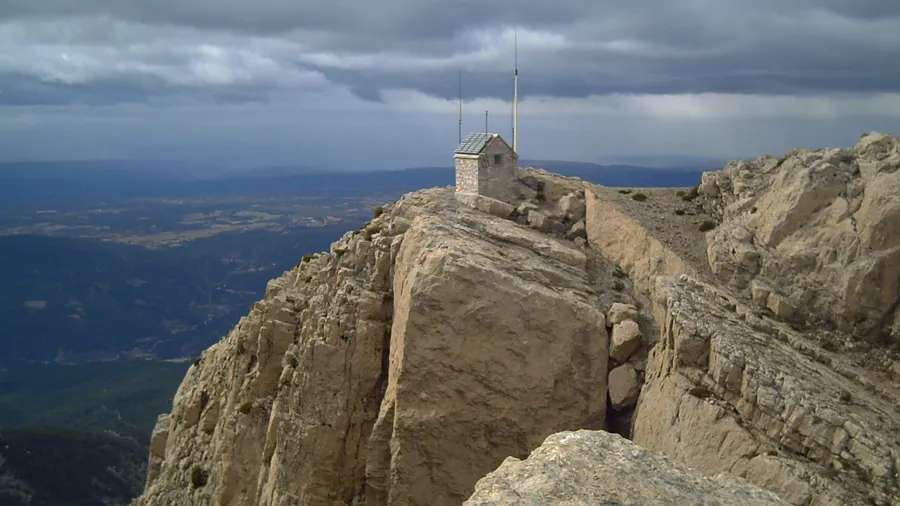
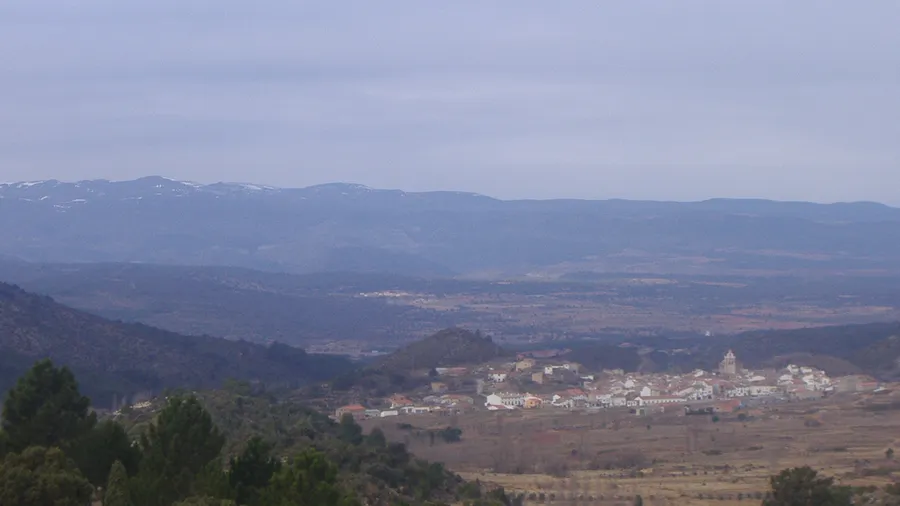
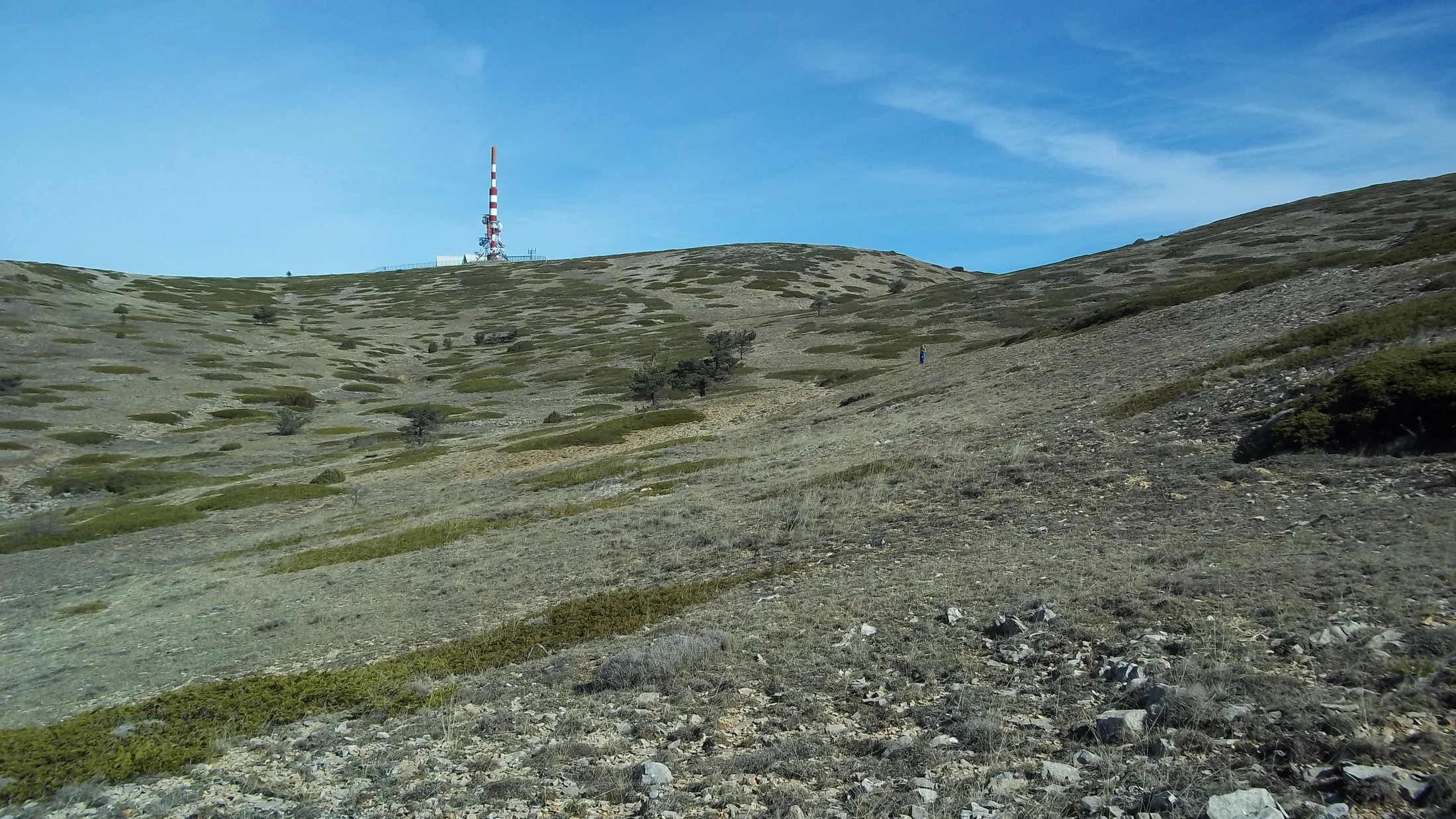
The Sierra de Javalambre rises within the Iberian mountain system in Teruel, its main summit reaching 2,020 meters above sea level at Pico Javalambre. Administratively it belongs to the province of Teruel, though its foothills extend into Valencia. The surrounding municipalities — Torrijas, Arcos de las Salinas, Camarena de la Sierra, La Puebla de Valverde, Sarrion, Albentosa, Abejuela and Manzanera — have a small combined population, which has helped the sierra preserve minimal light pollution levels and a silence that becomes palpable from the first hours of nightfall.

That darkness has turned Javalambre into an astronomy landmark. The Astrophysical Observatory of Javalambre (OAJ), located at Pico del Buitre at 1,957 meters, is a Singular Scientific and Technical Infrastructure (ICTS) managed by the Center for Physics of the Cosmos of Aragon (CEFCA). It houses two professional telescopes — the JST250 with a 2.55 m aperture and 3-degree field of view, and the JAST80 at 80 cm — dedicated to wide-field astronomical surveys. In 2017, the area received Starlight Foundation certification as a dark-sky reserve, supporting both scientific and tourism use. Galactica, an astronomy outreach centre located 10 km from the observatory, runs educational activities year-round.

The Javalambre ski resort, opened in 1995, has 14 kilometers of skiable terrain across 18 runs: 5 green, 3 blue, 8 red and 2 black. Together with the nearby Valdelinares resort, it forms the Aramon Javalambre-Valdelinares ski area, one of the closest snow options to Valencia at roughly two hours by road. Outside snow season, the slopes and surrounding forest tracks are used for hiking and mountain biking, with routes connecting the sierra villages through juniper and pine woodland.

Javalambre's flora stands out for its botanical endemisms. Creeping juniper (Juniperus sabina) grows at high elevations alongside exclusive species such as Oxytropis jabalambrensis and Sideritis javalambrensis. Mid-slopes are covered in pine forests (Pinus sylvestris and Pinus nigra), Spanish juniper woodland (Juniperus thurifera) and Lusitanian oak groves. Wildlife includes Spanish ibex, roe deer, wild boar, hare and rabbit. Raptors include golden eagle, short-toed snake eagle and eagle owl. Red-legged partridge and quail inhabit the open areas, while forest birds include woodpeckers, nuthatches and tits.

The main access is via the A-23 motorway from Teruel (about 45 minutes) or from Valencia along the same road. The sierra villages, with just a few hundred residents each, offer rural accommodation and dining based on local produce: black truffle from Sarrion (Spain's leading truffle-producing town), Teruel PDO ham, goat's cheese and shepherd's-style lamb. The low population density and absence of large tourism infrastructure make Javalambre a place where disconnection is genuine, not a slogan.
Practical information

Everything you need to know for your visit to Sierra de Javalambre

How to get there
From Teruel, take the A-23 toward Valencia; the ski resort access is signposted about 45 minutes away. From Valencia, the same A-23 in the opposite direction, roughly 2 hours. No regular public transport reaches the sierra; a private vehicle is recommended.
Area Information
Javalambre ski resort with 18 runs and lifts. Galactica astronomy outreach centre, 10 km from the observatory. The villages of Camarena de la Sierra and Arcos de las Salinas offer rural accommodation and dining.
Geography
Iberian mountain range peaking at 2,020 m at Pico Javalambre. Slopes descend from 2,000 m to 900 m in the surrounding valleys. The terrain features ridges, plateaux and ravines on limestone substrate.
Flora & Fauna
Creeping juniper at the summits with endemisms such as Oxytropis jabalambrensis. Scots and black pine forests, Spanish juniper woodland and oak groves on mid-slopes. Wildlife includes Spanish ibex, roe deer, wild boar, golden eagle and eagle owl.

Things to do

Find the best plans and things to do in Sierra de Javalambre

17

Accommodations

Best accommodation options in Sierra de Javalambre

Loading accommodation options...

Frequently Asked Questions

Get answers about Sierra de Javalambre

The observatory itself is a scientific facility with access restricted to researchers. However, the Galactica centre, located 10 km away, offers guided tours, workshops and nighttime telescope observations for the general public. Evening sessions require advance booking and are scheduled according to sky conditions.
The resort has 18 runs across 14 kilometers of skiable terrain: 5 green for beginners, 3 blue for intermediate skiers, 8 red for advanced and 2 black for expert level. It forms part of the Aramon Javalambre-Valdelinares area, allowing combined use of both resorts with a joint lift pass.
In summer and autumn, the forest tracks and trails open for hiking and mountain biking. Routes connect villages like Camarena and Torrijas through juniper and pine woodland. Astronomical observation runs year-round thanks to the Starlight certification, and autumn brings black truffle season in Sarrion.
Sarrion is Spain's leading producer of black truffle (Tuber melanosporum). The season runs from November to March. In December, the Sarrion Truffle Fair offers fresh truffles for purchase and special tasting menus. Several local restaurants serve truffle dishes throughout the harvest period.
The main roads (A-23 and ski resort access roads) are kept open by snowploughs. However, forest tracks to the observatory and secondary routes may be closed due to snow or ice. It is advisable to check road conditions before departing and to carry snow chains in the vehicle during winter months.