The essentials of Parque Natural Fragas do Eume

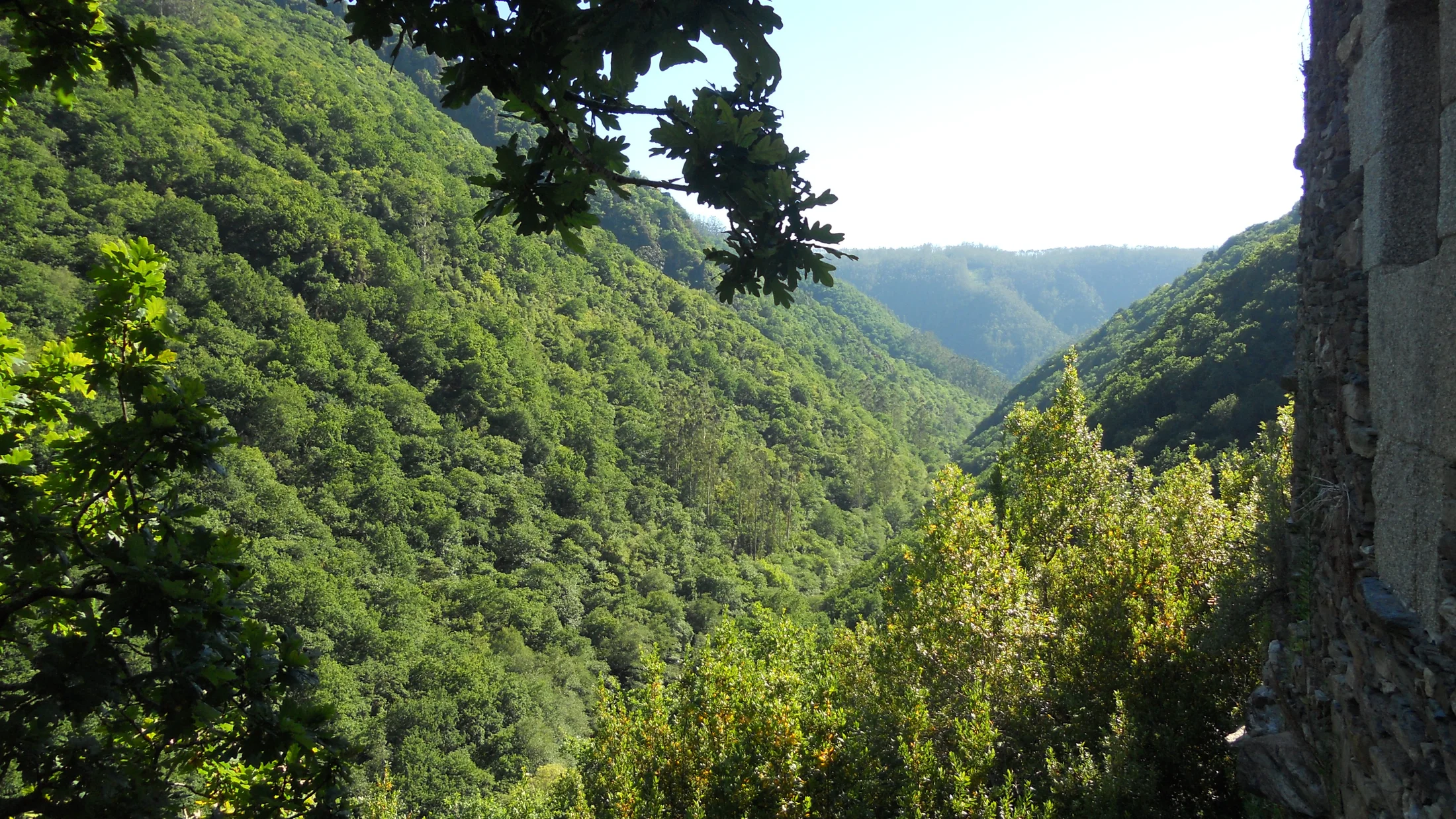
  • • Primeval Atlantic forest with 200-400-year-old alders and oaks
  • • 10th-century Caaveiro Romanesque monastery on a rock spur above the Eume
  • • Atlantic salmon and brown trout in the clear waters of the Eume river
  • • Chain fern and Diplazium caudatum, rare species in western Europe
  • • Slate and granite river canyon with walls up to 400 metres high

Description

Fragas do Eume Natural Park protects the most extensive and best-preserved Atlantic forest on the Iberian Peninsula, covering 9,126 hectares in the province of A Coruña along the Eume river valley from its headwaters to the Ribadeume reservoir. The concept of a primeval Atlantic forest takes precise meaning here: the alders, oaks and chestnuts forming the upper canopy are between 200 and 400 years old, and the understorey accumulates such a density of ferns, mosses, lichens and liverworts that some areas resemble the primary forests of the Azores or Madeira. The valley's humidity, combined with temperatures that barely fall below 4°C in winter and rarely exceed 25°C in summer, creates conditions for this green tapestry to remain stable throughout the year.

The Eume river is the park's structural element. It rises in the Serra do Coto in the municipality of Monfero and travels around 75 kilometres before entering the Ares estuary. Within the park, the river flows through a slate and granite canyon with walls up to 400 metres in places, and its clear waters support populations of brown trout and Atlantic salmon that run upstream in autumn. The Ribadeume reservoir, built in 1963, floods the lower valley and acts as a hydrological regulator, though its presence partially altered the original fluvial ecosystem. The park's trails skirt the reservoir and penetrate into the old-growth forest zones of the upper valley.

The park's fungal and vascular plant biodiversity is extraordinary for a territory of this size. More than 300 vascular plant species have been catalogued, including several wild orchids and ferns of considerable rarity in western Europe, such as the chain fern (Woodwardia radicans) and Diplazium caudatum. Mosses and liverworts, indicators of mature forest ecosystems with high ambient humidity, form communities that carpet trunks, rocks and the ground with a continuous green layer that late afternoon lateral light turns into tones ranging from emerald to lemon yellow.

Within the park stands the Monastery of Caaveiro, founded in the 10th century by San Rosendo on a rock spur at the confluence of two Eume tributaries. The building preserves the Romanesque church and some monastic quarters, restored in the late 20th century for visitor use. Access to the monastery is on foot from the A Ponte do Eume car park (5 km one way) or by boat from the As Neves landing stage during high season. The route from A Ponte do Eume follows the river along a dirt path between alders and oaks with multiple crossings of small tributaries, totalling around 10 kilometres return along the riverbank.
Practical information

Everything you need to know for your visit to Parque Natural Fragas do Eume

How to get there
Main access at A Ponte do Eume, 45 km from A Coruña via AP-9 and AC-144. Regulated parking in high season; shuttle from Pontedeume. In summer, boat access from As Neves landing stage to Caaveiro monastery.
Area Information
Pontedeume, 6 km away, is the main service town. Betanzos, 25 km away, has one of Galicia's best-preserved historic centres. Access to the Ares estuary from the Eume river mouth.
Geography
Eume river valley cut into slate and granite canyons up to 400 m deep. Ribadeume reservoir in the lower section. Old-growth forest in the upper valley. 9,126 ha in A Coruña province.
Flora & Fauna
Alder, Pedunculate oak, chestnut and hazel in the canopy. Woodwardia radicans, Diplazium caudatum, 300+ vascular plants. Atlantic salmon, brown trout, otter, roe deer, wild boar. Kingfisher in clear water sections.

Things to do

Find the best plans and things to do in Parque Natural Fragas do Eume

20

Accommodations

Best accommodation options in Parque Natural Fragas do Eume

Loading accommodation options...

Frequently Asked Questions

Get answers about Parque Natural Fragas do Eume

From the A Ponte do Eume car park, the route to Caaveiro monastery follows the Eume river for 5 kilometres along a dirt path between alders and oaks. The elevation gain is minimal and the walk takes 1.5-2 hours one way. In high season (July-August), boat access is also available from the As Neves landing stage in Pontedeume. The return can be made on the same route or by combining boat and walking.
Atlantic salmon run up the Eume mainly in autumn, between October and December, to spawn in the cooler upper sections. The best observation points are the weirs and rapids of the middle river, where salmon leap to reach spawning grounds. Activity peaks in the days following the first intense autumn rains, which raise water levels and facilitate the upstream run.
The forest's uniqueness stems from three factors: the age of the trees (200-400 years), continuous spatial coverage without significant agricultural interruption over centuries, and the hyper-humid microclimate of the river canyon. This combination supports a diversity of mosses, ferns and liverworts comparable to the Macaronesian forests of the Azores. Plants such as the chain fern Woodwardia radicans, which survives in very specific microhabitats on the Iberian Peninsula, are relatively easy to find here.
In July and August, private vehicle access to the A Ponte do Eume car park is restricted and managed via a free shuttle from Pontedeume. The number of simultaneous visitors is also limited to reduce impact on the ecosystem. Outside these months, access is free and parking is available without charge.