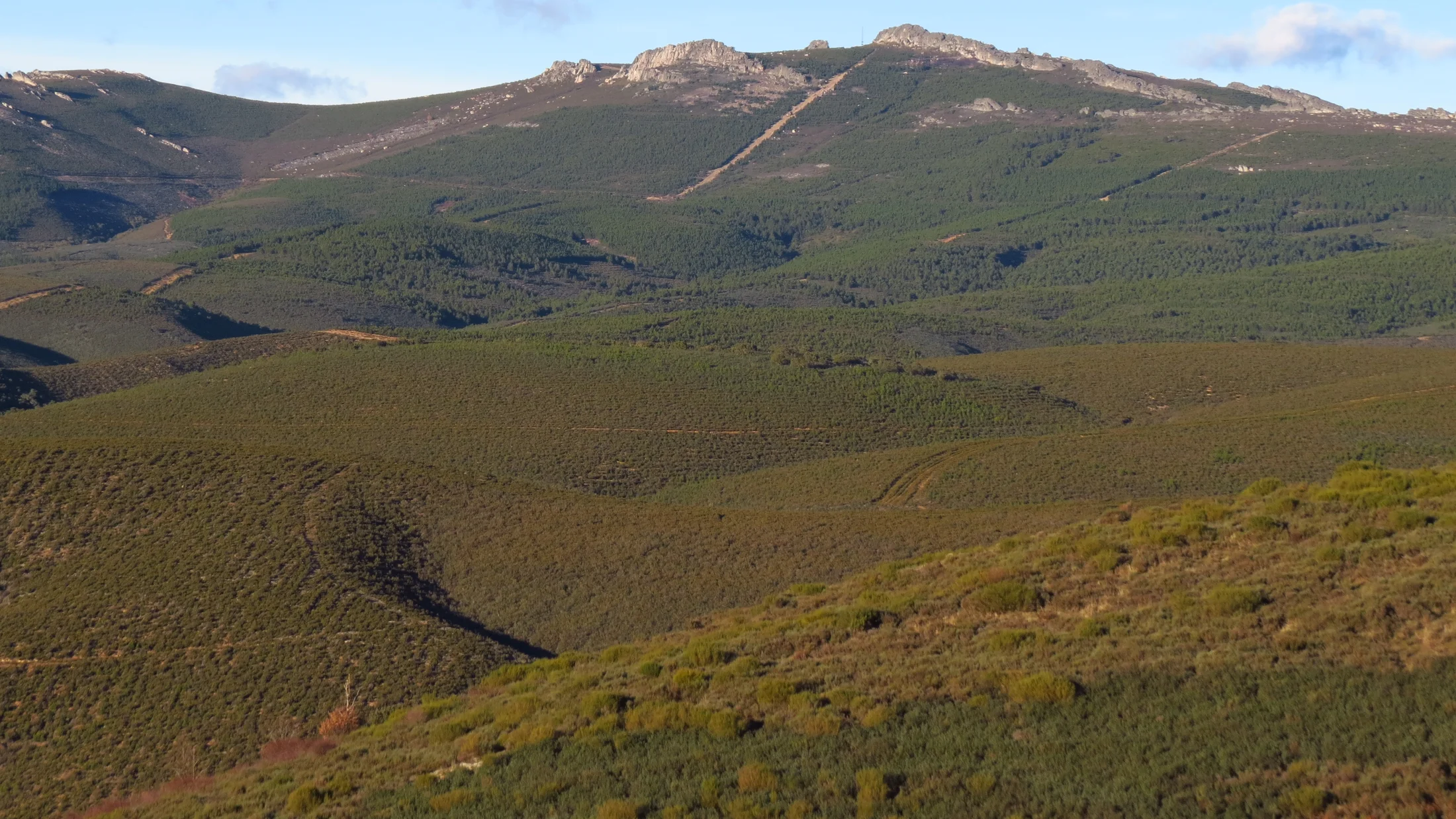
The Sierra de la Culebra covers roughly 67,340 hectares in the north-west of Zamora province, spanning the districts of La Carballeda, Tábara, Alba and Aliste near the Portuguese border. A National Hunting Reserve since 1973 and part of the Natura 2000 network as a Special Conservation Area, this massif of gentle ranges and enclosed valleys holds one of the highest densities of Iberian wolf in the European Union: between 5 and 7 individuals per 100 km² according to the most recent censuses. The sierra is, above all, wild-fauna territory in a landscape of low human density — its 41 villages across 12 municipalities account for only a few thousand residents.
The terrain ranges from 800 metres to the 1,241-metre summit of Peña Mira, the sierra's highest point. Slopes are clothed in Pyrenean oak (Quercus pyrenaica), with scattered holm oaks on drier ground and patches of Scots pine from twentieth-century plantations. In the valley floors, streams wind through alder and ash galleries that retain a largely unaltered riparian structure. Low forestry intervention and the absence of major infrastructure have kept the landscape dense and enclosed — a place where it is easy to lose visual bearings, and where wildlife moves with relative calm.
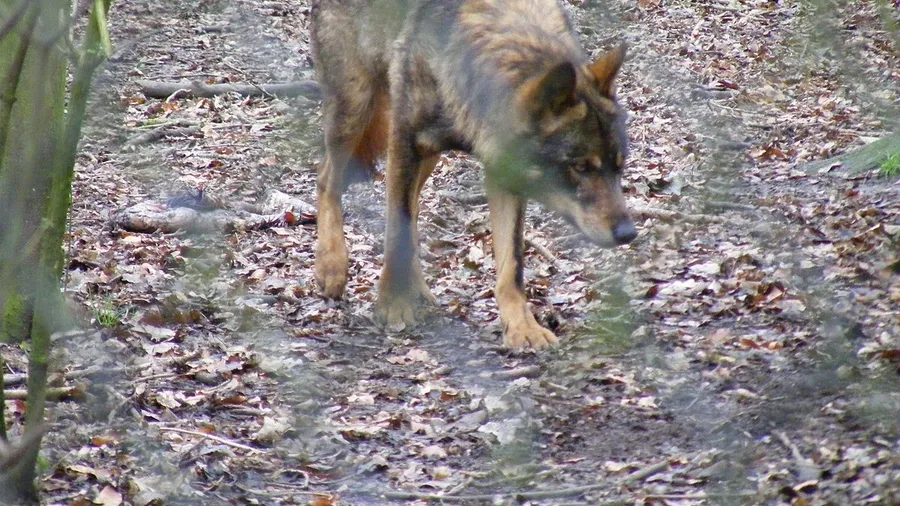
The Iberian wolf is the sierra's flagship species. Packs range across a wide territory, but the scrubland between Villardeciervos and Mahíde offers the best observation odds. Sightings demand patience, quality binoculars and, in most cases, the company of specialist local guides who know pack territories and habits. The Centro del Lobo Ibérico Félix Rodríguez de la Fuente, located in Robledo de Sanabria (Puebla de Sanabria), occupies 21 hectares of public woodland and allows visitors to observe wolves in semi-liberty. Opened in 2015, the centre serves as an interpretation and environmental-education facility on wolf biology and conservation.
Beyond the wolf, the sierra supports populations of over a thousand red deer, around five hundred roe deer and plentiful wild boar. The deer rut (berrea), in late September and early October, fills the valleys with a deep bellow audible from several kilometres away — the first hours after dawn and the last before dusk are the most intense. For birds, the sierra provides habitat for golden eagles, griffon vultures, eagle owls and a range of forest passerines. The European wildcat, elusive and nocturnal, rounds out the list of resident predators.
Tourism in the sierra revolves around wildlife watching, hiking and disconnection. The villages of Villardeciervos, Tábara, Ferreras de Abajo and Figueruela de Arriba offer rural accommodation and traditional Zamoran cooking (broad beans, cecina, seasonal mushrooms). Visitor density remains low even in peak season, making the area a destination of genuine stillness: nights free of light pollution, misty valley dawns and the constant presence of wildlife unaccustomed to crowds.