The essentials of Parque Natural Baixa Limia-Serra do Xurés

  • • Cross-border reserve with Peneda-Gerês, recognised by the European Union
  • • Roman road Via Nova with standing milestones on the Portela do Home section
  • • One of the last stable Iberian wolf populations in Galicia
  • • Iberian desman, a vulnerable endemic, in the headwater streams of the Limia
  • • Atlantic valley bogs and granite boulder fields defining the upland landscape

Description

Parque Natural Baixa Limia-Serra do Xurés covers 27,468 hectares in the southeastern corner of Galicia, in the province of Ourense, bordering Portugal, where the twin park Peneda-Gerês forms with it a cross-border reserve recognised by the European Union. The park's relief is organised around the Serra do Xurés, with summits above 1,500 metres at Pico Fontefría, and the lower basin of the Limia river, which runs channelled between granite slopes and woodland before crossing into Portugal towards the Lindoso reservoir.

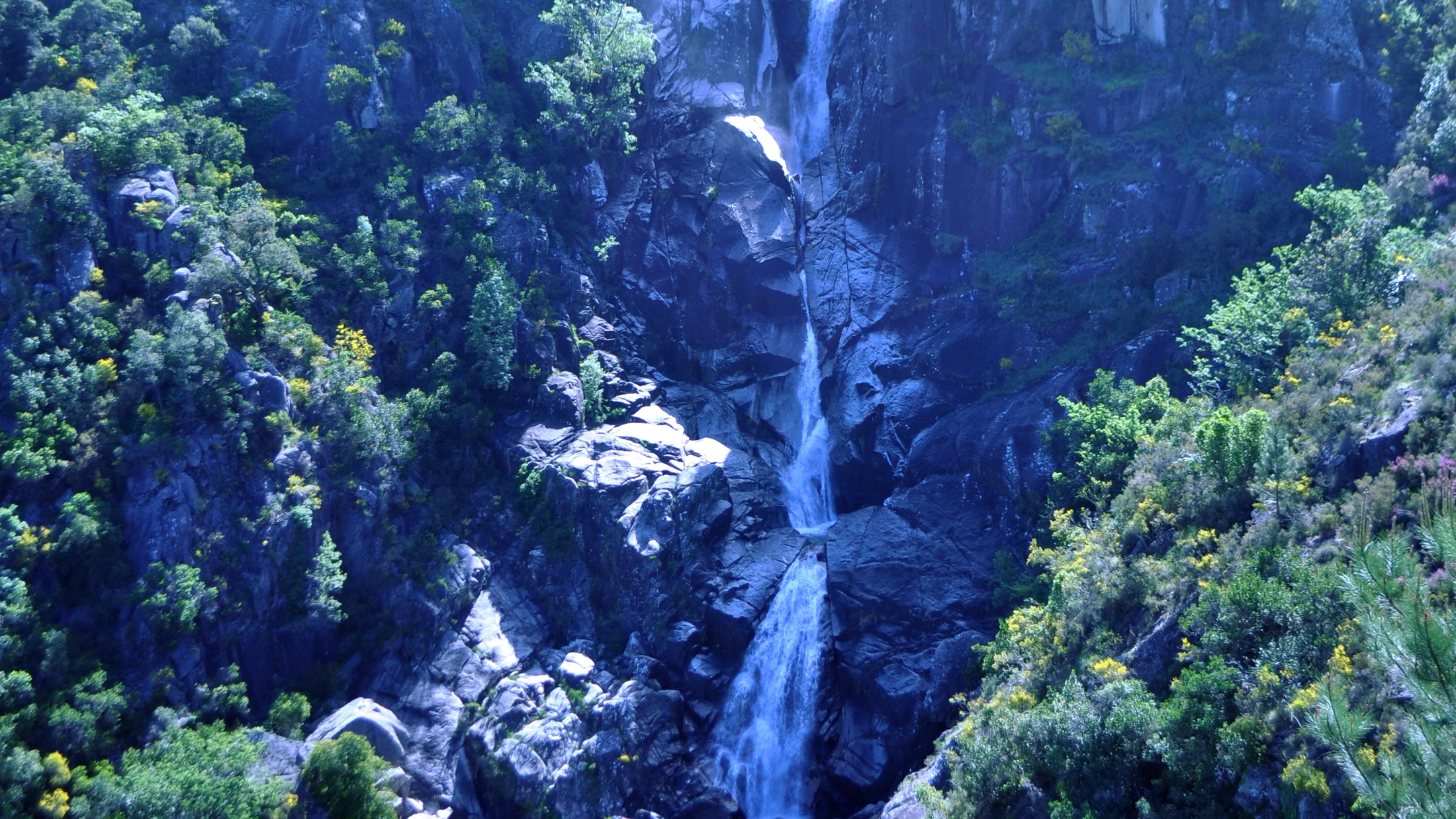
Granite dominates the geology. Differential erosion has left boulder fields, isolated rocks and chaotic block formations across the summits and slopes. The brañas — Atlantic valley-floor bogs — retain water through every season and maintain the constant humidity of a landscape that receives over 1,500 mm of rain annually in the most exposed zones. In autumn, mist rises from the Limia and spills over the cols, keeping the valley floors in shade long after the ridges are lit.

The park's fauna includes one of the last stable Iberian wolf populations in Galicia, using the mountain terrain and north-facing woods for movement. The roe deer, Capreolus capreolus, is abundant along forest edges and in heather, Erica spp., and broom, Cytisus purgans, scrubland. The otter, Lutra lutra, occupies the upper Limia and its tributaries, and the Iberian desman, Galemys pyrenaicus, a vulnerable endemic to the Iberian Peninsula, lives in oxygenated streams with stony beds within the park. Golden eagle, Aquila chrysaetos, and peregrine falcon, Falco peregrinus, nest on the granite outcrops.

The vegetation cover reflects the transition between the Atlantic and Mediterranean domains. Valley floors and north slopes hold pedunculate and Pyrenean oak, Quercus robur and Quercus pyrenaica, with bracken and ericaceous understorey. South-facing slopes and higher altitudes are covered in heather-gorse scrub with Calluna vulgaris, Erica cinerea and Ulex europaeus. Alder gallery woodland along the Limia and its tributaries, and holly, Ilex aquifolium, stands in north-facing mid-altitude gullies are the most botanically distinctive enclaves.

The park also holds a cultural heritage of the first order tied to the historical passage of travellers and pilgrims. The Vía Nova, a first-century Roman road linking Braga with Astorga, crosses the park from south to north and retains standing milestones on the Portela do Home section. Iron Age hillforts mark the granite summits and spurs, and vernacular stone villages such as Entrimo and Lobios preserve a built fabric coherent with the landscape. This layering of natural and historical heritage makes the park a destination with multiple dimensions.
Practical information

Everything you need to know for your visit to Parque Natural Baixa Limia-Serra do Xurés

How to get there
From Ourense, take the OU-540 towards Lobios (80 km). Alternative access from Vigo via A-52 to Celanova, then OU-540. Limited public transport: ALSA to Lobios. Private vehicle recommended to reach interior trails. Border crossing to Portugal at Portela do Home (light vehicles only).
Area Information
The park covers 27,468 ha in the municipalities of Entrimo, Lobios and Muíños (Ourense). It borders Portugal to the south, joining the Peneda-Gerês National Park. Managed by the Xunta de Galicia in cross-border coordination.
Geography
Granite range with highest peak at Pico Fontefría (1,538 m). Lower Limia river basin with the Lindoso reservoir to the south. Valley-floor Atlantic bogs (brañas). 30 km natural border with Portugal.
Flora & Fauna
Pedunculate and Pyrenean oak woodland, riparian alder and heather-gorse scrub. Iberian wolf, roe deer, otter, Iberian desman. Golden eagle and peregrine falcon on rocky outcrops. Fire salamander in streams.

Things to do

Find the best plans and things to do in Parque Natural Baixa Limia-Serra do Xurés

17

Accommodations

Best accommodation options in Parque Natural Baixa Limia-Serra do Xurés

Loading accommodation options...

Frequently Asked Questions

Get answers about Parque Natural Baixa Limia-Serra do Xurés

Yes. The Portela do Home pass connects the park with Peneda-Gerês National Park in Portugal and is open to light vehicles. Trails from this col head into Portuguese territory, where visitor infrastructure differs. Carry identification and check the opening times of visitor centres on both sides before travelling.
The best-preserved section of the Via Nova within the park runs near the Portela do Home and descends towards Lobios. Milestones — granite columns that marked Roman miles — still stand at several points. The Lobios visitor centre provides a detailed map of the route and can advise on the most accessible sections based on your fitness level.
Brañas are Atlantic valley-floor bogs and waterlogged meadows that retain moisture even in summer. They are high-diversity botanical ecosystems that function as water sponges for the landscape. Some are accessible from marked trails starting near Lobios and Entrimo. Waterproof footwear is strongly recommended, as the ground stays wet year-round.
Yes. The municipality of Lobios has hot spring facilities (Aqua Quente) drawing on volcanic-origin springs in the area. Water temperature exceeds 40 °C at some points. Public access is available, though the managed bathing facilities have set hours and an entry fee. Combining a day's hiking in the park with an evening thermal soak is a popular choice among visitors.