Introduction
Choosing between a regulated river and a natural one changes the flow, the season and even the difficulty level of the descent. This guide compares both scenarios with examples from Spain so you know what to expect before booking your rafting.
A regulated river releases water in a programmed and predictable way. A natural river depends on snow and rain, so it varies much more. That difference marks the rest of the plan: in regulated rivers there are fewer cancellations, departures at fixed times and more stable conditions, which is useful if you are going with family or if it is your first time. In natural rivers, the weather rules: powerful spring due to snowmelt, autumns with rainfall peaks and summers with less water and a different paddling technique.
The guide reviews representative rivers such as the Noguera Pallaresa, the Noguera Ribagorzana, the Ésera and the Cabriel, with when to go, how to get there and where to sleep in the valley or near the river. It also explains how to read the flow in m³/s and how it translates into the rapid classification from I to VI.
To follow the water in real time, the SAIH Ebro provides data on rainfall, flows and reservoirs throughout the basin, with gauging stations in any stretch of the river. The SAIH Júcar has more than 200 data collection points and records every five minutes.
In the riverside towns and on their banks, arrive, enjoy and return the respect you find.
To see options and real availability by region, consult verified experiences on Picuco.
Picuco te puede ayudar
Does something here catch your eye?
Tell us.
Write to us on WhatsApp or email: we answer questions, find the best options and help you sort out the booking.
Regulated or natural river: what really changes
Origin and flow control
A regulated river is born downstream of dams and reservoirs, where the gates decide how much water goes down and when it goes down. In a natural river, on the other hand, the flow depends on snow, which contributes during the spring snowmelt, and on rain, with autumnal peaks and convective episodes.
In rafting on a regulated river, companies coordinate descents with programmed releases that set useful flows, for example 40–80 m³/s at specific times. That sets the rhythm of the day: you know what water you are going to find and at what time.
In a natural river, there is no pause button. Floods or drops are organic and can be surprising after storms or prolonged heat.
The difference is noticeable in the rapids. In regulated rivers, they look very similar day to day during the season; in natural ones, the character of the river can change every week.
Knowing the origin of the flow helps you better plan the stretch and the time of day.
Predictability, safety and logistics
In a regulated river the flow is predictable, and that reduces cancellations. Departures happen at stable times, groups are homogeneous and the return transport is coordinated without surprises.
Safety also gains with repeatable scenarios: the guide knows where waves and eddies appear at a given flow. In a natural river, variation rules, and a storm upstream can increase the flow by 20–60 m³/s in hours. When it happens, the operator adjusts the level or postpones the departure.
In natural rivers, briefings are usually more detailed: alternative lines, safety walkways and conservative decisions if the flow exceeds the operable range.
Plan with time windows, confirm 24–48 h before and consider level or stretch alternatives. The day before, check SAIH and AEMET notices and ask about flash flood protocols.
Descent experience and landscape
In a regulated river, the descent progresses continuously and at a constant rhythm: the waves arrive reliably and allow you to progress technically or enjoy yourself without surprises. Many regulated valleys have several difficulty levels, so you can stagger the challenge for a mixed group.
In a natural river, the character changes with the flow. With high flows, waves trains, holes and powerful manoeuvres appear; with low flows, it requires fine reading, exposed rocks and technical passages. The landscape also feels wilder, with river corridors without large hydraulic works in sight.
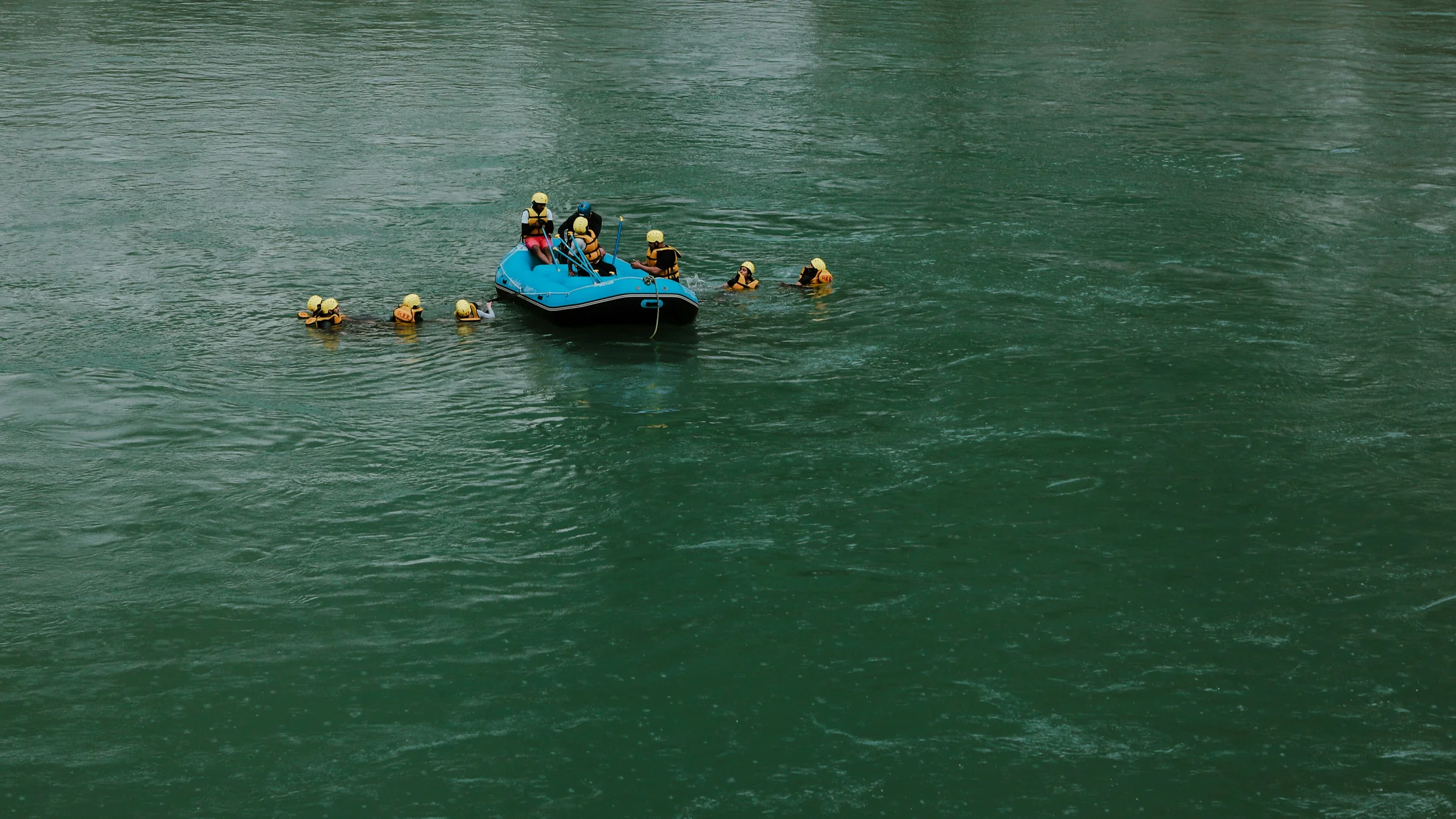
The sheet of water reflects pines and peaks passing by at a constant speed.
Families and first-timers usually prefer regulated rivers. Those looking for water reading and authentic character enjoy natural ones, especially in mid-spring.
Environmental impact and regulation
Controlled releases change the water temperature, the biological rhythms of fish and birds and the transport of sediments. Managers seek a balance between recreational uses and minimum ecological flows.
In protected areas, there may be quotas, schedules and access restrictions due to the breeding of birds or fish. Respect the riverbank areas and temporary prohibitions, and follow the instructions of the Hydrographic Confederations and forest rangers.
In natural rivers, watch out for erosion and trampling on the bank. In regulated rivers, keep in mind that flow peaks do not always coincide with the best moments for wildlife. It is advisable to step on the bank as little as possible: the air smells of rockrose and old moisture among the vegetation.
When choosing a company, prioritise operators with certification and environmental commitment. Minimise litter and noise, and use the already marked paths.
Where to go rafting in Spain: recommended rivers and sections
Four Spanish rivers summarise well the difference between a regulated and a natural riverbed. Choose according to the season you travel and the level of difficulty you seek.
The Noguera Pallaresa is a regulated river. Its classic section goes from Llavorsí to Rialp and the best season is from May to September, with flow releases. The difficulty is III–IV depending on the flow (m³/s).
The Noguera Ribagorzana has its best season from May to 31 August and a difficulty of II–III+. It is accessed via the N-230, with bases in Pont de Suert.
The Ésera runs through the Campo – Santa Liestra section, with difficulty II–III+ and peaks of IV. It is reached via the N-260 and there is a base in Campo.
The Cabriel is a regulated river: the Contreras Reservoir regulates the rafting section of Venta del Moro, Tamayo and Hoces. The recommended section is Tamayo – Tete, with difficulty I–II in the standard section and II–III in the Hoces section. It is accessed via the A-3/N-322, with bases in Venta del Moro.
1. Noguera Pallaresa: Pyrenean classic with scheduled releases
The Noguera Pallaresa is the flagship of regulated river rafting in Spain: coordinated releases from headwater reservoirs ensure flow during summer. The river rises in the Maladeta and Aneto massifs, at over 3,000 m altitude, and its course runs between limestone and conglomerate walls with canyoned sections.
The flow reaches its peak between April and June; in July and August the flow decreases and some rapids lose strength. The difficulty ranges from II to IV depending on the flow and section, so there are options for beginners and advanced paddlers. At high flow, the "El Bosc" rapid reaches difficulty III-IV.
Choose the section according to how much time you want to spend in the water: Llavorsí–Rialp is 2 hours of navigation, Llavorsí–Montardit takes half a day, and Llavorsí–Collegats, a whole day. Departures are scheduled in time slots and include transport to the put-in and the take-out. Several certified operators go out daily; confirm availability on Picuco.
If it is your first time, ask for medium flow slots and a large boat for more stability. If you are looking for intensity, ask about sections with longer rapids when the releases increase. Access is via the N-260, with bases in Llavorsí and Rialp, parking, and shuttles.
2. Noguera Ribagorzana: mixed and accessible sections
The Noguera Ribagorzana alternates regulated sections by reservoirs such as Escales with more natural sectors, between Catalonia and Aragón. This mix provides options for all levels, from families to experienced groups.
The river is of a mixed type: it has regulated and natural sections depending on the reservoirs. At low flows, rafting focuses on reading the water and positioning between rocks.
Prices are €40.00 for adults and €30.00 for children aged 6 to 12. You must know how to swim and be at least 6 years old, always accompanied by a parent or guardian.
Logistics are simple for families and mixed groups, with short shuttles. Local operators depart regularly during the season, so it is advisable to check the schedules. Access is via the N-230, with usual bases in Pont de Suert and the surrounding area.
3. Ésera: Natural mountain with glacial landscapes
The Ésera flows down from Benasque and behaves like a natural river: its flow depends on snowmelt and rain, not on a dam. For this reason, the level changes significantly from one week to another.
The river rises at 2,500 metres altitude in the Maladeta massif. The Campo–Santa Liestra section has difficulty II–III, with peaks of IV when the snowmelt pushes, and it is useful for experiencing the real variability of mountain water.
You must know how to swim, and for the Pyramids section, you must be over 14 years old. A cold scent of wet granite accompanies every stroke.
If you are looking for technique rather than power, go towards late spring, when the flow stabilises; with strong heat, the morning peak can be higher due to daytime melting. Confirm the flow 24–48 h before and have a plan B in case it rises excessively. Access is via the N-260, with bases in Campo and easy parking.
4. Cabriel: crystal clear water and play sections
The Cabriel, between Castilla-La Mancha and Comunidad Valenciana, is famous for the transparency of its waters and its meanders within the Cabriel Hoces Natural Park.
The Chorreras de Víllora and Enguídanos demand another level: it is the section of high technical difficulty. During high water season, the rapids can reach levels III and IV. On the banks, it smells of thyme and freshly risen sun.
The season runs from April to October. In summer the level is lower, but you can navigate with play levels, and at low flows the river offers precision manoeuvres perfect for improving technique.
As it is a park, there are environmental constraints: inform yourself about local permits and the measures to avoid stepping on rushes and reedbeds. On weekends it is advisable to book in advance, because there are quotas in the protected areas.
You arrive via the A-3 from Madrid and Valencia, with bases in Venta del Moro and nearby villages.
When to go: seasons and flows in Spain
Rafting in Spain is driven by two engines: mountain snowmelt and Atlantic and Mediterranean rains. Depending on which one prevails, the season, the flow, and the type of descent you will find will change.
In the Pyrenees (Ebro, Gállego, Noguera Pallaresa, Ésera and Noguera Ribagorzana basins) the key is the snowmelt between April and June. The colder and snowier the winter has been, the more sustained the spring flow will be. In dry summers, natural rivers drop and gain technique; regulated rivers compensate with releases and offer stable descents in July and August.
What to expect in each season
- Spring (April–June): maximum supply in natural mountain rivers due to snowmelt; the difficulty rises a degree with high flows, ideal for adventurers with a certified guide.
- Summer (July–August): in natural rivers the flow is lower, with technical play, light rafts and fine lines.
- Autumn (September–November): if storms arrive, there are occasional days with peaks; it is advisable to choose a date with a 72 h margin.
- Winter (December–March): reduced activity, with few windows in rainfall-fed rivers or after snowfalls followed by a rise in temperature.
Regulated or natural
Regulated rivers have internal schedules coordinated with reservoir managers, so they allow almost daily outings. Ask about the target flow (e.g. 50 m³/s) and the morning or afternoon slot: there are fewer cancellations and more predictability. In natural rivers, the variability is real; if you are travelling far, book with a flexible policy and prepare two alternative plans.
According to your level
For beginners and families, choose regulated rivers in summer or natural ones at the end of spring with moderate flow. If you have an intermediate level, aim for early spring with an experienced guide on natural rivers, or summer with high flow scheduled on regulated ones. For technical or adventure levels, look for snowmelt peaks and rainfall episodes, with safety margins and full equipment. If you are looking for this type of outings, check the adventure proposals.
Flows: what the numbers mean
The usual operable threshold is 25–80 m³/s for many III–IV sections, although it varies by river and section. Below 20 m³/s there is fine technical play, more rocks and less volume; above 90–120 m³/s the power is high and many companies restrict to experienced groups or cancel.
Before booking
Check AEMET 3–5 days before for precipitation and temperature, and the SAIH in real time the day before and on the day. Ask your operator about their operable flow range and their plan B if it falls outside the range.
How to get there and move around: access and permits
Road access and typical times
Rafting bases are usually located next to national roads with mountain sections, bends, and moderate passes. Calculate time margins: the last section always takes longer than it looks.
From Barcelona, you reach Llavorsí (Pallaresa) in 3 h 30 min via C-16/C-13. From Zaragoza, to Campo (Ésera) in 2 h 30 min via A-23/N-260. From Valencia, to Venta del Moro (Cabriel) in 1 h 20 min via A-3.
In summer, leave early to avoid the heat and traffic. If your rafting base offers parking, book it before leaving. Bring cash for rural car parks where there are no card machines.
Permits, regulations and municipal bookings
Before jumping into the water, check what paperwork the section requires: in rivers within parks or with environmental regulation, a municipal or regional permit may be needed. Companies also require authorisation from the Hydrographic Confederation.
Access to the foot of the dam and to the diversion channels is usually restricted for safety in regulated rivers. In sections with dams, do not enter locks, channels, or technical exits: respect fences and signage. In natural parks, it may be forbidden to step on sensitive vegetation, so follow the signage for the embarkation and disembarkation areas.
In tourist municipalities, they may charge a riverbank use fee or ask you to book a time slot during local festivals. If you go with a company, they are the ones who process the permits: ask them about current restrictions. If you organise it yourself, consult the corresponding Hydrographic Confederation and the town hall, and apply in advance during high season.
Equipment transport and organising companies
Local companies usually include a helmet, life jacket, wetsuit, and raft, as well as internal transport between the base, put-in, and take-out. Ask before booking what is included in the price and what you need to bring yourself.
The vinyl of the trailers creaks under the sun while they load shiny rafts. It is common for them to pick you up at the base and return you to your vehicle, with sanitised individual equipment: wetsuit, booties, helmet, and life jacket.
If you bring your own equipment, confirm compatibility beforehand: certifications and neoprene thickness. A serious operator has a guide certified by federations or official qualifications, civil liability and accident insurance, and a safety briefing.
To choose a reliable operator, look for visible certifications and up-to-date insurance, and reasonable guide/participant ratios (e.g., 1
–8 depending on difficulty). Check that they have clear flow and cancellation policies, and proactive communication 24–48 h before regarding conditions.If you book in advance, ask about the margin for changing the date due to flow and for surcharges during high season.
Where to sleep near the river
Rural accommodation and holiday houses
Sleeping in a rural house lets you have breakfast at your own pace and gives you a place to dry your wetsuit. Additionally, it brings you closer to the local cuisine of the valley where you are going to paddle.
Look for accommodation in valleys with several departure bases: this reduces travel time to the put-in. The friendly service and local information from the owners help you adjust schedules, and many offer half board.
In the morning, it smells of toasted bread and coffee while you watch the valley clear up.
If you are going in a group, ask about extra beds and multiple rooms.
In regulated rivers like the Pallaresa, choose towns with bases such as Llavorsí or Rialp.
Campsites and camping areas
Sleeping in the valley leaves you just a step away from the embarkation points. The campsites in the area offer good value for money and family atmospheres, with laundry facilities and drying areas for wetsuits.
Before booking, check which services are included: hot showers, laundry, electricity to charge equipment, and a shop or bar. Also ask about the distance to the embarkation points and whether they offer early picnics on release days.
Regulations change depending on the location. Find out about fires, night-time quiet hours, and capacity; in natural parks, wild camping is usually prohibited. If your trip is very early due to releases, check the silence hours and campsite access beforehand.
Night arrives with the scent of damp grass and soft guitars under the stars.
Refuges, hostels and options for groups
A large group sleeps together, eats breakfast together, and heads to the river at the same time. Hostels and refuges simplify logistics: they allow for a joint briefing and store rafting equipment.
Before booking, confirm that the accommodation has lockers or drying rooms and spaces for meetings. At dusk, a murmur of boots and laughter bounces through the wooden corridors.
It works well for school trips, clubs, and responsible stag or hen parties. Ask for early dinners and a room to review safety and the day's plan.
During bank holidays and summers, demand is high. Book with a deposit and a clear cancellation policy.
More than just the descent: plans around
The rafting day can be extended: hiking routes, viewpoints, landscape photography, and peaceful swims in authorised pools. Choose the plan according to the river and the time you have.
In the Pyrenees, PR and GR tracks connect valleys, and many viewpoints offer miniature views of the gorges you will later navigate. The Ésera adds the Benasque valley, with mountain lakes, waterfalls, and mountain biking on valley tracks; the valley is bordered by the upper basin of the Ésera river, the Congosto de Ventamillo, and the Turbón. There, Aneto peak and the Aigualluts waterfall are among the most visited places.
Sort works as a starting point for rafting, canoeing, and mountain activities in the Pyrenees.
Those who do not go into the water also have a plan: bathing areas in permitted zones, accessible viewpoints, natural park interpretation centres, local museums, and picnics in designated areas without leaving a trace.
Organise the day with rafting in the morning, for the best light and the lowest risk of convective storms in summer. Afterwards, eat in a nearby village with local cuisine and dedicate the afternoon to a short walk and a viewpoint to see the river from above.
Interpreting flow rates in regulated rivers and what to expect
The flow rate in m³/s tells you what the section will be like before you get on the raft. In a regulated river, releases set windows in which the water rises from a base flow to a target flow.
That flow plateau produces fairly constant waves, trains, and holes along the section. The approximate relationship between flow and difficulty, with specific ranges for each river, is this:
- Between 20 and 35 m³/s, class II–III: initiation with technical play and less volume.
- Between 35 and 60 m³/s, sustained class III: formed waves and controlled fun for most people with a guide.
- Between 60 and 85 m³/s, class III+–IV: power and continuity, for fit participants and with a good guide.
- Above 85 m³/s, class IV with occasional more serious passages: many companies restrict groups or cancel.
With more water, speed and wave size increase, lines are straighter and fewer rocks are exposed. Holes are also more powerful, and active safety relies on support kayaks if necessary. It is advisable to use short commands, firm positions and to pay more attention to eddies and intermediate stops.
Before booking, ask the operator for the target range for the day and the plan B if it is not reached. Check the SAIH the day before to see the release pattern, with block increases at fixed times. Also ask about the rapid classification at that flow and the guide/client ratio.
In a regulated river, the sensation is like a conveyor belt of waves, with progressive and predictable learning. In a natural one, reading the river rules, with variations from section to section.
Safety and equipment: how a reliable descent is prepared
Essential equipment and adaptations according to the river
Before boarding, check that you have a certified helmet, CE 12402-5 life jacket, a 3–5 mm wetsuit (or drysuit in the cold), river shoes and a paddle. That is the base equipment provided by the participant. The raft and the first aid kit are provided by the company.
The wetsuit smells of salt and rubber when you open it at dawn. In colder rivers, add a hood or neoprene gloves; in summer, sunscreen and glasses with a strap.
In regulated rivers the flow is stable: sizes and thickness are planned and the life jacket is adapted to medium/high volume. In natural rivers there is variability: add layers if the water comes from snowmelt and provide for extra dry clothes.
Guides add a safety knife and a throw line. For rescues from the shore, a rope bag. And to signal or ask for help, a whistle, first aid kit and communication by radio or waterproof phone.
Safety protocols and procedures
Every descent starts with a briefing: commands, positions, falling into the water, defensive and offensive swimming, and rope rescue. Before getting into the raft, the guide will review with you what you are going to hear and do in the water.
In regulated rivers with scheduled releases, the briefing emphasises entries and escapes during the flow plateau (the section of the day with a stable level) and not stopping in discharge zones. There, the water level changes in sections, so it is useful to know where to enter and where to exit.
Standard procedures include equipment verification and individual adjustment, a review of the critical points of the section and the escapes, and simple rescue practices on the bank or in a calm pool. Safety kayaks are placed when the section requires it (III+–IV).
The guide takes on continuous assessment, go/no-go decisions, leadership, and communications. For your part, pay attention to the briefing, be honest about your physical condition, and respect the environment.
Recommended training and emergency management
A basic whitewater course and another in first aid in remote environments give confidence to those who repeat on the river. In the case of guides, specific whitewater rescue certification is the industry standard.
If the flow rises out of range, a protocol is activated: evacuation via the escapes, head count, communication with the base or 112, and reassessment of the situation.
Before booking, ask the company four questions:
- Ask about the operable flow range and the planned plan B.
- Ask what qualification and what participant-to-guide ratio the company uses.
- Confirm if the activity includes accident and civil liability insurance, and what its coverage is.
- Ask them to explain how the escapes and communication are organised along the section.
Before booking: checklist and tips
First, choose the region and the season according to your profile. If you opt for a natural river, adjust the date with a 5–10 day margin: this way you avoid last-minute changes.
Define the group level (beginner, intermediate, or advanced) and decide between a regulated, predictable river, or a natural, variable one. Check the season and the expected flow in m³/s in the 3 days prior to the trip.
Before paying the deposit, confirm the operable range, the cancellation policy, and a plan B with the company. Also ask about insurance, the guide/client ratio, and their experience on that section.
In regulated rivers, ask about the day's "sweet spot", when the flow is most stable. In natural rivers, maintain flexibility of one or two days in case there is excessive rising or falling.
Read the cancellation policy due to flow before paying: serious companies offer date changes or partial or total refunds depending on the case. For extra coverage, consider travel insurance that covers whitewater activities.
Prepare a swimsuit, towel, eyewear strap, sunscreen, and water. Rest and have a light breakfast before the activity, and arrive with a 30–45 min margin, including parking.
Book during the week in high season: better price and fewer people. If the flow changes, combine the activity with hiking or viewpoints to make the most of the day.
Frequently asked questions
Is it safer to go rafting on a regulated river?
A regulated river usually provides a stable flow rate during specific time slots, which reduces surprises. Even so, safety depends on the section, the m³/s range, and the guide's skill.
There are also simple and very safe natural sections with moderate flows, and demanding regulated sections when the volume is high. The environment does not decide on its own.
Before booking, ask about the rapid classification at that flow rate, about rescue protocols, and about the plan B if the flow changes. With a certified guide, the correct equipment, and conditions within range, you can debut or progress in both environments.
What is the best season for rafting in Spain?
The answer depends on the river and what you are looking for. In summer (July–August), regulated rivers maintain excellent descents, and in the wet north, storms open windows for rafting in spring and autumn.
If you want to start with predictability, summer on regulated rivers like the Noguera Pallaresa is the ideal option. For a changing character and water reading, aim for mid-spring on natural rivers like the Ésera, with flow rates depending on snowmelt and rainfall.
The Ésera has sections suitable for both families and adults, so you can choose the level depending on who you are going with.
What does flow rate mean and how does it affect the difficulty level?
Flow rate is the volume of water that passes through a point in the river every second and is measured in m³/s. The more water flowing down, the more speed and larger waves, and the difficulty usually increases. Each section has its "sweet spot", so the same flow rate does not translate the same way in all rivers.
With low flow rates, rocks appear and navigation requires precision. To guide you, these thresholds give you an idea of what you can expect:
- Between 20 and 35 m³/s, the difficulty is around II–III, an active introduction.
- Between 35 and 60 m³/s, the difficulty is a solid III.
- Between 60 and 85 m³/s, it reaches III+–IV, with more power and continuity.
- Above 85 m³/s, the difficulty is IV and restrictions are frequent.
Before heading out, read the company's notices and check the SAIH the day before. This way, you can adjust your expectations to the water you are going to encounter.
What happens if my descent is cancelled due to flow rate?
If the flow rate is not enough to go down, the usual procedure is that they offer to change the date, switch to an alternative section or level, or refund your money according to the conditions. Ask how this is managed before paying.
Before booking, ask in writing for the flow rate policy, the operable ranges, and how they will notify you. Book with operators that inform you 24–48 h in advance and propose reasonable alternatives.
It is advisable to have a plan B in the same valley, such as a hiking route or a viewpoint. You can also consider travel insurance that covers cancellations due to conditions.
Book your experience — discover active tourism activities in Spain with providers verified by Picuco.
Conclusion
Choosing between a regulated river and a natural river is choosing between predictability and a measured rhythm, or a changing character and a living reading of the water. To decide, define your objectives and look at the season and the flow in m³/s that awaits you on the stretch.
If you are looking for stability, summer on regulated rivers provides a sustained III–IV and simple logistics. If you prefer variety, spring on natural rivers brings changes and more technique.
In all cases, prioritise safety: certified guide, complete briefing and a clear flow range. Finalise your plan with a margin of dates, book accommodation near the base and check flows and the forecast the day before.
At Picuco you will find experiences by region and level with verified operators.