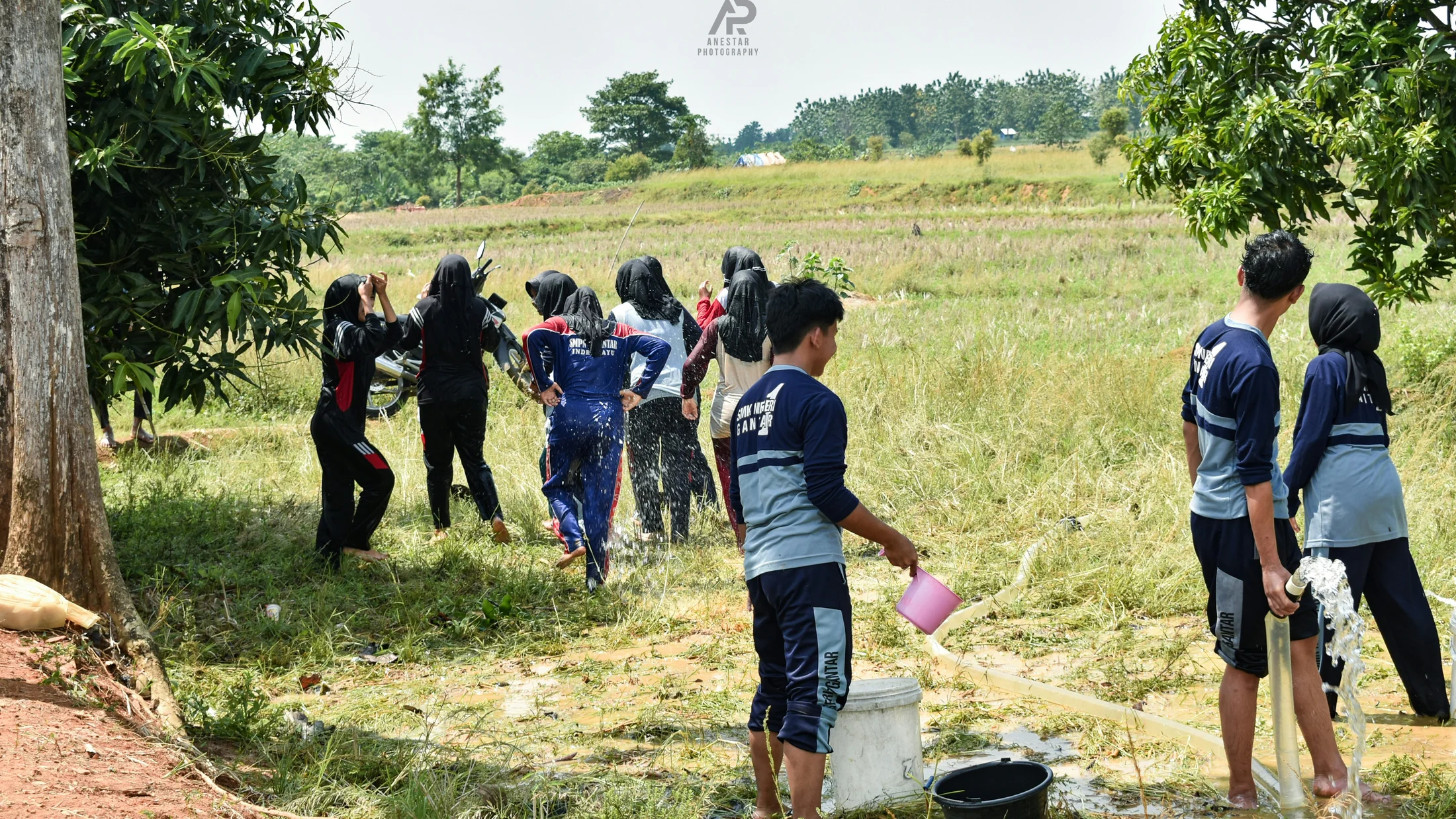
Why nature team building boosts your team
A team that spends two hours outdoors talks differently. Nature team building reduces stress, facilitates cooperation and stimulates creativity, which is why outdoor corporate days and rural retreats are growing in Spain.
Science backs it up. Spending 120 minutes a week in nature significantly improves wellbeing and health (Scientific Reports, White et al., 2019), and at work, this translates into more focus and less burnout. Exposure to green spaces reduces cortisol and heart rate (Twohig-Bennett and Jones, 2018, Environmental Research).
Outside the office, hierarchies carry less weight. In cooperative tasks, horizontal interactions increase, and moderate physical challenges accelerate trust building (Klein et al., 2009, Small Group Research). Contact with non-urban environments also increases short-term divergent thinking (Atchley et al., 2012).
There is one more reason to move the session to the countryside. The WHO recognises burnout in the ICD-11 and restorative breaks in green spaces are protective (INSST, 2022). Fresh air on your face and, almost immediately, mental noise decreases.
Nature activities are adapted to specific objectives: a scavenger hunt to break the ice or a ropes course to work on situational leadership. Tell us how many people you are and what you want to train, and we will set up the day.
Benefits you will notice in your day-to-day
A damp pine forest sounds like productive silence and coordinated footsteps. In outdoor corporate team building activities, you will see more agile decision-making, more active listening and better reaction to stress in projects with deadlines.
The environment helps because it reduces cognitive loads and encourages collaboration without anyone having to organise it. In kayaking, training clear signals reduces coordination errors, just as in a product sprint. Completing a route with mini-challenges reinforces self-efficacy, and that translates into proactivity in your day-to-day.
After a moderate active day, 60-70% of participants report lower perceived tension in post-event internal surveys (average in corporate programmes in Spain 2021-2024). 2-3 day rural corporate retreats consolidate learning with guided reflection, something that is difficult in online sessions.
Count on a brief and immediate improvement of 1-2 weeks. With follow-up afterwards, the impacts on coordination and team climate are sustained. To plan it, book the activity in advance and leave time for a reflection session at the end of the day.
What you will find here
Twelve outdoor activities explained one by one, with their logistics and their permits. This guide serves to design and execute a team building programme with criteria: choosing the location, when to go, how to get there and where to sleep.
Each activity comes with the optimal format for each objective, its materials and its variants. You will also find a matrix of formats, durations and physical and technical levels, and criteria to align the natural environment with the team's goals.
The practical part includes a checklist of logistics, permits and insurance, as well as recommendations for accessibility and sustainable impact. At the end, it explains how to request proposals and coordinate with verified operators.
When in doubt, prioritise safety and learning; the rest can be adjusted.
Picuco te puede ayudar
Does something here catch your eye?
Tell us.
Write to us on WhatsApp or email: we answer questions, find the best options and help you sort out the booking.
Where to go, when and how to move so that everything flows
Spain has mountains, coastlines, mid-mountain forests and riverbanks. The Pyrenees, Picos de Europa and the Sierra de Gredos cover the mountain part; the Cantabrian Sea, the Andalusian Atlantic and the Mediterranean, the coastal part. For forests, look at the Sistema Central and Montseny; for rivers, the Tagus, the Ebro and the Miño.
Choosing the location well multiplies the impact of the programme. A clear valley and the fresh morning air mark a different start for the group.
Plan the travel with real road times and consider the train and transfer option. This way the team arrives rested and the day starts at the scheduled time.
Choosing the right location
Before looking at maps, define what you want the team to achieve. The environment comes from there: water from reservoirs, estuaries and lakes works well for synchrony and communication under pressure, and rope courses in the forest, for trust and mutual support.
Practical tip
Define three candidate locations with clear criteria: objectives, maximum distance, alternatives for bad weather and availability of accommodation with a room.
In Spain, the mountains allow you to combine hiking with orienteering challenges, and coastal areas offer kayaking and photographic scavenger hunts with changing light. If you are looking for innovation and creativity, look at forests and natural parks near cities: Montseny from Barcelona (about 50 km away) or the Sierra de Guadarrama from Madrid are suitable for mixed sessions of mindful walks and creative challenges.
The Valmayor and San Juan reservoirs are in the Community of Madrid; San Juan is accessed via the M-501, popularly known as the "reservoir road".
Large teams fit well in plains and estates in Castilla y León or La Mancha, with space for multiple stations and catering logistics. Before booking, check accessibility, bus parking and proximity to health centres. If there is protected fauna or nesting areas, respect the seasonal restrictions.
Best time and how to get there
Spain has a varied climate, so it is advisable to avoid extremes and opt for spring and autumn: they work in almost the whole country. In summer, choose the coast or high mountains; in winter, sheltered valleys or low-exposure activities.
May, June, September and October are high season, with better weather and more demand. March, April and November form the mid season, with variable weather and moderate prices. July and August in the interior, and December and February due to cold or rain, are low season, except for the mild coast or the mountains with a plan B.
A trail at sunrise provides thermal margin and gentle light to start the day.
To move the group, the train with transfer works well: organise minibuses from AVE stations to reduce footprint and unproductive times. A private bus is optimal for groups of 20-50; calculate 90-120 min of travel time including stops and access points. Flying with a bus helps if you are unifying branches, but adds 2-3 h of buffers between flights and activity.
Finalise the logistics with staggered check-in and welcome coffee times, a plan B for weather and an early return protocol.
Accommodation and services for groups
Accommodation sets the group's pace and provides the spaces for reflection. Large rural houses and rural hotels with meeting rooms are useful for debriefings; hostels favour togetherness and adjust the cost.
Choose according to size and budget. A hostel or campsite with bungalows has high capacity, low cost and outdoor spaces, with less privacy. A rural house or estate fits medium-sized groups, with multipurpose rooms and local cuisine, although availability is limited during high season. A rural hotel with a spa adds comfort, equipped rooms and wellness options, at a higher price and requiring advance booking.
Before booking, ask about the actual capacity per room and its layout. Ask for details on the available rooms: capacity, natural light and projector or sound. Also check cancellation policies, quiet hours and the possibility of exclusive use of spaces. Finish your list of questions with options for catering adapted to allergies and local seasonal menus.
12 outdoor activities that really work
An outdoor team building activity works when it fits with the team's objectives and the profile of those participating. Before choosing, it is advisable to be clear about what you want to achieve and who will be there.
The selection brings together 12 proposals. Each one comes with its objectives, its logistics, its variations and the criteria to decide if it suits you.
Contact with nature creates a common language between participants that continues to work when returning to the office.
1. Orienteering scavenger hunt: treasure hunt and teamwork
Several groups search for beacons with a map and compass or a GPS app and solve challenges at the checkpoints. The crunching of leaves under boots sets the pace of progress.
The orienteering scavenger hunt works on collaboration, the distribution of roles and decision-making with incomplete information. It fits groups of 12-80 people, with low-medium physical condition and easy terrain, and is useful for the start of projects, the integration of mixed teams and kick-offs.
The objectives are effective communication, decision-making and strategic thinking. You need maps, compasses, beacons and a time-tracking app.
There are variations to adapt it to your team: a corporate theme with riddles about values, an urban or indoor version with site plans in case of rain, and a "score" modality based on points where not all beacons are worth the same. Choose an accessible park or forest and ask for permits if it is a protected area.
Before setting off, hold an orientation briefing, set regrouping points and leave an emergency phone number visible. A tip: integrate rotating roles (navigator, timekeeper, motivator, risk analyst) to distribute leadership.
2. Raft building: water collaboration projects
With drums, wood and ropes, your team has to assemble a raft that floats, moves and returns intact. The test is carried out in calm waters and with life jackets.
Groups range from 10 to 40 people, with medium physical fitness, and it is advisable to know how to swim. The activity lasts between 120 and 180 minutes, with qualified instructors, wind and current control and a safe capsize briefing.
Each team divides roles: design manager, knot manager, quality control and helmsman. Success is measured by stability, assembly time and speed in a small circuit.
There are variants to adjust the challenge. One adds a fictitious budget per material and another proposes rapid iterations: dismantle and improve after the first test. This works on planning, resource management, coordination and hypothesis validation.
Raft building fits well to reinforce interdepartmental collaboration and iterative thinking. Book in advance and confirm the meeting point and the included material.
3. Rafting or river descent: coordination and stress management
A boat, a guide setting the pace and a team that has to understand each other while the water changes. Rafting trains communication under pressure, trust in the leader and reaction to moving environments.
The activity is suitable for groups with medium physical fitness who know how to swim and do not have recent injuries. It is useful for working on team trust, leadership under pressure and focus on instructions. Choose familiar stretches (I-II) or sporting stretches (III) depending on the group profile, and you can add a basic rescue module with "support point" roles.
Safety depends on hiring an authorised company, with AEGM guides or equivalents, controlled flow, meteorological reports and an evacuation plan. Before entering the water, a signals briefing is advisable; upon finishing, a debriefing on decisions made in the heat of the moment and group trust. It is the option when you need to improve response to stress and the communication of critical signals.
The duration goes from 2 to 4 hours depending on the stretch and the programme, with a capacity of 8 to 90 participants. It can be reached in less than 2:30 h via the A3 highway and in 1 h from Valencia, Cuenca or Albacete.
4. Hiking with challenges: leadership and shared objectives
A walk with stops to solve logistical riddles or build a human bridge turns a hiking route into a team practice. It is done on local paths, with milestones that the group marks.
The activity works on situational leadership, planning and active listening. It fits groups with low-medium physical fitness and terrain without exposure.
It lasts 2-4 h and is led by a guide who controls the pace, with a time map and short alternatives. There are variants for mixed teams, with optional higher effort challenges, and an accessible version on wide tracks for all-terrain wheelchairs.
To prepare it, you need a first aid kit, walkie-talkies for communication and permits if you are travelling through a natural park. On the move, control hydration, fix escape points and follow the weather.
It proves useful for aligning objectives and practising leader rotation in low-pressure environments.
5. Ropes course (Low/high ropes): trust and communication
Low ropes and high ropes work on trust, mutual support and precise communication, with controlled risks.
The objectives are clear: trust, immediate feedback and coordination. Low ropes are suitable for any group; high ropes require medium physical fitness and no severe vertigo. In the former, you can implement a progressive "trust fall" with strict protocols; in the latter, a Tibetan bridge, a zip line or hanging scales.
The activity is carried out in certified facilities, with trained instructors and approved PPE. Safety includes daily inspection of anchors, a technical briefing and a guide/participant ratio of 1
. Upon finishing, the debriefing focuses on clear language and psychological safety agreements.It works well to improve trust and visible support between departments. Book in advance and confirm that the centre complies with the ratio and the anchor inspection.
7. Rock climbing or climbing wall: overcoming challenges and support between teammates
On a wall, trust is measured in metres: the person belaying holds the person climbing. The climber-belayer dynamic reproduces the support and feedback between work colleagues, and requires focus, fear management and trust in the person holding the rope.
The activity works on self-confidence, feedback, mentoring and two-way communication. It is designed for groups of 8-30 people with medium physical fitness, on easy routes (III–V), and lasts from 2 to 3 h. Harnesses, helmets, ropes, belay devices and qualified instructors are used.
If the group is starting from scratch or time is not on your side, there is top-rope at the climbing wall. Another option is a basic technique workshop plus a circuit of team challenges. Regarding safety, PPE is checked, cross-checks are performed and standard verbal commands are used. For participants with less mobility, there are low-altitude routes and micro-coordination challenges.
Climbing works well for working on trust and safe feedback in pairs and micro-teams. Book the qualified instructor and the equipment in advance, and confirm the meeting point with the activity company.
7. Kayaking or canoeing on a lake: synchrony and planning
Two people, one paddle each and a double kayak: in a calm lake, paddling in a pair forces you to find a common rhythm. The bow sets the pace and the stern corrects, and roles change depending on what the water requires.
The activity works on coordination, shared leadership and non-verbal communication. It fits groups of 10 to 50 people with low-medium physical fitness who know how to swim.
Sessions last between 90 and 150 minutes and include life jackets, paddles and double kayaks, with one instructor for every 8 participants. You can choose buoy relays with a change strategy or a "blind kayak", in which one member guides with their voice over short and safe stretches.
The wind rules: it is monitored before setting off, with perimeter limits and safe jetties. To bring it to the team, plan a briefing on signals, goals per iteration and a brief retrospective on the shore.
It works well for teams that need to fine-tune daily coordination and synchronisation routines.
8. Survival or bushcraft workshop: problem solving and creativity
Learning the essentials humbles the ego and organises the team's priorities. A survival or bushcraft workshop forces the group to solve concrete tasks with few resources and no room to improvise alone.
Lighting a fire with a flint in a designated area, building shelters with tarpaulins, basic water purification, or marking meeting points are exercises that teach you to collaborate and think creatively. The workshop works on prioritisation, problem solving, and the distribution of clear roles.
You can set it up as a "resource scarcity" scenario with a limited budget, or focus it on basic orienteering with a compass and azimuth. In both cases, it is advisable to assign roles from the start: safety leader, materials manager, task coordinator, and timekeeper.
Before lighting anything, ask for authorisation to use fire and check the forest risk control for the area. Keep a fire extinguisher and water at hand. The workshop is perfect when you want to reinforce priorities and creative thinking under real constraints.
9. Photographic scavenger hunt: creative outdoor challenge
Teams head out with a mobile phone or a camera to solve a list of shots and, at the end, narrate a story with them. The photographic scavenger hunt energises large groups and reinforces shared identity without physical demand.
Everything starts from a visual brief that turns company values into themes to capture: trust, collaboration, sustainability. With that starting point, the group works on visual storytelling, communication, and alignment with those values.
The activity is suitable for groups of 10 to 100 people and those with low physical fitness. It requires mobile phones or cameras, a list of challenges, and a mixed jury.
You can adjust the format to what you are looking for. A black and white variation emphasises composition; another asks for a series of 5 photos that tell the team's "hero's journey". The jury assesses originality, coherence with the brief, and teamwork.
Before heading out, agree on the rules with the group: respect people's privacy, do not trespass on properties, and ensure you have permits if necessary.
10. Night activities: orienteering and trust under pressure
With headlamps and nearby stations, the group orients itself in the dark and learns to listen to one another. The night refines communication: there are fewer visual clues and every word counts.
The activity combines station-based orienteering and guided trust dynamics. It is useful for making decisions with limited information, managing stress, and reinforcing team cohesion.
There are two variants: “Coordinated silence”, in which you move forward using only non-verbal signals, and an astronomical observation outing with a guide and brief star-based orienteering tasks.
Safety is prepared beforehand: local permits, perimeter limits, wildlife control, a contingency plan, and reference light points. It is advisable to expand the briefing and debriefing to integrate emotional learnings. It is a great formula for working on calmness and conscious decision-making in uncertain situations.
11. Outdoor cooking workshop: practical collaboration and roles
A team that cooks together learns to divide tasks in real time. The outdoor cooking workshop is a cooking challenge with stoves or a grill in a designated area: teams plan, cook and present their dishes to a jury with clear criteria for flavour, hygiene, time and collaboration.
The activity works on planning, time management, communication and distributed leadership. It is suitable for groups with low physical fitness, so no sports preparation is needed.
It lasts between 2 and 4 hours and requires tents, tables, stoves, tableware, water, a fire extinguisher and allergen control. The sizzle of the griddle and the aroma of herbs fill everything.
There are variations to adjust the challenge to your company: a surprise ingredient aligned with a corporate value, or a simulated budget for shopping and negotiation between teams. Regarding safety, basic HACCP, safe food handling and marked heat zones are applied.
To make it work, a brief initial training, mise en place checklists and a joint final presentation are recommended. This way, the group unites areas and practises coordination with a clear deliverable: the dish that reaches the jury.
12. Mindfulness and nature observation: wellbeing and cohesion
An outdoor breathing session can slow down a team's pace in twenty minutes. Mindfulness in nature is practised with guided breathing exercises, body scans, mindful walks and observation, and fits well into rural corporate retreats.
The objective is wellbeing, attention, empathy and emotional regulation. It is suitable for groups of 6 to 60 people, with any physical condition, and is accessible.
The sessions last from 60 to 90 minutes and require mats or chairs and a qualified facilitator. You can choose between mindful walking with sensory micro-stops or a field diary with a page for observations and commitments.
It is advisable to adapt the postures and communicate each participant's medical conditions beforehand.
Choose it to close intense days and consolidate learning with serenity.
Formats, durations and levels: how to design a balanced programme
Half day, full day or weekend: the format depends on your objectives, team availability and the season. With 3-4 h you aim for focus and key messages. With 6-8 h you combine two activities and add reflection. The weekend adds socialising and transfer to the workplace.
When designing, alternate moderate physical activity with a creative or reflective one. When the demand increases, offer "soft" variants in parallel so that no one is left out. Reserve 20-30% of the activity time for guided debriefing and leave 15-20 min between blocks for transitions and equipment.
A rhythm that works: welcome with objectives and a short warm-up, core activity aligned to the goal, hydration and snack break, complementary activity and closing with structured debriefing and commitments. Each activity has its duration and its level, and it is advisable to match them with the group.
- Orienteering scavenger hunt: low-medium physical level and low technical level; half day or full day; debriefing on decision maps and roles.
- Raft building: medium physical level and low-medium technical level; full day; debriefing on iterations and success metrics.
- Rafting: between 2 and 4 hours, medium physical level and medium technical level (guided); full day or weekend; debriefing on signals and stress management.
- Hiking with challenges: low-medium physical level and low technical level; half day or full day; debriefing on situational leadership.
- Low/high ropes course: low-medium physical level and medium technical level (guided); full day; debriefing on trust and clear language.
- Climbing: medium physical level and medium technical level (guided); full day; debriefing on feedback and belaying.
- Kayaking on a lake: low-medium physical level and low technical level (guided); half day; debriefing on synchrony and roles.
- Bushcraft: low-medium physical level and low technical level (guided); full day; debriefing on prioritisation and creativity.
- Photographic scavenger hunt: low physical and technical level; half day; debriefing on storytelling and values.
- Night orienteering and trust session: low-medium physical level and low technical level (guided); extended day or weekend; debriefing on decision-making under uncertainty.
- Outdoor cooking: low physical and technical level; full day; debriefing on planning and roles.
- Mindfulness and observation: low physical and low technical level (guided); end of day or retreat; debriefing on personal commitments.
There are combinations that work well. Kayaking in the morning and low ropes in the afternoon work on coordination and trust. A photographic scavenger hunt with outdoor cooking aims for creativity and cohesion. Rafting with mindfulness at sunset serves for stress and regulation.
Measure before and after. Define 3-5 prior indicators (communication quality, decision time, sense of support, perceived stress, clarity of roles) and use pre-post surveys, facilitator observations and SMART commitments. If the programme is for a weekend, add socialising: themed dinner, gentle morning walk and a session on actions upon returning to work.
Logistics, permits and staff: from the idea to the field without setbacks
A permit that arrives late ruins even the most well-planned activity. Before booking anything, check with town halls, natural parks and river basin authorities if the activity involves water. Request authorisations 2-6 weeks in advance and include a map, capacity and alternative dates. Also check restrictions due to fires, nesting and night-time schedules.
The human team makes the difference. You need monitors and guides with qualifications: Mountain TD, AEGM guides, whitewater and water rescue technicians. As a rough ratio, count 1
in water and altitude and 1:12 for hiking or gymkhanas. Within the company, divide three roles: logistics coordinator, safety manager and HR liaison.Equipment is checked before setting off. Carry certified PPE (EN 12492 helmets, EN 12277 harnesses, EN ISO 12402 life jackets), a communication kit with walkie-talkies, mobile phones and powerbanks, an ABC first aid kit and a thermal blanket. Add signage for spaces, shade or rain tents, water and snacks.
Transport needs an itinerary with realistic times and a 10-15% margin for unforeseen events. Hire buses with seatbelts and confirmed parking, and set up a staggered transfer if the group exceeds 40 people. For food, choose local catering with adapted menus: vegan, halal, gluten-free and allergies.
With large groups, organise lists by team, colour-coded identifiers and an assigned role per person. Hold a 10 min briefing with objectives, safety and communication channels, and mark water and shade points every 60-90 min. Have a plan B ready with indoor versions or low-exposure alternatives.
Set objective cancellation criteria: wind exceeding 20 knots, thunderstorms or extreme forest fire risk index. Between 3 and 7 days before, check this list:
- Confirmations of permits and insurance in force.
- Equipment and PPE with a count by size.
- Routes, flow rates and access points validated.
- List of attendees with communicated allergies and medical conditions.
- Emergency telephone numbers and nearby health centres.
- Printed briefings for monitors and HR.
Assign one person to the “D-hour” (debriefing) with a script and stopwatch so that the closing does not get diluted; a notebook with numbered pages prevents losing lessons learned.
Safety, insurance and accessibility: non-negotiable best practices
Before the first activity, establish protocols, train the team and ensure adequate coverage: safety is the foundation of any outdoor activity.
Start with a risk assessment. Identify the hazards of each activity (water, altitude, heat, wildlife, traffic) and apply a probability and impact matrix with preventive measures for each risk. On the same day, check the weather, flow rate and terrain conditions on-site.
The emergency plan needs clear roles: incident manager, communication, first aid and evacuation. Include meeting points, escape routes and the nearest hospital or health centre. Carry an expanded emergency kit, with a defibrillator if access is slow and there is trained staff.
Regarding insurance, cover the civil liability of the provider and the organiser where applicable, participant accidents and mountain rescue if necessary. Also add transport (civil liability and travellers) and catering (food civil liability).
Monitors must have specific qualifications, first aid certification and valid permits. Also ask for documented protocols for equipment inspection and maintenance.
For a group with diverse needs, there are adapted activities: wide track trails, all-terrain wheelchairs, tandem kayaks and inclusive low ropes stations. Plan for paces and breaks, shaded seating and accessible toilets, and collect the group's needs confidentially before the activity.
The briefing is done with practical demonstrations and by checking that it has been understood, using standard signals and key stop words. Provide safety information in writing in various formats, such as large text and pictograms. Record incidents and near-misses to improve: a safety culture is built with transparency and continuous learning.
Sustainability and impact: design experiences that add value to the territory
Nature is both the setting and the reason for the programme. Integrate Leave No Trace principles and choose suppliers with responsible practices from the very first email.
Design starts with size: scale the group so as not to saturate trails or water bodies, and choose times that are less sensitive for fauna and flora. Reuse materials such as drums and ropes, and minimise single-use plastics.
Move by train with a transfer or by shared bus. If there are flights, offset the emissions and plan charging points for reusable bottles. For eating, opt for local catering with seasonal and zero-kilometre products, with plant-forward menus that maintain energy without increasing the footprint.
In the day-to-day, apply Leave No Trace: plan and prepare, stick to existing paths, manage waste with the pack in, pack out method, and respect the fauna and other people. For cooking, use stoves and designated areas instead of improvised fires.
The experience adds more if the economy stays local. Hire local guides and spaces from associations or town halls, and recognise the local knowledge of the territory in your dynamics.
To ensure learning is not lost, start with a briefing with measurable goals and clear roles, and close with a debriefing structured around facts, learnings, and applications. After 48 h, send a summary with agreements and key photos; after 2-4 weeks, a check-in on commitments and barriers; after 8-12 weeks, a KPI evaluation and adjustments.
You can measure four fronts: communication (perceived clarity and reduction of misunderstandings), cohesion (sense of belonging and cross-support index), performance (decision time in simulated critical situations), and wellbeing (perceived stress and energy at the end of the day).
Share the learnings with the whole organisation and highlight the CSR actions connected to the visited territory. This way, the team sees that the impact goes beyond the day.
Frequently asked questions
Which format is best depending on objectives?
If you want to quickly cohere the team or integrate new people, a half-day with a core activity (orientation scavenger hunt or kayak) and a 30-minute debriefing works very well. To delve deeper into leadership and roles, a full day with two blocks and structured reflection spaces is advisable. And if you are looking for a cultural change or the launch of a strategy, plan a weekend that combines challenges (ropes or rafting), creativity (cooking or photography) and mindfulness.
Measurement changes depending on the duration. For a half-day, a pre-post survey and immediate commitments are enough. For a full day or a retreat, add facilitator observations and follow-up after 4-8 weeks.
Before booking, define 3-5 observable behaviours that you want to see the following Monday. This way, you link the activity to operational objectives and can explain to the team why you are doing this.
What approximate budget should I expect per person?
The price changes depending on the activity, the season, the destination and the group size. As a guide, a half-day outdoor session with instructors and equipment costs between 35-70 € p. p.
A full day ranges between 70-140 € p. p. If the plan includes a weekend with accommodation and full board, expect 180-350 € p. p.
Before finalising anything, confirm the updated prices with the operator and account for extras, such as room hire. The budget increases with the instructor's qualifications and the instructor ratio, the rental of PPE, the logistics of water or altitude, transport, insurance and permits, the season and the exclusivity of spaces.
To balance cost and benefit, choose nearby destinations to reduce transport, and group activities in a single location. You can also combine a technical activity with another that requires little equipment. Check the grouped options and availability at Picuco.
How do I ensure inclusion and accessibility?
Ask the participants first and design the activity based on their answers. A confidential form is useful for collecting needs and allergies before finalising the plan.
With those answers, offer routes on wide tracks, low-demand variants and ample rest times. A well-maintained path with a smooth texture opens the door to more people. Also, provide for all-terrain wheelchairs, tandem kayaks, shaded areas and accessible toilets.
Propose parallel alternatives for those who cannot or do not want to participate in physical challenges. Explain to the group that the goal is to share, not to compete, and rely on facilitators trained in accessibility and inclusive language.
Use clear signage and large fonts. Send the plan and the options in advance, so that everyone arrives knowing what they are going to find.
What documentation and insurance do I need as an organiser?
Before signing, ask the provider for the public liability and accident insurance policies, the list of instructors with their qualifications and the risk assessments for each activity. With those papers in hand, you will know what each insurance covers and who is responsible if something goes wrong.
Keep the municipal or park permits and confirm the water use authorisation if the activity requires it. The contract must include the scope of the service, the safety measures and the cancellation conditions.
Request copies of the current policies and receipts and of the PPE certificates, and validate dates and coverages. Also review the guide/participant ratios and confirm alternative plans in case of bad weather.
Have an emergency plan ready with communication protocols and collect image use consents if there will be photos or video.
Book your experience — discover active tourism activities in Spain with providers verified by Picuco.
Conclusion
Leaving the office changes how people talk, how decisions are made and how the team is cared for. With a location tailored to your objectives, well-chosen activities and solid logistics, outdoor team building in Spain turns an outdoor day into lasting lessons.
Before the day, define goals and measure results, prioritise safety and accessibility, choose local and sustainable suppliers and accompany everything with a debriefing and subsequent follow-up.
As a next step, you can opt for a rural corporate retreat or a hybrid day that combines challenge, creativity and calm.