Highlights

  • • Well-preserved defensive walls and ditches
  • • Numerous circular stone houses
  • • Adjoining museum with archaeological artifacts
  • • Strategic location in Galician landscape
  • • Evidence of Romanization in architecture
  • • Free entry with no reservation required

Description

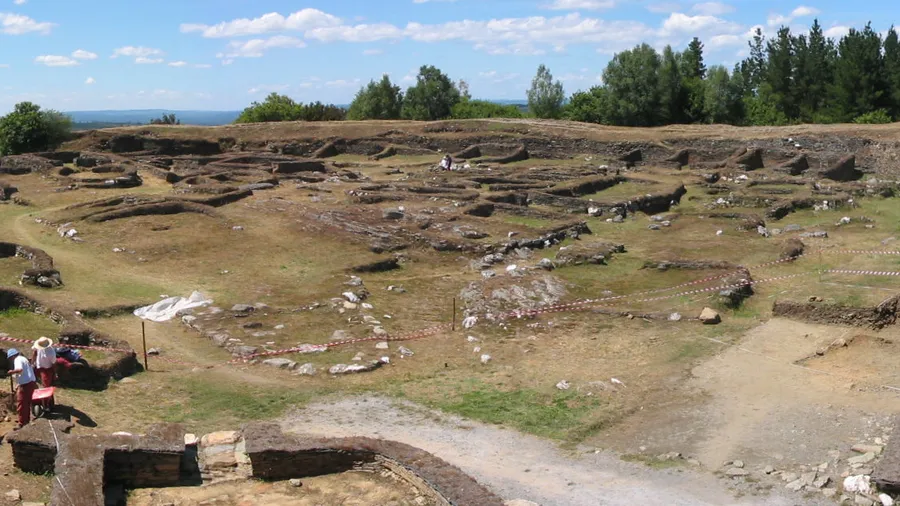
The Castro de Viladonga is a fortified settlement from the Gallaecian-Roman era located in the municipality of Castro de Rei, in Lugo province. This archaeological site offers a window into the past, showing how pre-Roman and Roman communities lived in the northwest of the Iberian Peninsula. Surrounded by a landscape of gentle hills and typical Galician vegetation, the castro stands out for its strategic location and defensive structure.

As you explore the castro, you can observe the stone walls that protected the settlement, as well as the ditches that reinforced its defense. Inside the enclosure, numerous circular stone houses are preserved, originally covered with wooden and straw roofs. These constructions reflect the traditional architecture of the Gallaecian castros, adapted to the climatic and social conditions of the time. Additionally, the adjoining museum exhibits archaeological objects found at the site, such as ceramics, tools, and everyday items, which help better understand the lives of its inhabitants.

The historical context of Castro de Viladonga spans from the 2nd century BC to the 5th century AD, a period during which the castro culture coexisted and transformed under Roman influence. This site shows the transition between indigenous traditions and Romanization, evident in the architecture and recovered materials. The preservation of the castro allows study of the social, economic, and defensive organization of these communities, as well as their adaptation to the Galician natural environment.

To visit Castro de Viladonga, it is recommended to allow at least two hours to tour the site and museum. Admission is free and no prior reservation is needed. Access is possible for people with reduced mobility in some areas, although the terrain may be uneven. It is a suitable space for families and groups interested in archaeology and ancient history. Comfortable footwear and sun or rain protection are advised depending on the season.

Key Information

Visit Duration

2-3 hours

Recommended Seasons

Spring, Autumn

Pricing

Free

Accessibility

Medium

Kid-Friendly Pet-Friendly No Booking Required

Guide

Essential information for visiting Viladonga Hillfort

Location
Practical Information
Pricing
Free
Visit Duration
2-3 hours
Features & Services
  • Accessibility:Medium
  • Kid-Friendly:Yes
  • Pet-Friendly:Yes
  • Booking:No Booking Required
Planning Information

Recommended Seasons

Spring · Autumn

Best Time to Visit

Spring and autumn are the best seasons to visit Castro de Viladonga, offering mild temperatures and fewer tourists, making it easier to explore the site and museum.

Visitor Tips

To make the most of your visit, wear comfortable shoes and weather-appropriate clothing, as the terrain is uneven and can be damp. Check the weather forecast beforehand and consider visiting the museum to enrich your experience. The area offers pleasant natural scenery, ideal for combining with the archaeological visit.

Historical Facts

Castro de Viladonga was inhabited between the 2nd century BC and 5th century AD, reflecting the cultural transition between castro communities and Romanization. Its defensive structure and circular houses are representative of Gallaecian-Roman architecture in northwest Spain.

Frequently Asked Questions

Get answers about Viladonga Hillfort

Yes, the museum is adjacent to the site and can be visited free of charge.
Some areas are accessible, but the uneven terrain may limit full access.
No, visits are free and do not require prior booking.
The castro has rest areas but does not offer services like a café.
Yes, pets are allowed provided they are controlled and waste is cleaned up.