Highlights

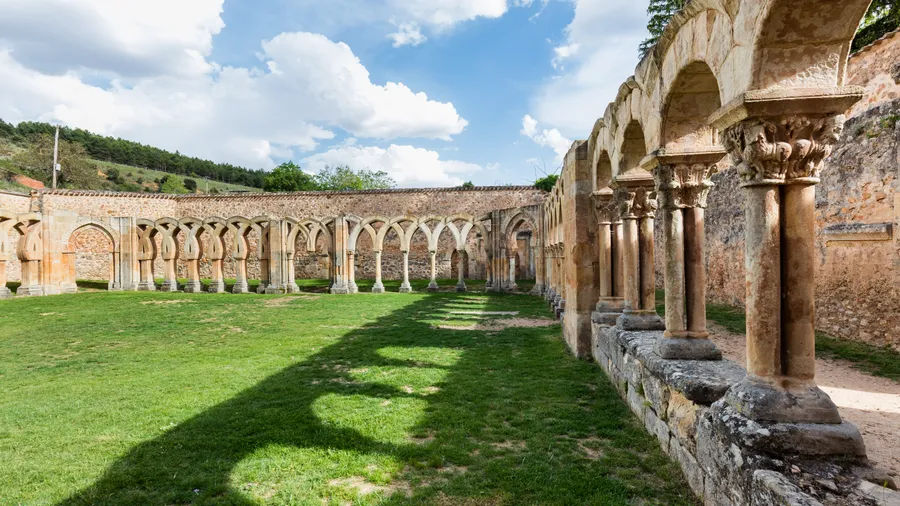
  • • Cloister with Mudéjar and Eastern-influenced arches
  • • Founded by the Order of the Hospitallers in the 12th century
  • • Located beside the Duero River in a natural setting
  • • Outstanding example of Romanesque architecture in Soria
  • • Preserved remains of church and monastic buildings
  • • Free entry and accessible for visitors with reduced mobility

Description

The Monastery of San Juan de Duero is a monumental complex located in Soria, on the banks of the Duero River. Founded in the 12th century by the Order of the Hospitallers, this monastery reflects the historical and religious significance of the region during the Middle Ages. Its riverside setting offers a natural environment that enhances the visit, with the gentle sounds of water and the whisper of wind through the trees.

The most remarkable feature of the monastery is its cloister, which showcases a series of arches with Eastern and Mudéjar influences, a rare example within Spanish Romanesque architecture. These arches, with varied shapes and geometric decorations, create a visual play that invites contemplation. Additionally, visitors can see remains of the church and other monastic buildings, allowing one to imagine the daily life of the Hospitaller monks.

This monastery was a center of care and spirituality during the Middle Ages, linked to the Order of Saint John of Jerusalem. Its architecture reflects the cultural blend of the Iberian Peninsula, where Christian and Muslim elements coexist. The preservation of the cloister stands as a testament to the artistic and cultural exchange that took place in Soria and its surroundings during that period.

To visit the Monastery of San Juan de Duero, it is recommended to allocate between one and two hours to explore the cloister and its surroundings. Admission is free and no prior reservation is required. Access is possible for people with reduced mobility, although some areas may present challenges. It is a suitable place for families and those who enjoy historical heritage and architecture. Comfortable footwear is advised, and visitors can take advantage of the visit to stroll along the nearby Duero riverbank.

Key Information

Visit Duration

1-2 hours

Recommended Seasons

Spring, Autumn

Pricing

Free

Accessibility

Medium

Kid-Friendly Pet-Friendly No Booking Required

Related Destinations

Guide

Essential information for visiting San Juan de Duero Monastery

Location

In this area

Practical Information
Pricing
Free
Visit Duration
1-2 hours
Features & Services
  • Accessibility:Medium
  • Kid-Friendly:Yes
  • Pet-Friendly:No
  • Booking:No Booking Required
Planning Information

Recommended Seasons

Spring · Autumn

Best Time to Visit

Spring and autumn are the best seasons to visit the monastery, when the weather is mild and the natural landscape along the Duero River displays beautiful colors.

Visitor Tips

Wear comfortable shoes and appropriate clothing for outdoor walking. The area along the Duero River is pleasant for a stroll after exploring the cloister. Check visiting hours at the local tourist office to avoid surprises and consider visiting early to avoid crowds. The Soria area also offers cultural and gastronomic options to enrich your experience.

Historical Facts

The Monastery of San Juan de Duero was founded in the 12th century by the Order of the Hospitallers, who combined religious duties with assistance to pilgrims. Its cloister stands out for blending Romanesque and Mudéjar styles, reflecting the cultural coexistence on the Iberian Peninsula during the Middle Ages. This complex is one of the most unique examples of medieval architecture in Soria.

Frequently Asked Questions

Get answers about San Juan de Duero Monastery

Visiting hours may vary by season, so it is recommended to check with the local tourist office before your visit.
Yes, there is nearby parking available, though arriving early during peak season is advisable.
Yes, it is family-friendly, but children should be supervised in open areas.
Generally, pets are not permitted inside the premises, except for guide dogs.
No booking is required; admission is free and open to all.