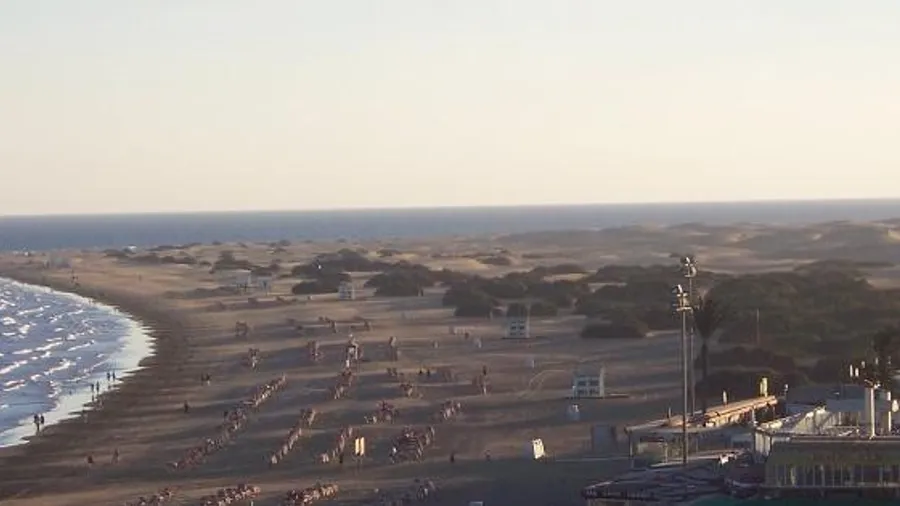
Maspalomas Beach
Highlights
- • Protected natural reserve with shifting dunes and diverse ecosystems
- • Maspalomas Lagoon, a wetland habitat for migratory birds
- • Adapted access and basic visitor services
- • Landscape reminiscent of the Sahara Desert
- • Ideal area for walks and nature observation
- • Environmental protection since the 1980s
Description
Key Information
Visit Duration
2-3 hours
Recommended Seasons
Spring, Autumn, Winter
Pricing
Free
Accessibility
Medium
Related Destinations


Guide
Essential information for visiting Maspalomas Beach
Location
Practical Information
- Pricing
- Free
- Visit Duration
- 2-3 hours
Features & Services
- Accessibility:Medium
- Kid-Friendly:Yes
- Pet-Friendly:Yes
- Booking:No Booking Required
Planning Information
Recommended Seasons
Spring · Autumn · Winter
Best Time to Visit
The best time to visit Maspalomas Beach is during spring and autumn, when temperatures are pleasant and tourist crowds are smaller, making nature observation easier.
Visitor Tips
To make the most of your visit to Maspalomas Beach, wear comfortable footwear for walking on the dunes and apply adequate sun protection. If you plan to birdwatch at the Lagoon, binoculars can be helpful. Respect signage and avoid stepping on protected areas to preserve the ecosystem. Consider visiting early morning or late afternoon to avoid peak heat and enjoy softer light for photography.
Historical Facts
The Maspalomas dunes formed thousands of years ago through wind action and volcanic material erosion. Since the 1980s, the area has been protected as a natural reserve to conserve its biodiversity and prevent urban sprawl along this coastal zone.
Gallery
Photos and images of Maspalomas Beach
Frequently Asked Questions
Get answers about Maspalomas Beach