Highlights

  • • Seating capacity of 25,000 in Roman times
  • • Visible remains of tiers and underground passageways
  • • Located in the historic Roman city of Itálica
  • • Birthplace of Emperors Trajan and Hadrian
  • • Typical Roman elliptical architectural design
  • • Free entry and accessible for visitors

Description

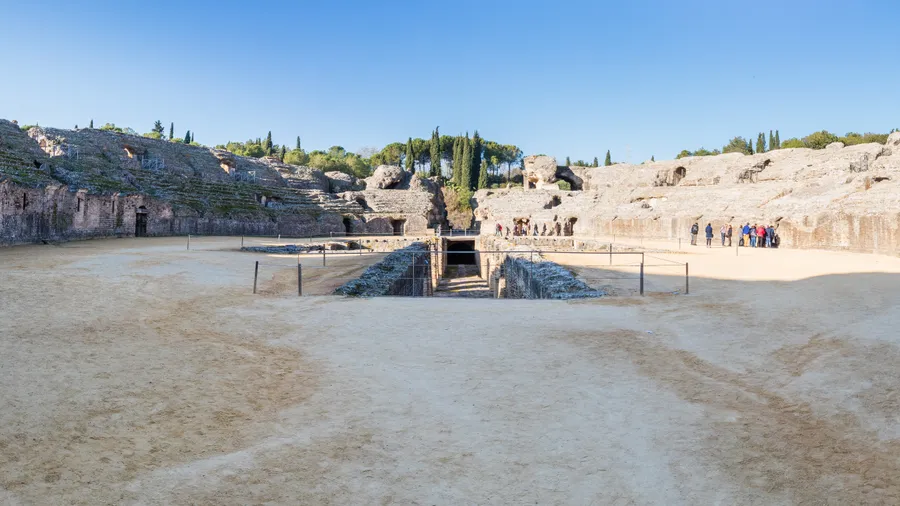
The Itálica Amphitheatre, located in Santiponce, Seville, is one of the most significant Roman structures on the Iberian Peninsula. Built in the 1st century AD, it was part of the ancient Roman city of Itálica, founded in 206 BC as a settlement for war veterans. This amphitheatre could hold up to 25,000 spectators, making it one of the largest in the Roman Empire. Its architecture showcases the advanced engineering of the time, featuring an elliptical design and tiered seating that offered excellent visibility from every angle.

As you explore its ruins, you can see the arena where gladiator combats and other public spectacles took place. Notable remains include the seating tiers, underground passageways, and entrances that allowed for quick access and evacuation of the audience. Walking through a space that hosted thousands nearly two millennia ago is a palpable experience, with the Andalusian sun illuminating stones worn by time.

Itálica is especially important as the birthplace of Emperors Trajan and Hadrian, two key figures in Roman history. The city was a major political and cultural center during the High Empire, and the amphitheatre stands as a testament to its prosperity and significance. Its construction and use reflect Roman customs and social organization in Hispania.

For visiting the amphitheatre, it is recommended to wear comfortable footwear for uneven terrain and to protect yourself from the sun. Entry is free, and the site is accessible for visitors with reduced mobility. No prior reservation is required, though arriving early is advisable to avoid peak times. A visit typically lasts between 1 and 2 hours, allowing enough time to calmly explore and appreciate the historical and architectural details.

Key Information

Visit Duration

1-2 hours

Recommended Seasons

Spring, Autumn

Pricing

Free

Accessibility

High

Kid-Friendly Pet-Friendly No Booking Required

Guide

Essential information for visiting Italica Amphitheatre

Location
Practical Information
Pricing
Free
Visit Duration
1-2 hours
Features & Services
  • Accessibility:High
  • Kid-Friendly:Yes
  • Pet-Friendly:No
  • Booking:No Booking Required
Planning Information

Recommended Seasons

Spring · Autumn

Best Time to Visit

Spring and autumn are the best seasons to visit the amphitheatre, with mild temperatures and fewer crowds.

Visitor Tips

To make the most of your visit, wear comfortable shoes and bring water, especially in summer. The site is outdoors and can be very sunny. Check updated opening hours before going and consider a guided tour to better understand the history. Although entry is free, please respect the rules to help preserve the ruins. Don't forget your camera to capture the historic atmosphere.

Historical Facts

Itálica was founded in 206 BC as a settlement for Roman veterans after the Second Punic War. The amphitheatre, built in the 1st century AD, was one of the largest in the Roman Empire and reflects the city's importance, which was the birthplace of Emperors Trajan and Hadrian, key figures in the empire's expansion and consolidation.

Frequently Asked Questions

Get answers about Italica Amphitheatre

Hours may vary by season; it's recommended to check the official website or visitor center before your visit.
Yes, there is parking available near the archaeological site.
Yes, it is family-friendly, though supervision is advised due to uneven areas.
Yes, guided tours and audio guides are offered for a better understanding of the site.
Generally, pets are not permitted inside the archaeological area to preserve the site.