The essentials of Toledo

  • • Toledo Primada Cathedral, a premier Spanish Gothic cathedral
  • • Old Jewish quarter with Santa María la Blanca and Tránsito synagogues
  • • El Greco's masterpiece The Burial of the Count of Orgaz
  • • Panoramic views from Mirador del Valle at sunset
  • • Themed nocturnal and theatrical tours through historic alleys

Description

Toledo is built upon a granite outcrop surrounded on three sides by the Tagus River, a geography that defines its character: a compact city of narrow, steep streets with little room for expansion within its ancient walls. UNESCO declared its historic centre a World Heritage Site in 1986, and a single walk is enough to understand why it is called the city of three cultures: Christians, Muslims, and Jews coexisted here for centuries, leaving temples of all three faiths just minutes apart.

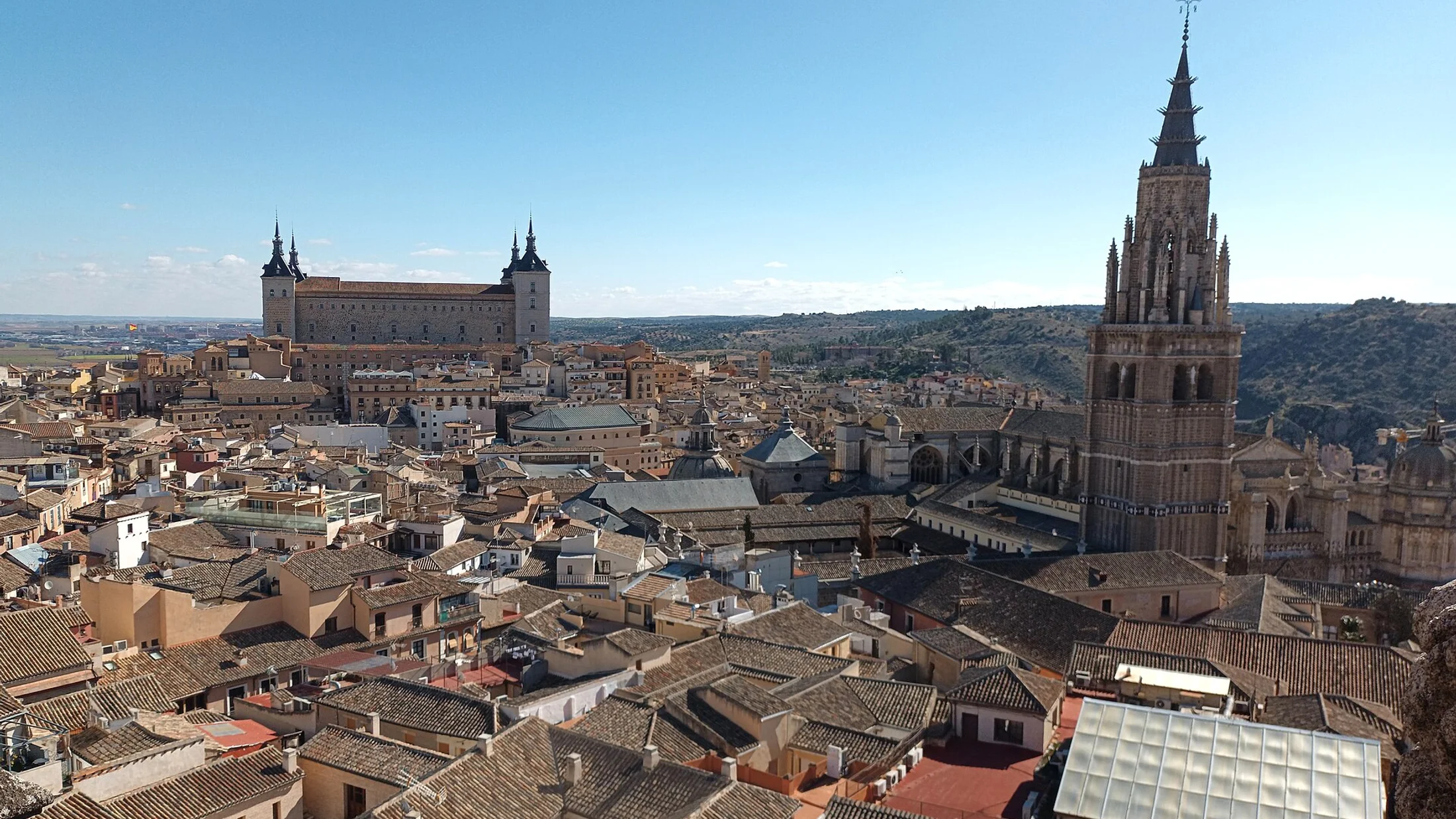
A classic visit is best done on foot and involves plenty of climbing. You can enter through the Puerta de Bisagra or via the Recaredo escalators, making your way up to Plaza de Zocodover, the heart of daily life. From there, descend toward the Primada Cathedral, one of Spain's most significant Gothic cathedrals. To the west lies the old Jewish quarter, home to the Santa María la Blanca and Tránsito synagogues (the Sephardic Museum), and very close by, the San Juan de los Reyes monastery, built by the Catholic Monarchs. In the Church of Santo Tomé, you will find The Burial of the Count of Orgaz, the most famous work by El Greco, the Cretan painter who lived and worked in Toledo until his death. The small mosque of Cristo de la Luz, dating from the late 10th century, serves as a reminder of Islamic Toledo, while the Alcázar dominates the skyline from the highest point.

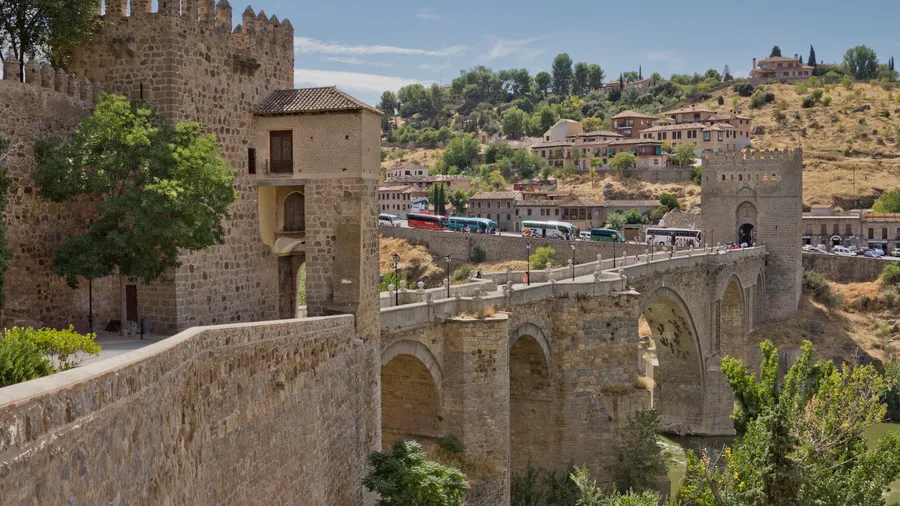
Toledo is also enjoyed from the outside. The ring road follows the southern bank of the Tagus through the cigarrales (country estates), and from the Mirador del Valle, the entire city is visible silhouetted against the river, especially at sunset. The Alcántara and San Martín bridges, located at each end of the river meander, serve as the historical entrances and perfect starting points for paths along the river at the foot of the walls.

Beyond the monuments, the city offers themed tours: theatrical performances, nocturnal legend walks through the alleys, or itineraries following the footsteps of El Greco or the Jewish heritage. Gastronomically, Toledo is defined by the scent of marzipan, signature dishes like stewed partridge and carcamusas, and the enduring traditions of damascene metalwork and swordmaking. Located just 70 kilometres from Madrid, it is an ideal day trip, though staying within the walls allows you to discover a different city once the tour groups leave and the streetlamps are lit.
Practical information for Toledo

Everything you need to know for your visit to Toledo

How to get there
From Madrid, take the A-42 highway (approx. 70 km, under an hour by car). High-speed trains connect Madrid-Puerta de Atocha with Toledo in just over thirty minutes. Frequent buses also run from Plaza Elíptica. The nearest airport is Madrid-Barajas. From the train or bus stations, you can reach the historic centre by walking, urban bus, or the Recaredo escalators.
Area Information
Toledo's gastronomy focuses on game and hearty stews: stewed partridge, carcamusas, and migas, paired with Manchego cheese and local wines. Marzipan is the city's iconic sweet. The crafts of damascene metalwork and swordmaking remain visible in local workshops. Nearby areas include the Montes de Toledo, the Barrancas de Burujón, and the regions of La Sagra and La Mancha.
Geography
Located in the centre of the peninsula, Toledo is the capital of Castilla-La Mancha, about 70 km south of Madrid. The historic centre sits on a rocky promontory surrounded by a deep meander of the Tagus River, known as the Torno del Tajo, which protects it to the east, south, and west. Beyond the river lie the cigarrales, leisure estates on the hillsides, and to the north, the open plains where the modern city has expanded.
Flora & Fauna
The surrounding landscape features Mediterranean vegetation, including holm oaks, shrubs, and various herbs typical of the central Spanish plateau.

Things to do in Toledo

Find the best plans and things to do in Toledo

What to see in Toledo

Discover the must-see sights in Toledo

Accommodations in Toledo

Best accommodation options in Toledo

Frequently asked questions about Toledo

Get answers about Toledo

One day is enough for the essentials: the cathedral, the Jewish quarter, Santo Tomé, Zocodover, and Mirador del Valle. Two days allow for a more relaxed pace, more monuments, and the chance to enjoy the city at night when the day-trip crowds have left.
You can take a high-speed train from Atocha station in just over thirty minutes, or a bus from Plaza Elíptica in about an hour. Driving via the A-42 takes approximately 70 km. From the station, you can reach the historic centre by bus, walking, or using the Recaredo escalators.
Vehicle access to the historic centre is highly restricted and parking is very limited. It is recommended to park in public lots near the city walls and explore on foot, as the distances are short despite the many steep hills.
The best view is from Mirador del Valle on the southern bank of the Tagus. It offers a full view of the city on the river meander, with the cathedral and Alcázar dominating the skyline. The stone turns golden hues at sunset.
You must try the local marzipan, a famous sweet. For main courses, look for stewed partridge or carcamusas, a typical meat stew found in local bars. Manchego cheese and regional wines also complete the culinary experience.