The essentials of Terra Chá

  • • Cospeito Lagoon, ornithological gem and Galicia's ZEPA birdwatching reserve
  • • Source of the Miño river, Galicia's great river
  • • Torre de los Andrade in Vilalba, 14th-century medieval landmark
  • • Horse riding and mountain biking through inland meadows and rural tracks
  • • Authentic gastronomy: Galician blonde beef and Lugo countryside produce

Description

Terra Chá is the great flatland of inland Lugo, a comarca that stands in contrast to Galicia's usual mountainous image. Its name says it all: in Galician, chá means flat, level, and that is exactly what awaits when you cross its boundaries. Endless meadows of deep green, blonde cattle grazing unhurried, and an open horizon that few Galician comarcas can offer.

Here the Miño river is born, Galicia's great river. Near Meira, close to the heart of the comarca, water springs from the earth modestly before becoming one of the peninsula's most important rivers. Witnessing its source is one of those moments that surprise you with their simplicity: a humble stream that gives no hint of its destiny.

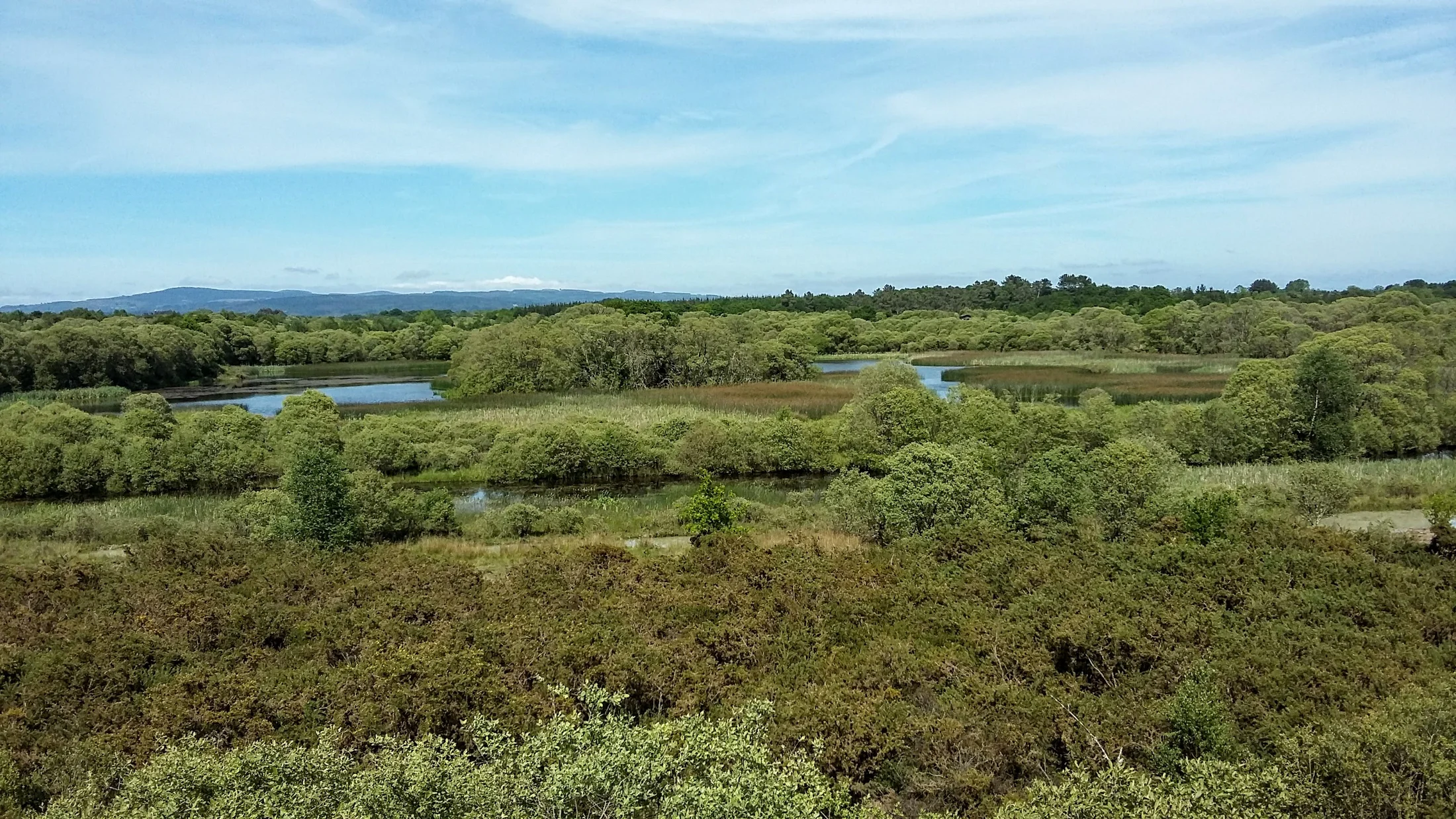
Terra Chá's natural jewel is undoubtedly the Lagoa de Cospeito, one of the few freshwater lakes in Galicia and a ZEPA (Special Protection Area for Birds). Birdwatchers come from across the peninsula to spot ducks, herons, and the white storks that have established one of their most important colonies in the northwest here. In winter, thousands of migratory birds stop over on its waters.

Life in Terra Chá revolves around cattle ranching. The Galician blonde cow, one of Spain's most prized native breeds, has grazed these meadows since time immemorial. Quality milk and meat production defines the identity of its people. The weekly markets in Vilalba, the comarca's capital, are authentic gatherings of rural Galician culture where farm produce takes center stage.

Vilalba preserves one of Galicia's finest medieval towers: the Torre de los Andrade, an imposing cylindrical 14th-century construction that was part of the area's seigniorial defensive system. Castro de Rei, Cospeito, Begonte, and A Pastoriza complete the map of municipalities that form this peaceful and authentic comarca.

For active travelers, Terra Chá offers horse riding routes along rural tracks, trails for hiking or mountain biking, and the chance to experience an uncrowded Galicia. Farm stays and contact with the rural traditions of inland Lugo are far more accessible here than in the coastal zones.
Practical information for Terra Chá

Everything you need to know for your visit to Terra Chá

How to get there
Vilalba, the comarca's capital, is about 35 km northeast of Lugo city. The N-VI passes to the south and the N-634 connects with the Mariña. From Santiago de Compostela, about 90 km via the A-54 and A-6. Bus services from Lugo. A private car is ideal.
Area Information
Terra Chá belongs to the province of Lugo. Its main municipalities are Vilalba (capital), Castro de Rei, Cospeito, A Pastoriza, Begonte, Abadín, Xermade, and part of Guitiriz. Rural Galician culture lives here authentically: the Galician language is predominant and gastronomy revolves around local produce.
Geography
Interior comarca in the northeast of Lugo province, at around 700 meters average altitude. The relief is surprisingly gentle for Galicia: rolling plains and broad meadows that contrast with the surrounding mountains. It borders Terra de Viveiro and the Mariña lucense to the north, the Sierra de Meira to the south, As Nogais and Fonsagrada to the east, and the Lugo comarca to the west. The Miño river is born in this comarca.
Flora & Fauna
The Cospeito Lagoon is the comarca's great natural sanctuary. A ZEPA (Special Protection Area for Birds), it hosts white storks, herons, ducks, and thousands of migratory birds on passage. Atlantic meadows dominate the landscape and sustain the livestock model. Riverside forests along the infant Miño shelter alders, willows, and ash trees.

Accommodations in Terra Chá

Best accommodation options in Terra Chá

Frequently asked questions about Terra Chá

Get answers about Terra Chá

It is one of the few natural freshwater lagoons in Galicia and a ZEPA (Special Protection Area for Birds). It has an interpretation center and is one of the best birdwatching spots in the northwest Iberian Peninsula, especially for white storks and migratory birds.
The Miño rises near Meira, at the northern edge of the comarca. The exact source is signposted and accessible via a short path.
Hiking, mountain biking on natural trails, horse riding with rural accommodation, birdwatching at the Cospeito Lagoon, and adventure activities like paintball and archery around A Pastoriza.
Yes. Vilalba has the Torre de los Andrade (14th century), an ethnographic museum, and good restaurants. Its Tuesday market is a window into rural Galician life.
For the stork colony, spring (April–July). For more migratory birds at the Lagoon, winter (November–February). Year-round there are resident waterbirds.