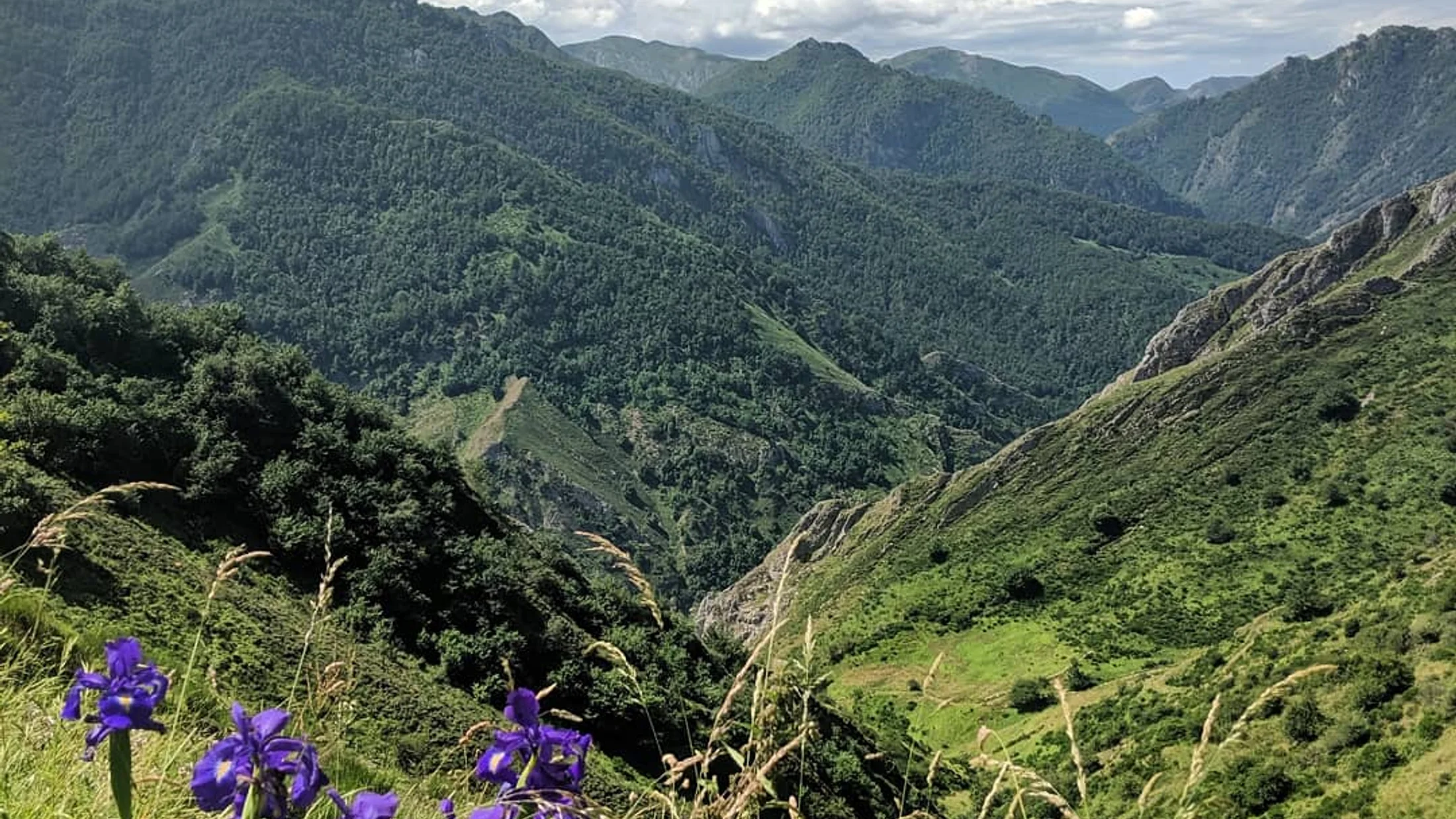
Somiedo Natural Park occupies the south-central area of Asturias, spanning the headwaters of the Sil and Pigüeña rivers in Cantabrian high mountain terrain that rarely exceeds 2,000 metres but concentrates an unusual density of natural and cultural values for northern Spain. The watershed with Castilla y León runs along the southern edge of the park, and the mountain passes crossing it — Puerto de Somiedo (1,486 m), Puerto de la Ventana (1,587 m) — served for centuries as livestock routes connecting Asturian summer pastures with Castilian winter pastures. This transhumant function left behind a landscape of teitos — traditional thatched huts with wooden frames and broom-grass roofs — that are the most recognisable element of local vernacular architecture.
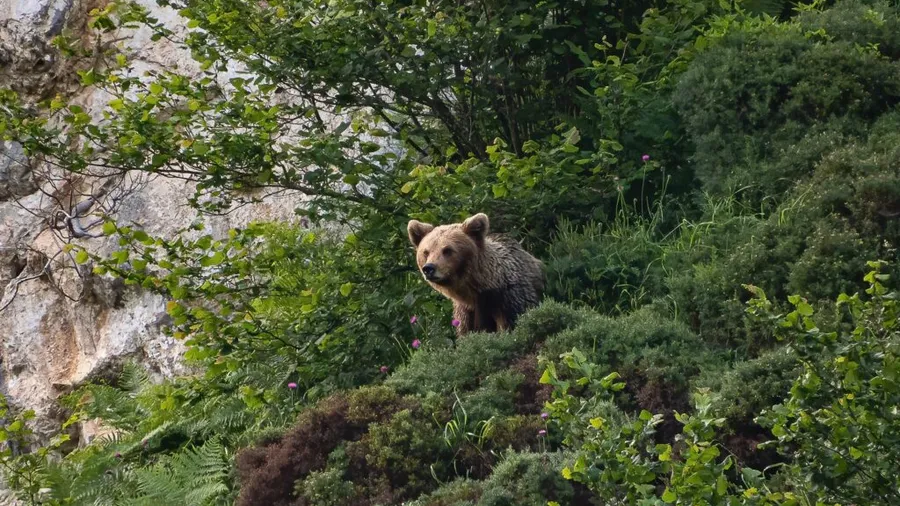
The Cantabrian brown bear has one of its most secure strongholds in Somiedo. The western bear population, shared between Asturias, León and Galicia, recovered from its historical low in the 1980s thanks to protection measures and a reduction in hunting pressure. Sightings are possible but uncommon for casual visitors: bears prefer oak and beech woodland at mid-to-high altitudes and areas of blueberry and bramble scrub, and avoid zones of high human activity. The best months for observation are May and June, when animals descend to lower meadows in search of food after winter.
The Lagos de Saliencia are the most visited lake group in the park: five glacial lakes sitting between 1,500 and 1,700 metres in a steep-walled cirque. La Cueva, the largest, is roughly 400 metres long and over 20 metres deep. The trail connecting all five lakes from the Saliencia car park covers about 9 km round trip with roughly 400 metres of accumulated elevation gain, crossing alpine grasslands and wet heathlands where mosses and lichens carpet the limestone rock. The view from the col above the lakes looking north, with the Asturian valleys in the background, is one of the park's defining images.
The vaqueiro de alzada culture — transhumant livestock communities that move between high-altitude summer pastures (brañas) and coastal winter villages — is directly tied to this landscape. Although active transhumance has declined sharply in recent decades, some families maintain the practice, and the park preserves the natural context in which this way of life developed over centuries. The brañas have individual names in each valley and concentrate the teito architecture that ethnographers consider unique in a European context. The park's forests range from Atlantic heathland at the summits to mixed oak and beech woodland lower down.