The essentials of Senda del Oso

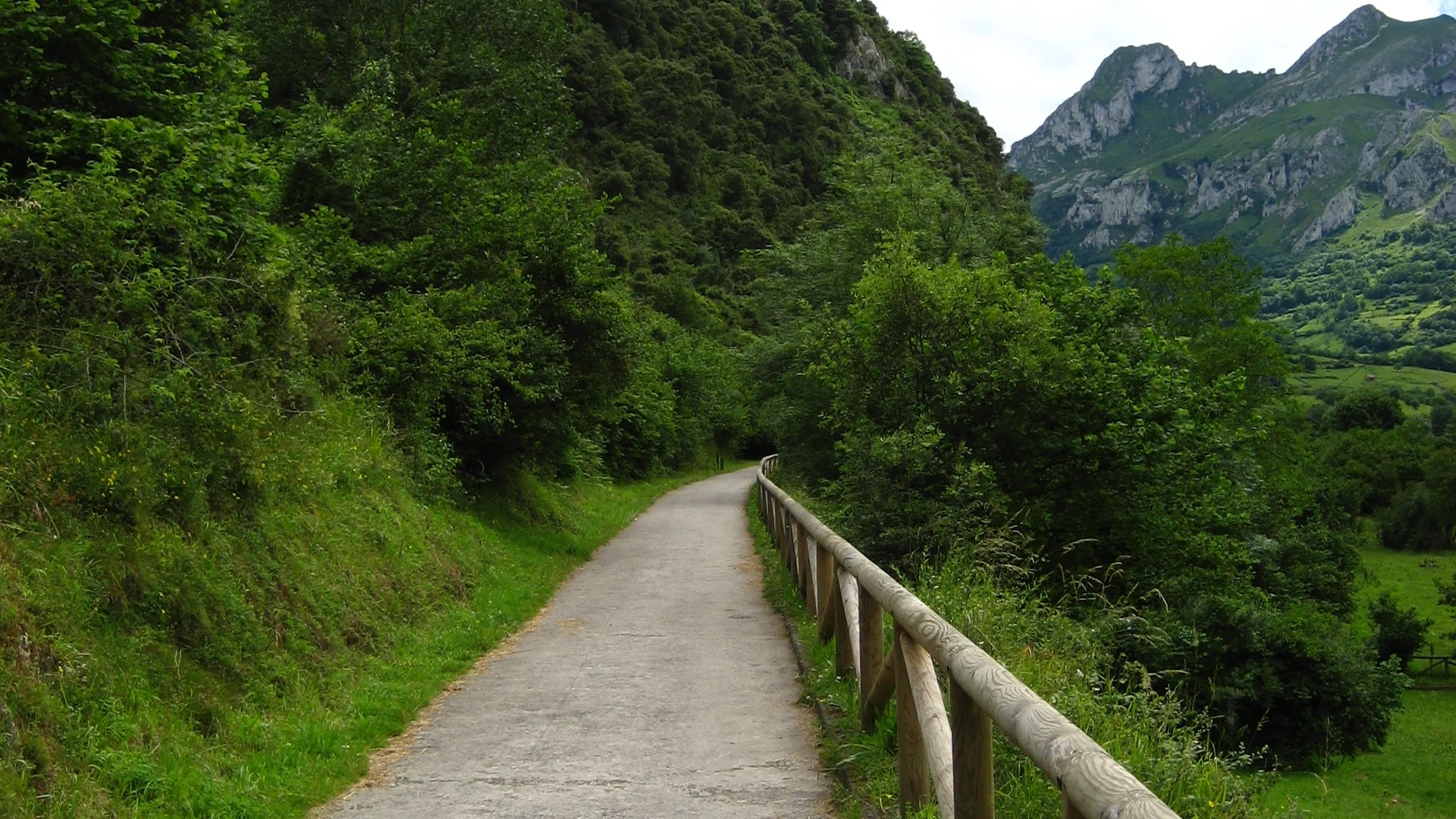
  • • 36 km of paved greenway with a maximum 3% gradient, suitable for families
  • • Proaza enclosure with bears Paca and Molina, visible directly from the trail
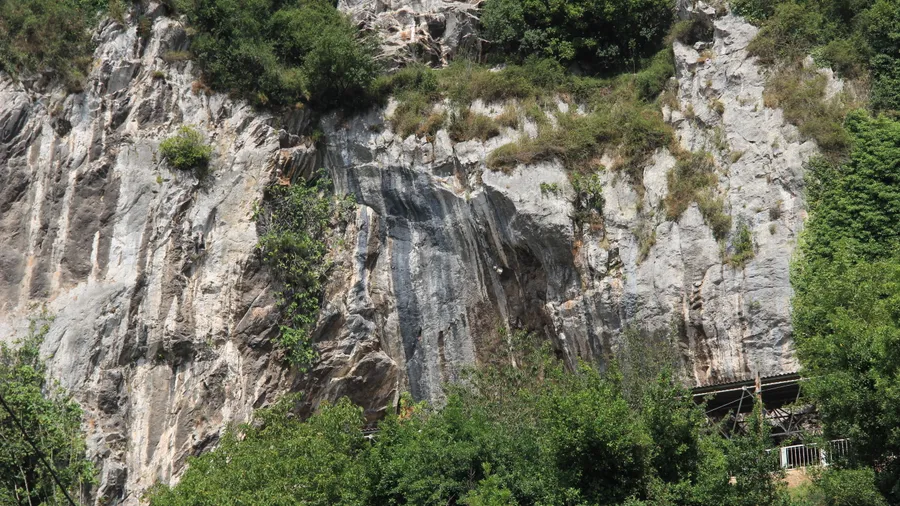
  • • Limestone gorges with walls just 10 m apart and original railway tunnels
  • • Pre-Romanesque church of Santo Adriano de Tuñón (9th century), UNESCO World Heritage
  • • Valdemurio reservoir with turquoise waters in a mountain cirque in the Quirós valley

Description

The Senda del Oso (Bear Trail) runs 36 km through the Trubia and Teverga valleys in south-central Asturias, following the route of a mining railway abandoned in the 1960s. The surface, paved and with gentle gradients never exceeding 3%, passes between Tuñón and the Puerto de San Lorenzo, crossing limestone gorges, iron bridges over the river Trubia and tunnels cut through rock. Converted in the late 1990s, the trail has become the most popular cycling and walking route in Asturias, with over 300,000 users per year. In the narrowest sections of the gorge, limestone walls close in to barely 10 metres apart, and the sound of water striking stones accompanies walkers for kilometres.

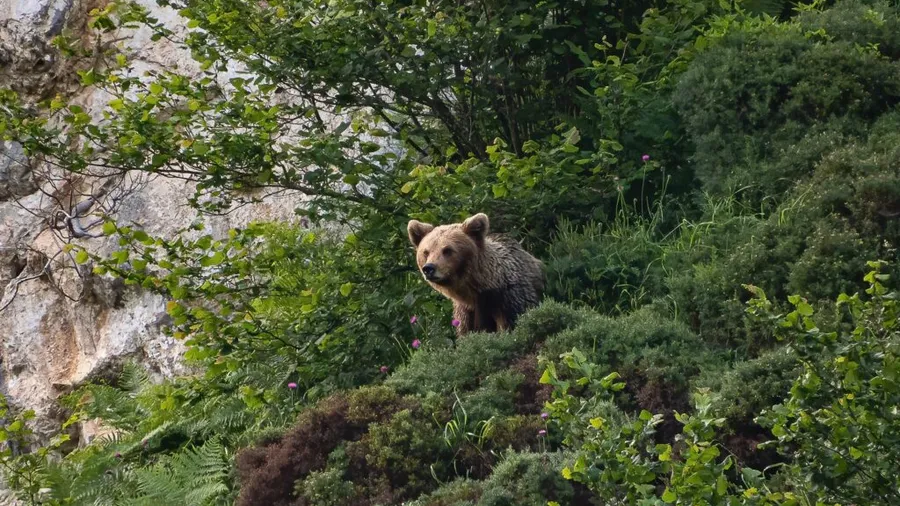
The trail takes its name from the historical presence of the Cantabrian brown bear (Ursus arctos) in these valleys. While spotting a wild bear requires heading into the mountains of Somiedo or Proaza with specialist guides and considerable patience, the trail offers close contact with the species at the Proaza enclosure, home to Paca and Molina, two bears rescued as cubs that could not be returned to the wild. The enclosure, managed by the Asturias Bear Foundation (FOA), is visible from the trail and has information panels on the biology and conservation of the Cantabrian bear. The estimated wild population across the Cantabrian Mountains exceeds 370 individuals (2023 census), and the Trubia and Teverga valleys form part of its western range.

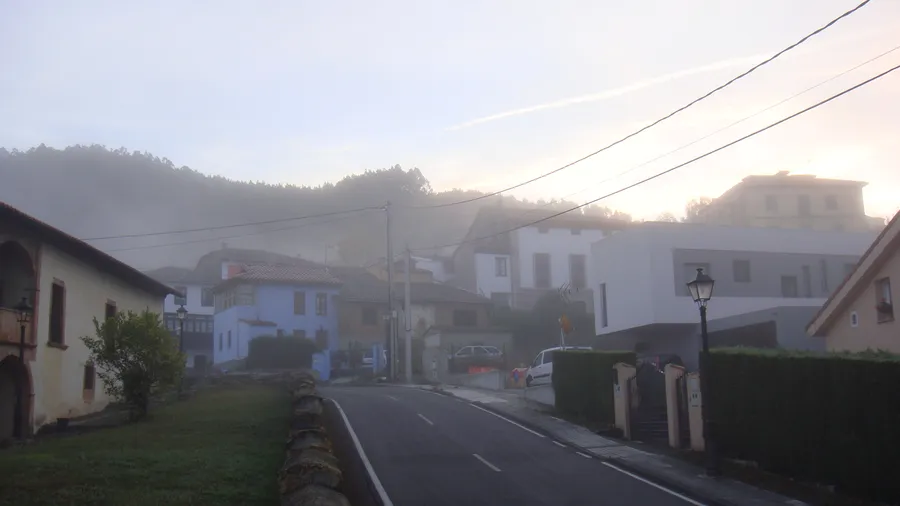
The valley forks at Caranga de Abajo: the southern branch continues towards Teverga through the Foz de la Canal gorge, while the western branch climbs towards Quirós and the Valdemurio reservoir, whose turquoise waters fill the floor of a mountain cirque. Both branches maintain a cyclable surface and together total 36 km. Along the route, the villages of Tuñón, Villanueva, Proaza, Caranga and Bárzana preserve Asturian hórreos (raised stone-pillar granaries), stone manor houses with wooden galleries, and the pre-Romanesque church of Santo Adriano de Tuñón (9th century), a UNESCO World Heritage Site as part of Asturian pre-Romanesque art.

The trail suits all ages and fitness levels. The most popular section — Tuñón to Proaza, 7 km — takes roughly ninety minutes on foot or forty minutes by bicycle. Several bike-hire points (including electric bikes and child trailers) operate in Tuñón, Proaza and Teverga. The route is usable year-round, though shaded stretches may be icy in winter mornings. In autumn, beech forests on the upper valley slopes turn red and orange, contrasting with the evergreen chestnuts on the valley floor. The scent of damp leaf litter and ripe chestnuts fills the trail from October to November.

Beyond cycling and walking, the area offers complementary activities. River canoeing on the Trubia (class II–III, 8 km, April–June when water levels allow) departs near Proaza. Mountain routes from valley villages give access to summits of 1,500–2,000 metres in the neighbouring Las Ubiñas-La Mesa Natural Park. Show caving runs at Cueva de Huerta (Teverga), a 14 km cave system with stalactite formations and underground lakes. And the valley's gastronomy centres on pote asturiano, fabada, Casín cheese (PDO, hand-shaped into discs with distinctive markings) and natural cider poured in the villages' traditional chigres.
Practical information

Everything you need to know for your visit to Senda del Oso

How to get there
From Oviedo (25 km), take the AS-228 to Tuñón, the usual starting point. From Gijón (50 km) or Avilés (45 km), the A-66 to Oviedo then the AS-228. Free parking at Tuñón, Proaza and Teverga. No direct train; ALSA buses connect Oviedo with Proaza (45 min, several daily services).
Area Information
Bike hire points (standard, electric and child trailers) at Tuñón, Proaza and Teverga. Picnic areas with tables and fountains along the trail. Rural accommodation in all valley villages. Casa del Oso (visitor centre) in Proaza. Cueva de Huerta (show caving) in Teverga.
Geography
River valleys of the Trubia and Teverga set into Carboniferous limestone. Elevations from 200 m (Tuñón) to 600 m (Puerto de San Lorenzo). Narrow gorges, iron bridges and tunnels along the former mining railway. Las Ubiñas-La Mesa Natural Park borders the trail to the south.
Flora & Fauna
Cantabrian brown bear (370+ individuals across the range). Bears Paca and Molina in the Proaza enclosure. Cantabrian chamois on the summits. Beech, chestnut and oak forests on the slopes. Brown trout and Atlantic salmon in the river Trubia. Cantabrian capercaillie (endangered) in the upper areas.

Things to do

Find the best plans and things to do in Senda del Oso

20

Accommodations

Best accommodation options in Senda del Oso

Loading accommodation options...

Frequently Asked Questions

Get answers about Senda del Oso

There are two ways. At the Proaza enclosure, right beside the trail, live Paca and Molina, two rescued bears that could not be returned to the wild. They are visible from the fence, which sits at trail level. Seeing a wild bear is far harder: it requires heading into the mountains of Somiedo or Proaza with specialist guides, early starts and luck. The wild population exceeds 370 individuals across the Cantabrian Mountains, but sightings are never guaranteed.
The trail totals 36 km across both branches (Teverga and Quirós). The most popular section, Tuñón to Proaza (7 km), takes about 90 minutes on foot or 40 minutes by bike. The full route to Teverga (22 km one way) requires roughly 5–6 hours on foot or 2.5 hours by bike. Most visitors ride one section and return, or leave a car at each end. Gradients never exceed 3%, so the physical effort is low.
Hire points operate at Tuñón (the most used, next to the car park at the start), Proaza and Teverga. A standard mountain bike costs 10 to 15 euros for half a day. Electric bikes run from 20 to 30 euros. Child trailers are available from the main operators for an extra 8–12 euros. In summer and on public holidays it is advisable to book in advance by phone, as stock often runs out early.
Yes, most of the trail is suitable. The surface is paved and gradients do not exceed 3%. Tunnels have artificial lighting and sufficient width. However, some stretches between Caranga and Teverga have a rougher surface with loose gravel. The Tuñón–Proaza section (7 km) is the smoothest and best suited to pushchairs and wheelchairs. Picnic areas along the route have accessible tables.
Cueva de Huerta in Teverga offers guided tours of a 14 km cave system with stalactites and underground lakes (1.5 hours, advance booking). River canoeing on the Trubia (class II–III, April–June) departs near Proaza. Mountain routes from valley villages lead into Las Ubiñas-La Mesa Natural Park, with summits up to 2,000 metres. The pre-Romanesque church of Santo Adriano de Tuñón (9th century) is open on a limited schedule. And the valley's traditional chigres serve fabada, PDO Casín cheese and natural cider.