The essentials of Parque Natural de Sa Dragonera

  • • Balearic shearwater, critically endangered endemic, with active breeding colony in the cliffs
  • • Lilford's wall lizard, Podarcis lilfordi, visible on the trails with no terrestrial predators
  • • Restricted access: boat only from Sant Elm, with a daily visitor cap
  • • 6 km longitudinal trail with views of the Serra de Tramuntana and the Mallorcan sea
  • • Audouin's gull with one of the world's largest colonies in the Balearic Islands

Description

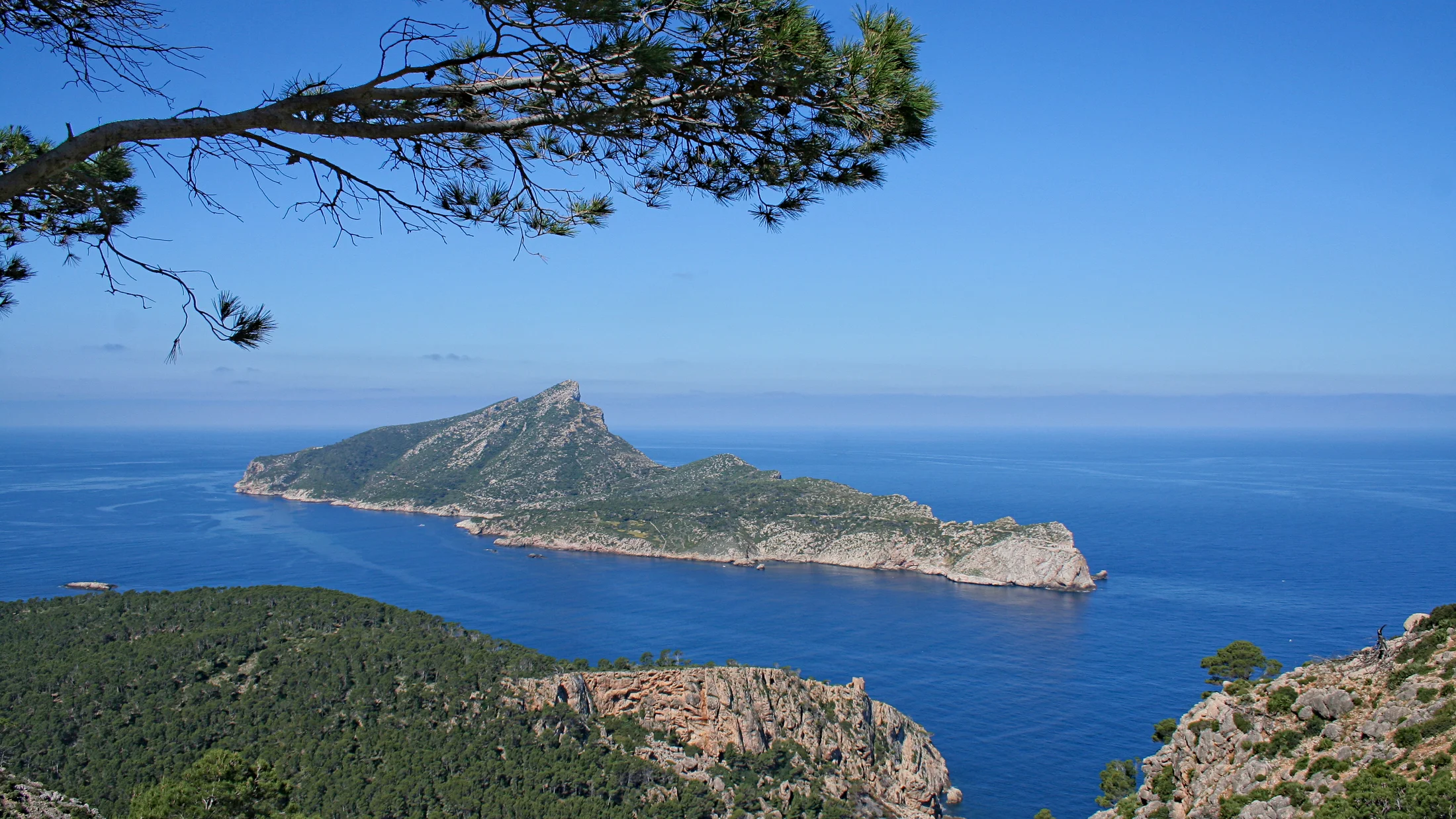
Sa Dragonera is an uninhabited islet of 288 hectares off the western coast of Mallorca, less than one kilometre from Cabo de Sa Dragonera in the municipality of Andratx. Its name comes from the large colony of Lilford's wall lizard, Podarcis lilfordi, which inhabits the island and which historical sailors mistook for small dragons. The island is elongated, running northeast to southwest over roughly four kilometres with a maximum width of just over 700 metres, and its profile from the sea is that of a limestone ridge reaching 353 metres at Puig des Fabioler.

Access to the island is restricted to visitors arriving on the scheduled service boats from Sant Elm, the only authorised embarkation point. Daily visitor numbers are capped by park regulations to minimise impact on wildlife, particularly on the seabird colonies nesting in the cliffs. The silence over the island — broken only by wind and gulls — is one of the most immediate sensory experiences for anyone arriving from the Mallorcan mainland.

The most characteristic fauna includes three seabird colonies of regional importance. The Balearic shearwater, Puffinus mauretanicus, a critically endangered endemic, uses the northwest cliffs for nesting between February and August, during which access to that part of the island is prohibited. Audouin's gull, Larus audouinii, a Mediterranean species with one of its largest world colonies in the Balearic Islands, also nests on Sa Dragonera. The European shag, Gulosus aristotelis, is visible year-round on rocks and in the water. The Lilford's wall lizard colony, in the absence of introduced terrestrial predators, is dense and easily observed along the trails.

Vegetation is typical of calcareous Mediterranean islands under salt and wind influence. Coastal maquis of wild olive, Olea europaea var. sylvestris, lentisk, Pistacia lentiscus, and dwarf fan palm, Chamaerops humilis, covers the exposed slopes. More sheltered areas with deeper soil carry dense scrub of strawberry tree, Arbutus unedo, and other shrubs. Cliff ledges and crevices host halophilous and rock-dwelling plant communities including Crithmum maritimum and Limonium spp. The removal of rabbits and feral goats when the island became a natural park has allowed vegetation to recover steadily since the 1990s. The island also retains two historic lighthouses: Far de Llebeig at the southern tip and Far de Tramuntana at the north, the latter housing a small exhibition on the island's maritime history. A single longitudinal trail of approximately six kilometres allows visitors to walk the island end to end, with open views across the Mallorcan sea and the Serra de Tramuntana on the horizon.
Practical information

Everything you need to know for your visit to Parque Natural de Sa Dragonera

How to get there
From Andratx or Sant Elm by road (20 km from Palma via MA-1 and MA-10). Scheduled service boat from Sant Elm pier (approx. 20-minute crossing). No private boat access. Check seasonal timetables; departures are limited.
Area Information
288 ha islet in the municipality of Andratx (Mallorca, Balearic Islands). Managed by the Consell de Mallorca. Includes the Far de Llebeig (19th century) and the Far de Tramuntana with a permanent exhibition.
Geography
Elongated limestone islet 4 km long and up to 700 m wide. Central ridge peaking at Puig des Fabioler (353 m). Vertical cliffs to the northwest and shingle beaches to the southeast. Separated from Mallorca by the Sa Dragonera channel.
Flora & Fauna
Maquis of wild olive, lentisk and dwarf fan palm on exposed slopes. Halophilous rock flora on cliffs. Balearic shearwater, Audouin's gull, European shag. Dense Lilford's wall lizard population. No terrestrial predators since 1992.

Things to do

Find the best plans and things to do in Parque Natural de Sa Dragonera

20

Accommodations

Best accommodation options in Parque Natural de Sa Dragonera

Loading accommodation options...

Frequently Asked Questions

Get answers about Parque Natural de Sa Dragonera

The only access is by scheduled service boat from Sant Elm pier in Andratx, a crossing of about 20 minutes. In high season (July and August) the daily cap fills quickly; booking days or weeks ahead with the service operators avoids disappointment. Outside peak season, departures are less frequent, so confirm timetables before travelling.
The Balearic shearwater nests on the northwest cliffs of Sa Dragonera between February and August. During this period, access to that section of the island is prohibited to protect the colonies. In summer, shearwaters are visible on the sea from boats circling the island. In autumn, large groups of shearwaters on migration passage can be spotted from the island's headlands.
No. Lilford's wall lizard, Podarcis lilfordi, is a harmless species that, in the absence of natural terrestrial predators on the island, has largely lost its flight response and approaches visitors with little caution. They are commonly found on paths and in picnic areas. They should not be fed or handled, as they are a protected species and human food disrupts their natural diet.
Yes. The waters around Sa Dragonera are part of a marine reserve zone with notable underwater biodiversity. Snorkelling is accessible from the small coves on the south of the island. Scuba diving requires specific park authorisation. Sea kayak excursions around the islet allow access to coves unreachable on foot and offer views of the cliff profile from water level.