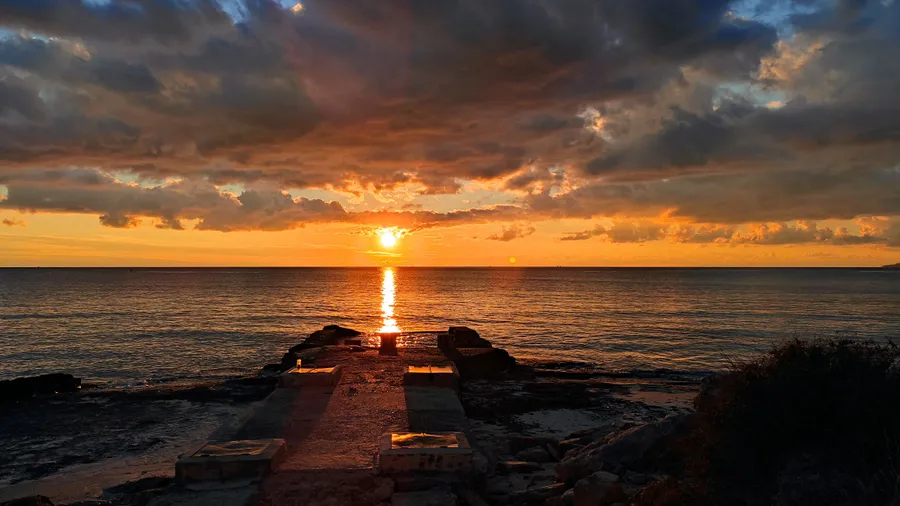
The essentials of Es Trenc-Salobrar de Campos Natural Park

  • • Es Trenc beach: nearly 4 km of undeveloped fine sand in southern Mallorca
  • • Salobrar de Campos: 800 ha of saltpans with flamingos and waders year-round
  • • Dune system with sea holly, marram grass and sea lavender
  • • Well-preserved posidonia meadows ideal for snorkelling
  • • 12 km circular route from Sa Ràpita along saltpans and coast

Description

Parque Natural de Es Trenc-Salobrar de Campos covers the southern tip of Mallorca and brings together two contrasting ecosystems separated by only a few metres: the dunes and pine trees framing Es Trenc beach, and the Salobrar saltpans, one of the largest coastal wetlands in the Balearic Islands. At dawn, the saltpan water turns coral pink from halophytic algae and wading flamingo flocks; by midday the fine white sand of Es Trenc gleams with an intensity that makes you squint. This duality between the briny silence of the interior and the sound of waves along the shore defines the park's character.

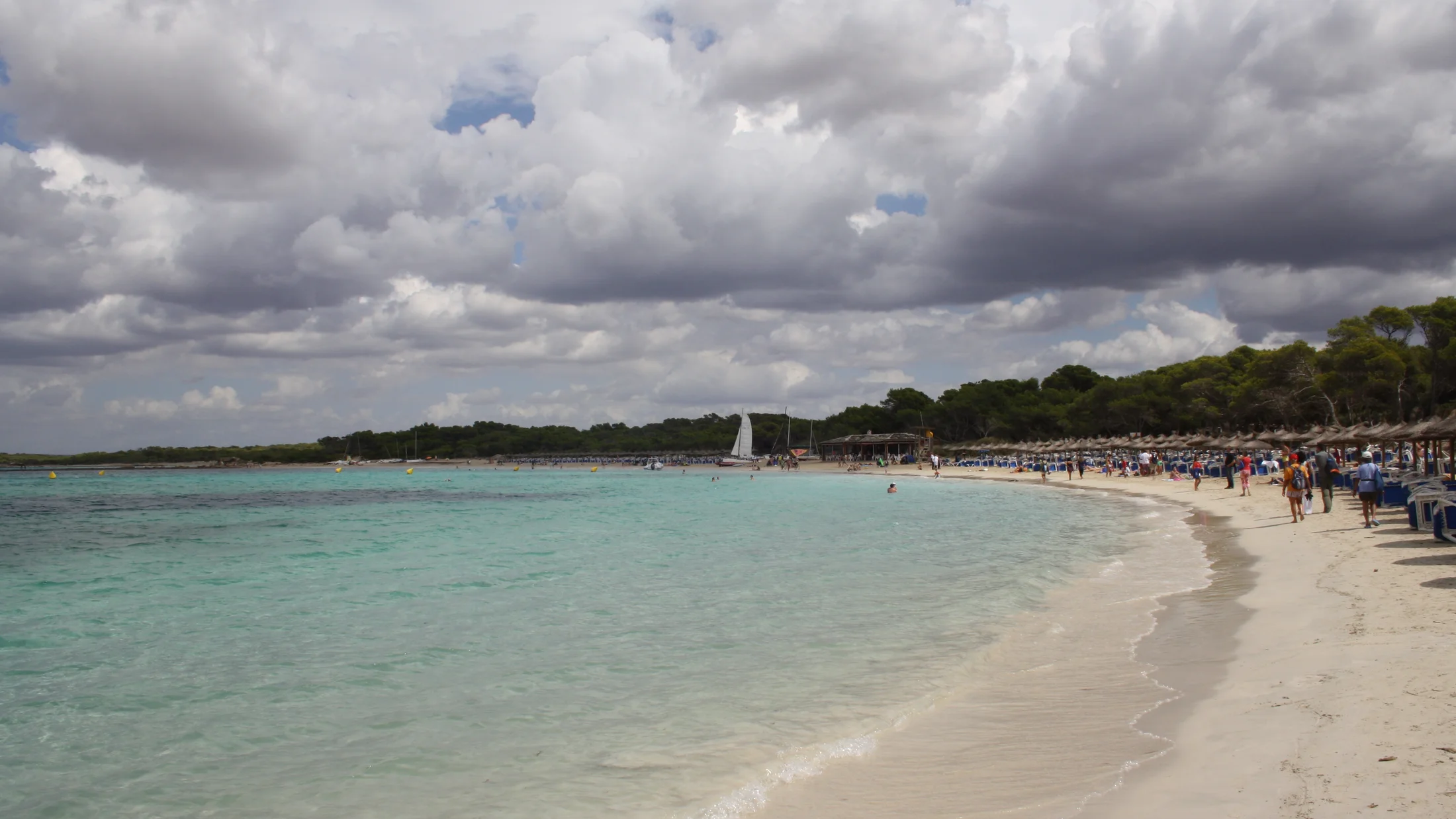
Es Trenc beach stretches nearly four kilometres with no beach bars or built promenades, making it one of the few undeveloped fine-sand beaches left on Mallorca. The dune system sheltering it hosts drought- and salt-adapted plant species: sea holly (Eryngium maritimum), marram grass (Ammophila arenaria), and sea lavender (Limonium virgatum), whose lilac flowers dot the sand in summer. Behind the dunes, a belt of Aleppo pines (Pinus halepensis) acts as a natural windbreak. Walking barefoot from the Es Trenc car park to the beach's eastern end takes around forty minutes and reveals the gradual transition from the near-bare primary dune to the stabilised, vegetated secondary dune.

The Salobrar de Campos is a complex of active and inactive saltpans covering around 800 hectares, partly managed for salt production. That industrial activity, seemingly at odds with conservation, is precisely what maintains the open habitat that wading birds require. Shallow lagoons attract dunlins, ringed plovers, redshanks and, during autumn passage, black-winged stilts. The greater flamingo (Phoenicopterus roseus) is present year-round in variable numbers, with the largest concentrations between July and October when birds arrive from Camargue and Fuente de Piedra colonies. The path skirting the Salobrar's western perimeter — three kilometres round trip — allows observation of these species without entering the restricted zone.

The park has no developed trail network, but the Salobrar perimeter track and the car-park access paths allow both ecosystems to be explored in a single day. The full circular route of around twelve kilometres starts from Sa Ràpita, skirts the saltpans, reaches the western end of Es Trenc and returns along the coast, with virtually no elevation gain. The flat terrain makes it accessible to all fitness levels, though the lack of shade along the beach section means an early start is advisable in summer. The seabed off the beach, with well-preserved posidonia meadows at two to six metres depth, is also popular with snorkellers: clear water lets you watch shoals of salema porgy (Sarpa salpa) and octopuses among the seagrass.
Practical information

Everything you need to know for your visit to Es Trenc-Salobrar de Campos Natural Park

How to get there
From Palma, 50 km via the Ma-19 road towards Llucmajor then Ma-6014 to Sa Ràpita. Car parks at Es Trenc (paid in summer) and Sa Ràpita. Bus line 525 from Campos in season.
Area Information
The town of Campos is the nearest service hub, with supermarkets, pharmacies and restaurants. Sa Ràpita has a small marina and seasonal kayak rental.
Geography
The park covers Mallorca's southern tip between the municipalities of Campos and Ses Salines. The coastline is low and sandy, with a dune system up to 8 metres high separating the beach from the interior. The Salobrar extends inland as a low-lying coastal plain.
Flora & Fauna
Halophytic flora in saltpans (Salicornia, Arthrocnemum), sea holly and marram grass on dunes. Wildlife: greater flamingo, dunlin, Kentish plover, black-winged stilt, Audouin's gull. Marine: posidonia, salema porgy, octopus, grey mullet.

Things to do

Find the best plans and things to do in Es Trenc-Salobrar de Campos Natural Park

20

Accommodations

Best accommodation options in Es Trenc-Salobrar de Campos Natural Park

Loading accommodation options...

Frequently Asked Questions

Get answers about Es Trenc-Salobrar de Campos Natural Park

The main Es Trenc car park is paid during the summer months (June to September), with charges of around 8-10 euros per day. Outside high season access is free. There is a free alternative car park in Sa Ràpita, from where you can walk to the saltpans and beach in about 40 minutes along the perimeter track.
Greater flamingos are present at the Salobrar year-round, but the largest concentrations occur between July and October when birds arrive from breeding colonies in southern France and Andalusia. Winter sightings are also possible, though numbers are lower. Early morning hours offer the best observation conditions.
Yes. The water off Es Trenc is two to six metres deep in the swimming area and contains well-preserved posidonia (Posidonia oceanica) meadows. You can spot shoals of salema porgy, grey mullet and octopuses with just a mask and snorkel. Conditions are best at the beach's ends, where there is less swimmer traffic and the seagrass is more intact.
The park does not have a waymarked trail network comparable to other natural parks. The main route is the perimeter track skirting the Salobrar on its western side, roughly three kilometres round trip. The full 12 km circular route between Sa Ràpita, the saltpans and Es Trenc is not officially signposted, though the flat terrain is easy to follow with a digital map.
No. Park regulations prohibit dogs on Es Trenc beach throughout the year to protect the dune system and its wildlife. Dogs are permitted on the paths around the Salobrar perimeter provided they are kept on a lead. Check the current rules with the Balearic Government's Environment Department before visiting.