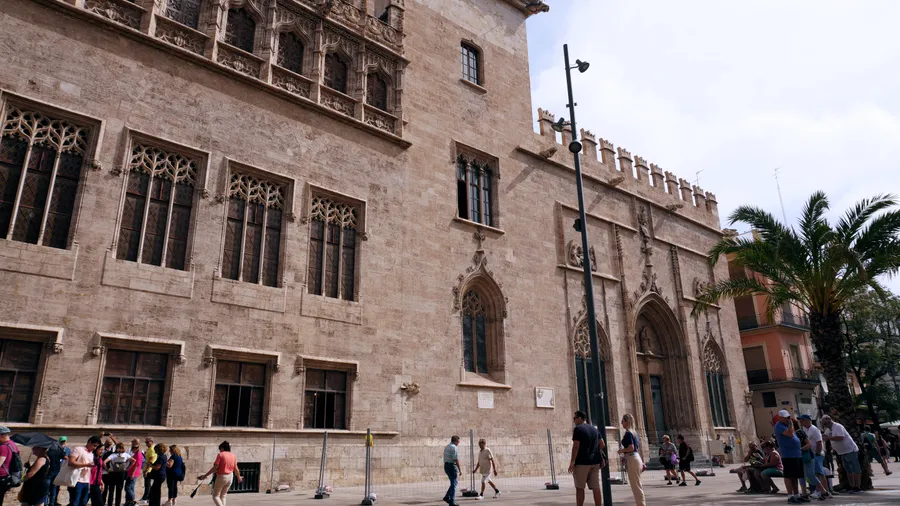
Silk Exchange of Valencia
Highlights
- • 15th-century civil Gothic construction
- • Trading Hall with helical columns
- • Interior orange tree courtyard
- • Distinctive octagonal tower
- • UNESCO World Heritage Site since 1996
- • Located in Valencia's historic center
Description
Key Information
Visit Duration
1-2 hours
Recommended Seasons
Spring, Autumn
Pricing
Free
Accessibility
High
Related Destinations


Guide
Essential information for visiting Silk Exchange of Valencia
Location
Practical Information
- Pricing
- Free
- Visit Duration
- 1-2 hours
Features & Services
- Accessibility:High
- Kid-Friendly:Yes
- Pet-Friendly:Yes
- Booking:Booking Required
Planning Information
Recommended Seasons
Spring · Autumn
Best Time to Visit
The best time to visit the Lonja is in spring and autumn, when the weather is mild and you can enjoy the surroundings without the summer heat.
Visitor Tips
Wear comfortable shoes to explore the Lonja de la Seda at leisure. Take the opportunity to discover Valencia's historic center where it is located and combine your visit with nearby monuments. Bring water and sun protection in summer, as some outdoor areas can be sunny. Check updated opening hours to avoid surprises and respect the monument's conservation rules.
Historical Facts
Built between 1482 and 1548, the Lonja de la Seda served as the headquarters for Valencia's mercantile activity, especially the silk trade crucial to the local economy. Its civil Gothic design reflects the wealth and power of 15th-century Valencian merchants, and its preservation offers a direct testimony of medieval commercial life in Valencia.
Frequently Asked Questions
Get answers about Silk Exchange of Valencia