Highlights

  • • Well-preserved dry stone walls
  • • Circular huts with roof remnants
  • • Located in natural Asturian landscape
  • • Testimony to the castro culture
  • • Free access with no reservations needed
  • • Recommended 1-2 hour visit

Description

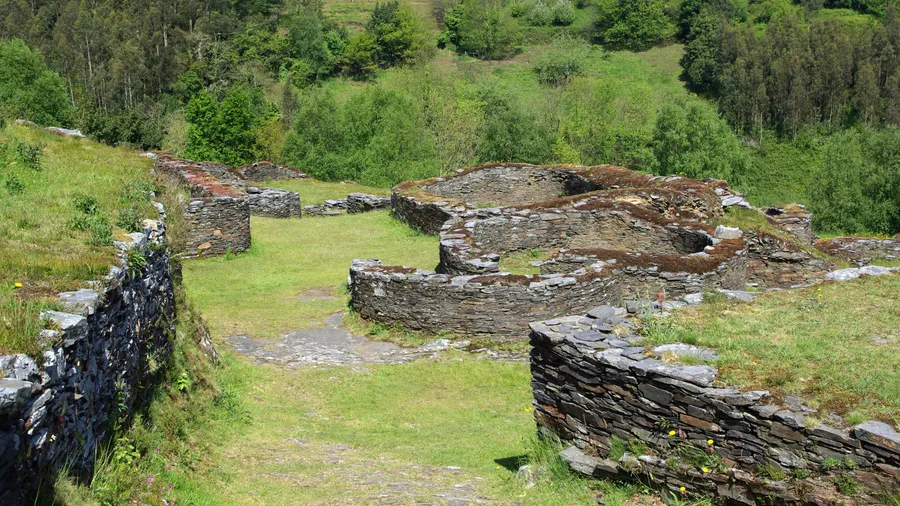
The Castro de Coaña is an Iron Age fortified settlement located in western Asturias, set amidst gentle hills and meadows stretching towards the Cantabrian Sea. This archaeological site offers a glimpse into the pre-Roman past of the region, revealing how the indigenous Asturian communities lived over two thousand years ago.

As you explore the castro, you'll observe a defensive structure composed of stone walls encircling the village. Notable are the circular huts built with dry stone walls, some retaining remnants of their original roofs. These dwellings are arranged in an orderly layout that reflects the social and functional organization of the settlement. The natural surroundings provide a peaceful atmosphere, with views of nearby valleys and forests.

Historically, the Castro de Coaña belongs to the castro culture, characterized by the construction of these fortified villages in the northwestern Iberian Peninsula during the Iron Age, roughly between the 6th century BC and 1st century AD. These communities engaged in agriculture, livestock farming, and metallurgy, and their architecture reflects the need for protection against possible attacks. The castro was abandoned following the Romanization of the area, but its remains have endured as a testament to that era.

When visiting the Castro de Coaña, it is recommended to wear comfortable footwear for walking on uneven paths and dress appropriately for the season. Access is free and requires no prior reservation. The tour can last between one and two hours, depending on your interest in interpreting the site. There are no accessibility facilities for people with reduced mobility. It is a suitable space for families and those interested in archaeology and ancient Asturian history.

Key Information

Visit Duration

1-2 hours

Recommended Seasons

Spring, Autumn

Pricing

Free

Accessibility

Low

Kid-Friendly Pet-Friendly No Booking Required

Guide

Essential information for visiting Castro de Coaña

Location

In this area

Practical Information
Pricing
Free
Visit Duration
1-2 hours
Features & Services
  • Accessibility:Low
  • Kid-Friendly:Yes
  • Pet-Friendly:Yes
  • Booking:No Booking Required
Planning Information

Recommended Seasons

Spring · Autumn

Best Time to Visit

The best time to visit Castro de Coaña is during spring and autumn, when the weather is mild and the natural landscape is at its most beautiful.

Visitor Tips

To make the most of your visit, wear comfortable shoes and bring water, especially in summer. Respect the guidelines to preserve the structures, avoiding stepping on walls or huts. Check the weather forecast beforehand, as paths can become slippery when wet. The site is child-friendly, but supervise children to prevent climbing on ruins and potential accidents.

Historical Facts

Dating from the Iron Age, Castro de Coaña is a representative example of the castro culture in Asturias. These fortified settlements were built between the 6th century BC and 1st century AD to protect local communities from raids and conflicts. The castro's abandonment coincides with the Romanization of the region, which transformed traditional ways of life.

Frequently Asked Questions

Get answers about Castro de Coaña

Yes, access is free and open to the public without the need for prior reservation.
The castro features explanatory panels that help visitors understand the structure and function of the settlement.
No, the uneven terrain and lack of facilities make access difficult for visitors with reduced mobility.
Yes, pets are permitted as long as they are under control and site rules are respected.