The essentials of Parque Natural de El Hondo

  • • Main breeding site for marbled teal in the Peninsula
  • • White-headed duck and flamingos
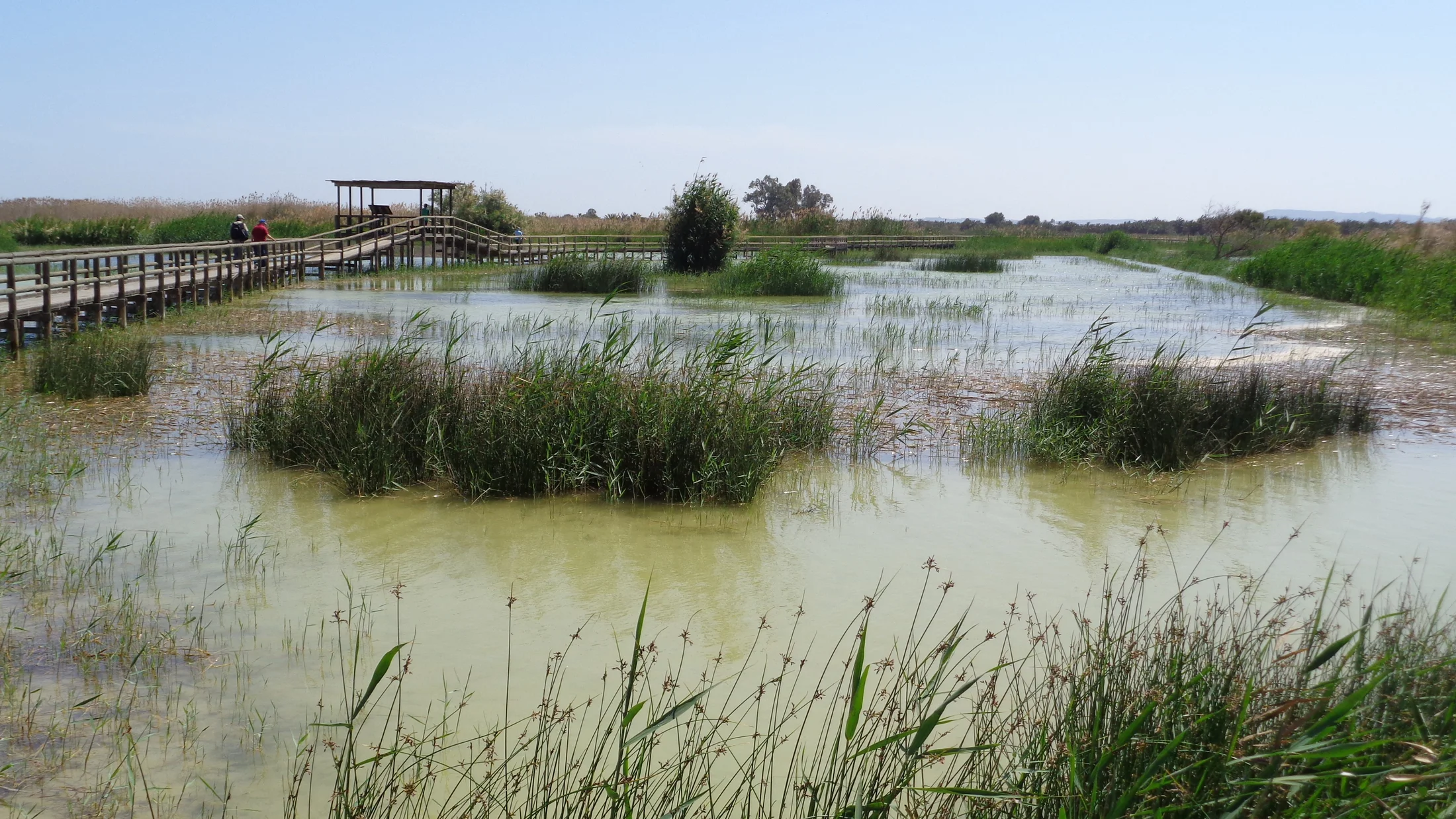
  • • Elevated observation points next to historical irrigation ponds
  • • Flat and accessible trails
  • • Information Center with guided tours by reservation

Description

Parque Natural de El Hondo protects 2,387 hectares of wetland between Elche and Crevillente — the second most important in the Comunitat Valenciana. It is the main breeding site for the marbled teal (an endangered species) in the Iberian Peninsula and hosts significant populations of white-headed duck and flamingo.

The birdwatching trails are flat and accessible, with elevated observation points next to historical irrigation ponds. The Information Center in Crevillente offers guided tours with prior reservation. Less touristy than the Salinas de Santa Pola but ecologically more relevant.

Practical information for Parque Natural de El Hondo

Everything you need to know for your visit to Parque Natural de El Hondo

How to get there
To reach Parque Natural de El Hondo, access is available from the CV-86 road, which connects the towns of Elche and Crevillente. The nearest city is Elche, located about 10 km south of the park. Public transport options, such as buses connecting Elche with Crevillente, are available, although using a private vehicle is recommended for greater convenience. Once in the area, there are signs indicating the different entrances to the park.
Geography
Parque Natural de El Hondo spans 2,387 hectares in an alluvial plain between the towns of Elche and Crevillente. The terrain is predominantly flat, with some gentle elevations providing panoramic views of the wetland. The altitude ranges from 50 to 100 meters above sea level. This natural space is characterized by its extensive water areas, including lagoons and irrigation ponds, surrounded by marsh vegetation and reed beds. The geological formations are primarily sedimentary, resulting from the accumulation of materials brought by nearby rivers, which has led to a diverse ecosystem rich in water resources.
Flora & Fauna
The flora of Parque Natural de El Hondo is rich and varied, highlighting communities of reeds, canes, and other aquatic plants that create an ideal habitat for numerous bird species. Among the fauna, the marbled teal stands out as the main breeding site in the Iberian Peninsula, along with the white-headed duck and various species of flamingos. Additionally, the park hosts a wide variety of migratory birds, making it a point of interest for birdwatching year-round.

Things to do in Parque Natural de El Hondo

Find the best plans and things to do in Parque Natural de El Hondo

Accommodations in Parque Natural de El Hondo

Best accommodation options in Parque Natural de El Hondo