Natural Park of La Mata and Torrevieja Lagoons
The essentials of Natural Park of La Mata and Torrevieja Lagoons
- • Torrevieja lagoon with pink water from Halobacterium and Artemia salina, visible from kilometres away
- • Stable colony of 2,000–8,000 greater flamingos at Laguna de La Mata depending on season
- • Industrial salt works active since 1803, Europe's largest producing 600,000 tonnes per year
- • Flat 9.5 km accessible circuit around the Laguna de La Mata, suitable for families
- • Traditional saline mud baths on the south-eastern lagoon shore, used for skin and joints
Description
Practical information for Natural Park of La Mata and Torrevieja Lagoons
Everything you need to know for your visit to Natural Park of La Mata and Torrevieja Lagoons
How to get there
How to get there
From Alicante, take the AP-7 south and exit at Torrevieja (about 50 km, 35 min). The La Mata Interpretation Centre is signposted from the N-332 near Los Montesinos. From Murcia, the AP-7 towards Alicante reaches Torrevieja in about 45 minutes. Regular buses run from Alicante and Orihuela.
Area Information
The La Mata Interpretation Centre opens Tuesday to Sunday with hours varying by season; it offers exhibitions, bird-watching telescopes and free guided walks by reservation. Car parks are available at the centre and the Acequión area. Torrevieja and Los Montesinos have full accommodation and dining options.
Geography
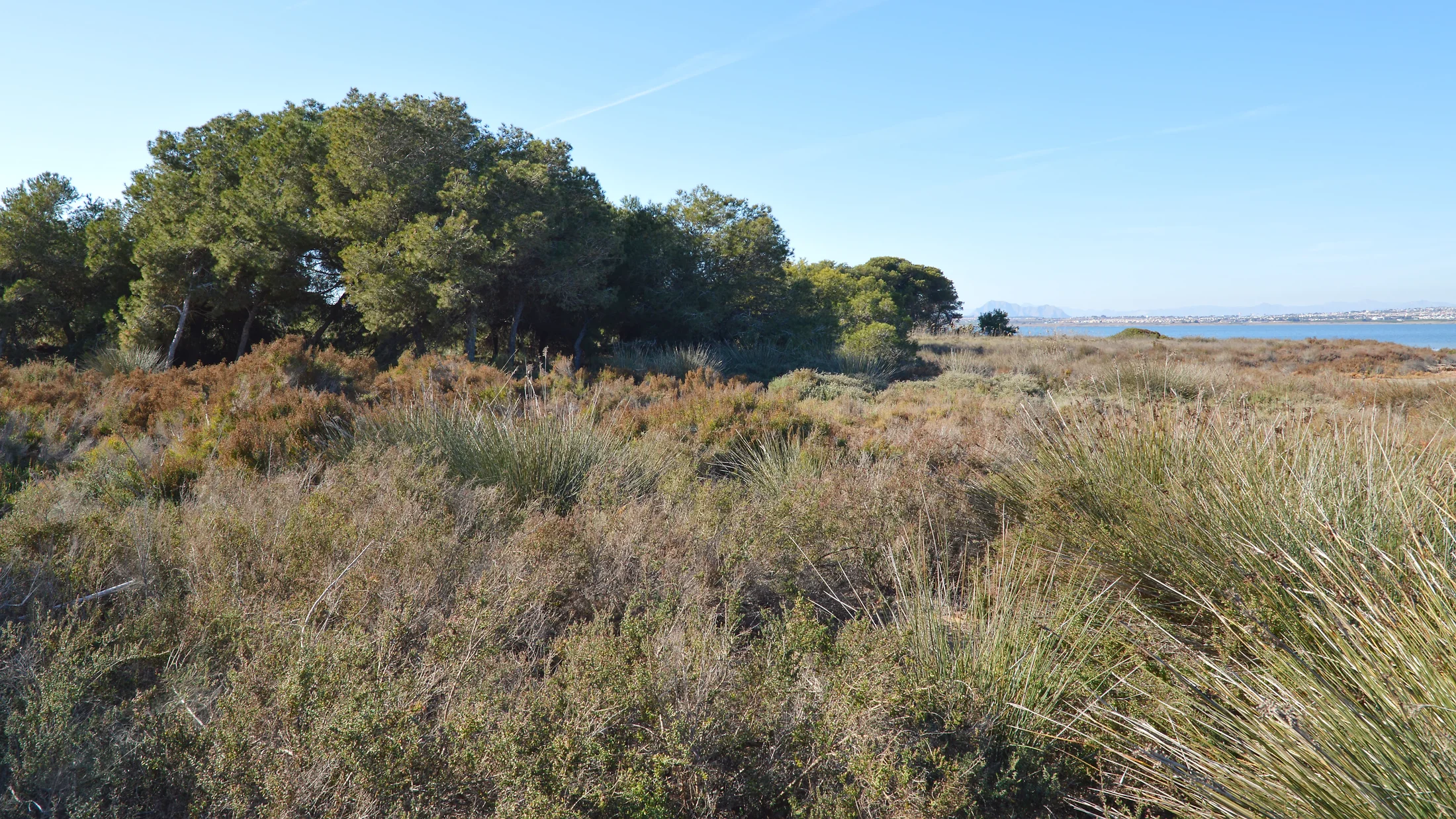
Coastal depression formed by two endorheic basins separated by a low ridge. The Laguna de Torrevieja covers about 1,400 ha and La Mata about 700 ha, linked by the Acequión canal. Average altitude 0–5 metres above sea level. Saline soils with evaporite crusts along the margins.
Flora & Fauna
Dominant halophilic vegetation: glasswort, seablite, tamarisk and rushes. Notable birdlife: greater flamingo (2,000–8,000), shelduck, pied avocet, Kentish plover and black tern. Artemia salina, a microscopic brine shrimp, underpins the birds' food chain. The endangered endemic killifish fartet is also present.
Accommodations in Natural Park of La Mata and Torrevieja Lagoons
Best accommodation options in Natural Park of La Mata and Torrevieja Lagoons
Gallery of Natural Park of La Mata and Torrevieja Lagoons
Photos and images of Natural Park of La Mata and Torrevieja Lagoons
Frequently asked questions about Natural Park of La Mata and Torrevieja Lagoons
Get answers about Natural Park of La Mata and Torrevieja Lagoons
Why is the water in the Laguna de Torrevieja pink?
The pink colour results from two organisms: the bacterium Halobacterium, which produces red pigments to protect itself from ultraviolet radiation, and the microscopic crustacean Artemia salina, which also takes on pinkish tones. The intensity varies by season; in summer, when evaporation concentrates the salinity, the pink is most vivid.
Can the lagoon circuit be done in a wheelchair?
A significant portion of the Laguna de La Mata circuit (9.5 km) is paved or compacted and accessible for wheelchairs and pushchairs. The stretches from the Interpretation Centre to the bird observatories are the most accessible. Some sections of the southern perimeter have earth surfaces that can be uncomfortable with wheels on rainy days.
Do the lagoon mud baths have medicinal properties?
The saline mud of the Laguna de Torrevieja is rich in magnesium chloride and other minerals and has traditionally been used to treat skin conditions and joint pain. However, no official health regulation endorses these properties. Mud baths are unsupervised and taken at your own discretion on the south-eastern shore of the lagoon.
When is the best time to see flamingos in the park?
Peak flamingo numbers occur between November and March, with counts that can exceed 6,000–8,000 individuals at the Laguna de La Mata. Numbers drop in summer, but some birds are usually present year-round. The bird observatory at the Interpretation Centre, with free-use telescopes, is the best spot to watch them without disturbance.
Is there an entrance fee to visit the natural park?
No, park access is completely free throughout the year. The La Mata Interpretation Centre is also free to enter. The guided walks organised by the centre are free but require advance booking by phone or email, especially during the peak activity season from October to March when the most scheduled programmes are available.