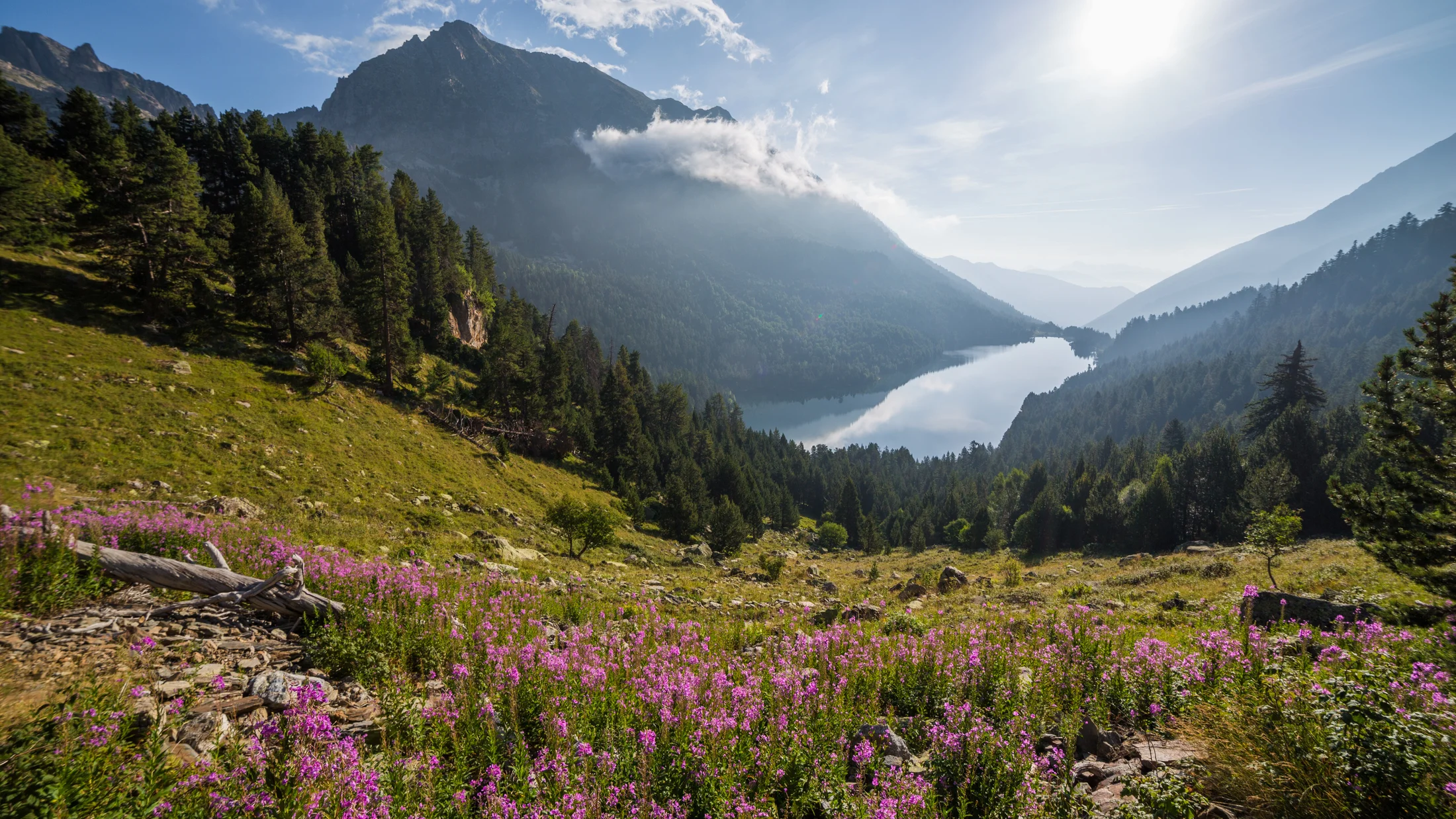
Aigüestortes i Estany de Sant Maurici National Park
The essentials of Aigüestortes i Estany de Sant Maurici National Park
- • Over 200 glacial lakes within a single Pyrenean national park
- • Encantats (2,748 m): vertical granite wall rising above Sant Maurici lake
- • Romanesque churches of Vall de Boí: eight temples inscribed as UNESCO World Heritage in 2000
- • Interior access only by authorised 4x4 taxi or on foot: unusually well-preserved ecosystem
- • Boí Taüll ski resort: highest altitude in Catalonia, runs up to 2,750 m
Description
Practical information for Aigüestortes i Estany de Sant Maurici National Park
Everything you need to know for your visit to Aigüestortes i Estany de Sant Maurici National Park
How to get there
How to get there
Eastern access (Espot): from Sort via the L-500 (20 km). Western access (Vall de Boí): from El Pont de Suert via the L-500 (20 km). From Barcelona, 3h 30 min via the A-2 to Lleida then mountain roads. No regular public transport to the park gateways.
Area Information
The park has two main gateways: Espot (Pallars Sobirà) and Boí (Alta Ribagorça). The reference towns are Sort (30 km from Espot) and El Pont de Suert (20 km from Boí). Distance from Lleida: 130 km. The park has an additional 26,733 ha peripheral protection zone.
Geography
Axial Lleida Pyrenees with elevations between 1,600 and 2,900 m. Over 200 glacial lakes. Sant Nicolau and Escrita rivers rise in the park. Glacial cirques of Encantats and Amitges. Granite, slate and gneiss dominate.
Flora & Fauna
Scots pine and silver fir in the montane zone. Alpine grasslands with Festuca and Poa at high elevations. Fauna: Pyrenean chamois, Alpine marmot, bearded vulture, capercaillie, Pyrenean brook salamander in the lakes.
Accommodations in Aigüestortes i Estany de Sant Maurici National Park
Best accommodation options in Aigüestortes i Estany de Sant Maurici National Park
Gallery of Aigüestortes i Estany de Sant Maurici National Park
Photos and images of Aigüestortes i Estany de Sant Maurici National Park
Frequently asked questions about Aigüestortes i Estany de Sant Maurici National Park
Get answers about Aigüestortes i Estany de Sant Maurici National Park
Why can you only enter the park by taxi or on foot?
Since the 1990s, the National Park has regulated motorised traffic inside the protected area to reduce the impact on fauna and vegetation. The 4x4 taxis are concessionaires of the Park's Governing Board and operate on regulated schedules. This restriction has allowed Pyrenean chamois, capercaillie and bearded vulture to maintain an unusually good conservation status. Visitors can enter on foot from the exterior car parks; the distance to the nearest lakes is 1 to 3 km depending on the sector.
How many lakes are there in the park and which are the most accessible?
The park holds over 200 glacial lakes, of which about 50 are of considerable size. The most accessible are Sant Maurici lake (20 min by taxi from Espot plus 30 min on foot from the park car park) and Llong lake (Boí sector, 1 hour from the Aigüestortes car park). High-altitude lakes such as Amitges and Colomers require 5-8-hour hiking days or overnight stays in mountain huts.
Can I climb the Encantats?
The Encantats are a rock climbing route, not a hiking trail. Gran Encantat (2,748 m) and Petit Encantat (2,738 m) are ascended via Grade II-IV routes on granite rock. The approach from Sant Maurici lake takes about 3 hours. A mountain guide or solid rock climbing experience is essential. In summer there are teams from across Europe; descent is by abseil.
Are the Romanesque churches of Vall de Boí inside the park?
Not directly, but they are a few kilometres from the park's western gateway. The eight Romanesque temples (Sant Climent de Taüll, Santa Maria de Taüll, Santa Eulàlia d'Erill la Vall, Sant Joan de Boí, among others) are in the valley villages, accessible by road. A visit to the UNESCO ensemble can easily be combined with a park visit from the Vall de Boí side in the same day. The Centre del Romànic de la Vall de Boí in Erill la Vall manages tickets and provides information on all the temples.
Are there multi-day routes that can be done without hut bookings?
Wild camping inside the national park is prohibited except at authorised mountain huts. The most complete multi-day route is the 3-4 day traverse from Sant Maurici to Boí (or vice versa) with overnight stays at the Amitges, Estany Llong and Ernest Mallafré huts. Huts have limited capacity and in July-August fill up weeks in advance; online booking is essential. In the peripheral protection zone, camping with a tent is possible with the relevant permits.