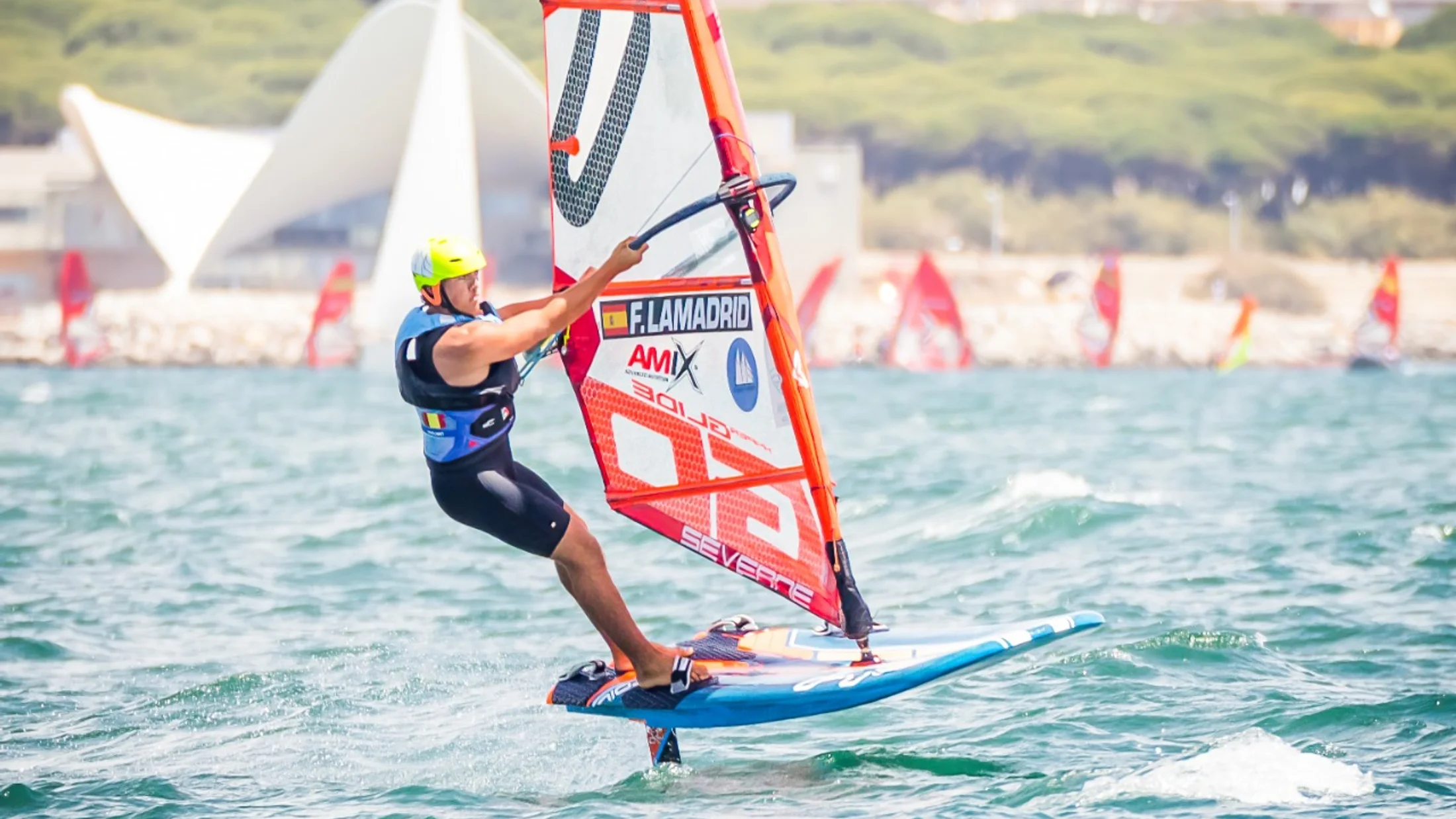
Why Spain is a great choice to learn and progress in windsurfing
Spain's winds and seas: essential context
The network of schools active all year round means you can start in any season.
The Atlantic is divided into four sections: the Cantabrian, from the Bidasoa river to Estaca de Bares; the Galician, from Estaca de Bares to the Portuguese border; the Andalusian, with Huelva and Cádiz; and the Canary Islands. In the Mediterranean, summer thermal winds rule, with calmer seas and clear waters, providing comfortable conditions to start.
The scent of salt accompanies you from the Costa Brava to the volcanic Canary beaches.
You will often find schools, equipment and wind, whether to start out or to progress manoeuvres or enter waves.
If you travel with family or as a couple, there are destinations with services and complementary plans. If you go in a group, look for spots with varied rentals and simple logistics.
Our selection: wind, safety and real options to progress
Ten windsurfing destinations in Spain chosen based on six measurable factors: wind, water, schools, safety, access and budget. This way, you know in advance if the spot fits your level.
Wind consistency and direction are the first filter. Afterwards, we look at the type of water (flat, chop or wave), the presence of schools and stable rentals, and safety: buoyed zones, lifeguarding and local protocols. Accessibility (airports, roads, ferries) and budget, with a variety of accommodation and course offers, complete the list.
If you are starting, we prioritise destinations with flat water or protected sea, schools nearby and buoyed zones. If you are already progressing, we look for more intense winds, areas of controllable chop and, when appropriate, ordered waves. And if you are travelling with little time, direct connections and hassle-free available equipment carry more weight.
Prices vary according to season and package, so confirm updated rates on Picuco or with local schools. In each destination, we indicate for whom it works best, when to go and practical tips to match your trip and level.
Picuco te puede ayudar
Does something here catch your eye?
Tell us.
Write to us on WhatsApp or email: we answer questions, find the best options and help you sort out the booking.
The 10 destinations to learn and progress without losing windy days
1. El Médano (Tenerife): consistency, atmosphere and zones for everyone
El Médano has almost daily trade winds in summer and everything is at a village scale: accommodation and restaurants right on the beach. Montaña Roja acts as a natural wind accelerator and increases its intensity by between 5 and 10 knots compared to general forecasts.
Each area has its level. Beginners sail in the Bay, and in the Bahía del Médano, freestyle and slalom are practised in flat water.
The dominant wind is NE, at 15-30 knots during the season, with chop seas and waves depending on the area. There are several schools and rentals on the front line, so book in advance during long weekends and in summer. Start at mid-low tide in the Bay to have more leeway for drifting.
With family, you can combine sessions with routes through Teide. At sunset, the light tints kites and sails in gold.
You can arrive by public transport with TITSA lines 408 (Granadilla, San Isidro and El Médano) and 470 (La Tejita, Los Abrigos, Golf del Sur, Las Galletas and Los Cristianos).
2. Sotavento (Fuerteventura): school lagoon and reference beach
Sotavento has a tidal lagoon that, during spring tides, becomes a flat water mirror for working on technique. The beach is on the southeast coast of Fuerteventura and is wide, with constant trade winds.
The best time is from May to September, with regular trade winds; spring and autumn are solid options. In the lagoon, you learn and progress; in the open sea, intermediates and advanced riders train. The wind blows from the NE with 15-30+ knots, there is flat water inside and chop outside, and the tide conditions the volume of water.
There are schools and rentals with established operators and seasonal equipment. Book if you are going during competition weeks. Check the tide tables to coordinate your sessions in the lagoon and wear water shoes if you are working on your waterstart at low tide. During event weeks, enjoy the atmosphere and keep your distance from the training areas.
Sotavento has been the venue for the PWA World Cup (Freestyle, Slalom, and Foil) every summer since the 1980s, and Risco del Paso is a regular setting for world speed records.
The Tiadhe line 1 (Puerto del Rosario – Morro Jable) stops in Costa Calma, from where it is a 10-minute taxi ride to the beach. A rental car is recommended, and there are beach bars and services in nearby areas.
3. Pozo Izquierdo (Gran Canaria): strong wind and accelerated progression
Pozo Izquierdo blows hard almost all summer: frequent 25-40 knots and right-hand waves of 1 to 3 metres. The spot has a side-on orientation, a rocky bottom, and short but powerful waves.
Here, you progress quickly if you already plane and are looking for control with 3.7-4.2 m² sails and intense chop. It is a school spot for intermediates and advanced riders; it is not ideal for a first contact.
The waves are short-period and there is shorebreak. In autumn and winter, variable days and waves arrive. Pozo Izquierdo is the historic venue for the PWA World Cup and the Gran Canaria Wind & Waves Festival.
Local schools and rentals focus on perfecting technique, so book in advance. If you are coming from calm waters, use a helmet and a buoyancy aid and bring two small sails. Before heading in, ask about the buoyed areas.
If it blows excessively, Bahía de Formas is an alternative spot to Pozo Izquierdo, with slightly weaker wind blowing diagonally towards the shore. It is good for speed, slalom, and beginners, with an entrance mostly made of gravel, a standing zone of only a few metres, and parking directly on the beach.
The nearest airport is Gran Canaria Airport (LPA), about 15-20 km away. It is convenient to stay in Vecindario or Playa del Inglés and to have a car to move to alternative spots.
4. Tarifa (Cádiz): variety of spots and surfer life
Tarifa looks out over the Strait from the southernmost tip of the peninsula, just 14 km from the Moroccan coast. It is the closest European city to Africa and brings together a variety of spots and surfer life.
Here, the wind rules: more than 300 windy days a year. The Levante (E) arrives dry and powerful, with gusts that can exceed 100 km/h on intense days, and the Poniente (W) is more humid and gentle.
The best time is from spring to autumn due to the constancy of the wind; in summer, there are thermal winds and strong Levante days. If you are starting out, look for Valdevaqueros or Dos Mares on Poniente days. With an intermediate or advanced level, aim for moderate Levante or the wave spots.
There is a great offer of schools and rentals, although it is seasonal: book during long weekends and in August. From 15 June to 15 September, there are buoyed zones for swimmers, schools, and free navigation, and in summer, water sports are not practised in Playa Chica.
Out of the water, you can walk the trails in the Estrecho Natural Park and, during the season, spot cetaceans.
Without a car, combine train or plane to Málaga or Jerez with a bus. From Sevilla, it is 2 h 15 min via the A-4/A-381. For a weekend, get up early to avoid peak hours on the N-340, and check the reports to choose a spot according to the wind of the day.
5. Mar Menor / La Manga (Murcia): flat water and protected environment
The Mar Menor is a salt lagoon that La Manga separates from the Mediterranean, with little depth and flat waters in many places. It is the largest lagoon in Spain and has international Ramsar protection.
The lagoon reaches a maximum depth of 7 metres, so in many areas you sail with your feet on the bottom. The predominant winds are the poniente and the levante, with reliable thermal breezes in spring and summer: during the season, thermals move between 12 and 25 knots.
The useful wind season is from April to October; in winter, you sail with a wetsuit. It is an excellent site for beginners and families, and also for progressing with straps and gybes. During the season, there are centres with stable equipment and buoyed zones, and water sports schools operate on the inner shore of La Manga to avoid the swell and the bottom of the Mediterranean.
To practise wind sports, always launch from the areas authorised by a local school. It is advisable to consult local navigation regulations and swimming zones in summer. If you are looking for a first experience or a course as a couple, confirm updated prices in advance.
6. Costa Brava (Empuriabrava, Girona): accessible and with good schools
Empuriabrava is approximately 1 h 45 min from Barcelona via the AP-7 and offers summer heat, wide beaches and services. Golf de Roses is the main windsurfing spot on the Costa Brava, with constant Tramontana wind and sea breeze in summer.
At the mouth of the Muga river, there is a flat water area between the river and the Mediterranean Sea, available 365 days a year. The breeze smells of pine and salt among the channels and dunes.
The best time to windsurf on the Costa Brava is from May to September. In spring and autumn, days of garbí and tramuntana arrive. The destination works for you to start out and progress with control; tramontana days are for those who already sail firmly.
There are several schools on the beach, with courses for children and adults, and it is advisable to book on weekends. Private classes are available from June to September; the 2 h course over 2 days costs 165€ per person (minimum three people). The Sunset SUP costs 30€ per person (1 hour including equipment and guide).
If you are starting, go in the morning when the sea is calmer and raise your sail in the afternoon. Accommodation is varied and you can combine your stay with routes through Cap de Creus. Nearby you have the Aiguamolls de l'Empordà, coves for snorkelling and Empordà gastronomy.
7. Famara (Lanzarote): moving to manoeuvres and first waves
Here you take the step to train manoeuvres and try your first waves.
On moderate days, you train control on the chop, reading sets and basic wave manoeuvres. The bay suits intermediates who are already planing and advanced surfers when the sea arrives with more size. The Risco de Famara cliff turns orange when the trade wind eases, with the silhouette of La Graciosa in the background.
From April to September, the trade wind rules; in winter, the swell is more powerful. The wave season goes from October to March, with waves of 1.5 to 3 m for advanced surfers. From April to June and from September to October, they drop to 0.8-1.5 m, and in July and August they stay at 0.5-1 m.
The schools and rentals are in Caleta de Famara and work on technical progression. Check tides and sandbanks, enter through clear channels and exit quickly if the size increases. Start at mid-tides, avoid crowded peaks and use a foot leash in wave conditions if your school recommends it. Some days you have quieter options in Costa Teguise, on the east coast of the island.
You arrive from the airport in 25-30 min via the LZ-30.
8. Formentera (Es Pujols): calm, turquoise water and close service
Formentera is a windsurfing destination for initiation and basic progression, with clear waters and light-to-moderate winds. It suits couples and families who prioritise tranquillity.
The prevailing winds are from the east and are more frequent in winter. The offer of schools and rentals is more limited than on the larger islands, so it is advisable to book in advance.
You arrive by ferry from Ibiza: the journey lasts between 25 min and 1 h depending on the type of vessel and the weather, with up to 70 crossings daily between the ports, separated by 21 km (11.3 nautical miles). Without a car, the island is travelled by bus and bike. Verify the anchoring regulations and the buoyed zones.
Bring sun protection and a shorty wetsuit for windy days, even if the water is warm. If there is no wind one day, you have bike routes, Posidonia coves and sunsets at Cap de Barbaria.
9. Santa Pola (Alicante): easy practice and holidays on the Costa Blanca
Santa Pola is 15 km from Alicante-Elche Airport and has sheltered areas to start windsurfing. It is a good base for beginners and for progressing without complications.
The water is usually flat, with some chop during gusts. It serves beginners and those perfecting their jibe and footstraps.
On the beach, there are centres with courses for all ages and equipment hire. If you are looking for something nearby and affordable on the Levante coast, it fits well.
Arrive by public transport from Alicante. In high season, confirm schedules and availability to avoid waiting.
10. Castelldefels (Barcelona): progress without leaving the city
Castelldefels is the urban school of the Barcelona metropolitan area: long beaches, afternoon thermals, and services for training during the week. It is 25-30 min from the centre of Barcelona by train or car.
The beach works for beginners and for training technique, with good days for progression when the thermal wind kicks in. There is light chop and a shoreline with gentle shorebreak.
Several schools and rentals are right on the beach, with afternoon and weekend courses. You can arrive by public transport and you have a wide range of bars and accommodation.
Schedule short sessions at the end of the day, when the thermal wind rises. If it blows more, explore Gavà or El Prat while respecting regulations and marked zones.
Where they are and how long it takes: map and essential logistics
Imagine the map: Canary Islands to the southwest with El Médano, Pozo, Sotavento and Famara; peninsula with Tarifa to the Atlantic south and Santa Pola/Mar Menor in the Levante; northern Mediterranean with Castelldefels and Empuriabrava; and Balearic Islands with Formentera.
- From Madrid (road): to Santa Pola 4 h 46 min (426 km); to Mar Menor 4 h 30 min (450 km); to Castelldefels (620 km).
- From Barcelona (road): to Empuriabrava 1 h 45 min (155 km); to Castelldefels 30 min (25 km); to Santa Pola 6 h (530 km); to Mar Menor 6 h (600 km).
- From Seville (road): to Tarifa 2 h 15 min (200 km); to Santa Pola (600 km).
Ibiza–Formentera ferry between 25 min and 1 h, with frequent services in season.
- Practical combinations: Canary Islands with flight + rental car; Formentera with flight to Ibiza + ferry + bike/bus; Tarifa with a shared car from Málaga or Seville.
- Transporting equipment: many airlines accept sports bulky items (dimensions/weight vary). Protect your mast and boom, use padded covers and declare the item when booking. If you do not want to transport it, prioritise destinations with a wide range of rentals.
How to choose wisely according to level, objectives and budget
Your level matters more than the trendy destination. Before booking, think about what you want to do on the water and how much time you have.
If you are starting from scratch, look for flat water, shallow depth and schools with a buoyed area. Mar Menor is a salt lagoon with regular thermal wind from spring to autumn and schools spread between Los Alcázares, La Manga and the surrounding areas. Castelldefels and Empuriabrava work if you live nearby and want regular classes.
To progress in upwind sailing, straps and jibing, prioritise wind consistency and controllable chop. Sotavento, with its spring tide lagoon, and El Médano, in the Bahía area, allow you to repeat manoeuvre after manoeuvre.
Freestyle and flatland manoeuvres require smooth water and moderate-to-high wind. Sotavento and Bahía del Médano are classic training grounds, and in summer Castelldefels has afternoons to practise without stress.
For your first waves, choose sandy bottoms and organised sets. Famara, from April to September, offers gentler waves, perfect for beginners. In Tenerife, Cabezo is for advanced riders, although you can observe and learn with respect.
If you already sail in strong wind, bring a small quiver and solid technique.
Cabezo has a sandy bottom and volcanic reef with rocks: respect the flag system and follow the lifeguards. Windsurfers usually sail in front of Flashpoint and leave the leeward beach for kitesurfers.
To save on school and accommodation, avoid the August peaks. In the Canary Islands, there is more wind consistency outside the European summer and you will find good windows.
Your wetsuit depends on the coast. In the Mediterranean, from May to September, a shorty or a lycra is enough; in the Atlantic and the Canary Islands, a 3/2 mm usually works for most of the year, with 4/3 mm in winter.
Regarding safety, prioritise beaches with lifeguards in season, respect the buoy markings and sail with a companion. If conditions change, the wind increases or shifts, get out, hydrate and decide if another tack is worth it.
To finalise your choice, make a personal ranking with 3 destinations from this list (for example, Mar Menor, Sotavento and Tarifa), define your date window and check the historical wind reports for that month.
Frequently asked questions
What equipment should I bring and what is better to rent?
If you are travelling light, rent the board, the sail, the mast and the boom at your destination. Bring your own harness, wetsuit and booties: they are light, fit your body and save you from surprises.
If you are demanding regarding measurements, check the available models in advance and book literages close to your own. This way, you arrive at the school with the material you already know how to handle.
How do I choose a reliable school?
Look for centres with qualified instructors, equipment in good condition and a defined safety zone. Those three points tell you more than any brochure.
Before booking, ask about the student/instructor ratio, the included insurance and the emergency plan. With those clear answers, the school gives you the confidence to start or to take the next step.
Do I need specific insurance?
Yes, it is advisable to have insurance that covers nautical activities and rescue. Many schools include basic coverage in their courses, so ask what is covered before hiring.
Before paying, confirm the coverage, the excess and the geographical scope of the policy. This way, you know if water rescue is included in the course price or if it is your responsibility.
How do I transport my board and sails by plane?
Book the equipment as sporting luggage with the airline before flying. Before leaving home, measure and weigh the board and the sails to adjust them to the permitted dimensions and weight.
Protect the tips of the board and the masts with foam. Arrive at the airport in good time and carry the written confirmation from the airline.
Do the conditions change much depending on the season?
Yes, and quite a lot. In the Canary Islands, the trade winds are strong in summer, so that is the time to look for constant wind. In the Mediterranean, afternoon thermal winds occur from May to September.
Tarifa plays in a different league: Levante and Poniente alternate all year round, and each requires a different sail. Before going, check the historical data for the month and consult the 72 h forecast to choose dates and equipment.
Are there local regulations I should know about?
Yes, and they change depending on the beach and the season. In summer, many beaches buoy channels for entering and exiting the water and bathing areas: respect them.
Maintain your distance from swimmers and vessels, and follow the instructions from lifeguards and municipal signs. Before setting up, look at the beach signage and ask at the school or the tourist office.
Can I learn if I am not a good swimmer?
To learn windsurfing, you need to know how to swim and be comfortable in the water. If you have doubts about your level, start with courses in lagoons or shallow areas, where the water covers you less and you can practise more calmly.
Before starting, communicate your level to the instructor. This way, they can adjust the equipment and the pace of the course to what you need.
How much do courses and rentals cost?
The prices for courses and rentals vary depending on the season, the equipment, and the duration of the course. The same course may cost differently in July than in May, and the type of board or sail you rent also changes the total.
Before finalising your dates, compare packages and check updated prices on Picuco or with local schools. This way, you can adjust your budget and choose the season that suits you best.
What wetsuit should I use?
It depends on where you sail and the time of year. In the Mediterranean in summer, lycra or a shorty is usually enough.
In the Atlantic and the Canary Islands, wear a 3/2 mm for most of the year and move up to a 4/3 mm in winter or on windy days.
Can I combine windsurfing with other activities?
Yes. The most comfortable way is to plan short windsurfing sessions and leave gentle activities for rest days.
The BTT Routes Project brings together 20 routes (8 main, 5 alternative, 4 connections and 3 extensions) that sum up to 385 km in total. The colours of the signage indicate duration and ecological sensitivity: red for more than one day, yellow for less than one day and brown in areas of ecological sensitivity. Difficulty is marked with green, blue, red and black, from lowest to highest.
Book your experience — discover active tourism activities in Spain with providers verified by Picuco.
Conclusion
Ten destinations spread across three seas cover all the stages of learning: from safe flat water to chop that demands technique, and from gentle breezes to solid trade winds.
If you are starting, Mar Menor, Formentera and Castelldefels offer progression without surprises. If you are aiming for strong wind or waves, Pozo and Tarifa are destinations for advanced levels.
Before travelling, choose your dates, check the historical forecasts for the destination and book your course or rental in advance.