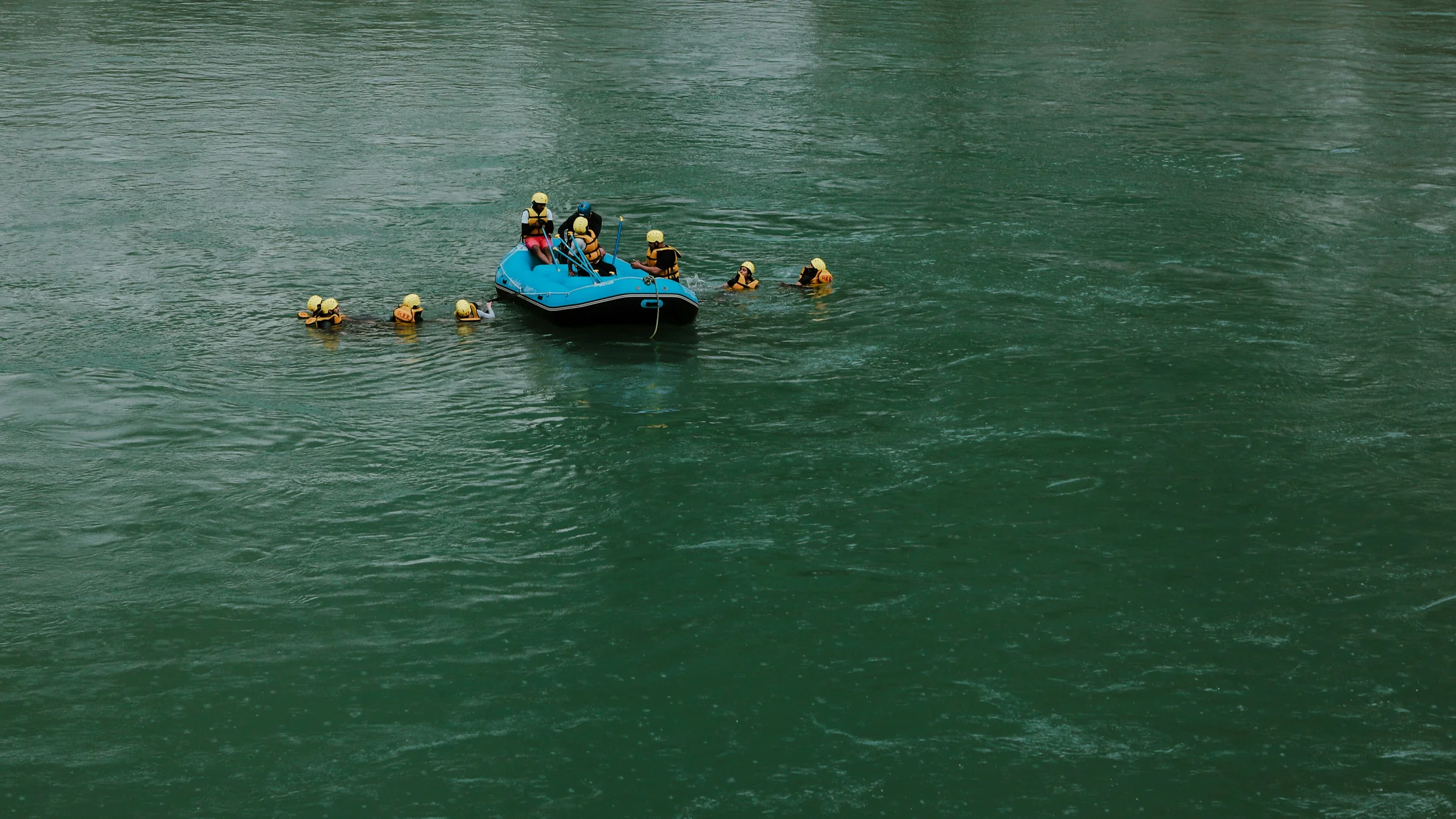
Rafting for the first time: why to prepare your equipment well
Preparing your equipment before your first descent gives you confidence and lets you enjoy it from the very first minute. The difference between having a great time and having a mediocre one often lies in what you are wearing and what you have sorted out before getting on the raft.
This guide answers what to take on your first rafting trip with clear, no-nonsense answers designed for beginners. It covers logistics (where and when), choosing an operator, mandatory equipment, clothing and footwear according to the season, common mistakes, and safety.
Inside adventure you will find more plans of this type. Here is an actionable checklist and simple criteria to help you decide. It is useful whether you have never paddled a rapid before or if you have gone once and want to improve.
Rafting, levels and why equipment makes the difference
Rafting is the descent of a river in guided inflatable rafts, through sections with rapids of varying difficulty. The international river difficulty scale (I–VI), used by the International Rafting Federation (IRF) and American Whitewater, classifies everything from almost flat waters (Class I) to extreme sections (Class VI, non-commercial).
If it is your first time, choose Class II–III: there are waves and manoeuvres, but with room for learning. As the boat approaches the first drop, the air smells of river and pine.
The right equipment reduces risks and improves control: certified helmet and life jacket, a wetsuit when the water is cold, and a guide with a safety system. A life jacket with CE/EN ISO 12402-5 certification provides buoyancy to keep your airways out of the water, and a helmet with the EN 1385 standard protects against impacts.
Preparing yourself well avoids grazes, hypothermia and losing objects, which are common causes of minor incidents in water activities. Before booking, ask about the level of the section and the material included in the trip.
What you will master in these lines
Before getting on the raft, the doubt is always the same: what do I put in my backpack? This guide gives you a verifiable list of what to take rafting, so you can check every item before leaving home.
Clothing changes depending on the season, and footwear decides whether you slip or lose your trainers in the river. Here is what to wear in each time of year and what to wear on your feet.
You will also find the most common mistakes that are worth avoiding, simple safety guidelines and answers to frequently asked questions. The goal is for you to head out to the river with judgement, light and safe.
Picuco te puede ayudar
Does something here catch your eye?
Tell us.
Write to us on WhatsApp or email: we answer questions, find the best options and help you sort out the booking.
Plan your trip: when to go, how to get there and where to sleep
Choosing the section, fixing the date and sorting out the travel before reaching the shore saves you rushes and scares. The descent is decided at home, not in the car park.
Set off with time and with your gear already adjusted before entering the water. The morning chill on your skin while you adjust your life jacket is the sign that you are well prepared.
Where to go and how to choose an operator and section
For a first time, commercial sections of Class II–III are ideal: small waves to play in and space to practise basic rescues with the guide. Choose the section according to your level, the distance, and the time you have that day.
Before booking, check that the guides have recognised training (IRF, regional training, or equivalent qualifications). Also, verify that the equipment complies with CE/EN standards: life jacket EN ISO 12402, helmet EN 1385, and wetsuit in good condition.
Look for consistent reviews from the last 12 months and ensure the operator's website or brochure describes clear briefings. Confirm what is included: helmet, life jacket, paddle, wetsuit, and jacket depending on the season, as well as internal transport to the put-in point and the return to the centre.
Use your rafting checklist to separate what you bring (footwear, technical underwear, towel) from what the operator provides. If you are travelling in a group, ask about the guide/raft ratios; the norm is 6–8 participants per boat.
When to go and how river conditions influence you
The river changes with the seasons, and with it, the strength of the rapids. The flow, the amount of water running down the river, depends on the time of year and the weather: in spring, snowmelt raises the level and the force of the water, and in summer, the flow decreases and the rapids are usually more predictable.
If it is your first rafting trip, aim for late spring to early autumn, with moderate flows. Without experience, avoid floods after heavy rains.
Water temperature also dictates the equipment. In Pyrenean rivers, in May it can hover around 6–10 °C, and in July it rises to 10–15 °C. With cold water, prioritise wetsuits and thermal booties; with temperate water, light quick-drying layers and sun protection.
The week of your trip, check the expected flow and water temperature with the operator: they adjust equipment and schedules based on these variables.
How to get there and what to expect on the day of the descent
The day of the descent starts in a car park, not on the river. Arrive 15–20 minutes early to change without rushing and to listen to the briefing carefully.
By car, park at the base centre or at the marked meeting points. Allow extra time for local roads, which tend to be slower than they seem. If you are travelling in a group, coordinate one single vehicle for every 4–6 people to facilitate logistics.
Some valleys have a bus or train to the headwaters, and the operator usually offers local transfers. Ask when booking which option best fits your starting point.
You will feel the cold rubber of the wetsuit and the firm click of the helmet: these are signs that everything is ready. From then on, the day follows this rhythm:
- Registration and equipment handover take 30–45 minutes.
- The safety briefing lasts 10–20 minutes.
- The descent lasts between 1.5 and 3 hours depending on the section and flow.
- The return and the shower or changing clothes take 30–60 minutes.
Where to sleep and what services to look for near the river
Sleeping near the river's starting point lets you start the day without early alarms or rushing. Choose accommodation based on who you are travelling with and how much you want to spend.
Campsites by the river are the budget-friendly option and work well for groups. Hostels and rural hotels seek a balance between price and comfort. If you are travelling with family, rural houses and apartments have kitchens to prepare snacks.
At the rafting centre or nearby, there is usually a cloakroom, luggage storage, and lockers. Showers with hot water and a drying area are also useful. In the centre's shop, you can find small spares: goggle straps, sunscreen, and dry bags.
Bring a small dry bag with dry spare clothes and a microfibre towel, and leave it in the vehicle or in the luggage storage to change quickly when you finish.
What to take rafting: essential and mandatory equipment
On your first descent, the operator provides the raft and the paddles. You are responsible for what is attached to your body: helmet, life jacket, wetsuit and footwear.
The operator usually provides the raft and paddles, sized according to your height, and the guide advises you. It also includes internal transport and the safety briefing. The guide carries a throw bag, a signalling whistle and a river knife; on technical stretches, they add a safety boat or a support kayak.
The EN 1385 approved helmet must fit without gaps and protect your temples and the back of your neck. The EN ISO 12402 life jacket needs your size: it must maintain buoyancy without preventing you from paddling. Underneath, you wear a 2–5 mm wetsuit and, if it is cold, a waterproof jacket or spray-top.
Bring closed footwear with good support and a grippy sole, such as water shoes or booties, and technical underwear without cotton under the wetsuit. For the end, bring a towel and a full change of dry clothes. Add waterproof sunscreen and lip balm with SPF. If you wear prescription or sunglasses, tie them with elastic or tape: if you lose them, your focus is gone. A small 5–10 L dry bag fits in the raft if the stretch and the operator allow it.
Before boarding, ask to check the sizes and fit of the life jacket and the helmet: a poorly fastened life jacket loses effectiveness. Check for visible dents in the helmet and the straps, and ask the staff to replace any damaged parts. The wetsuit must be intact and with working zippers, because loose seams reduce thermal capacity. If you bring your own equipment, verify the CE and EN standards for the helmet and life jacket and bring proof of certification if asked. Your helmet must be specific for white water sports, not a cycling one. Between uses, keep the material clean and dry: direct sunlight degrades neoprene and rubber.
Prepare a personal first aid kit with suture strips and waterproof dressings, a common painkiller if you use it regularly, small bandages and disinfectant, your personal medication and a minimal copy of your medical record in a zip bag. This does not replace the operator's first aid kit.
Many guides use a 3-tone whistle for emergencies: ask about the sound code of the day. Some stretches allow internal VHF radio for the team; as a participant, focus on the guide's hand and voice signals. Learn how to hold the paddle correctly, how to maintain three points of contact in the raft and how to get back on board using the hand-wrist-shoulder technique they will teach you. Less weight, more safety: avoid superfluous objects that become obstacles.
Clothing and footwear by season
Dressing for water is dressing for cold and movement, not for the photo. The right garments keep you comfortable and energised until the last rapid.
Before touching the water, there will be a slight smell of neoprene and sunscreen. Choose your clothing thinking about the river temperature and how much you are going to paddle, not about how you will look in pictures.
In the cold season, the wetsuit covers arms and legs and is combined with socks and booties that prevent chafing. In summer, you can wear short sleeves under the wetsuit and closed footwear that can get wet without any problem.
Ask the company what equipment is included before preparing your backpack. This way, you will know which garments to bring yourself and which ones they provide at the starting point.
1. Summer: light clothing and sun protection
In summer, the water is temperate and the sun is intense: the key is to go light, protected, and with quick-drying clothes. A technical t-shirt or a short or long-sleeved UV lycra, with UPF 50+ protection if possible, will serve you all day. Make sure it is cool and tight-fitting: it dries in minutes and prevents chafing with the life jacket.
Underneath, a swimsuit or tight shorts that do not create folds under the wetsuit, if you use one. For your head, a cap with a strap or a visor with an elastic band that fits under the helmet, and a buff or thin neck gaiter if the sun is intense.
Sun protection is separate: water-resistant SPF 50+ cream, reapplied 30 minutes before, SPF lip balm, and sunglasses with a safety strap. Keep your mobile phone and keys in a waterproof neck pouch or in a locker, and avoid open pockets.
Choose quick-drying polyester or nylon and leave the cotton at home: it retains water and makes you cold. In the middle of July, think minimalist: fewer layers, more sun protection, and a lycra that helps prevent chafing with the life jacket.
2. Spring and autumn: layers and insulation
In spring and autumn, the weather changes in a single descent: the key is the layering strategy. With it, you manage temperature changes and the wind without feeling cold or sweating too much.
Start with a synthetic or fine merino thermal base layer, tight-fitting and quick-drying. Over that, a light fleece or a thin 1–2 mm wetsuit if the water is cool. The outer layer is a waterproof jacket or a windbreaker (spray-top), which the operator often provides.
Adjust your protection to the water and the flow. With water below 15 °C or a strong flow, a 3–5 mm full wetsuit is recommended. With temperate water and wind, a short wetsuit plus a spray-top.
Wear tight cuffs and a neck to prevent cold water from entering, and avoid bulky zips that might be uncomfortable under the life jacket. When you finish, a dry change of clothes will restore your warmth quickly and prevent chills: always keep it in the bag.
3. Winter and cold waters: neoprene and thermal protection
Cold in white water is a real risk: hypothermia, with body temperature below 35 °C, reduces your strength and your ability to judge situations. That is why thermal clothing is chosen before heading out, depending on the water temperature and the wind of the day.
Neoprene is the base. A 4–5 mm full suit covers you well on cold days; if the water is not so cold, a 3/2 with an additional jacket gives you some leeway. Look for sizes that allow you to paddle without shoulder fatigue and seal the ankles and wrists well: less water enters and you retain more heat.
On your feet, 3–5 mm neoprene booties with a grippy sole. For your hands, neoprene gloves or paddles with hand warmers (pogies) if the guide offers them. On your head, a thin thermal hat that fits under the helmet; in very cold waters, a neoprene hood.
In very cold rivers or on winter days, some operators use a drysuit, which is combined with internal thermal layers. Eat something energetic before the activity and protect yourself from the wind when getting out of the water.
4. Footwear for rafting and essential accessories
Footwear is part of your safety: you need a grippy sole and a good fit to get in and out of the boat and walk along the riverbanks. Neoprene booties with rubber soles, closed water shoes with protected toes, or old trainers with the laces tied well and a worn-out sole will work.
Leave flip-flops, heelless Crocs, and loose sandals at home: they get lost and are slippery. Heavy boots don't work either, because they get soaked and hinder swimming. The footwear should be snug without cutting off circulation; if it's cold, try it on with a thin sock.
For the rest of the equipment, bring 5–10 L waterproof bags for your mobile, keys, and a snack, straps for your glasses, and small floating pouches for objects. If the centre has lockers, add a small padlock.
Good footwear helps you maintain the safety position if you fall into the water: feet forward to avoid hitting rocks.
Common mistakes to avoid on your first rafting trip
Booking a Class IV without experience is the mistake that costs the most. Start with Class II–III, check certifications and recent reviews, and ask about the guide/raft ratios before paying.
Ask for a clear list of what the price includes: equipment, neoprene on cold days, sizes, and the transfer and return logistics. This way, you avoid surprises on the day of the descent.
Under the neoprene, cotton and loose t-shirts soak up water. Use technical quick-drying layers and choose the right sizes so that pockets don't form.
No flip-flops or open sandals: wear closed footwear with a grippy sole or trainers that can get wet.
Pay attention to the briefing, the voice code, and the hand signals. Repeat the re-entry manoeuvre and the fall and recovery drill until you can do them without thinking.
The mobile goes in a waterproof bag, the keys and cap with a strap, and non-essential items stay in the cloakroom. A loose object in the raft is a problem for everyone.
Eat a light snack 60–90 min before and drink water or an isotonic drink; zero alcohol. And communicate allergies, asthma, or injuries to the guide, with necessary medication accessible and protected.
Prepare a bag with dry clothes, a towel, a hat, a light jacket, and a recovery snack for after the descent.
With a short list in hand and two clear questions for the operator, you can avoid most of these mistakes.
Practical and safety tips
In the water, the guide's voice is law: it is your main reference for manoeuvring and for maintaining safety in the boat. Follow their instructions at all times, even when the stretch seems calm.
Review with the guide how to paddle, where everyone goes, and what to do if someone falls into the water, and maintain those guidelines throughout the entire trip.
Hydration, nutrition and physical preparation
Arrive at the river with water in your body: drink 300–500 ml of water 1–2 hours before and 150–250 ml just before setting off if it is hot. When you finish the descent, rehydrate with water or an isotonic drink, especially if you have been sweating inside the wetsuit.
Avoid heavy meals in the 2–3 hours prior and bring light snacks: a bar, a banana or dried fruit. Sleep 7–8 hours the night before and spend 5 minutes on gentle shoulder and hip mobility before the briefing.
In the waterproof backpack for before and after, pack a small bottle, a snack, a change of clothes and sunscreen. If the activity is long or it is hot, ask the operator if you can carry a small bottle attached with a cord on the raft.
Securing objects and use of dry bags
Only what floats or is tied up goes in the boat. That is the rule that resolves almost all doubts before getting on board.
For the essentials, bring a 5–10 L dry bag with a roll-top closure. Your mobile phone goes in a waterproof case with an integrated float or strap, and you only take it up if you need it for photos and the guide approves. If you do not have a technical case, keep your documentation in a double zip bag.
Leave your wallet, jewellery and spare keys on land, and use the cloakroom or locker at the departure point. Essential medication must go with you, with quick access. The minimum list to secure is your mobile (if you are carrying it), keys, ID and medication.
Label your bag with your name. Attach it to a point on the boat only if the guide instructs you to, to avoid snags. The fewer items you carry, the more manoeuvrable and safe the vessel is.
Communication, signals and behaviour on the river
The river is noisy, and that is why signals and discipline are what allow for quick decisions. Before setting off, the guide will review the commands and hand signals with you: group up, approach and stop.
Repeat each command out loud to confirm that you have heard it. The whistle also has its code, with one, two or three blasts and meanings that are remembered during the briefing.
Maintain an active posture: feet anchored, back straight and paddle ready. The radios and GPS belong to the technical team; your focus is to see, hear and respond.
If you fall into the water, get into the safety position: float on your back, with your feet forward and hips high. Look for the raft or the indicated shore and do not try to stand up in strong currents to avoid foot entrapments. Follow the instructions of the guide or the rescuer with a rope.
Training for two minutes in calm water saves valuable seconds in the current.
Insurance, first aid and minimum training
Before paying the reservation, check that the activity includes civil liability and accident insurance. Ask for the summary of coverage and read it carefully. If you are coming from abroad, confirm that your travel insurance covers white water.
Keep your personal medication labelled and at hand, not at the bottom of your bag.
Upon arrival, pay attention to the briefing and practise re-entering the raft: it is the manoeuvre used most often if you capsize. If you get hooked by the activity, consider a basic white water course to move with more judgement on the river.
Also ask for the company's emergency and communication plan.
Frequently asked questions
What should I bring rafting if the operator already provides the equipment?
Most operators include a helmet, a certified life jacket and a wetsuit when the temperature requires it, in addition to the paddle and often the waterproof jacket. Even so, there are things it is worth bringing from home.
Add to your list closed footwear of your own with a grippy sole, technical underwear (no cotton), a towel, a change of dry clothes and waterproof sunscreen. Bring a small waterproof bag for your mobile and keys if the guide allows you to take them on board, or use the centre's locker.
Before booking, confirm the available sizes, if they include neoprene boots and if there are showers and lockers. Also ask about the total duration, the internal transfer and the estimated water temperature to adjust your layers.
Can I take my phone and how do I protect it?
You can take your phone rafting, but you assume the risk of losing it or of the water damaging it. The safest option is to leave it in a locker and ask someone in the group to take the photos from land. You can also ask if the operator offers a photo report.
If you decide to take it, use an IPX8 certified waterproof case, with a strap or float, and keep it in a small waterproof bag anchored as instructed by the guide. Avoid carrying it loose in your life jacket: it could hit you or be thrown out. Universal cases with an adjustable band work well if you test them at home first.
Before boarding, deactivate facial unlock if you wear glasses and there is humidity, and set up quick access to the camera so you touch the mobile as little as possible.
What footwear is best if I am going with children or beginners?
Rafting footwear must support the foot and grip when wet. With children and beginners, that support prevents bumps and scares in the boat.
The best options are neoprene boots with rubber soles or closed water shoes with protected toes: they protect the toes and do not get lost in the current. Old trainers with laces tied well and a firm insole are also suitable.
Discard flip-flops, heelless sandals and crocs: they slip off and slide. Before heading out, check the fit: no looseness at the heel and ensure the child can walk over stones without twisting their foot. If the water is cold, add a thin neoprene sock under the water shoe.
Keep a pair of dry footwear in the car for afterwards.
What happens if I fall into the water? What should I remember?
Falling into the water during rafting is part of the plan, and knowing what to do changes everything. The first thing is to stay calm and protect your body: if it is safe, hold onto the raft.
If you cannot hold on, adopt the safety position: on your back, feet forward and hips high to avoid hitting rocks. Do not try to stand up in strong currents.
Look at the guide and follow their instructions: they may throw a rope, bring the raft closer or direct you to a calm shore. If they throw you a rope, hold it above your shoulder and turn your body to let yourself be pulled while on your back.
To get back into the boat, drop the paddle, rest your feet on the gunwale and let your companion help you by the life jacket using the technique explained in the briefing. Take a deep breath, exhale slowly and return to the team's rhythm.
Do I need previous experience or can I go without knowing how to swim?
In the Class II–III commercial sections, no previous experience is required: the guide will teach you the commands and basic techniques before setting off.
Knowing how to swim helps, but many operators accept people who cannot swim if certain conditions are met: calmer sections, special attention from the guide, and a commitment to using the life jacket correctly. State that you do not know how to swim when booking and at the start of the activity, so they can adapt the plan to you.
If you do not know how to swim and feel apprehensive, start in very calm waters (Class I–II) or in an introductory session in a reservoir or lake, where rescue is easy. The life jacket will keep you afloat, but staying calm and following the guide's instructions is equally important.
Book your experience — discover active tourism activities in Spain with providers verified by Picuco.
Conclusion
Your first descent will be safer and more fun if you prepare three pillars: approved equipment, suitable clothing and footwear for the season, and hassle-free logistics.
For the day, bring non-slip closed-toe footwear, technical underwear, sunscreen, a towel and a change of dry clothes, and a small dry bag. Regarding basic safety, adjust your helmet and CE/EN life jacket well, pay attention to the briefing, be clear on the signals, and keep the safety position in mind.
The season dictates everything: in cold water, use a wetsuit and neoprene boots; in the heat, use lycra and UV protection. Avoid cotton in any case.
Copy your rafting list and save it on your mobile. Confirm with the operator what the price includes and ask about the expected flow and temperature.
If you are travelling in a group, assign someone to logistics (keys, photos, schedules) and arrive with time to change without rushing. Enjoy the paddling and listen to the guide.