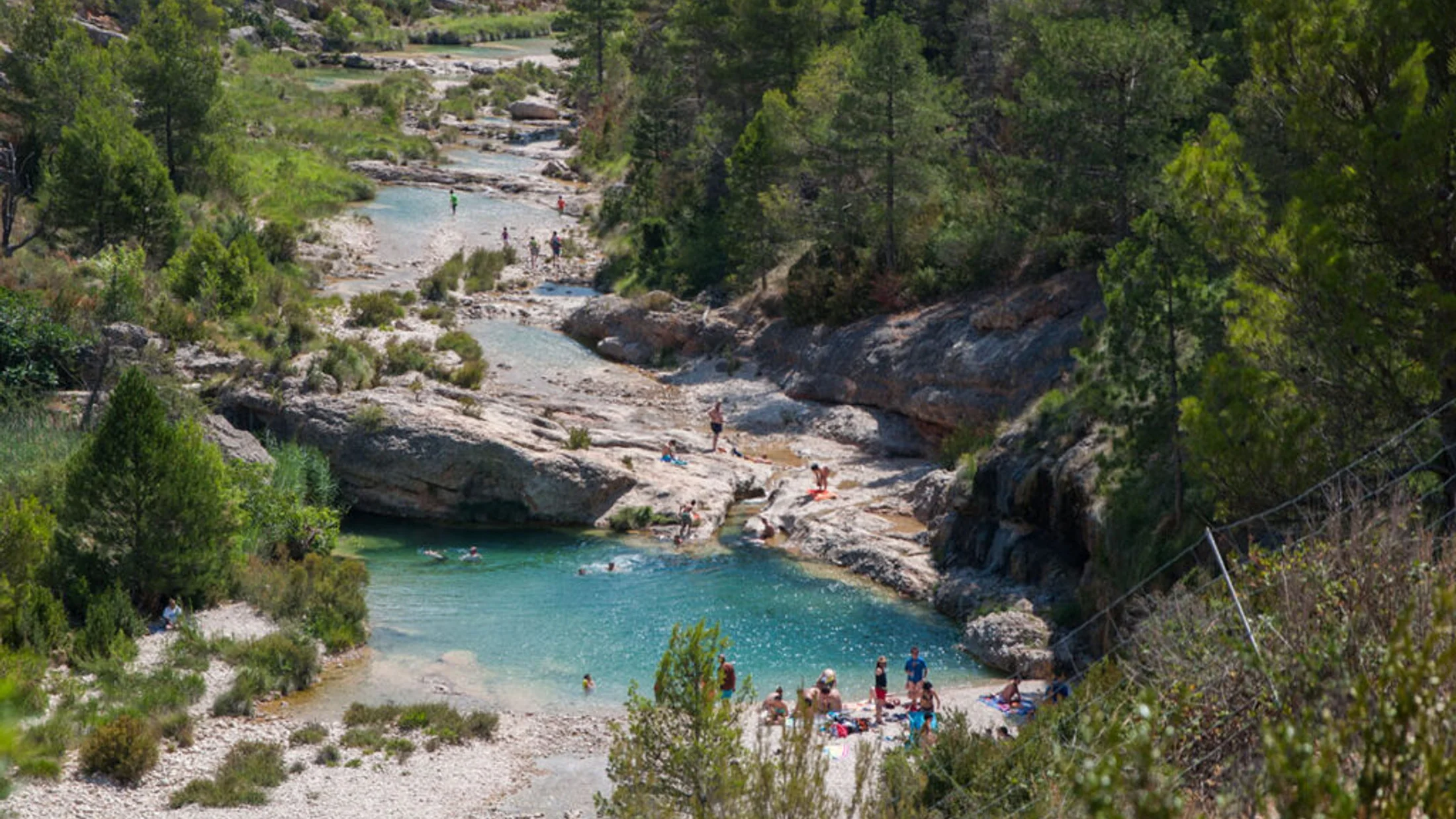
Why choose villages with a river for swimming
The charm of swimming in rivers and river beaches
A village with a river solves your swimming plans without needing an urban pool: clean currents, shade from alder trees, and meadows by the water. In Spain, there are several ways to take that dip, and it is worth knowing which one you are choosing before leaving home.
River beaches are banks prepared with sand or meadows, with a gentle slope to enter the water and, sometimes, summer supervision. Pools are deeper calm waters created by rock, designed for a short dip. Natural pools make use of the same riverbed with small dams and usually have stairs, walkways, and rest areas.
These spaces have fewer people than a pool, affordable prices, and a local atmosphere: lifelong bars and neighbours who look after the environment. Before leaving, check the signage and the AEMET rain forecast. The flow rises after storms, the bottom can be slippery, and lifeguards are not always present.
What you are going to find in this selection
Ten villages where a dip is just five minutes from the town centre or the car park. These are river villages, with a pool at hand and no car needed, designed for going for a swim without planning too much.
In each village, you will see where the locals swim, how to get there by car or public transport, and what services are available by the river. You will also find safety tips, recommended seasons, and tricks for families and hikers who want to combine swimming and a route.
Accommodation proposals range from rural houses to shaded campsites and small hostels next to the old bridge. With the practical itineraries, you can set up an express half-day, a weekend with a hike, or a family plan with shallow water and a picnic area.
If you fancy canoeing or canyoning, you have guidance to book the activity and coordinate schedules with swimming.
Picuco te puede ayudar
Does something here catch your eye?
Tell us.
Write to us on WhatsApp or email: we answer questions, find the best options and help you sort out the booking.
Where they are, when to go and how to get there
The mountain ranges concentrate a large part of the villages with rivers for swimming: the relief creates pools and waterfalls with flow almost all summer. That is why most of the destinations on this list are in mountain areas, a short distance from the town centre.
Near Madrid you have three clear areas. In Rascafría, the Lozoya passes near the Cartuja de Santa María de El Paular. And in the Sierra de Gredos, Navaluenga, already in Ávila.
Extremadura provides La Vera and the Valle del Jerte with Cabezuela del Valle, in addition to the Sierra de Gata and Robledillo de Gata. In Mediterranean Andalusia, the Axarquía region of Málaga has Frigiliana and the Higuerón river.
When to go
Late spring and early summer (May-July) usually offer pleasant flow and clean waters. Avoid floods after storms. August is hot and more crowded: go early or late in the day. In mountain rivers (Pyrenees, Picos), the water is cold all summer, so you will need brief dips and a short wetsuit if you are sensitive to the cold.
How to get there
A car is the most flexible option for small villages. Bring coins or a card for regulated car parks during the season, signal your location, and respect residential areas.
Trains and buses work for medium-sized hubs: you can reach Cangas de Onís from Oviedo by bus, and Rascafría with intercity lines from Madrid on weekends (a journey of up to approximately 135 minutes, with few departures per day). Public transport may be reduced in August and on weekends, so check the updated schedules from the regional consortium.
Many spots are 5-15 minutes from the centre. Leave your car in the first authorised car park and walk along marked paths, on foot or by bike.
Before setting off
Check the AEMET forecast and the water flow status after storms. Bring water shoes, a cap, water, and a bag for your rubbish. Look for local regulation signs upon arrival: some gorges restrict parking or capacity in summer. If you are travelling with children, prioritise river beaches with wide banks and gradual entry. On weekends, arrive before 10:00 or after 17:30 to park easily and find quiet banks.
Sleep and eat by the river without giving up comfort
Many villages leave the riverbed five minutes from the centre and combine accommodation with direct access to the water. You sleep comfortably and go down for a swim with a towel over your shoulder.
Rural houses and apartments are good for families or groups: they have their own kitchen, patio, and sometimes a garden with a barbecue. Hostels and inns are in the centre, with breakfast included and staff who know the local pools. Campsites and bungalows offer pitches next to the river with poplar shade, a bar-restaurant, and often direct access to the riverbank. Small charming hotels are less frequent and appear in tourist valleys such as Benasque and Alquézar.
Right by the water, there are usually seasonal bars and beach bars, ice cream kiosks, and picnic areas with tables. In some places, you will find walkways and stairs, and some regulated river beaches have lifeguards in summer. Authorised car parks may be paid or have limited capacity during high season.
Before booking, check the actual distance to the river: being 300 m from the bridge allows you to walk down. In summer, ask about the orientation and afternoon shade of the accommodation. With children, look for banks with gradual entry and check if there is summer supervision. For couples, a quiet accommodation with a terrace or garden where you can hear the current at dusk is advisable.
Filter by "river access", "bank" or "river beach" in the descriptions and check satellite maps to confirm proximity. In August, book 3-6 weeks in advance; in June and September, there are better prices and fewer people. If you want to add canoeing or via ferrata, confirm schedules and logistics with local operators and leave time for rest between swimming and the activity.
10 villages where a dip is five minutes away
1.Rascafría (Madrid): Las Presillas and the Lozoya
The village is in Rascafría, and the Las Presillas recreational area is located on the Lozoya river.
By car, leave Rascafría via the M-604 towards the Monasterio de El Paular and follow the signs to the recreational area. On foot, it is about 2.5 km from the village, taking around 35-40 minutes. There is free parking a few metres from the entrance and entry for people is free.
The area has lawn areas, walkways, tables, wide banks and several shallow natural pools, with adapted access areas for people with reduced mobility. Stepping onto the meadow, the air smells of freshly watered grass. The water is very cold, even in August.
There are no permanent lifeguards: exercise extreme caution if you go with children and avoid jumping from high areas. Go early in the morning or after 17:00, when the sun goes down and the water remains temperate. Bring water shoes, a cap and water, because there is not much shade next to the water surfaces.
Respect the signage and the riverbank, and help with the cleaning by using the bins and the glass containers. Combine it with a walk to the Puente del Perdón or the Bosque de Finlandia, both nearby.
2.Pelayos de la Presa (Madrid): San Juan reservoir beach
In Pelayos de la Presa, the San Juan reservoir leaves a freshwater beach. The water surface is dark green and is usually calm.
The Virgen de la Nueva beach was the first in the Comunidad de Madrid to receive a Blue Flag, since 2018. It is 500 metres long and has sand. It is an accessible and comfortable place, with marked areas, beach bars and services; during high season, there is supervision with lifeguards in areas delimited by buoys.
Respect some basic rules: do not cross the buoys, wear a life jacket if you go away on a board or boat and pay attention to nautical traffic, with jet skis kept out of the swimming area. If you are looking for fewer people, during the week you have El Muro or El Ancla. The best time is in the early morning hours or at sunset, when the heat and the wind drop.
With children, stay in the marked shallow areas, avoid glass and barbecues on the shore and respect the municipal regulations and cleanliness. Combine swimming with a walk through the old town and the viewpoints of the reservoir.
Access is via the M-501, known as the road of the reservoirs. Summer parking may be paid and fills up quickly on weekends.
3.Navaluenga (Ávila): pools of the Alberche river
In Navaluenga, the Alberche river opens into natural pools next to the Romanesque bridge, with clear water running over a smooth stone bed. The village is on the slopes of Gredos, 140 km from Salamanca, a little more than an hour and a half by car.
The banks have meadows, stairs and shaded areas, and there are beach bars. There is no lifeguard service as it is a protected area, so swimming is at your own risk.
Entry is free, but capacity is limited and it fills up quickly in summer, especially on Sundays and holidays: arrive before 10:00. In July and August, the population multiplies by ten.
The bottom is slippery and the current can increase after storms. Test the depth before the little ones get in. You can use mats or inflatable ducks in calm areas, but stay away from gates and avoid jumping from walls.
If you are looking for calm, go first thing in the morning or last thing in the evening and move a few metres away from the bridge. Bring river sandals and a large towel. You can access it on foot from the centre in 5-10 minutes, and there are signposted car parks at the entrance to the village.
4.Alquézar (Huesca): pools of the Vero river
Alquézar has crystal-clear water pools among limestone rock a short walk from the old town. The village is in the province of Huesca, overlooking the Vero river canyon.
From the old town, following the Vero walkways, you reach pools and small shallows of transparent, cold water, ideal for a brief dip. Get up early to have golden light and fewer people.
Respect the environment: do not use soaps, do not move the stones that serve as shelter for invertebrates and avoid loud music. During the season, canyoning shares nearby watercourses: stay in the signposted swimming areas and do not enter narrow gorges if the flow increases.
Bring footwear with an adhesive sole: the polished limestone is slippery. Combine it with a walk through the collegiate church and the viewpoints over the canyon, and consult the Parque Natural de la Sierra y Cañones de Guara for the rest of the day.
5.Cabezuela del Valle (Valle del Jerte, Extremadura): rivers and pools
Cabezuela del Valle is the base for swimming in pools and gorges of cold mountain water. The village adds its historic centre, declared a historical-artistic site, to the calm waters of the Jerte.
In the shade of the cherry trees, the water smells of fresh mountains.
The stretch you choose depends on the flow. At the beginning of summer, the river offers wide calm waters; in the middle of the dry season, look for deeper shallows upstream.
With children, choose river beaches with a natural ramp and supervise at all times: the current can be treacherous after rain. During the cherry blossom (March-April), combine a walk and a short soak if the weather is good. In summer, arrive early and avoid the hours of maximum sun exposure, and ask local tourism about pools with less attendance that day. There are regulated car parks in season to organise access.
The natural pool is open from mid-June to mid-September and does not have a lifeguard. You reach it from the urban centre via Marcelo Muñoz Díaz street, or by following the N-110 towards Navaconcejo and the signposted detour towards "Chiringuito El Vao", crossing the bridge and following the concrete track to a circular building.
6.Cangas de Onís (Asturias): stretches of the Sella and tributaries
In Cangas de Onís, there are pools tucked away in nearby tributaries, in the bed of the Dobra river, a tributary of the Sella river. The municipality borders Amieva and is near the Picos de Europa National Park, so you can also swim in nearby tributaries with more secluded pools.
For a safe swim, choose wide pools and avoid pools with siphons or currents after rain. Before going down to the river, check the flow: the depth of the pools varies with the low water season and it is not advisable to jump. The water is cold even in August, so limit your immersion if you feel numbness.
If there is canoe descending, swim outside the main channel and respect the boarding areas. Bring river shoes and a thermal towel to get in and out comfortably.
7.Robledillo de Gata (Extremadura): natural pools of the Árrago river
In Robledillo de Gata, the Árrago river passes by the village. The village is a historical ensemble of popular architecture, and swimming is just a short walk away.
From the entrance car park, you walk down to the pools in 5-10 minutes through narrow streets. The bed is made of slate and there are shallow areas, so you can get wet without any rush.
There is no lifeguard service and the flow changes after storms: be careful with slippery rocks. Bring water and something to eat, and pick up all your rubbish. Go early, when the village is still sleeping and the pool shines in silence.
In the village, you can see the church of Nuestra Señora de la Asunción, with Mudéjar coffered ceilings, and the Casa Hospital Franciscana (15th century) with original sgraffito. The Museo del Aceite occupies the Molino del Medio, a medieval oil mill. 5 km away is the Chorritero waterfall, with a 70-metre drop.
Park in the designated areas: the streets are very narrow and residents live there all year round. Respect the traditional irrigation channels and the mills, which are living heritage. If you are looking for more water, explore other natural pools in the Sierra de Gata in nearby villages.
8.Frigiliana (Málaga): pools and stretches of the Higuerón river
From Frigiliana, the bed of the Higuerón river has walkable stretches and transparent pools where you can soak. Access starts from the path to the river, in the lower part of the village, and the starting point is the door of the Cuartel de Guardia Civil, at 290 m altitude.
You walk up the river bed according to your desire and the flow. Los Estrechos is the narrowest point of the canyon, with walls just a few metres away. La Cueva Oscura has been closed for approximately 20 years to prevent the looting of prehistoric remains.
The water is clear and the bed is made of pebbles; in summer the flow decreases and more pools appear. Bring closed footwear to walk through the water and avoid the route after heavy rain due to the risk of flooding. The stretch is not suitable for babies or people with reduced mobility, and it is not recommended to bring dogs.
Local regulations ask you not to leave waste, not to pull up riverside plants and to avoid loud noises: it is a narrow gorge with sensitive fauna. It is better to go at dawn or in the afternoon, with oblique sun and less heat. Bring a waterproof bag for your mobile and a light towel.
If you still want more, visit the white old town of Frigiliana and its viewpoints.
9. Benasque (Huesca): mountain gorges and rivers
Benasque is at 1138 m altitude, between the Paso Nuevo and Linsoles reservoirs, and holds gorges of icy water flowing down from the Pyrenees. The Posets-Maladeta natural park is within its boundaries.
Swimming areas are spread across the Ésera and its tributaries, and you can reach them by car or on foot from the valley. Many pools are 10-25 minutes away via marked paths.
The water is very cold even in August. Take short dips, watch out for cold shock, and do not swim alone. After storms, rivers rise quickly: if you hear a roar upstream, get out of the riverbed.
You can combine swimming with gentle hiking along the GR-11 or with valley viewpoints, leaving the dip for the end. The GR 11.5 variant passes through Los Baños, Hospital de Benasque, Plan d'Están and La Besurta; one of its stages totals 14 km, 4h 25min, 900 m ascent and 155 m descent. Among the most visited spots are the Aigualluts waterfall and the Coronas Lakes, lakes of glacial origin in the Coronas Valley.
If you want to stay in the water for more than a few minutes, bring a short wetsuit and footwear with grip for the polished rock and unstable slopes. Respect the alpine flora and leave no trace. For a temperate water alternative, the Balneario de Benasque offers mineral-medicinal waters, thermal pools, saunas, Turkish baths and jacuzzis.
10. Villanueva de la Vera (Cáceres): natural pools and gorge
In Villanueva de la Vera, swimming takes place in gorges of clear water on the southern slopes of the Gredos mountains. The village occupies the eastern part of La Vera and serves as a stop for a morning or afternoon dip.
The Gualtaminos and Minchones gorges have pools with waterfalls such as the Diablo or the Ventera stream. There are prepared areas with walkways and meadows, comfortable for going with children.
More people arrive during the summer season: it is advisable to arrive early and look for shade. Respect cleaning rules and avoid jumping, as the depth changes with the low water level. Check local signs regarding fire and barbecues, which are usually prohibited.
The morning is good for families and the last hour of the day is for those seeking calm and soft light. Bring water shoes, a cap and a reusable bottle. Take the opportunity to see the traditional old town and buy seasonal fruit.
You can reach it by car to signalled car parks or on foot in 10-15 minutes via riverside paths.
What to do besides swimming: trails, viewpoints and heritage
Swimming is only half the plan: the other half lies in the trails and in village life. With a bit of organisation, the day yields much more than just a towel and a pool.
It is best to do it in the morning, when the heat is less intense.
In Benasque, the surroundings open up views of Posets and Maladeta.
Frigiliana has balconies with the Mediterranean in the background, and its old town of Moorish heritage, Barribarto, is declared a Historical-Artistic Site.
For water, Canoeing works well in calm rivers such as the Sella or stretches of the Tormes and the Alberche, with local companies and qualified instructors. In the Alberche, the descent lasts 3 hours, from 10:00 to 13:00, and it is essential to know how to swim. The banks of the Alberche feature parking areas, toilets, showers, benches and picnic tables.
There are also via ferratas and MTB in signalled areas, which can be combined with a short swim to refresh yourself.
Organise your day like this: a cool morning with a short walk or heritage visit; a dip and a picnic in the mid-morning, before peak hours; a siesta in the shade or a coffee in the village in the early afternoon; a second swim at sunset, with golden light and fewer people.
Families do well to prioritise river beaches with meadows, shade and services. Couples find less crowded pools at the end of the day. Hikers leave the swim for the end of the route and carry dry clothes and a light towel in their backpack.
Buying bread at the village bakery, asking for seasonal fruit and asking neighbours for the best spot to watch the sunset helps the local economy.
How to combine a dip, routes and rural life
Itinerary 1: Half day — morning swim and lunch in the village
With only a few hours ahead, the plan is simple: a swim in the morning and lunch in the village. Arrive between 8:30 and 9:00, park in the first authorised car park and walk 5-10 minutes to the shore. At that time, you avoid the crowds and the harsh sun.
Look for a stretch with morning shade and a progressive entry into the water, and swim for 20-30 minutes in two sessions. Afterwards, have breakfast or a snack at the picnic area.
At 12:30, head up to the old town to eat a menu of the day or tapas in local bars. Return to the car without rushing and respect the neighbours and agricultural access points.
For the day, carry a light backpack with a towel, water and a waste bag, as well as water shoes and sunglasses. Check the parking regulations and avoid the edges of paths and the entrances to estates.
Itinerary 2: Weekend — hiking route and rural nights
A weekend is enough to walk through the mountains, bathe in a pool and sleep in the village. This plan fits in villages with rivers and local trails, from Friday afternoon to Sunday.
On Friday afternoon you arrive and stay in a rural house 10-15 minutes from the river. On Saturday you do a circular route of 8-12 km via a local trail, with a light lunch and a swim in a pool in the mid-afternoon. On Sunday you dedicate the morning to a quiet river beach, eat in the village and return home.
Book your accommodation 2-4 weeks in advance during high season. If you add canoeing or via ferrata, confirm the schedules before leaving.
For swimming, avoid peak hours (13:00-17:00) or choose sections with shade and a gentle current. In mountain areas, take an offline track and a paper map. Put quick-drying swimwear and a change of clothes for dinner in your backpack. Park in designated areas and not in narrow streets, to respect the neighbours' rest.
Itinerary 3: Family — safe activities and places suitable for children
A river beach with a meadow, shallow depth and a lifeguard in season solves the day with children. Arrive before 10:00, set up shade and delimit a safe play area.
Splashing at the shore takes up the morning. Afterwards, a mini-search for river "treasures" (leaves, smooth pebbles) and a short walk to the village bridge keep the pace without tiring anyone out.
Eat in the shade and have a nap. The second swim arrives at 17:30, with less sun and the water already warmed.
If there are some deeper sections, put on a child's life jacket and do not move away from the shore. In your backpack, take a parasol or awning, mineral sunscreen, a cap and plenty of water. For the little ones, river sandals and a UV shirt. Bring simple games that do not leave residue: buckets, watering cans and soft balls.
Practical tips for safe swimming, regulations and parking
Before getting into the water, look at the flow and the current: if the leaves are passing by at full speed, only swim near the shore. Feel the bottom with your feet to find loose rocks, mud or uneven levels. In mountain rivers, take short dips and watch for numbness caused by cold water.
Avoid swimming right under waterfalls or gates, because they can create siphons. If it rains in the headwaters, postpone your swim: floods can be sudden. When in doubt, do not get in or move to a calmer section of the river.
Bring water shoes with an adhesive sole, a cap, eco-friendly sunscreen, water, a light towel and a waterproof bag for your mobile. Read the signs at the entrance: some gorges regulate capacity, parking or prohibit pets during sensitive seasons. In natural pools in villages, check if there is a summer surveillance calendar or temporary closures due to works or cleaning.
Do not use soaps in the river: they affect the fauna and the water quality. Fire and barbecues are usually prohibited in summer due to the risk of fire. Take your waste with you and, if you can, pick up something extra: "what goes in, comes out". Keep the music low or use headphones to share the river with respect.
Do not block rural paths: park in authorised areas even if they mean a 10-minute longer walk. Arrive early on weekends and in August, when parking fills up.
Frequently asked questions
Is it safe to swim in pools and river beaches?
Yes, swimming in pools and river beaches is safe if you choose your location wisely and respect the signage. Before getting in, look at the flow: if the water is carrying branches, it is better not to swim.
Look for backwaters rather than areas with strong currents, which are safer, and check the bottom: stable rock and free of objects. In mountain rivers the water is cold, so take short dips. If there is summer supervision in the area, swim within its coverage radius.
Bring water shoes, a cap and water. Avoid jumping from rocks, because the depth changes with the low water level. After storms the river can rise suddenly: if there is a heavy rain warning, wait 24 hours before swimming.
With children, stay on shallow river beaches in full view of everyone, without losing sight of them.
Do I need to pay or book to swim in these areas?
Most stretches are free to access and do not require a booking. Swimming in the river is usually as simple as arriving and looking for your pool.
In summer, some municipalities regulate parking with payment or capacity limits, and certain recreational areas may charge for maintenance. Reservoirs with river beaches sometimes have blue zones on the shore or official parking. Gorges with high environmental value may limit vehicles or close tracks during peak hours to avoid impacts.
Campsites with direct access to the riverbank are private and reserved for customers. If you book an activity such as canoeing or canyoning, confirm the conditions with the operator and arrive with time to spare.
Before going, consult the town hall website or the local tourist office and bring cash or a card in case the parking is paid.
How to detect if a pool is suitable for children?
A pool is suitable for children if it has a progressive entry, a backwater without current and a firm bottom. Before laying down your towels, look at the shore: a wide meadow or river beach, clear water in the first few metres and access without jumps are good signs.
Be wary if you see persistent foam, notice a strange smell, if there is an abrupt slope or if the current "pulls" objects. Choose areas where there are other families and, if it exists, summer supervision.
Bring river sandals, a child's life jacket for slightly deeper backwaters and a UV shirt. Do not move more than an arm's length away from the little ones, take short swims and avoid the central hours of sun.
Teach them to enter and exit through the same point and not to run on wet rock.
How is the water quality checked?
During the season, town halls, regional health services and hydrographic confederations supervise bathing water. Public reports and local panels will tell you if swimming is suitable, and also warn of temporary recommendations due to works, rises or blooms.
Before getting in, look at the water. Do not swim if it is unusually murky, if there are persistent foams, strong odours or visible discharges. It is also not advisable to swim right after a storm.
Take care of the river while you enjoy it: do not use soaps, do not stir up the bottom excessively and let a few hours pass after heavy rains. Before leaving, check the municipal website or that of the confederation of your basin (Tajo, Ebro, Miño-Sil, Júcar, etc.). If you have doubts, choose a higher stretch or a natural pool with maintenance.
Can I combine swimming with activities like kayaking or canyoning?
Yes, you can combine swimming with kayaking or canyoning if you adjust the logistics and safety. In calm rivers, there are companies with qualified instructors that offer kayaking or canoeing in specific stretches.
Respect the marked swimming and boarding areas. For canyoning, inform yourself beforehand about water levels, permits and allowed seasons: in regulated canyons, conditions can change in days.
Use a helmet, wetsuit and technical footwear, and do not enter canyons if a storm is forecast. Leave the long dip for after the activity, in a safe pool.
To book or compare options, consult specialised platforms and confirm equipment, insurance and guide-to-person ratios.
Book your experience — discover active tourism activities in Spain with providers verified by Picuco.
Conclusion
A village with a river adds freshness, landscape and local life in a single day: shade, meadows and pools that an urban swimming pool does not have.
Before heading out, check the water level and the weather forecast, arrive early and bring water footwear. Respect the local regulations and those who live there.
Choose according to who you are going with. Families appreciate shallow river beaches and, if available, those with supervision. Hikers prefer a dip at the end of the route. Couples, the afternoon light in tranquil pools.
If this selection inspired you, plan your getaway and share the guide with your group.