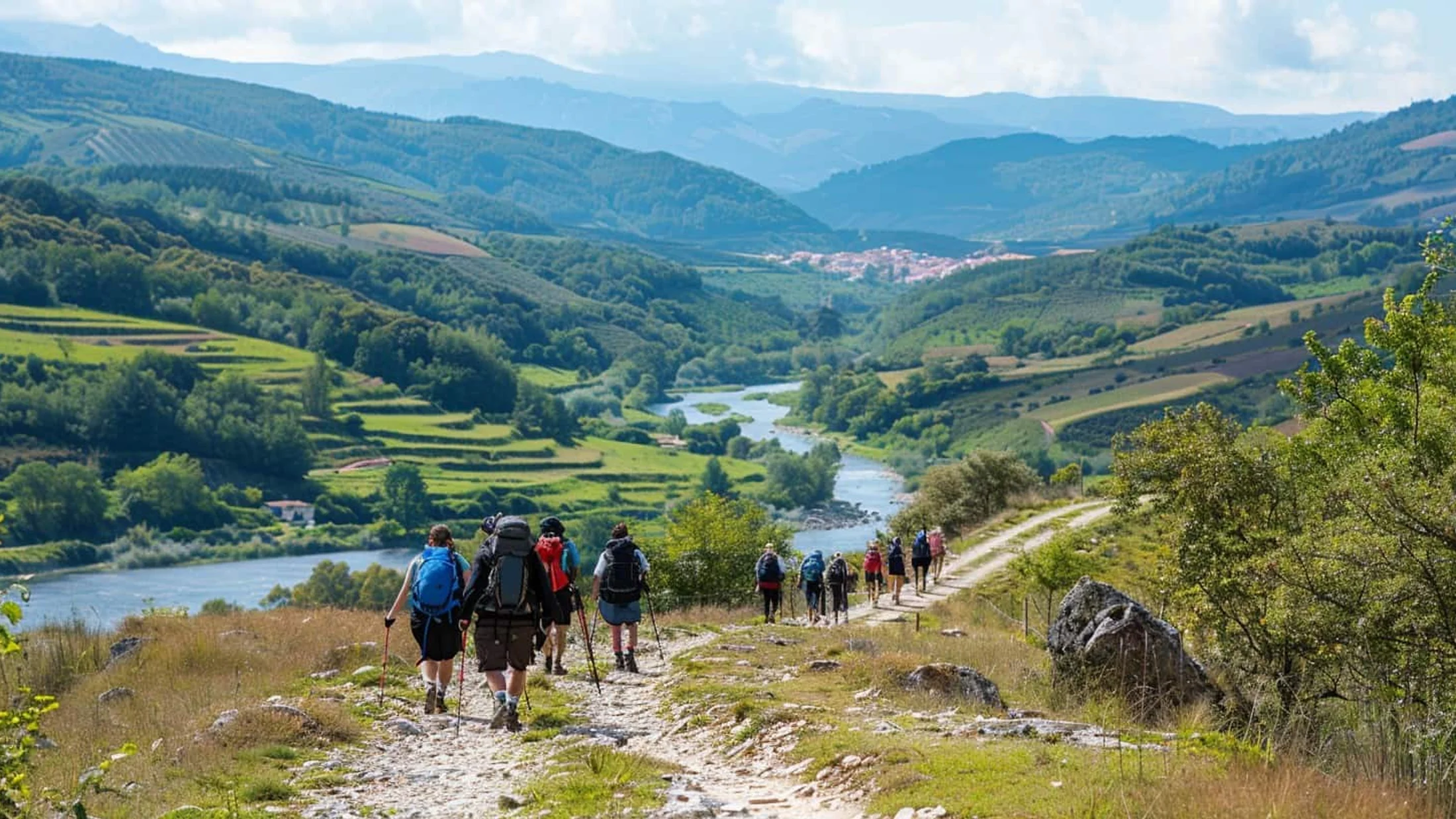
Why the Camino Francés Rewards a Naturalist’s Eye
The Camino Francés nature is not a backdrop; it shapes safety, conservation, and how you remember each step. Across 775 km from St-Jean-Pied-de-Port to Santiago, altitude, climate, and land use shift from Pyrenean beech woods to Galicia’s Atlantic forests, with a long, sun-exposed meseta in between. At dawn, a lark rises over wheat like a single note carried on an endless breath.
Understanding landscapes helps you plan water, layers, and pace on exposed stages, while awareness of Camino de Santiago wildlife keeps nesting birds, amphibian pools, and grazing herds undisturbed. This article spotlights seven natural highlights of the French Way chosen for five reasons: biogeographic representativity, easy access directly from a stage, high interest for birds and plants, singular scenic character, and nearby services for pilgrims. We cross-checked official guides (MITECO Natura 2000 sheets), regional studies (Navarra, La Rioja, Castilla y León, Galicia), SEO/BirdLife species atlases, and field notes collected along the GR-65.
You will learn what to look for—raptors over cols, steppe birds in cereal plains, riverine plants under alder shade—and where each is most likely. Use the list to match interests with places: birdwatching Camino de Santiago on spring ridgelines, botany in Galicia’s humid valleys, or sunrise photography in vineyard slopes. For each area, you’ll find concise snapshots with stages, best time to go, costs you might expect, and ideas for short detours. Scan it before choosing your window to walk, then adjust daily plans by weather and energy so you enjoy landscapes French Way without rushing. If you want more depth on a topic, check regional visitor centers on route towns and updated species bulletins from SEO/BirdLife and park offices before you set out.
Picuco te puede ayudar
Does something here catch your eye?
Tell us.
Write to us on WhatsApp or email: we answer questions, find the best options and help you sort out the booking.
Seven Natural Highlights of the French Way
1) Pyrenees and Navarre valleys: high ridges, clear rivers, living traditions
The Camino crosses the Pyrenees from St-Jean-Pied-de-Port to Roncesvalles, rolling from rounded crests to glaciated valleys fed by cold streams. Beech forests cloak the slopes while upland pastures open the sky to griffon and Egyptian vultures; in shaded brooks, the Pyrenean newt holds on to icy refuges. Wind slides over Ibañeta Pass and bells from latxa sheep drift like soft chimes.
The first two stages set the tone for Camino Francés nature: sharp weather changes, strong sun and wind, and sudden shelter in forest. Watch for short-toed snake eagle scanning for snakes, booted eagle, red kite, and migrating honey buzzard in late August–September (SEO/BirdLife seasonal notes). In beech stands, listen for black woodpecker and spot spring anemones and wood sorrel along the path undersides. For fauna Camino de Santiago, linger at ridge breaks and river bridges—raptors ride thermals, while dippers bob on stones in rapid streams.
-
Best viewpoints and moments:
- Alto de Ibañeta (1,057 m): raptor passage on clear, breezy days.
- Roncesvalles–Zubiri: Arga River bridges for dippers and grey wagtails.
- Dawn and late afternoon: softer light for landscapes Camino Francés.
-
Practical snapshot:
- Location: St-Jean-Pied-de-Port–Roncesvalles–Zubiri (Stages SJPP–1 and 2 of
GR-65in Spain). - Cost/services: Standard pilgrim services in SJPP and Roncesvalles; no fees for trails.
- Best time: May–June for flowers and raptors; Sept for migration, cooler weather.
- Ideal for: Birding, cool-forest botany, mountain photography.
- What to do: Pause at Ibañeta col; follow signed detours to beech viewpoints; carry layers and water.
- Location: St-Jean-Pied-de-Port–Roncesvalles–Zubiri (Stages SJPP–1 and 2 of
2) La Rioja vineyards and slopes: mosaic farming and biodiversity at the vine’s edge
La Rioja’s long, gentle hills carry vines stitched with farm tracks, villages, and chapel-capped knolls. Hedgerows of hawthorn and blackthorn shelter warblers, while fallow patches and dry banks host hoopoes, bee-eaters, and pollinator swarms over thistles and poppies. At sunrise, vineyard rows glow bronze and green like ordered waves.
This is flora and fauna French Way at its most cultural: biodiversity rides on traditional features—stone walls, solitary holm oaks, margins cut late for birds and insects. Expect skylarks and crested larks singing overhead; common kestrels hover above tracks; red-legged partridge scuttle from field to field. The landscape is open, so plan shade breaks and refill points in towns like Navarrete, Nájera, and Santo Domingo de la Calzada. Tread edges, not furrows, and keep away from active machinery and private parcels unless explicitly signed as public tracks.
-
Visible stretches and activities:
- Logroño–Navarrete–Nájera: broad vineyard vistas, easy side tracks for photos.
- Nájera–Santo Domingo de la Calzada: classic landscapes French Way with horizons and villages.
- Low-impact ideas: sunrise photo loops; responsible tastings near stage towns.
-
Practical snapshot:
- Location: Logroño–Navarrete–Nájera–Santo Domingo stages.
- Cost/services: Winery tours/tastings commonly 10–25 €; confirm locally or check options with Picuco.
- Best time: April–May (flowering); Sept–Oct (harvest); winter for stark vine architecture.
- Ideal for: Landscape photographers, pollinator watchers, cultural landscape fans.
- What to do: Walk between villages at dawn; photograph hedgerows; choose tastings after the stage to avoid dehydration.
3) The Castilian meseta: big skies, steppe songs, and watchful raptors
Between Burgos and León, broad cereal plains and remnant steppe habitat open the horizon for days. Wind moves over wheat like a slow tide and calandra larks rise, singing, into the blue. The scale is humbling and perfect for birders who scan rather than seek shelter.
This is the stronghold of steppe birds: great bustard, little bustard, stone-curlew, Montagu’s harrier, and pin-tailed sandgrouse in select patches (SEO/BirdLife Atlas). Early mornings in spring (April–May) are key for courtship displays and subdued temperatures. Raptors patrol—marsh harriers over fallows, red kites near villages, and black kites in migration. Bring compact binoculars (8x32 suits walking) and scan from field edges or gentle rises; never enter crops or approach displaying bustards—200 m is a good minimum.
-
Where to look and how:
- Burgos–Hontanas–Boadilla–Frómista–Carrión–Calzadilla: best continuity of open habitat.
- Use canal paths near Frómista to rest with shade and water birds (herons, egrets).
- Threats and conduct: stay on tracks, leash dogs, avoid playback calls, respect no-drone norms.
-
Practical snapshot:
- Location: Central meseta stages in Burgos and Palencia provinces.
- Access/services: Regular towns each 10–20 km; buses connect Burgos/Palencia for logistics.
- Best time: March–May for migrants and displays; Oct–Nov for passage; summer heat is intense.
- Ideal for: Birdwatching, minimalist landscape photography, meditative walking.
- What to do: Start pre-dawn in warm months; plan long water carries; schedule bird stops at field edges.
4) León and Palencia uplands and woods: green corridors and forest life
West of the plains, the way rises into the Montes de León with oak scrub, heath, and river galleries that thread the route. Broom and heather paint the slopes gold and purple, while pedunculate and Pyrenean oaks shade tracks and gullies. In the cool after-rain, the leaf litter smells earthy and sweet like a damp book.
Forest fauna includes roe deer and wild boar (crepuscular), genets and stone martens in quiet edges, and birds like Iberian green woodpecker, nuthatch, and tawny owl. Spring brings orchids to clearings; late summer brims with butterflies along heather-lined verges. Consider short signed detours near Rabanal del Camino into oak groves, or linger along shaded rivers between Astorga and Molinaseca. Reduce impact by moving quietly, keeping to marked trails, and using red-light headlamps for brief night listening without blinding wildlife.
-
Tramos and ideas:
- Astorga–Rabanal del Camino–Cruz de Ferro–Molinaseca: broom heathlands, stony passes, oak patches.
- Canal and riverside lines in Palencia/León for riparian birds and shade.
- Night notes: brief owl listening from villages’ edges; never enter deep woods in darkness.
-
Practical snapshot:
- Location: Astorga to Molinaseca corridor; riparian segments in León/Palencia.
- Services: Villages at stage ends; simple groceries and lodging common.
- Best time: May–June (flowers, mild); Sept (clear skies, cooler highs).
- Ideal for: Botany, forest birding, star and sound observation near villages.
- What to do: Add a 1–2 km loop into oak groves; cross Cruz de Ferro early to avoid crowds.
5) Maragatería and into Galicia: cultural fields, chestnuts, and living rivers
Between Astorga and O Cebreiro, the Camino crosses Maragatería and the Bierzo valley before climbing into Galicia. Stone villages, grazed commons, and riverbanks create a mixed tapestry where swallows, wagtails, and kingfishers share space with cattle and orchards. Water under alder shade runs tannin-brown and cool as tea.
This is a hinge between regions: Mediterranean touches in lower Bierzo—chestnut groves, vineyard pockets—and Atlantic humidity as you approach O Cebreiro (c. 1,300 m). Along the Valcarce and Burbia rivers, look for white-throated dippers and grey wagtails; in meadows, butterflies feed on knapweed and scabious. Respect grazing: give right of way to herds, pass calmly by mastiff dogs, and leave gates as found. For fauna linked to pastoral life, early morning edges of villages are rich in activity: starlings, sparrows, and kites taking advantage of insect flushes.
-
Stages and cues:
- Astorga–Rabanal–Molinaseca–Ponferrada–Villafranca del Bierzo–O Cebreiro: clear ecological transition.
- Chestnut groves near Ponferrada and villages: autumn mast and leaf color.
- River interludes for bird pauses on heat or rain bursts.
-
Practical snapshot:
- Location: Western León into eastern Galicia.
- Costs/services: Regular pilgrim services; optional farm visits or tastings vary—confirm locally.
- Best time: May–June (flowers, birds); Sept–Oct (harvest, chestnuts).
- Ideal for: Watching fauna tied to livestock and rivers, cultural landscape walks.
- What to do: Add riverside pauses; photograph chestnut textures; time O Cebreiro ascent for morning views.
6) Galicia’s fragas and rivers: emerald corridors and quiet meadows
From O Cebreiro to Santiago, Atlantic rain and mild temperatures feed lush fragas—oak, birch, and chestnut forests—with thick fern understorey. Alder-lined streams host amphibians and kingfishers, while pastures and small bogs break the forest like open rooms of light. Mist beads on spiderwebs so each thread gleams like a string of pearls.
Flora stands out: royal fern in wet ditches, holly tucked into shade, and carpets of moss on stone walls. Listen for song thrushes and robins, and scan slow pools for Iberian frog tadpoles and newts. Birdwatching Camino de Santiago here rewards patience at bridges and footbridges; kingfisher and grey heron flush quickly if you move fast. Consider short variants like Triacastela–Samos for deep valley forest and Sarria–Portomarín for Miño views and reservoir edge birds.
-
Stages and focus:
- O Cebreiro–Triacastela–Sarria–Portomarín–Palas de Rei–Arzúa–O Pedrouzo–Santiago.
- Low, wet meadows for wagtails and seasonal snipe; edges for orchids in spring.
- Quiet hours: early morning and after rain squalls for bird activity.
-
Practical snapshot:
- Location: Eastern to central Galicia on the French Way.
- Services: Frequent bars and lodging; forest shade and water common.
- Best time: April–June and Sept–Oct—wet but vividly green; winter quiet and moss-rich.
- Ideal for: Photography, botany, gentle river birding.
- What to do: Linger at bridges; take Samos valley variant; carry a light rain layer year-round.
7) Working rural stretches: fields, flocks, and the life of edges
Across the Camino, not just in one province, you’ll cross living farmland: cereals, orchards, vegetable plots, and pasture with sheep, cows, and horses. Here biodiversity hides in plain sight—barn swallows under eaves, white storks on church towers, and kestrels on wires scanning verges. Warm dust rises off the track at noon and smells faintly of straw and fennel.
Ecological processes are on show: swallows skim insect booms after rain, foxes work field margins at dusk, and amphibians breed in temporary troughs and ruts. Flora Camino Francés along edges includes mallow, wild carrot, and thistles powering pollinators; keep boots to path edges to avoid trampling blooms. For fauna Camino de Santiago without disturbance, stop, watch, and listen—ten quiet minutes near a hedgerow beats a rushed hour. Farmers’ good practices (late hedge cuts, nest-friendly barns) and pilgrims’ respect (leashes, litter-free lunches, no drone buzz) keep this mosaic thriving.
-
Where and how:
- Typical near every town-to-town segment, especially in La Rioja, Burgos, Palencia, and León plains.
- Best light at dawn/dusk; avoid harvest machinery zones and give wide berth.
- Dogs: keep on short lead around flocks; face livestock guardian dogs calmly and detour if signaled by shepherds.
-
Practical snapshot:
- Location: Dispersed along the entire French Way.
- Costs/services: No fees; buy local fruit/cheese where available to support communities.
- Best time: Spring and early summer for flowers/insects; winter for stork rookeries in Castile.
- Ideal for: Family wildlife watching, casual photography, cultural encounters.
- What to do: Pause at village edges; scan church towers; chat with producers when invited.
Map of Key Locations and Recommended Stages
We distributed each natural enclave on a single map layer by stage to make planning intuitive. Symbols mark raptor viewpoints, river bridges for dippers and kingfishers, open steppe lookouts, vineyard sunrise points, and forest footbridges. You’ll also see lodging clusters near nature-rich segments and municipal or regional interpretation centers in larger towns along the GR-65. The map’s legend distinguishes walking-only detours, short out-and-back spurs (under 2 km), and public-transport links for rest days.
Suggested stage pairings include St-Jean–Roncesvalles (Pyrenees raptors), Nájera–Santo Domingo (vineyard textures), Frómista–Carrión (steppe birds and canal shade), Astorga–Rabanal (oak and heath), and Triacastela–Sarria via Samos (deep valley forest). On mobile, use the interactive embed with pinch-zoom to read notes tied to benches, springs, and shaded stops; for offline planning, download a PDF snapshot with stage thumbnails and symbols. Integrate the map by picking one natural highlight per day—e.g., “bridge stop at km 8” or “ridge scan after the pass”—so interest points shape your pace instead of the other way around. Before you walk, check local tourism offices for seasonal closures of variants and any temporary wildlife-sensitive restrictions.
Choosing Your Segment by Interests and Fitness
If you’re a birder, spring and early autumn are the best time to walk French Way for variety and movement. Prioritize Pyrenees ridgelines, the Navarre valleys, and the meseta’s open patches between Frómista and Carrión for steppe specialties. Carry 8x32 or 10x42 binoculars, a lightweight bird app, and note dawn starts to beat heat and maximize activity. For fitness, these are moderate days—exposed but not steep—so focus on water and sun management.
For a botany focus, Galicia and the León uplands shine: April–June brings ferns, orchids, broom blossom, and fresh oak leaves. Add the Triacastela–Samos variant, and small loop detours into oak groves near Rabanal. Fitness-wise, expect rolling terrain with some climbs; use trekking poles to ease knees on descents, and wear shoes with good traction for wet forest paths.
Landscape photographers should think in light. Vineyards in La Rioja reward sunrise and low fog; the meseta is about scale and clouds; Cruz de Ferro and O Cebreiro serve drama with big skies. Pack a compact tripod or a clamp, and a 24–70 mm lens; keep an ultralight rain cover handy. Choose shorter days (20–24 km) so you can linger for the right angles without night arrivals.
If you’re short on time, combine two or three-day slices: St-Jean–Roncesvalles for a mountain fix; Nájera–Santo Domingo for cultural mosaic; Triacastela–Sarria for forest calm. Public transport links in Logroño, Burgos, León, and Sarria make entry/exit straightforward. For those seeking quiet, consider shoulder seasons—late March, mid-October—and start early; you’ll meet fewer crowds yet still enjoy thriving flora and fauna French Way.
Across all profiles, minimize impact:
- Stay on waymarked trails and signed variants; avoid crop shortcuts.
- Keep 50–200 m from nests/displays; never use playback during breeding (Mar–Jul).
- Leash dogs near flocks and wildlife; pack out all waste; avoid drones in protected or populated areas.
- Share sightings and sensitive locations with discretion and via local centers, not public posts that could drive crowds to fragile spots.
For safety, check daily weather, especially in the Pyrenees and at passes like Cruz de Ferro (42.492°N, -6.429°W), where wind and storms arrive fast. On the meseta, plan shade and electrolytes; in Galicia, assume slick rock and mud after rain. A simple rule anchors it all: move at a pace that lets you notice things.
Frequently Asked Questions About Wildlife, Safety, and Access
Do I need permits to watch birds or explore side tracks?
No permits are required for birdwatching from public paths, bridges, or viewpoints. Private land, vineyard rows, and active farm tracks may be off-limits unless signed as public; always ask before entering. Some protected areas can have seasonal restrictions in breeding periods—check local offices or park notices in stage towns.
Are there dangerous animals on the Camino?
Large wildlife is shy and mostly nocturnal; direct encounters are rare. The most common concerns are livestock guardian dogs—stop, speak calmly, give space—and wild boar at dusk, which you should avoid by sticking to towns before dark. Ticks are present in grassy edges; use repellent and do a quick check after walking.
What’s the best basic kit for birding and nature notes?
Carry light binoculars (8x32 or 10x42), a phone app or pocket guide, and a small notebook. Photographers do well with a 300 mm lens for birds and a 24–70 mm for landscapes, plus a compact rain cover. Add a thin sit pad for quiet observation breaks and a soft cloth to dry optics in drizzle.
How can I avoid disturbing wildlife?
Keep to trails, lower your voice, and give extra space during breeding (March–July). Do not use playback calls, drones, or flash with birds at close range; avoid approaching nests or burrows entirely. If an animal changes behavior—alarm calls, wing flicks, retreat—back away and shorten your stop.
Can I drone for aerial shots of landscapes?
Spain regulates drones strictly, with additional limits over people, villages, and protected areas. On the Camino, conditions rarely meet legal and ethical thresholds; wildlife and privacy risks are high. Unless you hold permits and operate well away from people and sensitive fauna, leave the drone at home.
Where can I get reliable local nature information on route?
Tourist offices and municipal nature centers in larger towns share current trail notes and species highlights. Regional park services and SEO/BirdLife local groups publish seasonal bulletins and host talks. Ask hospitaleros for nearby interpretation centers; many are marked on town maps with hours and contacts.
Book your experience — discover active nature experiences in Spain with providers verified by Picuco.
Conclusion
The French Way is a living corridor where culture and nature move together: beech shade and village bells, steppe songs and canal shade, chestnuts and river light. By tuning into Camino Francés nature, you’ll walk more safely, notice more, and leave less trace. Choose segments that match your interests—raptors on ridges, flowers in forests, or vineyard dawns—and build days around one or two natural highlights rather than racing the clock.
Download a planning map, check local updates, and carry simple tools—binoculars, a notebook, and curiosity. Support communities that keep hedgerows, chestnuts, and trails cared for by buying local and following farmers’ cues. Whether you have three days or three weeks, set a pace that lets the landscapes’ quiet details find you, and the Camino will answer with birdsong, leaf-shade, and a deeper sense of place.