Introduction
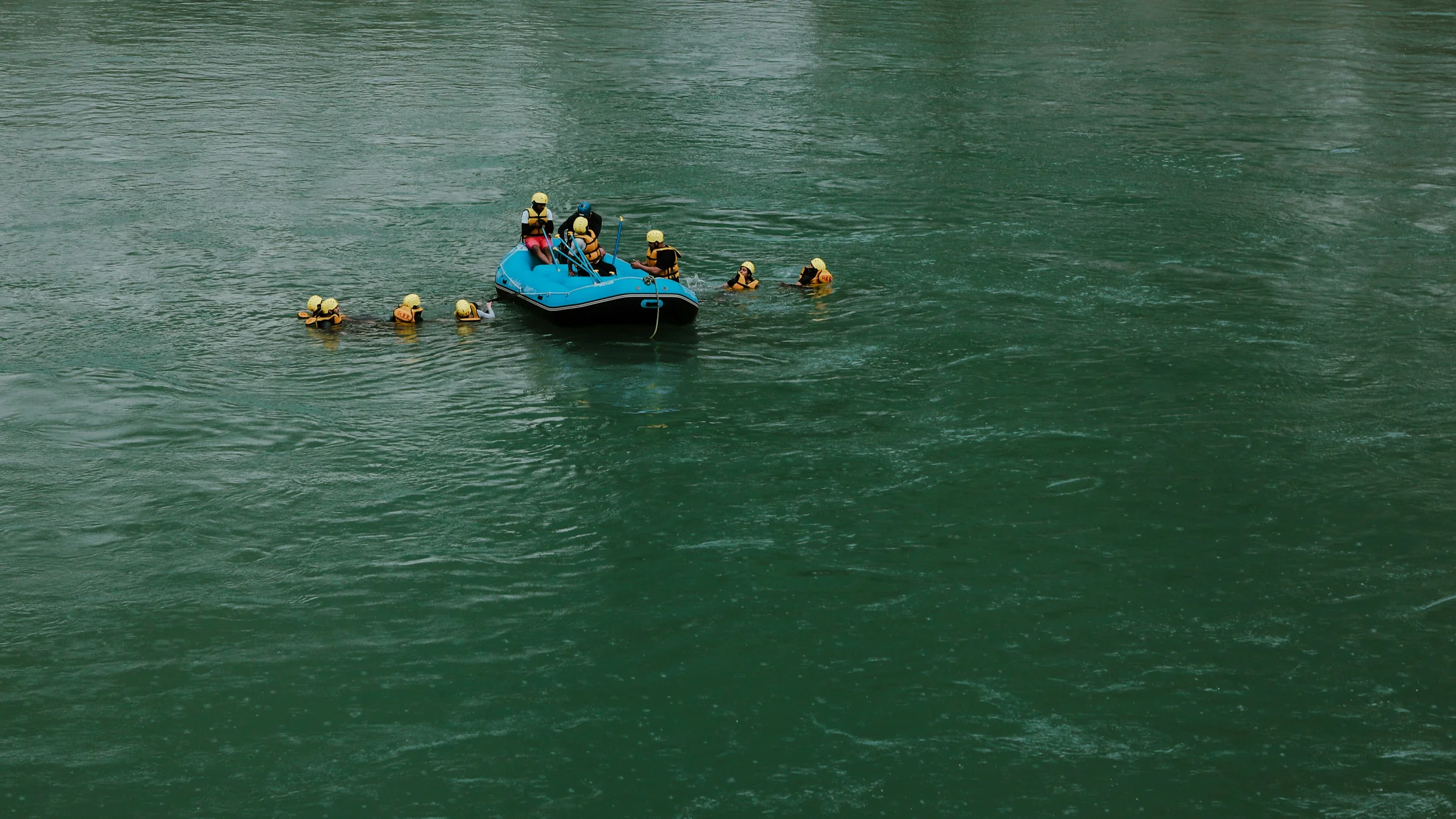
Rafting is experiencing a great moment in the country: the offering has grown and guides have become more professional. This is noticeable in the safety and the variety of sections available.
This guide explains why these four rivers concentrate so much activity, when it is convenient to go, and how to choose a section according to your level. The tips are clear and can be applied before booking.
What is happening with rafting in Spain?
Rafting in Spain has grown alongside active tourism and with better access to the rivers. Pyrenean and inland destinations have consolidated because they have predictable flows.
Most outings are concentrated between May and September. Peaks arrive with the snowmelt or with the scheduled releases from reservoirs.
Operators work with tight guide/client ratios and valid insurance. The hydrographic confederations publish daily flow data, so you can plan your outing in advance.
Four rivers capture the majority of descents due to their stable seasonal flow, their sections tiered by levels, and the services around them: accommodation, roads, and activity centres. The Noguera Pallaresa (Pallars Sobirà), the Cabriel (Cuenca/Valencia), the Gállego (Huesca), and the Ebro (Navarra/La Rioja/Cataluña) are the gateway for families, groups, and those who are starting out or progressing.
The cold foam against your face when entering a rapid wakes you up more than a coffee.
What you will take away from this guide
Choosing the right river and section changes the day. This guide helps you choose them according to the level, age, and experience of the group.
Before paying, you will know when to book: snowmelt, reservoir releases, and high seasons. You will also see the usual flow windows and what alternatives there are if the river is high or low.
The guide includes a checklist of personal equipment and clothing by season. And it teaches you how to evaluate serious operators and what to ask before paying.
On the shore, the wet wood of the pier smells like a well-planned morning of adventure. Each river has its moment, and here you will find how to get there from large cities and where to sleep nearby.
To complete the trip, the guide proposes combining rafting with hiking, via ferratas, MTB, or thermal baths.
Picuco te puede ayudar
Does something here catch your eye?
Tell us.
Write to us on WhatsApp or email: we answer questions, find the best options and help you sort out the booking.
Why these 4 rivers concentrate most descents
The reason lies in something less flashy: the flow, the access, and the schedules.
A commercial descent needs predictability. Sufficient flow is required, neither scarce nor overflowing, along with quick access and daily departures with defined schedules. These four rivers meet the requirements of usable flow, a variety of stretches, and simple logistics.
The Noguera Pallaresa lives on the Pyrenean snowmelt and upstream regulation. This gives it entire weeks of sporting flow between spring and summer. The Gállego, also regulated, has days with scheduled releases: the level rises at the predicted time, an advantage for coordinating schedules and safety.
The ~70% concentration is explained by the density of white water companies. There are more shuttles, i.e., round-trip transfers, more designated parking areas, and more control points. The more companies there are, the more shifts, more last-minute slots, and more options to adjust wetsuit size, the guide's language, or photos of the descent. If you want to maximise your chances of getting into the water on your chosen day, look at these four rivers first.
The diversity of stretches allows for graded difficulty. There is class II for children, III for eager groups, and occasionally IV for those seeking an extra technical challenge. The same destination serves everyone from first-timers to repeaters who are progressing.
The hydrological key is the coincidence between sporting flow and the holiday calendar. The snowmelt aligns May and June with long weekends on the Pallaresa. The releases coordinated by hydroelectric management create predictable windows on the Gállego. Summer stability and warmer water invite you to repeat in the Cabriel. The large Ebro basin buffers variations and provides security for inexperienced groups.
-
Noguera Pallaresa: Llavorsí–Sort and Rialp stretches, levels II–IV depending on the stretch, for beginners, intermediates, and mixed groups.
-
Gállego: levels II–IV with releases, excellent logistics with release schedules and services, for eager groups and intermediates.
-
Ebro: Navarra/La Rioja and Ribera d’Ebre, medium level III, available practically all year round with a peak in summer, good logistics with urban and riverside access, for beginners and large groups.
The 4 rivers, one by one: stretches, levels and best sections
1. Noguera Pallaresa: sections, levels and best stretches
The Noguera Pallaresa flows with the character of an alpine river through Pallars Sobirà (Lleida) and is the Pyrenean benchmark for rafting. It is considered one of the best white water rivers in Europe.
The classic sections run from Llavorsí towards Rialp and Sort, with class III rapids and occasional class IV passages during the high snowmelt season. The intermediate Llavorsí–Rialp section features a sustained, fun and continuous class III. The upper sections, class III–IV depending on flow, provide an extra technical challenge for those seeking it: always check this with the guide.
The river has a variety of lines, riverside roads that facilitate rescues and bases with changing rooms, showers and picnic areas. If it is your first time, ask the guide for an inside position on the raft to gain confidence. On cold days, ask for a full 5 mm wetsuit and neoprene boots.
The minimum age is 12 years in spring and 6 years in summer, depending on water levels. It is not suitable for pregnant women or people with heart conditions or serious medical problems. Always inform the guide of allergies, phobias or physical limitations.
Book in advance for June weekends, because they fill up quickly. You can combine the descent with hydrospeed or white water kayaking. The area is mountainous: respect the marked parking areas and do not block the valley's livestock access routes.
2. Cabriel: recommended sections and particularities
The Cabriel meanders between Cuenca and Valencia, with limestone walls and warmer waters that invite you to get wet without rushing. The rafting sections are concentrated between Venta del Moro, Villargordo del Cabriel and areas of Enguídanos, with an easy class II–III and plenty of play areas.
To start, the lower class II sections function as a school and admit children depending on the flow. The intermediate section links class II–III rapids, with playful waves and few technical manoeuvres.
Before booking, check the requirements: know how to swim, minimum age of 6 years, not suitable for pregnant women and a minimum group of 5 people. The best time is from April to October; in summer the water is temperate and the logistics are very comfortable. During low water periods, companies adapt schedules and choose deeper sections.
Part of the river passes through the Hoces del Cabriel Natural Park: respect the paths and rules. Wear closed trainers that you can get wet and avoid loose flip-flops. On hot days, a light thermal t-shirt or lycra for the sun is enough, and the wetsuit can be thinner.
Ask for photos of the descent and for multi-adventure combinations, such as gentle via ferratas or calm kayaking. The area lives off wine and the countryside: buy local at DO Utiel-Requena wineries and village bakeries. Park in designated areas; there are frequent shuttles that make returning to the start easy.
3. Gállego: regulated flow and options for everyone
The Gállego is descended while looking at the Mallos de Riglos, between conglomerate walls. The La Peña reservoir regulates its flow: the flow is constant and the coordinated releases allow you to know at what time there is river on the marked days.
The releases set shifts and allow you to choose the level; the sound of the gates opening marks the start of the descent. There are sustained class III sections and wide waves after the release, for an intense intermediate level. At high flows, class III passages and some points close to IV appear for advanced levels, always with an expert guide.
The best time is April–June. In summer, you should check the release calendar, which tends to be concentrated on weekends and specific time slots. Before paying, verify the release days: companies adjust their shifts to that window. If you are going in a group, book full rafts to control the pace and breaks.
Access is easy via the A-132, with nearby car parks and bases with showers and shaded areas. From Zaragoza, you arrive by car in approx. 1h 15min via the A-23 and A-132. You can combine the descent with ferratas, paragliding or hiking in Riglos. Bring a strap for your sunglasses: photos with the Mallos de Riglos in the background are the usual souvenir of the descent.
4. Ebro: popular stretches and levels
The Ebro is the great peninsular river and, as a rafting destination, focuses on initiation and scenic descents. In Navarra/La Rioja and in the Ribera d'Ebre (Tarragona), there are authorised class I–II stretches, with peaks of II–III in spring.
Typical descents are family-oriented and go near riverside urban centres, so they work well for schools and large groups. There are also scenic descents between castles and meanders, more contemplative than technical: the wide murmur of the river sounds like an aquatic corridor that invites you to paddle as a team.
The best audience here is beginners, families, corporate events and groups that prioritise accessibility. The logistics help: urban access, large car parks and short returns, with half-day options that are easy to fit into longer trips.
If you are looking for technical spark, choose spring or increase your level in the Pyrenees. For "Ebro rafting", check the weekly flow: if it is low, the experience will be more landscape-oriented. Bring sun protection and water; on sunny days, the stretch feels more nautical than alpine.
Where they are and how to organise your trip
Location and how to get there (By river)
Four rivers concentrate most of the rafting in Spain, and each has its own entrance. It is worth knowing where to park and how long it takes before booking.
The Noguera Pallaresa flows through Pallars Sobirà, in Lleida. You can get there via the C-13 to Sort or Llavorsí, or by train to La Pobla de Segur and then by local bus. From Barcelona, it takes about 3 h 30 min via the A-2 and the C-13. Park at the activity bases: operators include transfers at the start and end of the section. Confirm the exact check-in point in Llavorsí or Sort before the activity.
The Cabriel, between Cuenca and Valencia, is 1 h 15–30 min from Valencia and about 3 h from Madrid via the A-3. The base has its own parking, as well as showers and shaded areas during the season.
The Gállego is reached via the A-132 to Murillo de Gállego, in Huesca. On release days, arrive 30–45 min early: the water schedule is king.
The early morning light, with mist over the water, turns the arrival into a ritual of calm before the action.
Best time and flow considerations
Each river has its own calendar, and choosing the right date changes the descent. The snowmelt, reservoir regulation, and heat determine when there is water and when there is a queue for boarding.
The Noguera Pallaresa experiences its snowmelt peak in May–June. July is stable and August remains viable thanks to regulation. In the Cabriel, summer is comfortable due to the temperature, with the water between 14 and 18 °C. The Gállego carries natural waters from April to June, and its high season is linked to water releases and weekends. In the Alto Ebro, the star season is summer (June–October), with guaranteed flow.
The metallic scent of the high river anticipates a lively descent, while the quiet murmur of summer promises long paddles and laughter.
More flow and higher demand mean you must book 2–4 weeks in advance for bank holidays and weekends. During the week, there are usually gaps and better prices. Check the flow reports from the corresponding confederation the day before.
Accommodation and local services
Sleeping near the river changes the plan for the next day: you head out to the water without a car and return to eat just a few steps away. Each valley has its base village, and in all of them, there is somewhere to stay depending on the group and the budget.
Riverside campsites with bungalows work well for groups. If you are looking for something more economical and close to the river, look at the hostels and guesthouses in the base village. For a weekend getaway, rural hotels and entire houses offer more space.
Upon finishing, the crackle of an ember and the smell of roasted lamb or brown trout close the day just like the last eddy on the shore.
The services you are going to use are close at hand: restaurants with local cuisine, sports shops for last-minute forgets, and regional health centres. During the season, operators extend check-in hours and changing rooms, so ask when booking if you are arriving late.
What else to do around: trails, ferratas and a well-set table
If you are coming for rafting, extend your stay by one more day: the valleys and canyons of the four rivers have plans for all profiles.
In Pallars Sobirà, you will find the Parc Natural de l’Alt Pirineu. The afternoon invites you to enjoy sheep cheese, artisan cured meats and a glass of mountain wine. The fresh breeze coming down from the pass smells of pine and wet stone.
In Cabriel, the Parque Natural de las Hoces is a Biosphere Reserve and offers transparent pools and mountain biking routes among vineyards, with itineraries that depart from and return to the Venta del Moro campsite. The river is territory for DO Utiel-Requena wineries: note down tastings and slow meals on village terraces. Between Enguídanos and its waterfalls, the water forms natural slides of polished rock and turquoise pools for swimming or jumping. To access the Monumento Natural de las Chorreras del Cabriel, you must reserve a parking space and check regulations and safety.
At the table, the river suggests cold soups, riverbank vegetables, rice if you head south and generous roasts.
For families, the plan of two mornings of water and one gentle afternoon works well: rafting, a picnic and a short walk. If you are looking for more, combine a day of sustained class III with canyoning or a ferrata. Always ask local guides about the day's conditions: their craft relies on reading the water and the mountain.
Practical advice and safety on the river
Equipment, clothing and pre-trip checklist
The company provides you with a certified helmet, buoyancy aid, wetsuit, jacket and paddle, depending on the section. You bring a swimsuit, towel, closed footwear that can get wet and, on cold days, a thermal shirt, preferably synthetic or merino wool.
If it is a sunny day, add high-protection sunscreen and a strap for your glasses. Before setting off, inform us of any injuries, allergies and medications. Check that the wetsuit size is correct and that the buoyancy aid is well adjusted.
You must be able to swim a minimum of 25 m and know the safety position: on your back, feet downstream. Learn the "stop", "gather" and "paddle hard" signals before boarding. Afterwards, bring water, a change of dry clothes and extra sandals or trainers.
Serious operators follow international protocols: certified guides, drills and a first aid kit, as well as liability and accident insurance policies. Ask them to explain the emergency plan and the escape points of the section.
Age, physical level and section selection
The minimum age for rafting changes depending on the water flow and each company's policy. Confirm it on the exact day of the activity, as it can vary from one week to the next.
For a half-day trip, basic physical fitness is enough. If the section has higher intensity stretches, give us advance notice of any problems with shoulders or knees.
It is advisable to know what each class means before choosing. Class I–II has moving water, small waves and simple manoeuvres. Class III adds waves and clear modes and requires coordinated paddling. Class IV demands powerful movements and precise manoeuvres, with a very active guide.
Choose a section that is honest with your experience: it is better to leave wanting more than to have a bad time. Nervous laughter when trying the paddle turns into confidence when you understand that you are paddling as a block.
Safety, insurance and key questions for operators
Before paying, ask the operator four questions. Their answers will tell you more about the river than any brochure.
Start with the guide/participant ratio per raft: in intermediate stretches, it is usually 1
–8. Also ask about the guide's training, including their certifications and their experience on that specific river. Afterwards, check the onboard safety equipment: throw rope, knife, first aid kit and repair gear.Ask about protocols for high water levels or thunderstorms and about the cancellation policy. Request the insurance coverage details, civil liability and accident insurance, and the informed consent document.
If you fall into the water, adopt the safety position, keep your paddle if possible, look at the raft and follow orders. When the rescue rope flies towards you, hold it by the free end, never by the carabiner. The dry click of the carabiner on land provides the peace of mind of a job well done.
Take care of the environment: do not leave micro-litter, respect the flora and fauna and only park in permitted areas. A clean river is also a safer one.
Frequently asked questions
What is the minimum age to go rafting on these rivers?
The minimum age depends on the day's flow and the stretch you choose. There is no fixed figure for all rivers.
On the Ebro and in the calmer stretches of the Cabriel, most companies accept children from 6–8 years old if the child is over 1.20 m and the river is low/medium. In the family-friendly Gállego and the gentle Noguera Pallaresa, it is common from 10–12 years old. In sections with class III+ or IV rapids, especially when the snowmelt intensifies, the age rises to 14–16 years.
It is advisable to inform the company of the age, height and water experience of each minor. If there are doubts, requesting a private raft allows the pace to be adapted to the group. Choosing the first hour of the day means less heat and calmer waters.
The guide is in charge at all times.
How much does a descent cost on average and what is included?
Prices vary by river, stretch and season. As a reference, a half day with family (class I–II) usually ranges around 35–50 € p.p.; intermediate ones (II–III) 45–65 € p.p.; and a full day with stops and more kilometres, 70–100 € p.p. They usually include technical equipment (wetsuit, helmet, life jacket), a qualified guide, insurance and internal transfer. Sometimes photos are also included, but check this.
Extras to plan for:
- Photo/video report.
- Rental of water shoes if you are not bringing your own.
- Picnic/lunch between stretches.
- Supplement for a private raft in small groups. Check updated prices on the operator's website or explore options on Picuco.
How to choose the river or stretch according to my level?
The river level matters more than your desire: choose the stretch based on your experience and the physical fitness of the whole group.
To take the first leap into higher flow, the intermediate Cabriel (II–III) or the Gállego offer fun waves and very attentive guides.
Listen to the guide and be honest about your physical fitness: progressing over two consecutive days works better than "all or nothing". A deep breath before the rapid centres your head and body.
What happens if the flow prevents the descent or there are cancellations?
The river is in charge. Rafting companies follow the official flow data and, if it is above or below the safe thresholds, they reschedule the activity. It can also happen that the weather triggers a thunderstorm alert or strong winds: in that case, the guide decides whether to descend.
In the event of a cancellation, it is usual to change the date at no cost, switch to a different section or another activity (calm kayaking, reservoir) or keep a voucher for another season. Ask for the cancellation policy in writing when booking and confirm the cancellation deadlines.
The notice arrives by telephone or email the day before or the morning of the activity. When booking, ask if there is a plan B in the same valley so you don't lose the day.
Do I need insurance or previous training to book?
For a commercial descent, you do not need previous training: the guides give a full briefing and explain the basic manoeuvres before entering the water. The operator must include civil liability and accident insurance in the booking.
If you are going to chain several activities together or are travelling with minors, consider personal travel or adventure insurance. For technical sections or to guide paddles in class IV rivers or in courses, specific training with instructors is advisable.
Bring your ID or passport, an operational phone and your booking confirmation. Inform the team of medical conditions such as asthma or epilepsy and of any medication you take. Before starting, check that the helmet is firm and the life jacket is adjusted.
Book your experience — discover active tourism activities in Spain with providers verified by Picuco.
Conclusion
With little ones or on your first time, the Ebro and the gentle section of the Cabriel are a safe bet. If you want to take a leap in difficulty, the Gállego and the Noguera Pallaresa have sustained class III, expert guides and predictable flow windows.
To get it right, consider three variables: the season (snowmelt, releases or mild summer), the group level and the travel logistics. Check the official flow reports the day before, confirm the change policy, ask for the safety plan and adjust your equipment to the temperature of the day.
If you want to extend your getaway, add hiking, via ferrata or a local tasting. Choose a destination according to your level, mark the weekends with the best flow on your calendar and book 2–4 weeks in advance during high season. Save the checklist for the day of the descent and leave the place better than you found it: rivers are cared for by the communities that inhabit them.