Why Spain is a great country for snowboarding and freeriding
The current scene on the peninsula: snow, sun and variety
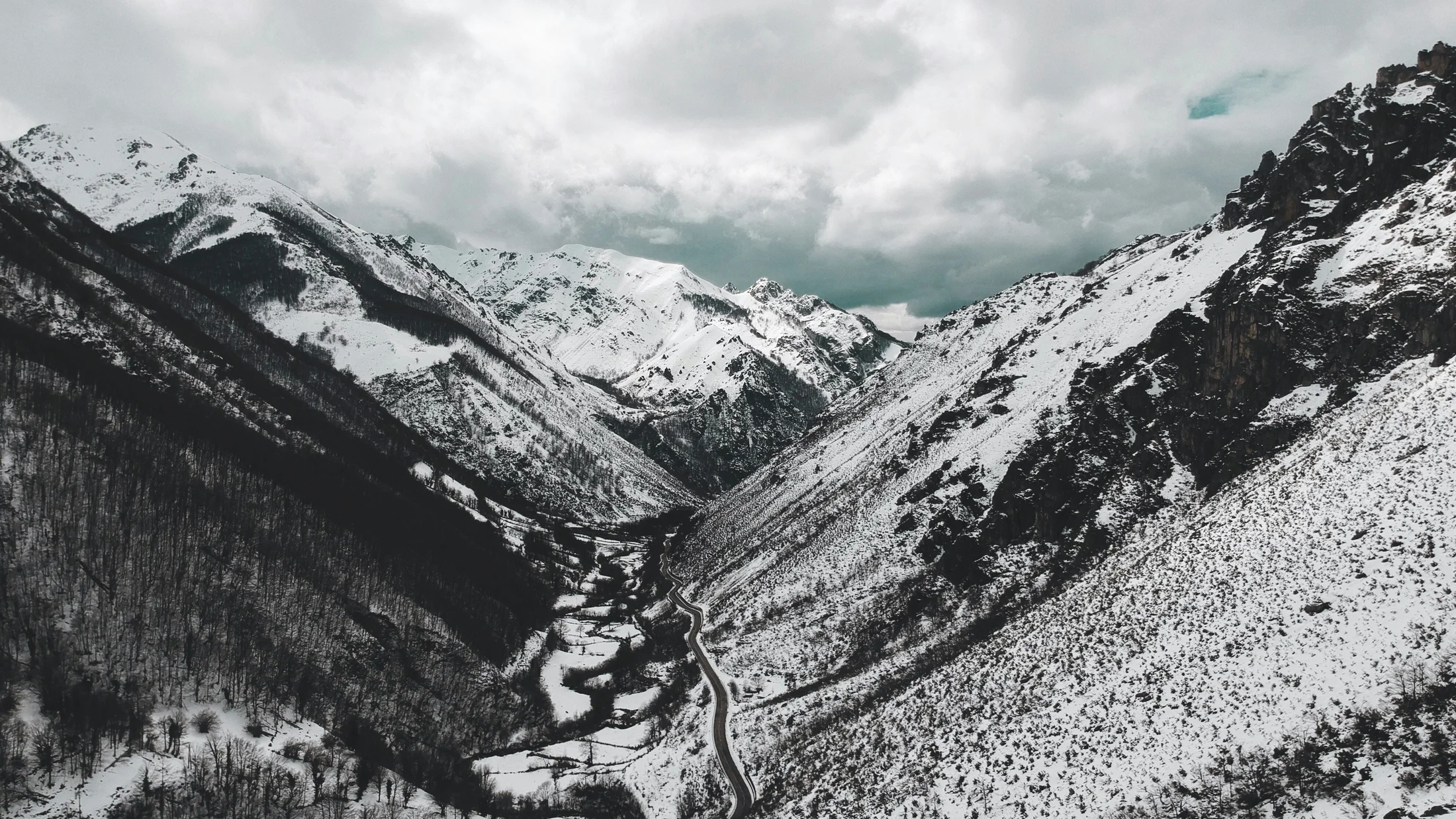
Spain has high mountains, many hours of sunshine and modern resorts: terrain for several winters of snowboarding and freeriding. The season runs from late November to April, and the best snow arrives between January and March in the Pyrenees.
The Pyrenees, spread across Aragón, Navarra and Catalonia, have the highest average altitude, varied orientations and the most sustained runs. Sierra Nevada, in Granada, adds high altitude, powerful artificial snowmaking and regular sunny days.
In European terms, the average level is good, snowparks are well-maintained in the main domains and freeriding is growing with an expanding safety culture. A cold scent of pine and board wax floats in the valleys when it dawns clear.
Before heading out, check the snow report and the weather daily on AEMET and ICGC; the GREIM rescue teams operate in key areas. To reach the Pyrenees, Huesca-Pirineos Airport (HSK) has few commercial flights: it is more practical to fly to Pamplona or Zaragoza. By train from Zaragoza, the journey lasts between 3 h 30 min and 4 h, with about two services each way every day.
How we choose these resorts and areas
Choosing a resort for snowboarding depends on three things: what off-piste terrain is available, whether you can progress and what safety you have. These are the ones that meet those criteria.
First, we look at off-piste access, the variety of terrain and user services. We also look for slopes for all levels, from gentle bowls to sustained couloirs, and snowparks that allow for real progression.
Safety carries a lot of weight: nearby avalanche bulletins, active patrols, the possibility of hiring qualified guides and rescue coverage. To that, we add the value for money of the lift pass, rental and accommodation, and the best time of year according to orientation and altitude.
The dry crunch of cold snow under your bindings is the best sign that you chose the right day. With all this, you can decide where to go, when to go and what to expect from each area.
Picuco te puede ayudar
Does something here catch your eye?
Tell us.
Write to us on WhatsApp or email: we answer questions, find the best options and help you sort out the booking.
The 7 resorts and freeride areas that never fail
Before choosing a destination, open the interactive map at the top of the guide: all the resorts appearing in this article are there. With it, you can see at a glance where each one is located and how to get there.
The map also helps you read access points and orientations, a factor that changes the snow significantly from one slope to another. And if you feel like extending your getaway, it is useful for combining neighbouring destinations in the same trip.
Scroll down the page and choose the area that fits your level; in each section, you have everything you need to plan your trip.
1. Baqueira-Beret: the Val d’Aran reference for powder and long lines
Baqueira-Beret is the reference for the Val d'Aran (Lleida) for powder freeride and long lines. You arrive via the N-230 from France and there are connections from Lleida and Barcelona.
36 lifts and cable cars connect the Baqueira, Beret and Bonaigua sectors with a single lift pass. Altitudes range around 1,500–2,610 m.
The terrain combines forests with visibility on overcast days and channels accessible from the lifts. It is good for intermediate-advanced skiers, and a guide is advisable for your first incursions off-piste.
Every morning, check the Avalanche Danger Bulletin from the Conselh Generau d'Aran/ICGC and maintain conservative margins after heavy snowfalls.
The daily lift pass usually falls within a medium-high range, and accommodation ranges from hotels to rural houses: book in advance.
To arrive by plane, Lleida-Alguaire (LEL) is 160 km away (approx. 2 h by car), Toulouse-Blagnac (TLS, France) is 270 km away (approx. 2 h 30 min by car) and Barcelona-El Prat (BCN) is 410 km away (approx. 4 h by car). From Vielha, the local VA line bus departs, and during the season there are free or low-cost ski buses between Vielha, Arties, Salardú and the villages with the lift base.
There are free car parks spread across the sectors and one paid car park at the foot of the cable car. Bring winter tyres or chains.
2. Sierra Nevada: altitude and sun in the south, with options for everyone
Sierra Nevada offers lifts at ~3,300 m, 40 min from Granada and 2 h from Málaga, with a very stable climate. That altitude and that sun allow you to ski and snowboard in the south almost all winter.
After cold spells, occasional snowfalls arrive, and the station's varied orientation allows you to look for the face with the best snow.
The lift pass is in a medium-high range, so check updated prices before travelling. To sleep, you have everything from hotels in Pradollano to nearby rural houses.
Sierra Nevada has one of the most complete snowparks in Spain, ideal for progressing in jibbing and graded jumps. The wide and progressive slopes work for beginners, while intermediates and advanced skiers find a mix of park and off-piste.
Also consult the AEMET avalanche report for the Penibética area.
Watch out for ice patches and crust layers after heat and cold cycles. In spring, get up early to catch safe transformation: the sun reflects off the limestone and the snow crunches like sea salt under your board.
3. Formigal‑Panticosa (Aramón): breadth, connectivity and variety
Formigal-Panticosa offers 140 km of slopes between 1510 and 2250 m, in Huesca. It is a vast domain, with extensive sectors and good internal connections by bus and lifts.
The resort has 565 snow cannons and a daily lift pass that usually falls in the mid-range; it is advisable to confirm updated rates before buying. Accommodation in the Tena Valley is varied, so you can choose a base according to your budget.
It works well for families with riders of various levels, for intermediates looking for variety, and for advanced riders who want kilometres of options. On days of poor visibility, you have wooded variants, and access to sunny and shaded slopes is quick.
If you go off-piste, use a helmet and full equipment, and check for wind slabs on the high ridges after northerly winds. Every valley has parking and a service area at its base to reach the chairlifts, and the resort is very close to the A-136.
4. Cerler: high altitudes and clean lines in Ribagorza
El Gallinero de Cerler reaches nearly 2,650 m, and that altitude defines the rest of the resort. Cerler is in Benasque, Huesca, with an orientation that holds snow well and provides clean lines for descending.
It is a resort for intermediate-advanced riders who want off-piste terrain close to the lifts and with good infrastructure.
Lift passes are in a mid-range and there are mountain refuges and rural accommodation in the valley: check updated prices before booking.
Respect closures and signage. After heavy snowfall, wait for weak layers to stabilise on shaded faces. In the Natural Park, wild camping is prohibited and high-mountain bivouacking is regulated: check the official conditions.
5. Candanchú: alpine character and a quick gateway to the backcountry
Candanchú retains the air of a small high-mountain school, nestled between rocky walls and classic slopes of the Aragón Valley. It is one of Spain's oldest resorts and maintains an alpine feel that is noticeable on every lift.
The lift pass is in a mid-range and the best period is usually from January to March, when cold northerly winds load the snow well. The maximum skiing altitude is at Tuca Blanca, at 2,400 m altitude.
The classic off-piste terrain points towards Loma Verde and Tubo de la Zapatilla, the latter for experts and only in safe conditions. It is a resort designed for riders with a solid foundation looking for short access to the backcountry and lines with character.
During the season, there is experienced patrol, avalanche training, and outings with qualified guides. The environment channels the wind, so evaluate accumulations at the entrances to the couloirs and always carry an avalanche transceiver, shovel, and probe. A hollow sound under your board in wind-exposed sections warns of slabs.
You arrive via the N-330 towards Somport, with buses from Jaca during peak periods. If there is abundant snow, carry chains or winter tyres.
6. Astún: practical, close and perfect for quick getaways
Astún is 33 km from Jaca, so you can hit the slopes with an express weekend getaway. It is a ski resort with links to Candanchú to expand your play.
Intermediate skiers find accessible freeride here, and advanced ones can maximise descents per day.
Lift passes are in the medium range, so confirm rates before going; there is a joint lift pass for the 100K domain with Astún and Candanchú. January-March is usually the best bet, with north winds that fill bowls and hollows well. The season runs from 29 November 2025 to 12 April 2026.
The resort reaches a maximum altitude of 2,300 m, with a base altitude of 1,660 m and a vertical drop of 640 m; the blue run Toboganes has a length of 2,092 m. From the top of the Truchas chairlift, you can see the Astún ibón, a high mountain lake situated at 2,147 m.
Watch out for sudden temperature changes, which create a crust, and on blizzard days, limit your exposure on ridges.
7. Boí Taüll: cold snow and technical terrain without crowds
Boí Taüll is in Alta Ribagorça (Lleida), in the Catalan Pyrenees. Dry cold predominates, so the snow maintains its quality.
The terrain combines technical bowls and serious slopes that demand good technique. The approaches to the less frequented sectors are short, and therefore it is a resort for advanced riders looking for demanding lines and fewer people.
There are rentals, schools and local guides who know the orientations and the snow transformation timings. The clear high mountain light makes every crystal shine like glass shavings.
On steep slopes, management must be precise: plan your timings and avoid chaining several descents on the same slope.
The lift pass is in the medium range and rural accommodation is in the villages of the valley. Check prices and availability before booking.
General advice on prices
The lift pass ranges mentioned are indicative and vary by date and age; confirm updated prices on the official website of each resort or explore options on Picuco.
Baqueira-Beret in depth: access, sectors and how to organise your day
Baqueira-Beret has varied orientations, lifts that leave you at the foot of great slopes and a mountain culture rooted in Val d'Aran. That is why it is one of the freeride references in Spain.
The snow after northerly winds is cold and dry, and well-directed westerlies also load generously. In spring, the sunny slopes provide soft snow if you get up early.
The main car parks in 1500 and Orri distribute the vehicle flow well. For a classic day, get up early, check the avalanche report (ICGC/Conselh Generau d'Aran) and choose a sector according to the dominant wind and the recent snow level.
Carry complete safety equipment: transceiver, shovel, probe and helmet, with an airbag being recommended. Organise small groups so you can communicate well during descents off-piste.
If it is your first time, hire an AEGM/UIAGM guide: you will optimise orientations, avoid terrain traps and learn to read the local terrain. Off-piste skiing is done under your responsibility and outside the control of the resort: respect closures, avoid crossing pistes and do not enter marked areas as they are dangerous.
The patrol and rescue in the valley are coordinated with 112/GREIM, but the best help is prevention. Compared to other resorts, Baqueira-Beret brings together the greatest combination of useful vertical drop, variety of lines and efficient return.
Sierra Nevada and the south: sun, altitude and snow with golden windows
Sierra Nevada puts high mountains just a few kilometres from Granada and, in a single day, offers options for both beginners and advanced skiers. The mixed orientation and high altitude sustain the season, but sunshine and wind change conditions quickly: choose your slope and time carefully.
The snowpark is a reference in the peninsula, with lines from basic level, one of the largest halfpipes in Spain and a cross circuit for ski and boardercross.
If it is your first time freeriding in the mountains, book a guide to combine slopes protected from the wind with sections of pleasant transformation; getting up early helps to find fresh snow or safe spring conditions.
The resort totals 112.5 km of marked pistes, and the longest is the Águila piste, with 6.253 km.
Aragonese and Navarrese Pyrenees
Choosing a resort depends on your level, what you are looking for and the time of day. Compare several neighbouring resorts before deciding: the microclimate changes significantly from one valley to another.
With cold northerly winds, Candanchú and Astún usually load up well with snow. With westerly winds and slightly milder temperatures, Formigal and Cerler can offer a better balance of wind and visibility.
Formigal has 140 km of slopes, with areas in Sextas, Sarrios, Anayet and Portalet, in addition to a Snow Park, Video Slalom and Tubers and 3 beginner areas (Sextas, Anayet and Portalet). It has 4 access points with free parking, except for Anayet, which is paid.
To choose by level, look at these combinations:
- If you are a beginner or progressing, Astún and Formigal have wide slopes and light freeride to help you gain altitude.
- If you already move with ease and want more, Cerler and Formigal mix bowls and long shaded slopes.
- If your level is technically advanced, Boí Taüll and Candanchú perform well in stable conditions; Boí Taüll, in the Catalan Pyrenees, also offers low crowds.
Regarding safety, consult the AEMET report in the Aragonese Pyrenees and consider hiring a guide if you go off known itineraries. In Catalonia, check the ICGC/MeteoMuntanya bulletins.
Short access from lifts multiplies the vertical drop without carrying gear. The connections between valleys in point-to-point lines require car logistics.
If you rent equipment in Boí Taüll, the opening hours are from 9:00 to 17:00 h. And if the wind or the snow line punishes your plan A, change valleys: the smell of hot soup in the mountain bar makes up for any last-minute detour.
Safety, essential equipment and protocol for freeride in Spain
Freeride relies on three pillars: knowing the snowpack, carrying the right equipment and deciding with prudence. Before heading out, learn to read typical avalanche problems (wind slab, recent snow, persistent weak layers) and cross-reference them with orientation, slope and altitude.
Every morning, check the Avalanche Danger Bulletin. For Sierra de Guadarrama, Picos de Europa and the Sierras del Cordel and Peña Labra, these are issued weekly when the snowpack is significant. Additionally, AEMET issues avalanche warnings in the Pyrenees (via METEOALERTA) and specific warnings in other areas according to the European avalanche danger scale.
In Catalonia and the Val d'Aran, the ICGC publishes daily bulletins with 7 differentiated zones: Aran, Franja Nord Pallaresa, Ribagorçana – Vall Fosca, Pallaera, Perafita – Puigpedrós, Vessant Nord Cadí – Moixerá, Prepirineu and Terr – Freser.
The essential equipment is the transceiver (ARVA/DVA), shovel and probe, always within your group and with real practice. The digital sound of the transceiver during the self-test is the first confirmation that it is working. Add a certified helmet and protection, and consider an airbag in avalanche terrain. Carry a phone with a charged battery, offline map and/or GPS, an emergency blanket and a basic first aid kit, as well as warm clothing, spare gloves and goggles with interchangeable lenses.
Hire a guide on your first visit to a complex area, if you have doubts about orientation or visibility is reduced, on days with non-obvious avalanche problems or persistent weak layers, and in groups with disparate levels that need pace and safety management.
Assistance and rescue can involve costs. Take out specific ski/freeride insurance or a federative licence (FEDME/autonomous) that covers off-piste, and verify that it includes rescue, search with aerial means, hospitalisation and civil liability.
Before heading out, follow this checklist:
- Check the weather report and the Avalanche Bulletin.
- Define a plan A and a plan B according to wind, snow level and safe orientation.
- Check everyone's equipment: transceiver self-test, shovel, probe, helmet and airbag.
- Agree on communication and regrouping points.
- Inform someone of your plan and carry your phone with 112 memorised.
Outside of marked and signposted pistes, you move at your own responsibility: manage slope, exposure and spacing between riders, and turn back if you do not see the overall situation clearly.
How to choose, plan and book your snow getaway
Choose the resort according to your level, your objectives and the weather window. Once that is clear, the rest of the getaway almost decides itself: where to sleep, how to get there and when to book.
If you are looking for technicality and fewer people, Boí Taüll stands out in stable conditions. If you want sun, altitude and a park, Sierra Nevada is the option.
For sleeping, you have two paths. Staying inside the resort lets you get to the lifts first thing in the morning; rural accommodation in a nearby valley is usually better priced and gives you a local atmosphere.
A car gives you maximum flexibility to change valleys according to the snow report. Train and bus is a viable option for the Pyrenees (Huesca, Jaca, Lleida) with local transfers. By plane, Granada serves Sierra Nevada; Barcelona and Lleida for the Catalan Pyrenees; Zaragoza and Pamplona for Aragón and Navarra.
In the Catalan Pyrenees, there are transfers from Barcelona Airport to the resorts, in addition to bus and train. You can reach La Molina and La Masella in about 2 hours by car from Barcelona Airport. For Baqueira Beret, the nearest airport is Zaragoza; from there, you need a car or VTC, although there are bus connections.
To save money, ski during the week, at the end of January and beginning of February, and in cold March. Book your rental online and consider daily lift passes for non-consecutive days if they exist.
When is it most likely to find powder snow?
After strong north or west winds, get up early and look for shaded orientations. The snow holds up better on faces that do not see the sun first thing.
In Sierra Nevada, occasional cold windows provide excellent days.
In spring, aim for the early hours and the safe transformation of the snow. Leave early and adjust your plan according to how the snowpack evolves throughout the day.
Do I need a guide to do freeride?
It is not mandatory, but it is highly recommended if you do not know the area, the orientations, or if the avalanche report is complex. A qualified guide improves safety and saves you time finding the best lines, especially in resorts with many options off-piste.
Which insurance is mandatory or recommended?
Skiing does not require any mandatory insurance. Things change when you go off-piste: it is advisable to have mountain insurance that covers rescue, search and hospitalisation.
A federative licence and specific skiing and freeride policies provide adequate coverage for those cases. Before hiring, check the policy exclusions and confirm what is left out.
Which resorts are best for beginners?
Sierra Nevada is a good option to start: it has schools and a snowpark with easy lines. Cerler also works well for the first days, with good progression in Ampriu, one of the four sectors that make up the resort.
Start on-piste and try light freeride with an instructor or guide. This way you add hours on your board without skipping steps and with someone who knows the terrain.
Where can I find reliable avalanche information?
Before heading out into the snow, check your local avalanche bulletin every morning and reassess the conditions on the ground. AEMET publishes avalanche bulletins for the Pyrenees; for Sierra Nevada, there is no official AEMET bulletin.
In Catalonia, MeteoMuntanya allows you to consult the three-day evolution of temperature, wind and humidity on more than 300 peaks. The website includes predictions for peaks and routes, as well as a snow depth map.
Book your experience — discover active tourism activities in Spain with providers verified by Picuco.
Conclusion: next steps for a perfect getaway
Finalise your plan in this order: choose a resort according to your objective and level, check the weather report and the avalanche bulletin, decide if you will hire a guide, book accommodation and transport, and prepare your equipment with a checklist.
If you are torn between several destinations, look at the orientation and the wind from the last 48 hours and have a plan B in a neighbouring valley. To save money, look for weekday dates and adjust them to cold windows.
- Step 1: define your objective (progression, park, long lines or technical).
- Step 2: choose the resort and dates with the report in hand.
- Step 3: take out insurance and, if applicable, hire a qualified guide.
- Step 4: book accommodation and rental in advance.
- Step 5: review the safety checklist and adjust your expectations to the day.
At Picuco, you have activity proposals and getaways with verified providers.