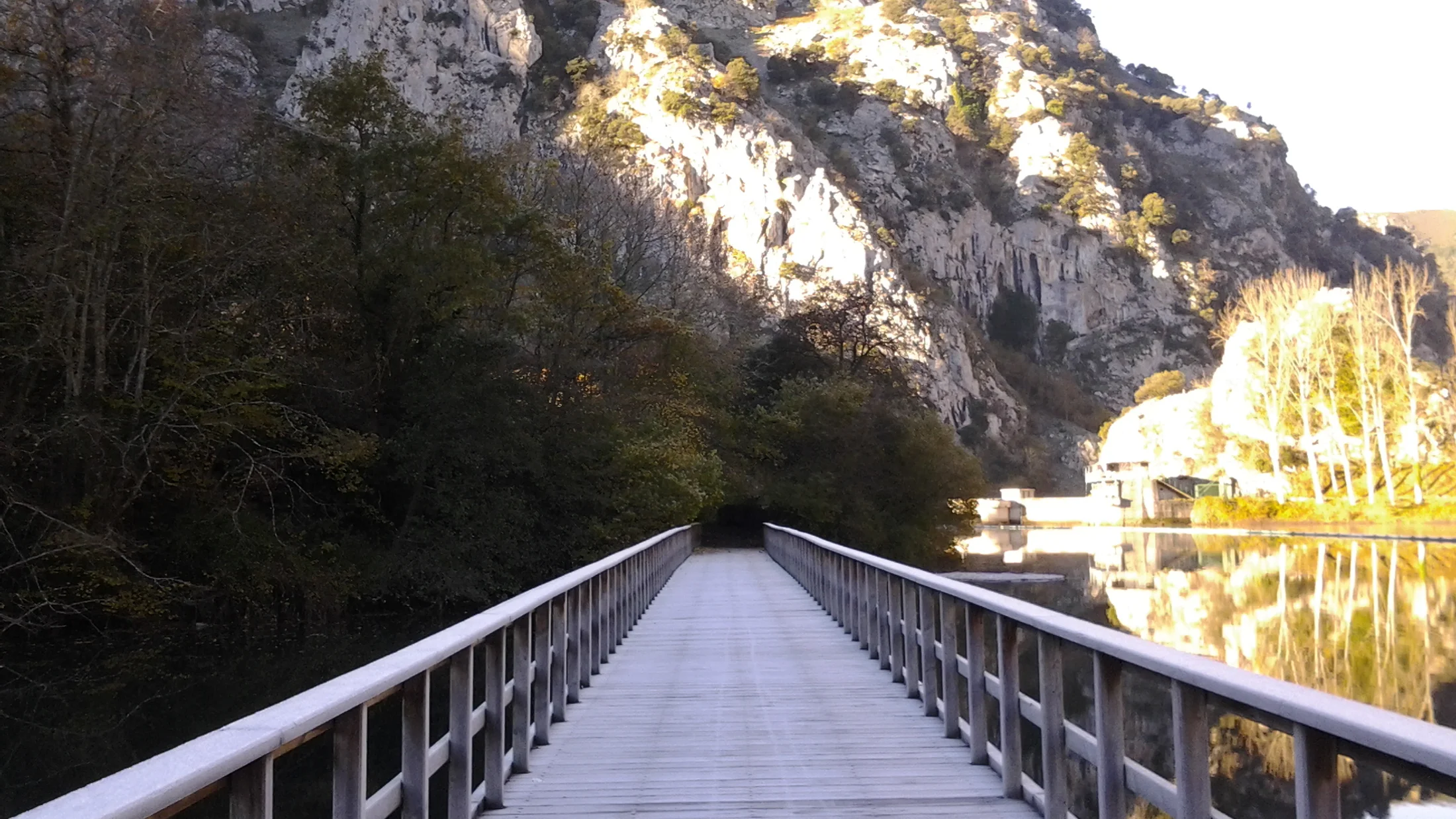
Meet the Senda Del Oso
The Senda del Oso turns an old mining railway into one of Spain’s most family-friendly greenways. You move through river-cut valleys, short tunnels, and leafy galleries where wheels hum and water murmurs below the track. Expect a gentle gradient, village hospitality, and a route shaped by conservation and community pride. Use this guide to choose between biking, walking, or a kid-adapted plan—and to make every hour count.
A quick story of iron, valleys, and bears
This corridor once carried iron and coal from Quirós and Teverga to the Trubia steelworks; rails gave way to a compact path in the 1990s as Asturias embraced greenways. Today the Senda del Oso links the valleys of the Trubia, Quirós, and Teverga rivers with a nearly continuous, low-gradient surface ideal for bikes and walkers. The breeze smells of damp rock when you enter the tunnels, a cool breath from the mountain’s past.
The route supports both tourism and conservation: it channels visitors off busy roads, encourages slow travel, and connects you with local initiatives like the Brown Bear Foundation. Families, casual cyclists, and hikers share the path comfortably because it behaves like a railway track should—smooth, wide, and never too steep. You come for the easy grade and stay for the villages, where sidra and cheese tell the story of the valleys as clearly as the old cuttings.
Practical value: you’ll find distances, gradients, time estimates, transport logistics, kid-safe segments, and a one-look comparison of the most popular stretches. If you only remember one thing, remember this: choose your start point high and ride or walk downhill back to services.
What you will get from this guide
You will learn how to plan the Senda del Oso in three ways: by bike, on foot, or with children in tow. We translate gradients and map lines into time-on-feet and time-on-wheels so you can judge stamina, daylight, and snack stops. Ferns brush your calves near riverbanks, a soft reminder to pace the day.
Inside, you’ll see:
- Where to start and finish, with classic Entrago–Tuñón and Proaza–Teverga options.
- The best months, daily timing, and weather caveats.
- Senda del Oso bike trail essentials: rentals, guided descents, and safety.
- Senda del Oso walking tips: stage ideas, shaded sections, and fountains.
- Senda del Oso with kids: trailers, short loops, play stops, and hazards to avoid.
- Services map in words: food, water, parking, and nearby lodging.
Use it like a field manual: scan the itineraries, pick a start point that fits your group, and match your plan to daylight and appetite.
Picuco te puede ayudar
Does something here catch your eye?
Tell us.
Write to us on WhatsApp or email: we answer questions, find the best options and help you sort out the booking.
Essential Info for Easy Planning
This section gives you the lay of the land before you lace boots or clip helmets. You’ll locate trailheads, pick the right season, and plan your approach from Oviedo or Gijón. Morning light glints off wet rails embedded in old sleepers, a quiet cue to start early and keep margins.
Where it is and how to read the map
The Senda del Oso runs southwest of Oviedo through the councils of Santo Adriano, Proaza, Quirós, and Teverga. The "main stem" links Tuñón (near Proaza) with Entrago (Teverga), while a side branch heads from Caranga to Bárzana/Santa Marina (Quirós). Think of a Y-shape: Tuñón at the base, Caranga the split, and Entrago and Quirós the tips. Moss clings to cuttings beside you, a green seam that threads the valleys.
Key trailheads and landmarks:
- Tuñón (Santo Adriano): classic low point with parking, bars, and bike services.
- Buyera recreational area (near Proaza): family hub and frequent shuttle point.
- Caranga: junction of branches, useful for combinations.
- Entrago (Teverga): upper end of the main branch, popular for downhill bike starts.
- Valdemurio reservoir (Quirós branch): scenic mid-point and picnic spot.
- Bárzana/Santa Marina (Quirós): upper end of the Quirós branch.
How to interpret segments and grade:
- Former rail bed = consistent gentle gradient (often 1–2%).
- Surfaces mix compacted gravel and asphalt; tires 35 mm+ roll best.
- Tunnels are short to moderate; carry a front/rear light for visibility.
Tip: Print or download an official greenway map and identify services (food, water, medical) around Tuñón, Proaza, Entrago, and Bárzana. Mark bailout points where the path meets the AS-228 (Trubia–Teverga) and AS-229 (Proaza–Quirós) roads in case plans change.
When to go, how long it takes, and how hard it feels
The route works year-round, but spring (April–June) and autumn (September–October) balance cooler temps, fresh foliage, and reliable daylight. Summer offers long days and kid-friendly warmth, with afternoon heat in exposed cuts; winter brings short days and frequent rain. The earthy scent rises after showers, and droplets bead on helmets as you roll into a tunnel.
Typical durations and difficulty:
- Bike, Entrago–Tuñón (approx. 20–22 km): 1.5–2.5 hours moving time, easy; add stops for photos and cafés.
- Bike, Caranga–Bárzana (approx. 12–14 km): 1–2 hours, easy; optional out-and-back to Valdemurio.
- Walk, Tuñón–Proaza/Buyera (approx. 7–9 km): 2–3 hours, easy; shaded and ideal for families.
- Walk, Proaza–Entrago (approx. 12–14 km): 3.5–5 hours, easy–moderate due to length, still gentle grade.
Advice by mode:
- Biking: expect a steady "Senda del Oso bike descent" feel when starting high; brakes stay cool, cadence stays smooth.
- Walking: plan 4–5 km/h on flat sections, 3–4 km/h with kids or frequent photo stops.
Start early to claim parking, ride the quietest hours, and beat midday tunnel traffic. Pack a light, a layer, and spare water on warm days.
Getting there by car or bus, and where to Park
From Oviedo, take the AS-228 toward Trubia and continue to Tuñón/Proaza; Entrago sits further south past Caranga. For Quirós, turn onto the AS-229 at Proaza toward Bárzana and Valdemurio. From Gijón, the fastest approach is usually A-66 to Oviedo, then AS-228. The engine’s hum fades quickly once you’re in the valleys, replaced by the rush of the river.
Parking and access:
- Tuñón: multiple informal and signed parking areas; arrive before 10:00 on weekends.
- Buyera (near Proaza): recreation area parking; fills fast in peak season.
- Entrago (Teverga) and Bárzana (Quirós): village parking; respect local signage and residents.
Public transport:
- Regular regional buses connect Oviedo with Proaza, Teverga, and Quirós; frequencies vary by season and day. Combine an uphill bus ride with a downhill walk or bike back.
- Some local operators offer paid shuttles between trailheads for riders; book ahead in high season.
Safety and costs:
- Most parking is free but limited; avoid blocking farm access and private drives.
- If splitting a group between start and finish cars, agree on a rendezvous café and a time window well before mobile coverage thins in the valleys.
Routes and Itineraries That Work
This is your operational core: choose bikes, boots, or family-first variants, then match distance to your day. The track hums under knobby tires, and cool air sighs from the tunnel mouths as you ease into an effortless grade.
1.On bikes: smooth descents and smart pacing
The Senda del Oso en bici feels like it was engineered for smiles: wide turns, steady 1–2% downhill if you start at Entrago or Bárzana, and a firm surface that suits mountain or hybrid bikes. Expect compacted gravel with intermittent asphalt, occasional cattle grids, and a few short shared-road connectors—ride single file and stay alert. Your front light throws a short cone in tunnels, picking out drops of water like tiny stars.
What to ride and how to plan:
- Bikes: hardtail mountain bikes and hybrids excel; 35–50 mm tires handle gravel smoothly. E-bikes help mixed groups even out pace.
- Rentals and shuttles: local operators around Tuñón, Proaza, Entrago, and Bárzana rent standard, kids, and e-bikes; many offer a morning shuttle up and an afternoon pickup. Reserve weekends and holidays.
- Pace and stops: plan 20–25 km/h on open sections, 10–15 km/h in mixed zones or with kids. Stop where sightlines open at bridges and reservoirs.
Safety essentials:
- Helmets are required for under-16s in Spain and recommended for all; reflective bands improve visibility in tunnels.
- Slow before dark entrances; announce when passing; yield to walkers.
- Check brakes before long descents and keep wet-weather distance.
2.On foot: steady rhythm, generous pauses
Walking the Senda del Oso turns a travel corridor into a living museum of rail cuts, river sound, and village life. The tread is mostly even, gradients kind to knees, and shade abundant in riparian stretches; you will still want sturdy shoes for gravel. Damp air brushes your face at tunnel mouths, a cool punctuation between green paragraphs.
Distances and staging:
- Short family walk: Tuñón–Buyera (7–9 km one way). Flat, shaded, services at both ends; return by bus, taxi, or out-and-back to suit stamina.
- Full-day stretch: Proaza–Entrago (12–14 km). Allow 3.5–5 hours plus café and photo stops.
- Quirós branch: Valdemurio–Bárzana (6–8 km). Scenic reservoir views, less crowded.
Tips for new hikers:
- Maintain 4–5 km/h on flats; adjust to 3–4 km/h with little legs or frequent pauses.
- Carry a headlamp or phone light for tunnels and a spare layer for sudden shade.
- Watch for brief road crossings; keep kids close before and after tunnels where sightlines shrink.
3.Senda del Oso with kids: fun, flow, and safe shortcuts
Families rate this as one of the most reliable "family routes Asturias" offers thanks to gentle grade, frequent benches, and regular services. Trailers and child seats work well, and older kids love the short tunnels and bridges. Laughter echoes in the cool of a tunnel, then spills into sunlight over the river.
Family-friendly picks:
- Bike with trailer/seat: Buy a morning shuttle to Entrago and roll 20–22 km down to Tuñón over 2–3 hours, adding playground and ice-cream stops.
- Short walk: Tuñón–Buyera (3–4 hours at child pace), with a café break in Proaza.
- Quirós sampler: Valdemurio–Bárzana out-and-back (4–6 km), picnic by the reservoir.
Safety and pacing:
- Duration: cap moving time to 2–3 hours for under-7s; stop every 45–60 minutes.
- Gear: helmets, bell, and lights on bikes; hi-vis vests help in dappled shade.
- Hazards: wet tunnel floors, cattle grids, brief road connectors—dismount or walk if unsure.
Keep kids engaged with spotting games (tunnel lights, bridge numbers, herons) and give them jobs—bell ringer, map reader, snack captain.
4.Entrago–buyera/tuñón: the classic downhill
This is the marquee itinerary: start high at Entrago (Teverga) and let gravity carry you to Buyera or Tuñón. The path follows the Teverga and Trubia rivers through a chain of tunnels and bridges; cafés and services cluster at both ends. Cool air brushes your forearms as you freewheel from shadow into sun.
Key facts:
- Distance: approx. 20–22 km Entrago–Tuñón; 16–18 km Entrago–Buyera.
- Time: 1.5–2.5 hours by bike without long stops; 4–6 hours on foot with breaks.
- Difficulty: easy for bikes and walkers; suitable for trailers and tagalongs.
Logistics:
- Start: Entrago has parking and services; shuttles often depart mornings.
- Finish: Buyera offers family facilities; Tuñón has more bars and rentals.
- Return: arrange a shuttle or bus from Tuñón/Proaza back to Entrago, or leave a second car.
Pro tips:
- Ride the morning window (9:30–12:30) for quieter tunnels; lunch at Tuñón.
- In rain, expect slick patches at tunnel edges; reduce speed.
- If walking, consider Entrago–Proaza one day and Proaza–Tuñón another.
5.Proaza–teverga and variants: quieter corners
This middle-to-upper stretch offers lush river scenery with fewer crowds than the base near Tuñón. You’ll meet more local walkers, cross fewer busy connectors, and find long, steady runs of greenway. Leaves flutter like small flags over the river in the midday breeze.
Options to choose:
- Proaza–Entrago (12–14 km one way): serene, steady, and classic by bike or on foot.
- Caranga–Entrago (8–10 km): focus on the upper half; good if you have limited time and a shuttle.
- Family variant: Proaza–Buyera out-and-back (low commitment, café anchors both ends).
Combining branches:
- Start at Caranga, ride 6–8 km up-and-back on the Quirós branch to Valdemurio, then roll down to Proaza or Tuñón for a longer mixed day.
Logistics notes:
- Services thin out between Proaza and Entrago—carry snacks and water.
- Shade is good even on warm days; tunnels break up the heat.
- If using public transport, Proaza gives you the best bus frequencies.
6.Other combinations and circular ideas
You can stitch the branches into loops, out-and-backs, and shuttle-assisted descents to match time and weather. A heron lifts from the bank as you glide past, its shadow crossing the path like a moving waypoint.
Ideas by time block:
- Half day (bike): Shuttle to Entrago, descend to Buyera, late lunch, optional extra to Tuñón.
- Half day (walk): Tuñón–Buyera–Tuñón out-and-back with a café stop.
- Full day (bike): Caranga up to Valdemurio, back to Caranga, then continue down to Tuñón.
- Full day (walk): Proaza–Entrago one way, taxi/bus return.
When to reserve transport:
- Weekends/holidays: secure shuttles 48–72 hours ahead; specify trailers or child seats.
- Shoulder days: you may self-shuttle with two cars; mark meeting points and timing.
Alternate starts for parking ease:
- Begin at Buyera or Caranga to dodge Tuñón crowds, then ride/walk toward services.
- If traveling with kids, keep your finish at a services hub (Tuñón, Buyera, or Bárzana).
Sights and Stops Along the Way
The Senda del Oso is more than a line on a map; it’s a chain of tunnels, bridges, and river bends that turn travel into discovery. In the hush of a tunnel you hear only drips and whispers, then emerge to wide valley light and birdsong.
1.Tunnels: light, history, and caution
Tunnels are the greenway’s signature, carved when trains needed straight lines through difficult rock. Lengths vary from short flashes of shadow to a few hundred meters; most are straight or gently curved, and many have some ambient light, but not all. Moist air beads on eyelashes inside, a cool veil that lifts as you step back into the sun.
Safety tips:
- Use front and rear lights; phone flashlights work in a pinch but are less stable.
- Slow before entrances, ring a bell, and give walkers space.
- Mind wet patches and small potholes; ride single file.
Curiosities:
- Notice soot staining and drill marks—fossils of the railway era.
- Some portals show stacked stone linings; others reveal raw cut rock.
- Echo games delight kids—set rules to stop when you see oncoming lights.
Photo ideas:
- Frame bikes against the bright circle at the far end.
- Catch silhouettes of walkers entering shafts of light.
2.Bridges and viaducts: views worth a pause
Bridges lift you above water and meadow, gifting quick perspectives on valley geometry. Guardrails are solid, decks stable, but cross with care if cycling with kids—excitement spikes on open spans. Water flashes silver beneath as swallows stitch lines in the air.
Where to linger:
- Short iron spans near Proaza with river views.
- Valdemurio reservoir edge on the Quirós branch; glassy reflections in the morning.
- Mixed meadow-and-river vistas between Caranga and Entrago.
Best light:
- Early morning for calm water and soft color; late afternoon for warm valley walls.
Precautions:
- Dismount if a child swerves or wind gusts rise.
- Keep to the right and avoid blocking the deck for photos; step aside to a lay-by.
3.Rivers and waterside breaks: where to stop
The Trubia and its tributaries run close to the path, creating frequent cool spots and picnic-ready meadows. Not all banks are safe or accessible; choose broad, clear areas with gentle slopes and no fishing lines in sight. The smell of wet stone and alder leaves lingers where water eddies by roots.
Good places to pause:
- Shaded pullouts between Tuñón and Proaza; benches appear every few kilometers.
- Valdemurio reservoir shore for a longer rest and kid-friendly space.
- Wide meadows near Caranga with easy returns to the path.
Flora and fauna:
- Alders, willows, and ash line the banks; ferns crowd damp edges.
- Look for dippers, herons, trout rises, and butterflies in sunny glades.
Conservation basics:
- Pack out all waste; avoid trampling banks and nests.
- Swimming is not advised in fast river sections; choose calm, signed areas only.
4.Brown Bear Foundation: learning and stewardship
The Brown Bear Foundation (Fundación Oso Pardo) anchors local conservation with education programs, exhibitions, and outreach. Its presence reminds visitors that bears returned to the Cantabrian Mountains thanks to decades of protection and community work. Children press hands to displays while outside the valley breathes its green hush.
What to expect:
- Exhibitions on Cantabrian brown bears: habits, habitats, and recovery stories.
- Occasional talks, guided activities, and educational materials.
Why visit:
- It connects your ride or walk to the living landscape, not just its scenery.
- Donations and visits support habitat protection and coexistence.
Practical notes:
- The foundation base and interpretation centers operate with seasonal schedules; check current hours before you go.
- Locations in and around Proaza are easy to integrate into Tuñón–Proaza days.
Services, Stays, and Rentals Nearby
Base yourself close to the path to turn logistics into leisure: short transfers, easy access to food, and flexible start times. The clink of cups in small bars warms the cool greenway morning as you plan the day.
Where to sleep and where to stock up
You’ll find a mix of rural guesthouses, family-friendly hotels, and campsites across Santo Adriano, Proaza, Teverga, and Quirós. Most cluster near Tuñón/Proaza, Entrago, and Bárzana, so you can start early and return without long drives. Fresh bread scent drifts from village bakeries when bars open for breakfast.
Good bases by area:
- Lower valley (Tuñón/Proaza): best for first-timers, rentals, and frequent cafés.
- Upper valley (Entrago/Teverga): perfect for downhill bike starts and quiet evenings.
- Quirós (Bárzana/Valdemurio): scenic, calmer branch, great for walkers.
Services to note:
- Restaurants and bars: dense in Tuñón, Proaza, and Bárzana; lighter between Proaza and Entrago.
- Shops and cash: small groceries in main villages; carry some cash as card acceptance varies.
- Health services: consult current locations/hours in Proaza and Teverga; carry a small first-aid kit.
Booking advice:
- Reserve weekends, holidays, and July–August well in advance.
- If traveling with trailers or e-bikes, confirm secure storage and charging.
Bike rentals, kid gear, and active operators
Rentals operate in and around Tuñón, Proaza, Entrago, and Bárzana, typically offering adult/child bikes, e-bikes, trailers, tagalongs, and child seats. Many bundle shuttles for the classic downhill and provide helmets and lights. Chains whisper on stands as mechanics set saddle heights and check brakes.
What to expect from providers:
- Fleet variety: mountain/hybrid bikes,
e-MTB/e-trekking, kids’ sizes, child seats, trailers. - Add-ons: helmets, locks, lights, hi-vis vests, basic repair kits.
- Services: shuttle to Entrago/Bárzana, GPX tracks, route briefings.
Price ranges (check current rates with the operator or explore options on Picuco):
- Standard adult bike: 15–25 € per day.
- E-bike: 30–45 € per day.
- Child bike/seat/tagalong: 8–20 € per day.
- Trailer: 10–25 € per day.
- Shuttle (per person/bike): 5–12 € depending on route and season.
Booking tips:
- Reserve 48–72 hours ahead for weekends/holidays; specify sizes and accessories.
- Ask about rain policies, late returns, and one-way drop-offs.
- Confirm helmet inclusion and light availability for tunnels.
Family Tips, Gear, and Accessibility
A little preparation turns a good outing into an easy day: plan breaks, pack smart, and match the route to your group’s energy. The cool shade of alders is a natural playroom, with stones to skip and stories to tell.
Family playbook: stops, food, and simple safety
Families thrive on rhythm: move, pause, snack, repeat. Build your "ruta familiar Asturias" around reliable anchors like Buyera, Proaza cafés, and Valdemurio’s open spaces. The crunch of gravel under small shoes sets a steady beat that keeps spirits high.
Where to pause:
- Picnic tables: Buyera area and spots near Valdemurio.
- Cafés: cluster in Tuñón, Proaza, and Bárzana—perfect mid-route incentives.
- Shade and benches: frequent between Tuñón and Proaza; mark two before you start.
Time and distance:
- Under-7s: 2–3 hours total moving time; aim for 6–10 km on foot or 10–20 km by bike with trailer.
- 7–10 years: 3–4 hours; 8–14 km on foot or 15–25 km by bike.
Keep it safe and happy:
- Brief kids about tunnels: lights on, voices low, single file.
- Walk bikes across cattle grids or dismount with small riders.
- Carry a basic first-aid kit, emergency contacts, and charged phones.
Motivation hacks:
- Assign roles (navigator, bell ringer, snack manager) and run a photo scavenger hunt (tunnel, bridge, heron, fern).
What to pack and who can access what
Greenway simplicity doesn’t mean minimal gear—pack for shade, showers, and tunnels. A fine mist lingers after rain, making layers and lights earn their keep.
Essentials for all:
- Footwear: grippy walking shoes; closed-toe shoes for kids on bikes.
- Clothing: light layers, waterproof jacket, and a warm layer for tunnels.
- Visibility: front and rear lights; hi-vis vests or reflective bands.
- Sun/rain: cap, sunscreen, sunglasses, and a small umbrella or poncho.
- Hydration/food: 1–1.5 liters per person in warm weather; snacks or a light picnic.
Family-specific:
- Carriers: child seats, trailers, tagalongs; check weight/age limits.
- Comfort: thin blankets for trailer naps, ear covers for kids sensitive to tunnel echoes.
- Safety: helmets for all riders, bell, and spare tube/pump.
Accessibility notes:
- Surface: mixed asphalt/compacted gravel; many stretches are stroller-friendly.
- Best stroller/wheelchair sections: Tuñón–Proaza/Buyera and Valdemurio lakeside areas, where grades and surfaces are smoothest.
- Support: plan help for short connectors or steeper access ramps near bridges.
Faqs and Final Notes
You asked, we answered—concise, field-tested, and realistic. The morning air smells faintly of woodsmoke in villages, a calm start for clear decisions.
Is the Senda del Oso suitable for very young children?
Yes, with smart staging. Choose Tuñón–Buyera on foot (7–9 km one way) for frequent benches, shade, and cafés, or book a shuttle to Entrago and ride gently down with a child seat or trailer. Tunnel air cools flushed cheeks in seconds, a natural reset for small riders.
Plan for 2–3 hours of moving time and breaks every 45–60 minutes. Keep kids close before and after tunnels where sightlines are short, and use bells and lights. The Senda del Oso with kids works best when you finish at a services hub—Tuñón, Buyera, or Bárzana—so you can stretch, snack, and play before the ride home.
Should I reserve bike rentals in advance?
In spring weekends, summer, and long holidays, yes—reserve 48–72 hours ahead to secure sizes, trailers, and e-bikes. Early bookings also lock in shuttle slots that make the downhill plan seamless. The clean click of a pre-fitted helmet saves time at pickup.
Ask about: included helmets/lights, rain policies, one-way drop-offs, and late returns. Choose a hybrid or hardtail for comfort on compacted gravel; pick an e-bike for mixed-ability groups or if you plan to add the Quirós branch. Confirm prices and accessories in advance or explore current options on Picuco.
Will I find cafés and drinking water on the route?
Yes, in the main villages and hubs. Tuñón, Proaza/Buyera, Entrago, and Bárzana generally offer bars and small shops; mid-route services thin out, especially between Proaza and Entrago. Coffee steam fogs a window while bikes stack outside at mid-morning.
Carry at least 1–1.5 liters per person in summer and refill at village fountains or bar taps where allowed. Pack kid-ready snacks and a simple picnic if you plan the quieter stretches. On peak days, lunch hours get busy—an early lunch or a late one avoids the rush and keeps energy even.
What about safety and wildlife—will I see bears?
Bears live in the broader Cantabrian range, but sightings from the Senda are rare and not an expectation; the path’s value is educational and habitat-friendly, not a wildlife-viewing safari. Still, you’ll share space with birds, livestock, and the occasional dog. A jay’s call carries from the trees like a quick alarm.
Safety basics:
- Keep to the path; don’t approach or feed any animal.
- Pass livestock calmly, closing gates behind you if you open them.
- Wear helmets when cycling; use lights in tunnels and keep right on narrow sections.
If you ever encountered larger wildlife, observe quietly from a distance and continue; report any concerning incidents to local authorities.
How do I handle the return if I only want to do one direction?
You have four options:
- Pre-book a shuttle from the finish back to your start;
- Use regional buses that connect Tuñón/Proaza with upper villages;
- Arrange a taxi pickup at a set time/place; or
- Stage two cars, one at each end. The sound of air brakes on a bus signals an easy ride back uphill.
Popular pairings:
- Entrago–Tuñón by bike with a shuttle return.
- Proaza–Entrago on foot with a taxi back to Proaza.
- Caranga–Valdemurio out-and-back to simplify logistics.
Confirm seasonal bus timetables and book shuttles in advance on weekends and holidays. If using two cars, swap keys and share GPS pins before you set off.
Book your experience — discover nature and active adventures across Spain with Picuco-verified providers.
Conclusion and next steps
For families, the Entrago–Buyera/Tuñón downhill by bike or the Tuñón–Buyera walk balances fun, services, and safety. For cyclists, add the Quirós branch to Valdemurio for extra scenery; for walkers, split the main line into two relaxed days anchored by cafés. Afternoon light warms the valley walls as you roll back to your base.
Next, check current rental and shuttle availability, reserve lodging close to your chosen trailhead, and save this article for quick reference. Share the path with courtesy, carry out what you carry in, and thank the people who keep these valleys alive—your visit helps sustain both trail and community.