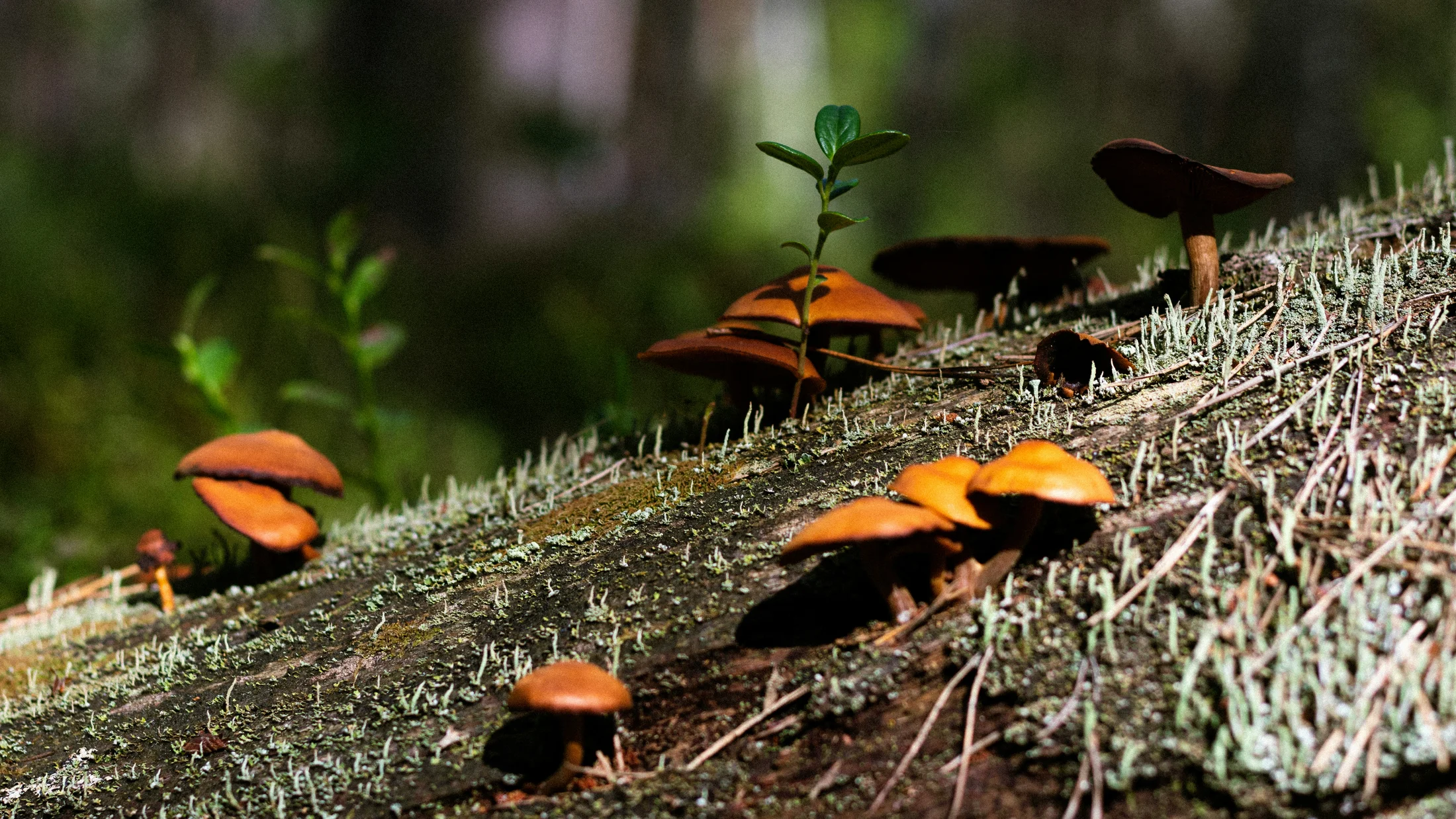
Autumn, mushrooms and paths: why head to the mountains with a local guide
In autumn, humidity and mild temperatures activate the forests: it is the best time for mycology in Spain. The crunch of leaves under your boots and the smell of wet earth awaken your curiosity.
Identifying a mushroom requires reading its environment: type of tree, soil, altitude and recent rainfall. A local mycological guide shortens the learning curve, helps you recognise species, avoids dangerous confusion and provides guidance on permits. They also know discrete microhabitats and adjust the route according to the weather and the fruiting of each week.
Each autonomous community has its own rules and a mushroom picking permit is often required. Many areas limit the quantity and the hours, and in national parks, collecting may be prohibited. It is advisable to go out with an aerated basket, cut cleanly with a pocket knife and respect private property and protected species.
The guide brings together where and when to go, types of forests, 10 key places, regulations, public transport access, accommodation that collaborates with guides, mycological routes by level, identification workshops and gastronomy experiences with mushrooms.
Picuco te puede ayudar
Does something here catch your eye?
Tell us.
Write to us on WhatsApp or email: we answer questions, find the best options and help you sort out the booking.
When and where to look: climates, forests and basic rules
Mushroom season starts with the first stable rains after summer and a soil temperature of 10-18 °C. The peaks arrive between September and November, with differences depending on altitude, latitude and exposure.
Three to five days of light and continuous rain are usually enough for them to fruit. Check the forecast before heading out: 10-30 mm of light rain in 48-72 h are productive, and nights above 5-7 °C protect tender shoots from frost. Warm, dry winds slow down the cycle, and a new light rain reactivates it in 3-7 days.
Important
Mushroom identification has a margin of error without experience. Never consume doubtful specimens and, if you can, hire a local mycological guide with accreditation and civil liability insurance.
Altitude dictates the harvesting windows. From 2,000 to 1,500 m, from late September to mid-October, depending on north or south orientation. From 1,500 to 900 m, full October, with a second wave if the "veranillo de San Miguel" provides a respite and it rains again. From 900 to 300 m, from late October to late November, and in temperate coastlines it can extend to December.
Each climate has its forests. In the Atlantic (Asturias, Cantabria, north of Galicia) regular rains favour boletus and chanterelles in beech and oak forests. In the inland Mediterranean (Soria, Segovia, Guadalajara), Scots pine and negral pine forests yield saffron milk caps and boletus after westerly fronts. In the humid Mediterranean (Girona), the beech forests of La Garrotxa yield delicate mushrooms if there are no late heatwaves. In the southwest (Huelva), chestnut groves and dehesas yield specific species after the first Atlantic storms.
Beech forests yield boletus, chanterelles (Cantharellus cibarius) and amanitas, the latter with extreme caution. Oak forests yield boletus edulis and aereus, and tooth fungi (Hydnum). Pine forests yield saffron milk caps (Lactarius deliciosus) and boletus pinophilus. Chestnut groves yield chestnut mushrooms and lepiotas in damp clearings. Dehesas yield autumn meadow species and mushrooms linked to holm oaks, with many being private estates.
Spain does not have a single harvesting rule: each community and, sometimes, each mountain is regulated. The picking permit sets limits (kg/day), hours, zones and best practices. In mycological parks regulated by provincial councils or local consortia, quotas of 3 to 5 kg per person per day are common (for example, in Castilla y León and Navarra), so it is advisable to consult the official bulletins. In national parks, harvesting is usually prohibited; in natural parks, it is often restricted or conditioned by zones. Do not enter private property without express permission: many dehesas and low mountains are private estates.
Carry an airy basket instead of a bag: it disperses spores and prevents the mushrooms from stewing. Cut flush with a knife and cover the hole, without disturbing the leaf litter, which is the living tissue of the forest. Do not pick old or very young specimens and leave the non-edible ones in place, because they fulfil their ecological function. Do not consume anything without 100% reliable identification: a photo does not replace an expert diagnosis.
To interpret the season, observe the local rainfall and follow local bulletins and mycological association networks: they provide clues about mushroom waves by region.
How to get there and where to sleep: practical bases by Region
Choose a base with good roads and you will be able to change valleys depending on where it has rained. Get up early and look for accommodation accustomed to mycological logistics: rural houses and hotels with seasonal kitchens usually offer flexible breakfast and picnic schedules, space to dry boots and equipment, and information about permits and guide contacts. Mycological hostels and interpretation centres organise group outings and afternoon workshops.
Practical advice
Book parking and access in advance in destinations with quotas (Tejera Negra, Hayedo de Montejo) and confirm return bus schedules, which are usually limited on autumn weekends.
In the Selva de Irati, you enter via Ochagavía or Orbaizeta, by car: from Pamplona it is 1 h 40 min via the NA-178. Public transport is limited and some accommodations manage transfers. In Redes and Muniellos, you arrive by car from Oviedo in 1-2 h via the AS-117 and the AS-15; there are trains to Oviedo and regional buses to the valley heads, with reduced schedules on Sundays.
Muniellos is the largest oak forest in Spain and is declared a UNESCO Biosphere Reserve. Access is limited to 20 people per day and the permit application opens every 15 December. In Tejera Negra, the final track has access control and parking with reservation in autumn, and the Hayedo de Montejo requires prior access reservation.
Valsaín, in the Guadarrama, can be reached by train to Cercedilla or Segovia and local bus, or by car from Madrid in 1 h 15 min via the AP-6. To the Pinares de Soria, you arrive by car from Madrid in 2 h 56 min to Soria capital. Gredos has access via the AV-941 and the N-502, and the AV-941 connects the N-502 and the N-110 through the north of the sierra; the peak Almanzor is the highest point, with 2592 m of altitude, and the sierra features the Parque Regional de la Sierra de Gredos.
In the Garrotxa, from Barcelona it is 1 h 45 min via the C-17 and the C-37, and there are intercity buses to Olot and Santa Pau. The Rumbus service (operated by TEISA) runs Les Preses – Olot – Fageda d’en Jordà – Área de Santa Margarida – Santa Pau and operates on weekends, holidays, bank holidays and other specific dates.
For a plan B, set up your base at a crossroads of valleys: Cangas de Narcea for Muniellos and nearby forests, and Olot for the Fageda d’en Jordà and the high beech forests.
To transport mushrooms, bring 1-2 medium baskets of 25-35 l and stackable boxes in the boot. A rigid travel cooler helps if you return late, and it is advisable to avoid excessive humidity. Keep the species separate with paper or cardboard and label them if you are practising identification.
10 essential forests for mushrooms in autumn
Ten reference destinations for searching for mushrooms in autumn, with notes on access, species and permits. The list traverses northern mountain ranges with constant humidity, productive pine forests of the plateau and temperate coastlines that offer good outings at the end of autumn.
The perfect moment to enter the forest is recognised by the low mist between the trunks. Before leaving, check at each destination which permits are needed and which local guide you can rely on.
1. Selva de Irati (Navarra): beech forests and fir forests of the North
The Selva de Irati mixes beech forests and fir forests that retain moisture and provide delicate mushrooms in regular autumns. It is the second largest and best preserved beech forest in Europe, after the Black Forest in Germany.
Fruiting depends on the rains of September and October, with staggered peaks according to the altitude. In the clearings, boletus edulis and aereus appear, in the peripheral pine forests níscalos appear, and in acidic soils there are Cantharellus and also amanitas, which require extreme precaution.
The difficulty is medium: there is a lot of diversity and "twin" specimens that require a trained eye. A local mycological guide knows the low walls, the hollows and the changes in altitude that matter after each front. Avoid areas with recent waterlogging.
The Juntas de los Valles de Aezkoa y Salazar manage permits for non-residents, so it is advisable to buy one the day before if there is availability. Consult the BON (Boletín Oficial de Navarra) for updated regulations and daily limits.
You arrive from Ochagavía and Orbaizeta, with regulated parking in season and forest tracks with occasional control. The rest area in Casas de Irati is paid and has information, rangers, parking, picnic area and bar-restaurant.
2. Hayedo de Tejera Negra (Guadalajara): a classic of the plateau
The Hayedo de Tejera Negra is a beech "island" at the eastern end of the Sistema Central, in the sierra de Ayllón. Getting there is easy and the forest is cared for with exemplary regulation. The October rains activate its cool soils and temporary streams.
Look for clear and slimy hygrophorus, russulas of varying colours, boletus in mixed areas and níscalos in nearby pine forests, outside the core of the beech forest. The difficulty is medium-high: hygrophorus and russulas require practice to differentiate the edible ones.
Full October is the best time, with a second wave if light rains fall in November. The Hayedo de Tejera Negra is located in the Parque Natural de la Sierra Norte de Guadalajara, within which it became integrated. Respect the paths and do not collect in areas of maximum sensitivity.
The recommendation is clear: prioritise mycological routes in the peripheral environment of the park with a local guide and combine it with an interpretative visit to the beech forest without collecting to learn about beech forest fungi.
The vehicle must match the type indicated in the reservation and buses with more than 35 seats cannot enter the interior parking lot. The access hours are from 10:00 to 15:00, with departure before sunset.
The marked routes organise your day. The Senda de Carretas is circular, 6.5 km long, with white and blue markers. The Senda del Robledal totals 17 km with green markers and starts at the esplanade of the Centro de Visitantes. For bicycles, there is a 21 km circular route with red markers up to the Zarzas river.
3.Hayedo de Montejo (Madrid): accessible getaway for mushrooms
The Hayedo de Montejo is one of the southernmost beech forests in Europe: 250 hectares in the Sierra del Rincón, with a maximum altitude of 1,600 metres. It is a Site of National Interest and a UNESCO World Natural Heritage site.
The mist between thin trunks turns the light into a cold silk. The difficulty is medium and the area is very busy, with specimens scattered outside the massive paths.
Look for boletus in the adjacent oak forests, Clitocybe and Lepista in meadows and tracks, and saffron milk caps in nearby pine forests. The best time is from mid-October to early November.
Inside the Hayedo de Montejo, collecting is prohibited: access is interpretive and guided by the visitor centre. Collecting is done in forests within the surrounding Biosphere Reserve, always following municipal regulations and the corresponding permits. A local mycological guide knows less frequented ravines and instructs you in safe identification, which makes a short getaway from Madrid worthwhile.
Book in advance for the beech forest and keep in mind that parking is limited. The pass is collected at the Centro de Información de la Reserva de la Biosfera, 8 km from the beech forest. Visits are free and accreditation can be obtained in advance on the website of the Reserva de la Biosfera Sierra del Rincón; it can also be requested on the same day at the Centro de Información, subject to availability.
4.Muniellos (Asturias): oak forests and Atlantic woods
Muniellos preserves one of the best-preserved oak forests in Europe, and there the priority is to protect it, not to collect. The Integral Natural Reserve covers the Muniellos, La Viliella and Valdebois mountains, in the southwest of Asturias, between the municipalities of Cangas del Narcea and Ibias.
In its Atlantic matrix, you can observe boletus, amanitas and Cantharellus, as well as polypores on dead wood. Collecting is prohibited within the integral reserve: only observation is allowed. The correct approach is photographic observation, because identifying without touching requires a high level of difficulty.
Access has a very limited daily visitor quota and requires mandatory prior reservation, which must be confirmed between 15 and 23 days before the visit. Applications can be made from 15 December of the previous year. Entry and exit is exclusively via Tablizas and no pets can be brought. The reserve closes from 1 to 6 January and on the 24, 25 and 31 of December.
October is the best time, with visits conditioned by the weather. To collect responsibly, hire guided routes in the surrounding forests, outside the reserve, within the municipalities of Cangas del Narcea or Ibias. A good plan is to alternate a day of observation in Muniellos with a day of educational collecting in neighbouring oak forests accompanied by a local guide from the area.
5.Redes Natural Park (Asturias): Atlantic mix for varied mushrooms
Redes combines beech forests, oak groves and mountain meadows with permanent watercourses, a perfect cocktail for fungal diversity. The murmur of the streams competes with the snapping of damp branches. Mushrooms here appear in mosaics according to altitude and exposure.
- Species: chanterelles (Cantharellus), boletus edulis, Hydnum repandum and marasmius at path edges.
- Difficulty: medium; good density of classic edibles, with possible confusion between Cantharellus vs false chanterelles.
- Access: from Oviedo via
AS-117towards Sobrescobio and Caso; multiple routes signposted by the park. - Best time: October and early November; head up the valleys if it rains little.
Regulations:
- Natural park with regulation; harvesting for self-consumption may be subject to local ordinances. Consult the Principado de Asturias and town halls (Sobrescobio, Caso) for current limits.
Services:
6.Sierra de Aracena y Picos de Aroche (Huelva): chestnut trees and dehesas
In the north of Huelva, the chestnut groves, holm oak forests and dehesas of the Sierra de Aracena y Picos de Aroche turn ochre, reddish and yellow in autumn. It is a mosaic of habitats that changes quickly after each rain and responds generously to the first Atlantic storms.
Look for chestnut mushrooms, saffron milk caps in damp corners, macrolepiotas in clearings and meadow mushrooms in the dehesa. The difficulty is medium: you have to read the terrain and adjust the plan to how much it has rained.
The best time is from late October to late November; in wet years it extends until early December. The high season is November, until heavy frosts stop the growth of the fungi.
Much of the land is private: respect the gates and do not enter without permission. In public mountains, local authorisation may be required, and guides work with collaborating estates, which facilitates legal and responsible access.
Park only in permitted areas, do not access private estates, respect the paths and consult the regulations for the use of drones in parks and ZEPAs. Carry enough fuel: some routes have few petrol stations.
Various shops and restaurants in mountain villages offer menus with seasonal mushrooms. Book for the mycological fair weekends.
7.Pinares de Soria (Castilla y León): pines and boletus
The Pinares de Soria are a vast expanse of pine forest, with the white pine forests of Covaleda, Duruelo and Vinuesa at the heart of the autumn season. After well-distributed rainfall, mushroom production can be high.
Look for saffron milk caps (Lactarius deliciosus), boletus pinophilus and edulis, and marzuelo in other seasons. The difficulty is low-medium: there is a good density of pine forest, but it is worth reading the terrain in edges, clearings and mossy soils.
The best time is October and the first half of November. Depending on the altitude, it starts earlier in Urbión and later at the foot of the valleys.
The mycological parks manage daily or seasonal permits with quota controls and good practices. Buy it in advance for the weekend and carry identification. The permit for the Montes de Soria can be obtained via online sale or at authorised expedition points.
Seasonal prices in Montes de Soria:
- The local recreational collector pays 3 € and the local commercial, 10 €.
- The linked recreational collector pays 10 € and the linked commercial, 50 €.
- The general recreational collector pays 10 € for two days, with a limit of 5 kg of mushrooms in two consecutive days.
- Local and linked collectors have a limit of 5 kg/day (recreational) or 30 kg/day (commercial).
Get up early and cover different altitudes on the same day: early hours at 1,400 m and the last sweep at 1,000-1,100 m. A local guide will place you in the active zones according to the week's rainfall.
From Madrid, it is 3 h 11 min to Vinuesa and 3 h 18 min to Covaleda. Covaleda, Duruelo de la Sierra and Vinuesa function as bases.
8.Montes de Valsaín (Segovia): mountain pine forest and autumn mushrooms
They are located near Madrid and Segovia, so they are suitable for a one-day mushroom outing.
Look for saffron milk caps in clearings, boletus in deep soils with moss and tricholomas on the edges of tracks. The terrain is gentle, with moderate slopes: low-medium difficulty.
To collect mushrooms, you need a specific permit from the Organismo Autónomo Parques Nacionales. Minors under 14 do not need it, but they must go with an adult who has one. Do not use sickles, rakes or hoes that damage the soil, roots or mycelia, and do not collect at night.
The National Park of the Sierra de Guadarrama prohibits collection in its core zone. The Montes de Valsaín have their own management and specific restrictions: inform yourself at the Centro de Visitantes de Valsaín before setting out. Respect regenerated areas and research areas.
From Madrid, you arrive in 1 h 15 min via the AP-6; by public transport, the AVE goes from Madrid Chamartín to Segovia in 25 min or the bus leaves from the Moncloa interchange every half hour (AVANZA BUS). From Segovia, the bus to La Granja de San Ildefonso runs every 45 min (LINECAR).
9.Sierra de Gredos (Ávila): oak groves and mountainous chestnut forests
In Gredos, altitude and shade decide where the mushrooms appear. The mountain range mixes oak groves, chestnut forests and piornos, with a microclimate that changes according to orientation and altitude.
The melojares form a belt of vegetation between 1500 and 1700 m altitude, and Almanzor peak crowns the area at 2592 m. Look for boletus in the oak groves, Hydnum in acidic soils and macrolepiotas in the high meadows.
The difficulty is medium: the terrain and thermal changes make fruiting unpredictable. October is the best time to go up.
From Madrid you arrive in 2 h via the N-502 and the AV-941. You can stay in Hoyos del Espino, Navarredonda or Arenas de San Pedro.
Gredos is a Regional Park and regulations change depending on the mountain and the municipality, within the mycological network of Castilla y León. Check with town halls and local neighbourhood boards regarding permits and quotas before heading out.
Bring a thermal layer and a windbreaker: dense mists are frequent at the end of the day and mountain weather rules.
10.Garrotxa Volcanic Zone (Girona): beech forests and volcanic woods
It is in Girona, and in autumn its forests fill with mushrooms.
Inside there is a circular route of 4.7 km, practically flat with 23 m of elevation gain, which takes 1.5 to 2 hours to walk.
Look for rebozuelos, chantarelles and boletus at medium altitudes, and pay attention to the diversity of wood-decay fungi that appear on dead wood. The difficulty is medium: it is worth refining your search for microhabitats so as not to compete with other collectors. The best time is October and November, with surges following light rains.
The natural park has specific regulations with collection limits per person per day. From Barcelona you arrive in 1 h 45 min; there are buses to Olot and Santa Pau and marked routes through the Parc Natural.
Avoid the weekends of maximum crowds: during the week there is more calm to observe and learn.
Activities and local guides: how to make the most of the season
The mycological autumn goes beyond filling your basket: there are courses, tastings and themed outings for all levels. Each activity has its own pace, so you can start with an identification talk and follow up with an outing to the mountain.
To progress safely, the local mycological guide is your best ally. They know the species of their area, distinguish those that are easily confused and teach you how to collect without damaging the forest.
Before booking, check the calendar for each activity and the level it is aimed at. Outings usually close with few spots available, so it is advisable to sign up in advance and confirm the meeting point.
Guided routes: types and how to choose according to your level
Guided outings are organised by duration and objective, and choosing well changes what you learn in the forest. There are half-day routes (3-4 h), full-day routes (6-7 h) and technical outings for identification or photography.
In half-day routes, habitats are introduced and 5-10 frequent species are recognised; they are suitable for families and beginners. Full days allow you to explore two different altitudes and delve deeper into identification criteria, transport and conservation.
If you are starting out, prioritise safety, the clear differences between edible and toxic species and harvesting ethics. With some experience, look for outings focused on microhabitats, difficult species and permit management. For photographers, small groups work well, with macro photography and the location of singular species, and with minimal extraction.
Groups of 6-10 people work well for learning and moving without noise. Before booking, confirm the meeting point, if insurance is included and if the guide processes the mushroom harvesting permit when applicable.
Workshops and gastronomic experiences: learn and try cooking mushrooms
In an identification workshop, you learn to look at the stem, the gill, the pore, the cuticle and the smell of each mushroom. These basic morphological keys are the starting point for distinguishing species in the field.
Workshops usually combine a short outing with an identification table, the use of field guides and consultation apps. Conservation courses cover drying, blanching, freezing and food safety.
In cooking workshops, gentle techniques are practised: short sautéing, low-temperature confit and pairing with eggs, game or chestnuts. There are formats for all tastes:
- Outing, identification and seasonal food in a rural house.
- Cooking demonstration with 3-4 recipes and tasting of local wines.
- Mycological photography at dawn and basic editing in the afternoon.
It is advisable to book in advance on peak weekends, such as the Pilar and Todos los Santos long weekends.
If you are looking for verified proposals, consult options on Picuco and filter by region and level.
Hiring a local guide: criteria, rates and concrete advantages
Choosing the right guide decides a large part of the safety and learning of the mycological outing. First, look at their training (biology, environmental sciences or specific accreditations), their experience in the area and references from other hikers.
Ask for the civil liability insurance number and confirm that they know the regulations and permits for each mountain. A good guide opens up discreet areas to you, reads the local weather and corrects your identifications in the field.
When choosing, review these criteria:
- Valid accreditation and insurance, and up-to-date knowledge of municipal and regional regulations.
- Small groups and educational material such as plates, magnifying glasses and field guides.
- A clear policy on responsible collection and quotas.
Indicative rates in open groups are 25-45 € per person for a half day and 45-75 € per person for a full day. In a private group, from 140-220 € per group for a half day and from 220-350 € per group for a full day. Book in advance.
When booking, ask if it includes the mushroom collection permit and what happens if the area does not fruit (plan B or change of date). Also confirm if there is insurance, a first aid kit and communication in areas without coverage, and if they separate by levels and limit places.
Equipment, safety and checklist for responsible harvesting
A mushroom day is decided before you head out: with the right equipment and a clear plan, you will enjoy the walk and your finds will arrive in good condition. The equipment looks after your feet, your route and what you collect, with hygiene throughout the entire process.
Food safety
Some dangerous species mimic classic edible ones. The amanita phalloides can be confused with innocuous green mushrooms; never rely solely on colour or smell.
To harvest, take wicker baskets or 25-35 l rods and paper bags. Add a short-bladed knife with an integrated soft brush, waterproof boots with a treaded sole and spare socks. Dress in layers: thermal, lining and windbreaker or waterproof.
In your backpack, a GPS or an offline app with downloaded maps, an external battery and a whistle are essential. Add a physical field guide and a reference app for visual contrast, as well as thin gloves, hand sanitiser and rubbish bags.
The golden rule in identification is simple: if you doubt, do not consume. Compare with 2-3 sources and validate with a guide or mycological society. When cutting, do it flush, clean the stem and avoid disturbing the substrate; leave past specimens for fauna and sporulation. Separate species by compartments and label with habitat notes to learn.
If you do not cook within 12-24 h, refrigerate at 4 °C. Ventilate the baskets and avoid stacking; for long transport, use a rigid cooler with separators and without free moisture. In the kitchen, clean dry first and avoid intense washing that soaks the flesh.
In the mountains, plan your itinerary, elevation gain and hours of light: in October, it gets dark earlier. Inform a third party of your route and schedule, because coverage is irregular in the valleys. Watch the weather (fronts, winds and mists) and always carry layers and a headtorch in your backpack. To orient yourself, mark returns at crossroads and use simple GPX tracks.
Keep quiet and respect fauna and livestock; close gates. Do not trample ant nests or lift rotten logs on a whim, and park in designated places without invading forest tracks.
Express checklist before leaving: printed or mobile permits, ID and insurance. Take baskets, a knife, layered clothing, water and snacks. Do not forget offline maps and extra battery, as well as paper bags and labels. Check the weather and have a B plan for altitude or valley.
Frequently asked questions
Do I need a permit to collect mushrooms?
In many areas of Spain, a permit is indeed needed to collect mushrooms. Castilla y León, Navarra and part of Castilla-La Mancha require permits by mountain or mycological park, with daily or seasonal quotas.
In national parks, mushroom harvesting is usually prohibited. Before heading out, consult the local regulations and acquire the corresponding permit.
How do I safely differentiate edible mushrooms from poisonous ones?
The "triple verification" rule gives you three filters before cooking: a field guide, a verified app and the opinion of an expert person. If the three do not coincide, the mushroom stays in the forest.
Look at the stem, the hymenium (gills or pores), the cuticle, the smell and the habitat where it grows. With those five pieces of data, you can rule out many confusions. Faced with any doubt, do not consume it.
A local mycological guide accelerates learning and reduces risks: they teach you to look at what a photo does not show. Book your outing in advance in autumn, which is when most people look for mushrooms.
What quantity limits are common?
In many mycological parks, limits of between 3 and 5 kg per person per day are set, although the quota varies depending on the mountain and the species. Some municipalities reduce quotas during periods of drought or following heavy harvesting pressure.
Before heading out, consult the current order from the town hall or the mountain manager to know the applicable limit.
Can guides collect for me?
The norm is that the guide will encourage you to collect for yourself under their supervision, because that is how you learn to distinguish species and move through the forest. Some operators offer "sample" baskets for cooking, always within the quotas and regulations.
Before booking, ask if insurance, traceability, and the mushroom collection permit are included in the price.
What do I do if I find protected or rare species?
If you find a protected or rare species, do not collect it. Photograph the mushroom and take notes of the habitat where you found it.
Communicate the find to the local mycological society or to the manager of the natural space. Some species are protected by regional catalogues and their extraction is punishable.
Is there a quieter season to avoid overcrowding?
Weekdays in October and November are the quietest. Avoid long weekends and central weekends, and go out during the week, in the first hours after a light rain.
If the best-known forest is full, change altitude and look for less obvious orientations: that way you find calm and mushrooms.
Book your experience — discover active tourism activities in Spain with providers verified by Picuco.
Conclusion
Searching for mushrooms in autumn is learning to read living forests and respect their pulse. To start, a light basket and a clear map are enough; the smell of damp soil does the rest.
With reliable information, permits in order, and a local mycological guide, you enjoy more and avoid risks. Before heading out, check the weather, choose a forest from the list, and prepare a route according to your level.
The season passes quickly: organising yourself in time turns a morning among leaves into one of the best autumn stories.