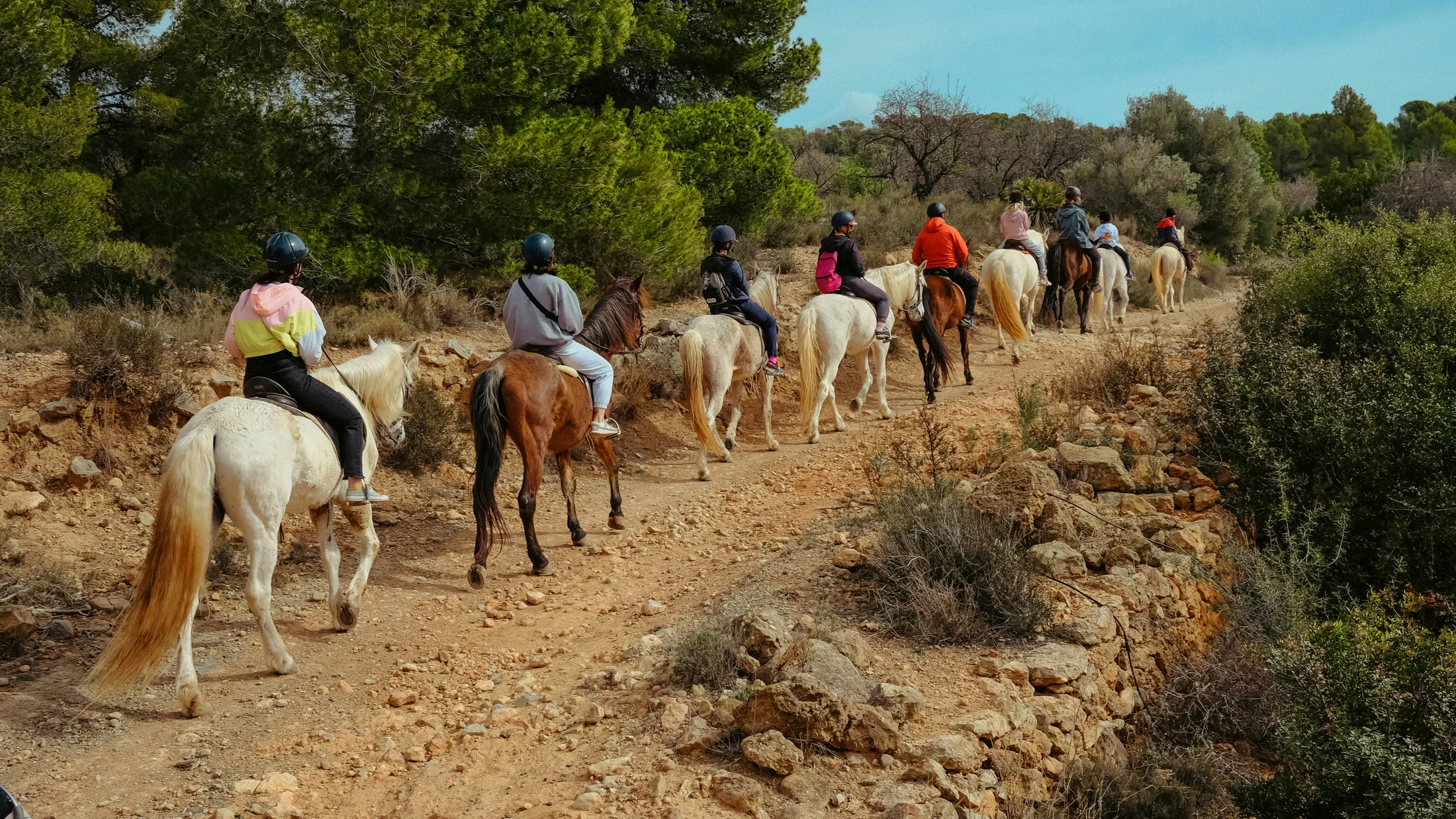
Why Horseback Riding in Spain Feels Different
Spain rewards you on horseback in a way few countries do: mountains that climb into thin air, Atlantic beaches that seem to run forever, and rolling dehesa pastures dotted with holm oaks and cattle. You’ll find a deep equestrian tradition here—from Andalusian horses (Pura Raza Española) to transhumance routes that once moved herds across the peninsula—and that culture translates into well-kept trails, patient guides, and horses used to every kind of terrain. If you’re curious about horseback riding Spain, this guide helps you choose with confidence.
Move at a horse’s pace and the landscape reveals itself with calm: 6–8 km/h at a walk, 10–12 km/h at a trot, and short canters where footing allows. That slower rhythm means quiet encounters with wildlife, time to learn your mount’s balance, and a more intimate sense of place. Formats range widely: short 1–2 hour rides ideal for first-timers, half- and full-day outings that reach viewpoints or coves, sunset horseback ride Spain moments that time your hoofprints with evening light, and multi-day horseback tours Spain across high passes or coast-to-coast corridors. If you ride already, you’ll find technical mountain horse trails Spain; if you don’t, Spain’s trained trail horses and certified guides make entry easy.
This guide gives you a curated selection of 10 outstanding experiences—across mountains, beaches and dehesa—plus practical logistics on when to go, how to get there, where to stay, safety, what it costs, and how to book. We’ll show you where beach horseback rides Spain work year-round (and when tides matter), where altitude opens summer windows for cool rides, and how to build multi-day loops with rural inns or organized bivouacs. We’ll also flag park rules, seasonal closures, and realistic fitness expectations so you choose a route that matches your skills.
Expect clarity and specifics: distances, altitude ranges, typical durations, and price bands to help you plan. You’ll also find cultural and culinary ideas to round out your days—because in Spain, a ride is rarely just a ride; it’s a thread that ties villages, flavors, and landscapes together. Picture the scent of crushed pine under hoof as a breeze lifts the mane across your shoulder. For booking, many areas have multiple specialized operators with daily departures in season; compare options and, when in doubt, ask for smaller group sizes and English-speaking guides.
Picuco te puede ayudar
Does something here catch your eye?
Tell us.
Write to us on WhatsApp or email: we answer questions, find the best options and help you sort out the booking.
The 10 Experiences at a Glance
- Sierra de Gredos — High mountain traverse with granite cirques and glacial lagoons; typically 3–6 days with 5–7 riding hours daily; intermediate riders recommended due to altitude, rocky footing, and occasional stream crossings; best June–October for stable weather and open high passes.
- Picos de Europa — Dramatic limestone massifs and deep valleys where trails climb to sweeping overlooks; options from demanding full-day rides to 3–4 day hut-to-village itineraries; intermediate to advanced level for exposed paths; best June–September, often pairing with a Fuente Dé cable-car morning.
- Sierra Nevada — Ride between snow-fed ravines and white Alpujarra villages; half-days in shoulder seasons or multi-day crossings that touch
GR 240segments; beginner-friendly valley rides, but altitude stages suit confident riders; best late spring, summer in high zones, and early autumn. - Costa de la Luz (Cádiz–Huelva) — Coastal horse riding Spain with wide Atlantic beaches and low dunes; classic 1–2 hour sunset sessions ideal for first-timers; gentle paces on firm sand at low tide; best September–June, with high-season restrictions midday in popular beaches.
- Cabo de Gata–Níjar — Volcanic cliffs, fossil dunes, and protected coves like Genoveses and Mónsul; half-day and full-day loops mix shoreline tracks and desert-like interior ramblas; easy to moderate terrain; best October–May to avoid extreme heat and nesting closures.
- Costa Brava — Mediterranean cliffs, pine-framed paths, and hidden calas; choose sunset rides or day routes combining farm tracks with coastal viewpoints; beginner to intermediate, with restrictions in protected areas; best spring and autumn, book early for July–August.
- Doñana and the marshes — Wetland edges, umbrella pines, and miles of empty shoreline; 2–4 hour nature-focused rides with binocular stops; easy pace for all levels; permits and route limits apply inside protected zones; best October–May for birds and cooler air.
- Dehesa of Extremadura — Oak-studded pastures, iberian livestock, and gentle clay tracks; dehesa horse riding blends easy terrain with gastronomy at cortijos; day rides and 2–4 day inn-to-inn options; best October–April when grass is green and temperatures mild.
- Sierra de Aracena y Picos de Aroche — Mixed dehesa and chestnut groves linked by Roman paths and white villages; family-friendly 1–3 hour rides plus 2–3 day circuits; easy to moderate levels, autumn shines with mushrooms and chestnuts; best October–May.
- Serra de Tramuntana (Mallorca) — Multi-day horseback line along terraced olive slopes with sea views; 2–5 day itineraries touching
GR 221corridors (on permissible tracks); moderate levels in spring and autumn; logistics are easy with local horses—no horse transport needed.
Essential Logistics: Where, When, How, and Where to Sleep
Spain divides neatly for riders: the north for mountains and lush valleys, the center for granite sierras and open plateaus, the south for coastlines and wetlands, and the islands for Mediterranean sceneries under stable skies. Travel time matters; mountain clusters like Gredos sit 2–2.5 hours by car from Madrid, while Costa de la Luz beaches are 1.5–2 hours from Seville or Jerez. On islands, Mallorca’s Tramuntana trailheads lie 30–60 minutes from Palma. Imagine the early cool on your cheeks as you cinch the girth beside dew-wet grass.
-
Regions and access:
- North (Picos de Europa): fly to Santander/Oviedo; trains to Llanes/Cangas de Onís via Ribadesella; driving offers fastest trailhead access.
- Center (Gredos): drive from Madrid or Ávila; regional buses reach valley towns, with stable pick-ups by arrangement.
- South (Sierra Nevada, Costa de la Luz, Doñana, Aracena): fly to Granada, Málaga, Seville, or Jerez; rent a car for flexible transfers.
- Islands (Tramuntana): fly to Palma; short transfers by taxi/shuttle to coastal or interior bases.
-
Best seasons by terrain:
- Mountain horse trails Spain: late spring to early autumn, with July–August for high-altitude cool; watch afternoon storms in June–July.
- Beach horseback rides Spain: September–June are easiest for permits and space; in high summer, aim for dawn/dusk and check local bylaws.
- Dehesa horse riding: October–April offers green pasture, shade, and active wildlife; May–June works early/late; summers can be hot midday.
-
Transport on arrival:
- Car hire unlocks remote trailheads and flexible returns after linear stages.
- Trains connect major cities; arrange stable transfers from nearest stations.
- Domestic flights shorten island or north–south jumps; pack helmet and boots in carry-on for reliability.
-
Typical costs (confirm with the operator or compare options on Picuco):
- 1–2 hours: 35–60 € per person
- Half-day: 60–90 € p.p.
- Full-day with lunch: 90–150 € p.p.
- Multi-day horseback tours Spain (with horse, guide, baggage transfers): 150–220 € per day
-
Where to sleep:
- Riding centers with on-site rooms or cabins for seamless starts.
- Rural inns and agrotourism stays (casas rurales, cortijos) close to stables.
- Mountain refuges on some traverses; luggage moved by support vehicle while you ride.
- On coast, consider off-beach villages to avoid high-season noise and to respect ride access windows.
Planning tips for peak times:
- Book beach rides 2–4 weeks ahead in July–August, and mountain traverses 6–10 weeks ahead for June–September.
- For protected areas, ask your operator to confirm route permissions and bird-nesting or fire-restriction windows (park rules can change quickly).
- Pair rides with local plans: cheesemaking visits in Picos, olive mills in Tramuntana, iberian ham tastings in Extremadura, or a teleférico morning in Fuente Dé before an afternoon valley loop.
The 10 Horseback Routes by Landscape
Sierra de Gredos: High-granite Traverse (multi-day)
Sierra de Gredos rides weave across granite spines, past the Circo de Gredos and blue glacial bowls like Laguna Grande beneath Almanzor (2,592 m). Expect 3–6 days of travel, 5–7 hours in the saddle daily, with walk–trot paces and controlled canters on meadows and forest tracks. Picture the clink of horseshoes on rock as the air thins and bells from distant herds drift across the valley.
These rutas a caballo montaña require intermediate comfort: steady seat, light hands on descents, and confidence in variable footing. Best season runs June–October when snow retreats from high passes; shoulder weeks may still hold patches of névé. Guides often mirror parts of the GR-10 and old transhumance lanes, using rural inns or arranged bivouacs with hot dinners. Pack layers, a breathable rain shell, gloves, and a headlamp; afternoons can build quick storms.
Logistics are straightforward: bases sit 2–2.5 hours from Madrid by car, and some offer station pick-ups from Ávila. Approximate costs for paseos a caballo multi día range 160–200 € per day including horse, guide, and luggage transfers (confirm inclusions). No special permits are required beyond Regional Park norms—stick to trails, water horses away from lagoons, and tie only to designated points. For a quiet thrill, time an early or late ride to watch alpenglow flicker across the granite cirque.
Picos de Europa: Between Peaks and Deep Valleys
Picos de Europa feels vertical: limestone towers to 2,648 m, shadowed gorges, and valleys where shepherd hamlets sit on green shelves. Rides range from demanding full-day climbs above Liébana to 3–4 day circuits that combine high meadows with village nights. Hear the rush of distant water in the Cares and the wingbeat of a griffon vulture spinning in warm air.
These rutas a caballo montaña suit intermediate to advanced riders due to narrow traverses and occasional exposure. Best months are June–September, when snow has cleared and track edges are dry. Footwear matters: choose boots with heels and ankle support, and pack a warm layer even in August. Many itineraries link with sightseeing—an early Fuente Dé cable-car ascent for views, then an afternoon valley ride on safer ground.
Operators in the area run guided groups with trained mountain horses and radios; lodging typically mixes casas rurales and small hotels, with vehicle support for bags. Expect 100–180 € per day depending on duration and meals (check details). Park rules can restrict access to certain tracks; your guide will choose legal routes that avoid core habitats. A night in Potes or Arenas de Cabrales adds cheese tastings and stone-bridge strolls to your saddle time.
Sierra Nevada: Height, Moorish Villages, and Mediterranean Views
On clear days, Sierra Nevada offers a double horizon—Mulhacén’s crown behind you and a faint Mediterranean line ahead. Lower Alpujarra rides pass acequias (traditional irrigation ditches) and whitewashed villages; higher summer stages cross open pastures and crest lines that touch segments of the GR 240 Sulayr path. The crisp scent of mountain thyme lingers on your gloves as you steady the reins.
Beginners do well on valley loops (1.5–3 hours), while altitude routes suit confident riders who handle longer trots and uneven rock. Aim for late spring and early autumn at mid-elevations, and summer for true high country; winters bring ice and limited daylight. Acclimatization helps—drink steadily, keep paces calm at first, and adjust the saddle for additional layers.
Local riding centers near Lanjarón, Pampaneira, or Güéjar Sierra (among other bases) offer half-day, full-day, and multi-day horseback tours Spain with baggage support. Costs cluster around 70–120 € for day rides and 160–200 € per day for multi-day trips; confirm if meals and transfers are included. National Park core zones are off-limits; authorized tracks lie in the Natural Park and adjacent commons. Add a Granada stop for the Alhambra, or soak in hot springs after a long canter on old mule paths.
Costa de la Luz (cádiz–huelva): Beaches and Golden Sunsets
The Atlantic edge of Andalusia means breadth: long, pale beaches and a sky that turns brass at day’s end. Rides often time the outgoing tide for firm sand and easy footing, with gentle paces friendly to first-timers and families. Salt air beads on the reins as the surf hushes and hooves drum a steady beat.
These rutas a caballo playa are classic sunset horseback ride Spain sessions of 1–2 hours, and half-day outings that add dune paths or pine forest tracks. Best months are September–June, with high summer limited to dawn/dusk and specific beaches under municipal rules. Some operators offer shallow-water wades or safe “horse baths” when conditions allow; always follow the guide’s lead.
Base towns stretch from Tarifa’s windy edge to El Palmar, Zahora, and up toward Matalascañas near Doñana’s border. Prices typically run 35–60 € for short rides, 60–90 € for half-days (check current rates). Tides drive timing on the Cádiz–Huelva coast—consult official tide tables from Puertos del Estado or let your operator set departure windows. Pair your ride with tuna almadraba tastings in spring, or a beachside chiringuito at dusk when the sand is cool again.
Cabo de Gata–níjar: Wild Coves and Volcanic Ridges
Cabo de Gata rides feel elemental: dark volcanic spurs, fossil dunes, and crescents of sand framed by cactus and palmetto. Loops link coves such as Genoveses and Mónsul with interior ramblas that roll like dry rivers, mixing shoreline breezes and desert stillness. You’ll smell warm rock and sea fennel on the wind as you crest to a panoramic saddle.
Choose half-day explorations (10–15 km) or full-day circuits that lunch in shade and dip back to the coast. Terrain is easy to moderate, ideal for confident beginners upward; canters occur on flat, safe stretches only. The best window runs October–May; spring colors the scrub with blooms, and winter air is bright and mild. In summer, dawn sorties avoid heat; some tracks may close temporarily for fire risk or bird nesting—park rules apply.
Eco-focused operators keep groups small and prioritize low-impact routes; ask about group size, weight limits, and bilingual guiding. Expect 45–90 € for half/full days, with multi-day packages available shoulder season (confirm details). Combine a ride with snorkel in the marine reserve on calm days, or short hikes to viewpoints where horses cannot go. Night skies are particularly clear here—plan a late ride to finish under the first stars.
Costa Brava: Clifftops and Secret Coves on Horseback
The Costa Brava mixes dramatics and detail: cliffs that meet turquoise water, pine-needle paths, and stone farm tracks that smell faintly of rosemary. Rides braid inland masías (farmhouses) with coastal miradors, saving a cove for a quiet dismount and a swim stop ashore. The light flickers through umbrella pines like a metronome on your horse’s neck.
These rutas a caballo playa routes usually run 1.5–3 hours, with day-long options that eat a picnic above the sea. Levels span beginner to intermediate; protected zones such as Aiguamolls de l’Empordà or Cap de Creus have specific restrictions and seasonal closures—your guide will choose legal, horse-friendly paths. Spring and autumn are ideal for temperatures and calm trails; if you ride in July–August, reserve early and target early or late slots.
Access is easy from Girona (AP-7) and coastal towns between Sant Feliu, Palamós, and Begur. Prices align with other coasts—around 40–65 € for short rides, 70–110 € for day routes (check with providers). For a coastal sunset horseback ride Spain moment, choose golden-hour departures on ridges above the sea where breeze and shade meet. Pair with a fishermen’s lunch in a port or a visit to a cork-oak museum inland.
Doñana and the Marshes: Wetlands Between Pines and Shore
Doñana’s edge rides glide past marsh mirrors, through aromatic pine, and out to a seemingly endless beach where hoofprints vanish with the next tide. Birdlife is the headline here—flamingos in rose lines, egrets lifting like scraps of paper, and raptors riding thermals beyond the dunes. Your horse pricks its ears at distant calls in the reeds.
Itineraries focus on nature, with 2–4 hour loops at a calm pace, suited to all levels. Parts of the National Park are strictly protected; commercial rides typically operate in adjacent Natural Park zones or designated corridors, and permits may apply. Autumn to spring (October–May) offers cooler temperatures and peak bird activity; summer rides happen early or late, with short dune and shoreline segments.
Look for ecotourism-focused operators who brief on wildlife etiquette, group spacing, and noise limits. Photographers should bring a small, body-hugging zoom and dust protection; ask about stops for observation. Prices fall in the 40–80 € range depending on duration (confirm specifics). Add a visit to a visitor center to learn about seasonal closures before you saddle up, and finish with seafood in coastal towns that live with the rhythms of the marsh.
Dehesa of Extremadura: Livestock Landscapes, Holm Oaks, and Flavors
The dehesa is Spain’s pastoral heart: open woodlands of holm and cork oak, grazing iberian pigs and cattle, and tracks that flow gently over red clay. Hoofbeats here are quiet and regular, and the air carries acorn sweetness on cool days. A magpie flashes between trees as you thread the shade.
Rutas a caballo dehesa are forgiving—soft ground, low gradients, and wide lanes where beginners gain confidence and intermediate riders enjoy long, relaxed trots. Day rides commonly link cortijos for coffee or lunch; 2–4 day inn-to-inn circuits add farmhouse dinners and tastings. Best seasons are October–April when pasture is green; late spring still works early and late, while summer midday is best avoided.
Respect for livestock is key: pass slowly, give a wide berth to cows with calves, and close gates as you found them. Guides often include food stops highlighting DOP Dehesa de Extremadura iberian ham, sheep cheeses, and olive oil; ask about vegetarian options. Prices are similar to mountain valleys—60–100 € for day rides; multi-day 150–200 € per day (confirm inclusions). Pair with visits to montanera pastures in late autumn or local markets on weekends.
Sierra de Aracena y Picos de Aroche: Dehesa Meets Chestnut Groves
North of Huelva, Aracena blends dehesa with chestnut forests and stone paths that feel ancient under hoof. White villages—Almonaster la Real, Linares de la Sierra—offer fountains, small plazas, and shady lanes where horses rest. The cool of a woodland hollow wraps around you like a shawl between sunlit clearings.
Rutas a caballo dehesa here range from family 1–3 hour loops to 2–3 day circuits that tie villages and farm stays. Terrain is easy to moderate, with stone lanes where you walk and earthen tracks for steady trots. Autumn is glorious with mushrooms and chestnuts; winter is mild; spring brings flowers. Local operators tailor paces and horses to mixed groups, adding optional tastings of cured meats or market stops.
Expect 40–70 € for short rides, 80–120 € for full days (check current rates and group sizes). Combine your saddle time with the Gruta de las Maravillas cave visit in Aracena town, or a Sunday market that still moves with the agricultural week. Ask your guide about foraging rules if you’re tempted by chestnuts or wild herbs—collection is often limited to personal, minimal amounts.
Serra de Tramuntana (mallorca): Mediterranean Multi-day Traverse
Mallorca’s Tramuntana strings together terraced olive groves, pine slopes, and limestone saddles with constant glimpses of sea. Multi-day horseback lines trace permissible farm tracks and sections parallel to the GR 221 Dry Stone Route, sleeping in rural stays or small inns. The scent of warm rosemary rises as hooves tap old cobbles near a viewpoint.
Most itineraries run 2–5 days at a moderate level, with 4–6 hours in the saddle and luggage moved by support. Spring and autumn are prime—stable weather, long light, and quiet trails; winters are rideable with layers; high summer sticks to shaded tracks and early hours. You don’t need to transport a horse—local centers provide trail-fit mounts and tack adjusted to your build.
Expect 160–220 € per day on multi-day packages and 60–110 € for day rides (confirm meals, transfers, and group caps). Palma’s airport sits within an hour of many start points; add a rest day for coves or a cycling loop across the island’s flat interior. Protected-area rules apply; guides maintain legal corridors and coordinate with landowners across terraced estates.
What to Do Along the Way: Wildlife, Villages, and Tastes
Riding opens a constellation of add-ons that fit the terrain and the day’s rhythm. In wetlands and coasts—Doñana, Costa de la Luz—birdwatching is a natural pairing; carry a compact binocular and learn silhouettes: flamingo lines, black-winged stilts, and bee-eaters in looping arcs. In mountains—Gredos, Picos, Sierra Nevada—scan for ibex on rocky ledges, griffon vultures circling thermals, and alpine flowers like gentians near springs. A wisp of sage or rockrose on a passing breeze marks the seasons as surely as a calendar.
In dehesa country, gastronomy belongs in the saddlebag: iberian ham cut by hand, local sheep cheeses, honey, and seasonal fruit. Many cortijos and agrotourism stays offer workshops—olive oil tastings, cheese-making demos, or charcuterie talks that explain montanera (the acorn-fattening season). On island and Mediterranean routes, visit olive presses and vineyard cellars; tastings are easy to arrange outside peak hours.
Village stops add texture: whitewashed lanes in Aracena, stone hamlets in Picos, or Moorish heritage in Alpujarra towns. Plan a short, guided stroll to hear how transhumance shaped paths you’re riding today; local museums hold maps, saddles, and photos that ground the landscape in memory. Photography is welcome almost everywhere; for horses’ comfort, leave flash off and keep cameras secured with crossbody straps.
On certain beaches, shallow horse bathing is possible under guide supervision and environmental conditions; listen for instructions on footing and currents. Where protected areas set limits, ride the legal corridors and avoid dunes and nesting zones; in wetlands, stay quiet to minimize stress on birds. A basic Leave No Trace approach works for riders too: stick to durable surfaces, yield to hikers on narrow tracks, pack out all litter, and water horses away from sensitive springs. Ask your guide to point out plants you’ll meet repeatedly—holm oak (encina), cork oak (alcornoque), broom (retama), palmetto (palmito), and endemic pines—so the landscape feels more like a lived-in friend than a backdrop.
Practical Tips and Safety: Gear, Levels, and Smarter Decisions
Choose clothing and gear that balance safety, comfort, and the day’s forecast. Always wear a certified riding helmet; pair it with boots that have a defined heel so your foot can’t slip through the stirrup. Layer up—technical base, light mid-layer, windproof shell—with gloves to protect hands and avoid sunburn. The soft creak of leather under your thigh tells you your tack fits; if something pinches early, fix it before you move off.
Match route to level honestly:
- Beginners: flat or rolling ground, short beach or dehesa loops, walk–trot only.
- Intermediates: sustained trots, controlled canters, gentle mountain ascents/descents.
- Advanced: narrow traverses, long hours, varied footing, exposure.
Core safety rules:
- Keep one horse-length spacing at a walk; more at trot/canter.
- Pass hikers and cyclists at a walk; communicate early and clearly.
- In mountain zones, dismount to lead on very steep, rocky, or eroded sections; watch weather—thunder means get off high ridges.
- On beaches, check tides and avoid soft, deep sand; stay clear of swimmers and kite lines.
- In dehesa, close gates, avoid crowding livestock, and never approach calves.
Horse care matters as much as rider care:
- Water and rest breaks on a schedule; shade at midday in heat.
- Check girth every 20–30 minutes as pads compress; inspect for rubs at lunch.
- Ensure saddle fit; report any head-tossing, tail-swishing, or short strides early—discomfort should be solved, not ridden through.
Insurance and paperwork:
- Ask about personal accident coverage and third-party liability; many operators include it, but verify.
- For multi-day trips, request written inclusions: horse, guide ratio, baggage transfers, meals, accommodation type, and emergency plans.
- Confirm weight limits and medical restrictions candidly; horses’ welfare depends on it.
Beach, mountain, dehesa specifics:
- Beach: consult tide tables; start on outgoing tide; rinse salt off tack where possible.
- Mountain: pack a warm layer even in summer; storms build fast; lightning means leave exposed crests and tall trees.
- Dehesa: prime seasons are autumn–spring; watch for slippery clay after rain; ask before foraging.
Checklist for ride day:
- Helmet, boots with heel, long pants, gloves
- Layered top + light waterproof
- Sunscreen, lip balm, sunglasses with strap
- 1–2 liters of water + snacks
- Phone in waterproof pouch + ID
- Small first-aid kit (plasters, ibuprofen)
- Cash card for rural cafés and tips
Frequently Asked Questions
What riding level do I need for these routes?
Most coastal and dehesa rides suit beginners with walk–trot paces on forgiving ground, and guides match horses to riders. Mountain itineraries (Gredos, Picos, high Sierra Nevada) are best for confident intermediates comfortable with varied footing and longer hours; ask for an assessment call if unsure.
How far in advance should I book, and can I cancel?
For July–August beaches or June–September mountain traverses, reserve 2–10 weeks ahead depending on duration. Cancellation policies vary; reputable operators offer free changes up to a set window, but always read terms regarding weather, minimum group size, and refunds, and consider travel insurance.
Is horseback riding safe, and what about insurance?
Riding carries inherent risk, but certified guides, trained trail horses, helmets, and conservative paces reduce it significantly. Confirm personal accident and liability insurance are included or add your own; disclose health conditions and respect guide instructions on spacing, speed, and terrain.
Can I bring my own horse or travel with pets/children?
Multi-day logistics are easier with local horses—transport and quarantine rules make bringing your own complex. Children often ride from 8–10 years depending on size and confidence; weight and age limits apply. Pets generally cannot join rides for safety and wildlife reasons; ask about kennel options nearby.
What should I expect on a multi-day horseback tour?
Plan for 4–7 hours in the saddle daily with breaks, luggage moved by vehicle, and nights in rural inns or farm stays; some routes include occasional short hikes. Paces stay steady, food is local and hearty, and weather calls are made daily for safety; rest days can be added on request.
Reserve your experience — discover active tourism activities in Spain with providers verified by Picuco.
Conclusion
Spain’s riding map is generous: high granite and limestone for summer cool, Atlantic strings of firm sand for coastal calm, and dehesa lanes where shade and flavors meet. Choose your terrain and season, be honest about level, and let trained horses and certified guides turn uncertainty into flow. If you’re searching for rutas a caballo España, start with a short coastal loop, step up to a mountain valley day, and pencil a multi-day traverse when the rhythm of hoofbeats feels like home. For current availability, group sizes, and price bands, compare options and ask operators about safety standards, permits, and wildlife etiquette—planning well means you’ll ride more and worry less.