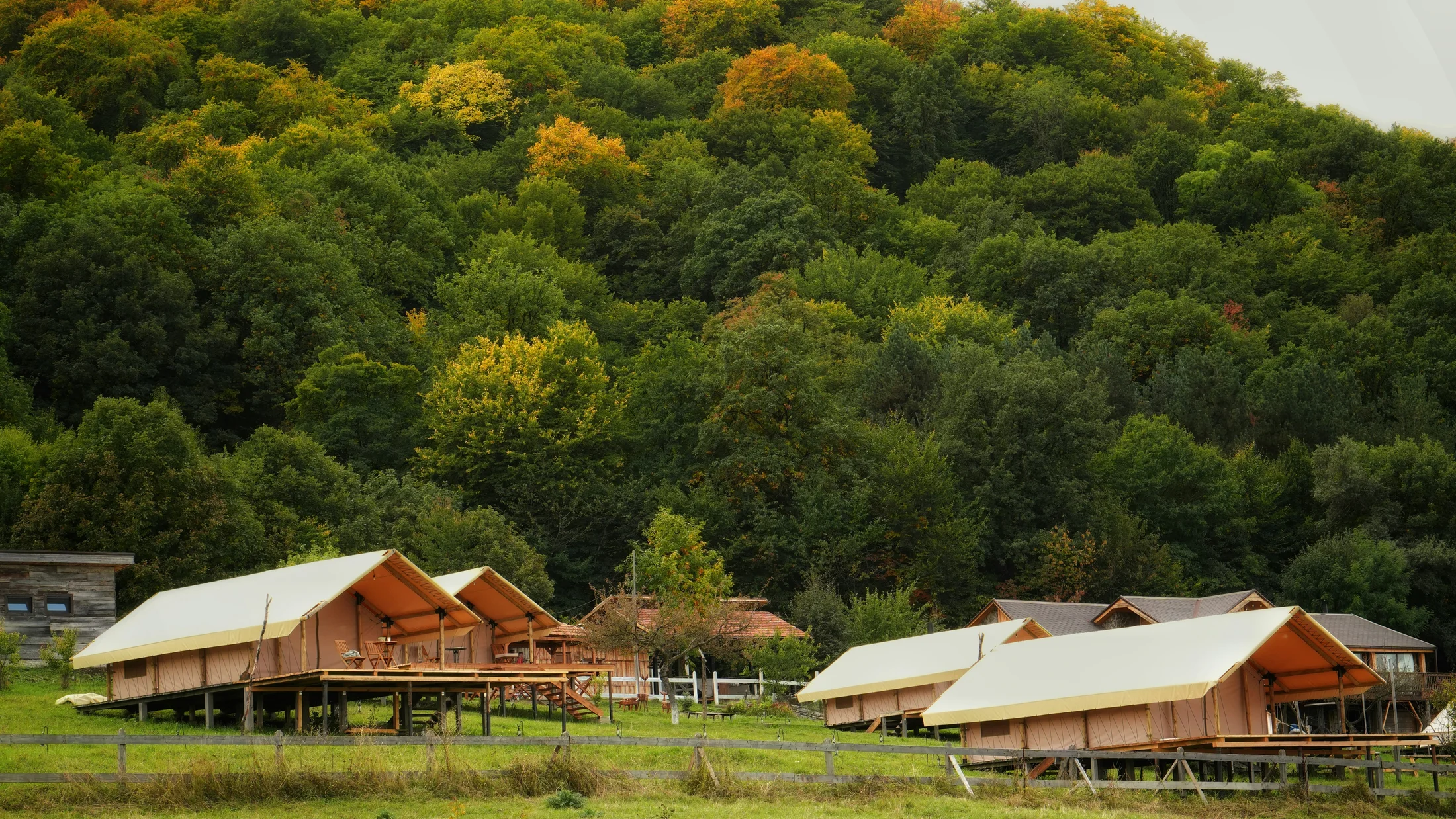
Glamping: nature and comfort to travel at your own pace
Sleeping with a large bed, bathroom and heating and yet still waking up among trees or facing the sea: that is glamping in Spain. It brings together unique accommodations that combine design, amenities and landscape.
Compared to traditional camping, glamping puts comfort first without cutting the connection with the environment. The most common options are transparent bubbles to see the stars, native-inspired tipis, Mongolian yurts and geodesic domes.
The selection brings together 15 luxury glampings in Spain, designed for couples, families and curious travellers. Each entry includes location, best time, ideal profile, nearby activities and a note on sustainability, with a map to locate each proposal.
At the end you will find practical tips and an FAQ of frequently asked questions. From each destination you can explore linked active experiences and book when you are sure.
Picuco te puede ayudar
Does something here catch your eye?
Tell us.
Write to us on WhatsApp or email: we answer questions, find the best options and help you sort out the booking.
How we choose the accommodations
A good bed and a well-integrated private bathroom weigh more than a transparent dome. In this list of glamping in Spain, design and comfort are the first filter: quality beds, thermal insulation, ventilation and, where appropriate, a private bathroom or a well-resolved attached module.
Location decides almost everything. We look for forests, mountains, coast and wetlands with trails, viewpoints and lively towns nearby, so that the accommodation is the base and not the destination.
We also look at how each accommodation works: renewable energies, waste management, water saving and local suppliers. And we value services that truly add up, such as zero-kilometre breakfast, guided routes or bicycle hire, along with the balance between value and price.
Prices change according to the season and the services included. Confirm them on the accommodation's website or on Picuco before booking.
15 glamping accommodations to experience nature with comfort
1. Bubblecamp Sierra de Gredos: bubbles with mountain views
Sleep in a transparent bubble and use the Gredos valley as your living room. The Bubblecamp is in Navatalgordo (Ávila), at the foot of the Sierra de Gredos and surrounded by trails, rock formations, thyme and birds.
The sierra has its peak at Almanzor (2,591 m), the highest summit of the Sierra de Gredos and of the entire Sistema Central. You climb via the western route, passing by the Laguna Grande de Gredos and the Elola refuge.
The dark skies of the area are ideal for astrotourism, with cool nights even in summer. The best time is from spring to autumn, with clear nights to see the stars. It is a plan designed for couples, romantic getaways and night photographers.
You can go hiking on the local trails, swim in the pools of the Tormes, observe the stars and visit the thermal baths in nearby towns. The accommodation looks after energy consumption and night lighting, and some accommodations offer zero-kilometre breakfast.
Book in advance at picuco.com. Access is easy from Madrid.
2. Tipilandia Costa Brava: tipis by the sea
The surroundings mix rocky coves and clear water among pines. Calella de Palafrugell or Begur are just a short journey away, so you can combine the beach and the town on the same day.
Late spring and summer are the best time to visit. In the water, go snorkelling in the coves or go out in a kayak; on land, walk the camins de ronda and visit coastal villages and markets.
The campsite applies a water-saving policy in the showers, separates waste and works with local suppliers for breakfasts. Book in advance, especially if you are going during high season.
If you are looking for more options in the area, consult our Costa Brava guide.
3. Yurtas del Valle de Arán: family yurts in the valley
A yurt is a circular structure made of wood and felt, of nomadic origin, with good ventilation and warmth, adapted to mountain climates. In the Valle de Arán (Lleida), these yurts are located in Pyrenean meadows and forests, a mountain environment for walking in summer and enjoying the snow in winter.
It is an option designed for families and quiet groups, with a slow pace and nature in its purest state. The best time is summer, to go hiking in stages with the nearby GR-11, and winter, if there are snow activities in the surroundings.
As for what to do, you have hiking routes to high-altitude lakes, seasonal rafting and visits to Romanesque churches and villages like Vielha. The accommodation focuses on the responsible consumption of heating, natural materials and waste management.
Book in advance: it is a very popular accommodation during high season.
4. Domos Almería Desert Retreat: geodesic domes in an arid landscape
In the Tabernas desert, one of the driest in Europe, the geodesic domes have a large window open to the horizon. You sleep right in the middle of the arid landscape, about 30 km from Almería capital.
As evening falls, the sky turns copper and the low light draws clean shadows. It is a place designed for photography, creative travellers and lovers of lunar landscapes.
The Tabernas desert has been the setting for thousands of film and advertising shoots. You can do 4x4 routes with authorised operators, landscape photography, astronomical observation and visits to ramblas and film locations.
The accommodation applies water-saving measures and lighting control to protect nocturnal fauna, and some domes use solar energy. For walking, the PR-A 269 hiking route is 14 km (5 h) or a 9 km (3 h) version, of low difficulty with elevation changes.
It is better to go in autumn-spring; in summer, choose ventilated nights. Book in advance.
5. Picos de Europa Bubbles: stargazing and nature
Sleeping in a transparent bubble and looking at the sky from your bed, with limestone mountains all around. That is the proposal of these glamping accommodations in the Picos de Europa, designed for couples and for those travelling through nature.
The mineral aroma of the rock mixes with that of the meadows after the rain. From the accommodation, treks lead towards viewpoints and valleys, and the night sky can be seen with very little artificial light.
Spring and summer are the best times for the routes; autumn arrives with colours and mushrooms. Among the activities are ascents to viewpoints, gorges and classic routes, as well as cheesemakers and local cuisine.
The accommodations apply light restrictions and generate minimal waste, and some promote local products.
6. La Garrotxa Yurts: volcano and forest
The textile insulates and the circular shape of the yurt creates a pleasant microclimate and a sense of refuge.
The forest smells of damp leaves and firewood when the stove is lit. Spring and autumn are the best times; in summer, the shade of the beech forest makes the heat more bearable. It is an accommodation designed for families and for nature escapes.
The campsite works with local materials, carries out responsible waste management and controls water consumption.
Book in advance: there are few yurts and demand is high during the season.
7. Cantábrico Ecocamp Tipi: sustainable tipis on the coast
The Cantábrico tipis are built with wood and canvas, and inside they feature natural fibres that concentrate light and ventilation. You sleep in a simple space, designed for air to flow and for clarity to enter effortlessly.
The surroundings mix open beaches and nearby meadows, with constant waves. At sunset, the salty air moistens the skin.
Spring and summer are the best times to visit. The site is a good fit for surfers, eco-travellers and small groups looking for a quiet base by the coast.
In the area you can learn to surf with local schools, follow coastal routes and visit cider houses and seafood kitchens. The camp operates with renewable energy, has recycling points and cleans with biodegradable products.
Book in advance: tipi spots are limited and fill up in high season.
8. Sierra Nevada Glamping Domes: domes for mountain activities
In Pinos Genil, on the slopes of Sierra Nevada, you sleep in domes with structures and insulation designed for cold nights and clear skies. Mulhacén has an altitude of 3,479 m.
The domes are a good fit for skiers, hikers and high-mountain photographers. In winter you have snow; in summer, trekking and viewpoints. During the ski season, snow rules; the rest of the year, observing high-altitude flora.
The accommodation looks after the energy efficiency of the domes and the control of internal transport to reduce the footprint. Book in advance: spots run out during the snow season.
9. Bubble & Spa Rioja: bubbles with spa and wineries nearby
Sleeping in a bubble among vineyards and completing the afternoon with a spa and wine tourism: that is what this experience in La Rioja proposes, among paths and century-old wineries. The environment invites you to slow down and toast, with an air of oak barrels and freshly ploughed fields.
Spring and autumn are the best times, due to the harvest and the colours of the landscape. It fits well with romantic getaways and wine tourism plans.
You can visit wineries, go on cycling routes among the vines and try Riojan gastronomy. The accommodation works with zero-kilometre proposals, a soft lighting policy and a spa with efficient water management.
Book in advance: it is an experience with limited places and is in high demand during the harvest season.
10. Yurtas Extremadura Natura: tranquillity and birdwatching
In the Extremaduran dehesa, among gentle mountains, the yurtas of Extremadura Natura are spacious and ventilate well even on warm days. They are a comfortable base for resting and for going out to watch birds.
The environment of dehesa, reservoirs and mountains makes birdwatching an excellent plan: the song of birds fills the morning. Spring and autumn are the best times for your stay and for observing. The accommodation fits those looking for birdwatching, relaxation and family plans.
What to do: routes through the dehesa, ornithological viewpoints and rural heritage. Regarding sustainability, nesting areas are respected, there is a commitment to zero waste and local suppliers and, in some cases, there are responsible tourism certifications.
You arrive via Ctra. N-110, Km. 390,3, in Casas del Castañar. Book in advance, especially if you go in spring or autumn.
11. Tipis Doñana Sunset: tipis for wetland routes
The tipis of Doñana Sunset have shade and ventilation, and a simple and cool interior.
The marsh and the moving dunes form a protected mosaic. While walking, the brackish smell mixes with the aromas of rockrose and bridal broom.
The best time is from autumn to spring, due to bird migration. It is accommodation designed for naturalists, photographers and families.
For guided tours it is advisable to book in advance and ask if permits or specific time slots are required.
The campsite controls waste, limits water consumption and works in coordination with the Park's regulations.
12. Domos Ibiza Retreat: domes near coves and nature
In Ibiza, some geodesic domes let you sleep among turquoise water coves and coastal paths. The accommodation combines relaxation and a Mediterranean atmosphere, with beach plans and walking within a short distance.
The rural silence and the nearby nightlife allow you to tailor the plan to your liking. The breeze brings salt and thyme. It is an option designed for couples and for those who want to combine the beach and hiking in the same trip.
Nearby plans include hidden coves, coastal stretches on foot, sunsets on cliffs and the cultural offering of the villages. Water management is responsible and there is control of nocturnal noise; to get around, the best option is a bike or going on foot.
The best time is from spring to summer, and late September if you are looking for calm. Book in advance: places fill up in high season.
13. Bubble Asturias Forest: bubbles in temperate forests
Sleep in a transparent bubble among beech and chestnut forests in Asturias, with the treetops above your bed. The accommodation is designed for intimacy and for those seeking to disconnect as a couple.
The nearby mountain ranges have gentle routes dotted with viewpoints and lively villages. Spring and autumn are the best times to visit.
The plan combines hiking through the valleys, the coast less than an hour away, and homemade cuisine in local eateries. The accommodation maintains low lighting for wildlife, separates waste, and serves zero-kilometre breakfasts.
Book in advance: there are few bubbles and they fill up in high season.
14. Yurtas Mallorca Tramuntana: yurts with views of the sea and mountains
The yurts in Mallorca are located in the Serra de Tramuntana, a declared World Heritage site. The air brings salt, rosemary, and warm stone.
They are an option designed for couples and for those who enjoy the Mediterranean landscape.
From the accommodation, you can go on routes through viewpoints, head down to nearby coves, and visit towns such as Valldemossa or Deià. Local oil and cuisine complete the plan.
The campsite controls water consumption and uses renewable energies whenever possible, in addition to supporting local producers. Book in advance: spots fill up.
15. Domos Canary Islands Starcamp: domes for astrotourism
The domes of Canary Islands Starcamp have skylights and an orientation designed for observing constellations. They are located in an archipelago with skies internationally recognised for astronomy.
The volcanic geology offers plenty: routes between lava flows and cones, volcanic hiking on islands with parks and reserves, black beaches, and interpretation centres. The night air is clean and cold.
The domes are great for astrophotography, for couples, and for those curious about the sky. If you are interested in night orientation, here you have a good starting point.
You can go at any time of the year, prioritising clear nights. In part of the archipelago, there is lighting control due to the sky law, renewable energies, and respect for marked paths. Book in advance.
Location map
The map brings together the accommodations and marks them by type (bubbles, tipis, yurts, and domes) and by environment: coast, mountain, forest, or wetland. This way, you can see at a glance which option fits the trip you have in mind.
You can filter by glamping type and check quick data for each point: distance to the nearest town, road access, and public transport where available. Use it before booking to compare travel times and combine nearby activities.
If you are travelling without a car, prioritise locations with a bus or train stop less than 8-12 km away and on-demand transfer services.
Types of accommodation and how to recognise good practices
Canvas and wood can be felt to the touch: you sleep outdoors, but with shelter. Before booking, it is worth knowing which type of accommodation fits the climate and the season of your trip.
Bubbles offer a 360º view of the sky and maximum light exposure. Check that they have temperature control and curtains, and keep in mind that privacy depends on the trees.
Tipis are ventilated and charming, and work very well on the coast and in summer. Check the protection against the wind.
Yurts have a circular structure that provides notable thermal comfort, useful in variable climates. Geodesic domes are solid, spacious and bright, and perform well in the cold if the insulation is correct. There are also wooden cabins, treehouses and micro-houses.
You can ask for specific responsible practices:
- Solar or mixed energy in the accommodation.
- Waste separation.
- Water saving and reuse.
- Control of night lighting.
- Local suppliers.
When booking, ask about environmental policies and how they minimise the impact on flora and fauna.
Activities by environment and tips for choosing well
The camping environment sets the plan for the day. In the forest, opt for forest bathing, mushroom foraging in season and family routes with little elevation gain; bring waterproof footwear and a raincoat. In the mountains, you have hiking, viewpoints and GR traverses: check the elevation gain and the weather, and get up early in summer.
On the coast, the plan involves snorkelling, kayaking and walks along cliffs. Protect your skin and avoid the hours of maximum sun. In wetlands, observe birds and sunsets with a telescope or binoculars, and respect sensitive areas.
Choose the time of year according to the climate: spring and autumn are wildcards. Before booking, confirm access and parking, and define the level of comfort you want, for example if the bathroom is private or not.
Adjust the criteria to the trip: families need space and shade, couples seek privacy and those going on an adventure appreciate proximity to routes. In your suitcase, pack a headtorch, a power bank and thermal layers.
How to book and frequently asked questions
Book via direct contact or on reliable platforms and check the flexible cancellation policies. In high season, block the dates 6-8 weeks in advance. The best offers arise in mid-season and by subscribing to newsletters.
Is a car needed to get there?
It depends on the accommodation: many have access via local roads and parking. If you are travelling without a car, confirm beforehand if there is a nearby bus or train and if the accommodation offers a transfer.
Is there electricity and a private bathroom?
In domes and yurts, there is usually electricity and, sometimes, a private bathroom or an attached module. Before booking, check the exact services of each accommodation: not all include the same things.
Are pets accepted?
Some glamping campsites allow pets, with clear rules. Confirm this before booking and respect sensitive areas for fauna.
Is it safe with children?
Yes, as long as the facility has fences and the children are supervised. Ask about safety measures when booking, especially if the little ones will be moving around the plot on their own.
Before booking, ask about cots, extra beds and common areas. This way you will know if the bubble, the tipi or the yurt suits your family and your children's ages.
Book your experience — discover active tourism activities in Spain with providers verified by Picuco.
Conclusion
Sleeping in a bubble, a tipi, a yurt or a dome changes the way you experience nature. Glamping in Spain brings you closer to the countryside without giving up comfort, and you have plenty of options to choose from in almost any province.
Design your getaway according to the landscape, the level of comfort and the season. Before booking, check the map, the services and the sustainable practices of the accommodation, compare nearby activities and confirm the updated prices.
With your plan clear, book and spend a night under the stars with just the right comfort to rest and wake up eager to explore.