Introduction
A hidden treasure in a forest, a mountain range or a marshland, and you with the coordinates. Geocaching in Spain combines adventure, nature and outdoor play.
It is a modern "treasure hunt" that guides you through forests, mountain ranges and marshlands. Behind it are real and safe routes, designed for families, couples and groups.
The idea is that you set out with a concrete plan, well-equipped and with options according to your level and your time.
Geocaching in Spain, on the rise
A beep from the GPS and the song of a common blackbird can be the best start to your getaway. Geocaching is practised in Spain in national and natural parks, mountain ranges, greenways and coasts, with a special concentration near large cities and in hiking corridors.
There are tens of thousands of active caches spread across the entire territory. Check the platform for updated figures and locations.
Expansion coexists with conservation: protected area managers set limits and many series are located in areas for public use to minimise impacts. You will find everything from urban microcaches to hiding places on mid-mountain routes and marked family loops.
The key is to choose accessible circuits, with difficulty according to your experience and always respecting local rules. It is necessary to book in advance.
What you get from this article
Geocaching turns a walk through the mountains into a search with coordinates. Here you have everything you need to start without getting lost in the attempt, even if you go with children.
The article explains what geocaching is and how to start step by step, with recommendations for doing it as a family. Additionally, it indicates what equipment to carry, which apps to use, how to set up filters and how to download offline maps before setting out.
It includes a map with starting points and levels, and 7 quick fact sheets of geocaching routes in natural environments in Spain, with local tips and seasons. It also collects best practices and safety: permits, signage, water and Leave No Trace principles.
It closes with a planning checklist and a frequently asked questions section. Read the block that interests you and go out to look for your first box.
Picuco te puede ayudar
Does something here catch your eye?
Tell us.
Write to us on WhatsApp or email: we answer questions, find the best options and help you sort out the booking.
What is geocaching? The 21st-century treasure hunt
Geocaching is a global orienteering game: you use GPS coordinates to find "caches" that other players have hidden. It can be played anywhere, with a mobile phone or a handheld GPS, and is equally suitable for an afternoon with the family or a mountain route.
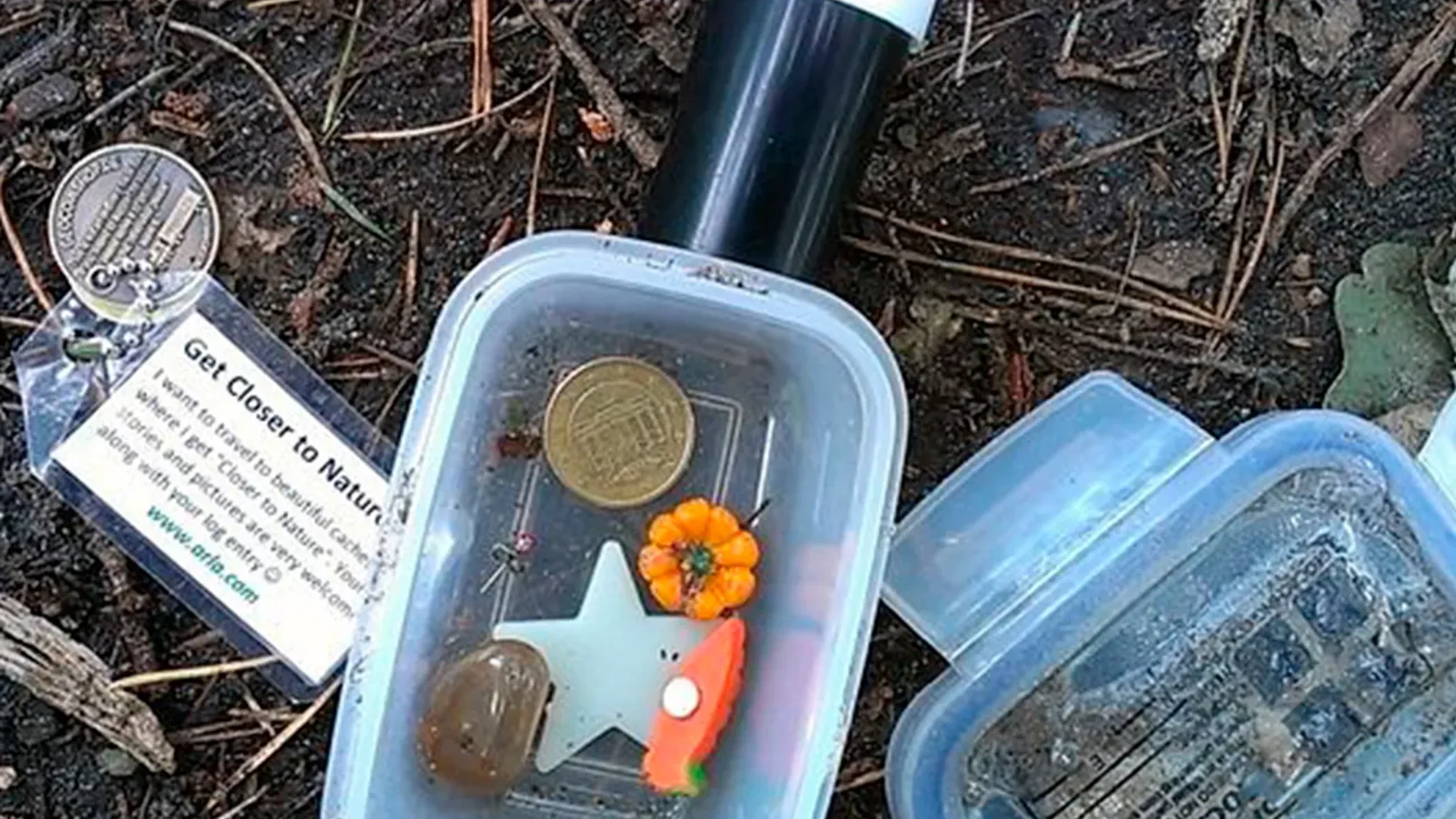
A cache is a durable container, ranging from micro-tubes to airtight food boxes. Inside, it holds a logbook and, sometimes, small items for trading. When you find it, write down your alias, leave something of similar value if you take something, and hide it exactly as it was.
To start, you register on a platform, choose a nearby hiding place, and copy its coordinates or navigate to it using the app. Then, you follow the clues and descriptions to the spot.
Each cache has a difficulty level and a terrain level on a scale of 1–5. The first indicates how complex it is to locate, and the second, the physical effort required. A "1/1" is usually wheelchair accessible and perfect for family beginners; a "3/4" involves elevation changes or irregular terrain; "5/5" requires technical skills.
There are several types. The traditional one is a container at the coordinates. The multi-cache involves several stages with clues, and the mystery or puzzle forces you to solve a riddle to obtain the final coordinates. The letterbox carries a stamp for collectors, the earthcache has no container and focuses on geology with educational questions, and events are community meetups. An earthcache can lead you to observe volcanic strata and answer basic questions on-site.
The game relies on good practices. Do not force enclosures, do not dig, do not remove stones from traditional walls, and do not disturb the wildlife. If the hiding place compromises the environment or someone might mistake it for rubbish, report it on the platform with a log for review. Always carry a pen, respect private property, and follow the local rules of the parks.
Each cache is an anonymous gift: look after it as if it were yours. The crunching of leaves under your boots warns you that you are just a few metres from the treasure.
First steps: equipment, apps and rules to get off to a good start
Essential equipment
To start, a mobile phone with GPS and a geocaching app is enough. Add a 10,000 mAh power bank and an extra cable, and turn on airplane mode with GPS to save battery.
Carry a notebook and a pen in case the logbook is full, small non-invasive tools (tweezers, cordage), and zip bags to improve the container if it is damaged. For trading, put small, clean, and safe objects in your backpack (stickers, keyrings, mini compasses); avoid food or liquids.
Wear clothing in layers and footwear with grippy soles. When with family, add a lightweight raincoat per person and a change of clothes for the little ones.
With children, design outings of 60–90 minutes with 2–3 "easy" caches near a picnic area or playground and turn every clue into a micro-challenge.
Recommended apps and platforms
The official Geocaching® app combines logging, proximity search and difficulty and terrain filters. It has base maps and, in its paid version, allows you to save offline lists. Its community is the largest in Spain.
If you are looking for more control, Cachly (iOS) and c
(Android) work with offline modes, vector maps and advanced list management. To plan long trips, GSAK is a database manager for PC.Start by creating your account, validating your email and choosing a recognisable alias. Then apply filters depending on who you are going with: “Traditional” and “Terrain ≤ 2” for families, “Multi” and “Mystery” if you are attracted to puzzles.
Before a natural route, activate the relief and orthophoto layers and save the area offline. Search on the map around a car park and save 5–7 caches in a list to have alternatives. The map in dark mode and a short buzz for each “proximity” help you locate the caches.
Best practices and safety
A geocache is best searched for when the mountain remains the same as when you found it. Walk along marked paths, do not cross nesting areas and avoid shortcuts that erode the terrain.
Follow the "Leave No Trace" rule: leave what you find, take your rubbish with you and, if you can, remove a couple of others' waste without exposing yourself to risks. Before heading out, check the weather and available light and mark a return point.
The scent of pine and the fresh breeze remind you that the best path is usually the most well-maintained one.
In the plan for each outing, include water (0,5–1 l per person/hour in heat), a cap and sun protection. Share your plan with someone and carry your phone with battery.
If you are going with children, prioritise clear signs, short distances and areas with coverage.
Location map and how to use it on your mobile
The interactive map gathers the best circuits in natural spaces, with starting points, indicative difficulty, estimated duration and links to each file. Each point indicates if the circuit is ideal for families, if it requires a permit and the best time to avoid extreme heat, snow or seasonal restrictions.
Next to the map, you have KML/GPX downloads to use in your usual mountain apps. Download the GPX file from the map section and open it with your favourite hiking app or with your geocaching app if it supports tracks.
Before heading out, activate the GPS and the offline map of the area and check that you can see the track and the starting waypoints. With the proposed layers, you can filter by “families”, “mid-mountain” or “province”.
The green points on the map become small goals, like discreet beacons among forest clearings. Mark 2–3 additional options in case a car park is full or there is a temporary closure.
Calibrate the zoom before leaving the car and take a waypoint from the vehicle for a more comfortable return.
Geocaching routes in nature: our 7 favourite circuits
1. Sierra de Albarracín: pine forest and canyons
Near the Pinares de Rodeno, in Teruel, there are series of traditional caches a short distance from each other. The Sierra de Albarracín is a geocaching destination in nature, with red sandstones, pine forests and viewpoints over ravines.
The protected landscape of the Pinares de Rodeno has sandstone and conglomerate formations and manifestations of Levantine Rock Art, visitable in the permitted areas. A gust of wind through the treetops and the smell of resin announce that the container is nearby.
Forest tracks and easy paths, with gentle elevation changes, are great for families and relaxed hikers during a mid-morning. Spring and autumn are the best time; in summer, the altitude is appreciated.
Start early to park in the designated areas and avoid the midday sun on the red sandstone slabs. Save the area offline and activate proximity alerts at 30 m so the little ones can lead the final stretch.
Respect local regulations in pine forests and nesting areas. Accessing the summit of Cerro Peña Botadera (Alto de la Cruz) is not recommended due to the danger of lightning strikes and damage to the concrete structure.
2. Picos de Europa: mountain routes and viewpoints
Picos de Europa hides caches next to landmarks, mountain passes and viewpoints with dizzying views. It is a mountain geocaching destination spread across Asturias, Cantabria and León.
Enter via Cangas de Onís, Potes or Posada de Valdeón, and also by buses and taxis from the towns in the surrounding area. Access is free in public use areas; cable cars and car parks have their own fees.
The best time is from late spring to early autumn, because in winter there are winter conditions. Experienced hikers take advantage of the mountain paths and karst terrain, with elevation changes and terrain 2–4 caches. Families find low routes and viewpoints.
The starting point is the Buferrera car park, where the Pedro Pidal Visitor Centre is located. You can choose between a long route of 5 km (2.5 hours) and a short one of 3 km (1 hour), with 50 m of ascent and descent; the long one passes through the Palomberu beech forest and the meadows of the Vega de Enol.
Another point of interest is the Mirador del Cable (Fuente Dé), in the Picos de Europa. The echo of the cows and the crunch of limestone under your boots mark the rhythm of the find.
In high mountains, carry a physical map and a GPX track: fog and scree slopes complicate orientation, and you must take extreme precautions with the fog on the long route of the Lakes. Check the snow reports and avoid exposed edges; on the Cares Route, do not step off the path due to rockfalls. Avoid winter itineraries without preparation.
A good suggestion: combine a cable car ascent with a gentle traverse of the altitude, looking for 2–3 caches without rushing the timing.
3. Doñana National Park: marshes and biodiversity
Doñana is a geocaching destination where conservation rules: here, caches are sought with care. The park is divided between Huelva, Sevilla and Cádiz, and the placement of caches is highly restricted. Earthcaches abound, which ask you to identify habitats, sediments or species.
Enter via El Rocío, Matalascañas or Sanlúcar de Barrameda. From El Rocío, you can walk to the La Rocina Visitor Centre, and you can take public transport from Sevilla and Cádiz to the Fábrica de Hielo Visitor Centre. The José Antonio Valverde Visitor Centre, in Aznalcázar (Sevilla), is reached via unpaved tracks.
You can walk freely along the 33 km of beach between Sanlúcar de Barrameda and Matalascañas. In winter, the marshes gather up to 500,000 waterbirds, and the best time for avifauna is winter and spring. In summer, avoid the middle hours.
Plan short circuits from the visitor centres and combine the search with observation in hides. Bring binoculars: they are essential. The terrain mixes sand tracks, boardwalks and observatories, with limited and highly regulated caches, almost always earthcaches or traditional ones on the perimeters.
Respect the distances to the wildlife, do not leave the boardwalks and check the seasonal closures for breeding. The briny smell and the murmur of swans accompany the excitement of signing a log without disturbing anyone.
If you want more options, look for green corridors and paths in the Guadalquivir surroundings, or the Matalascañas coastline outside of sensitive areas.
4. Sierra de Grazalema: karst and forest paths
Between Cádiz and Málaga, the Sierra de Grazalema is a terrain of limestone, dolines and Spanish fir forests with marked paths and viewpoints. Entry is from Grazalema, El Bosque and Zahara de la Sierra.
The destination is a great fit for photographers, families hiking on short circuits and karst lovers. The network of paths and viewpoints allows you to chain together 3–5 traditional caches (difficulty 2–3) and some mystery cache with a landscape clue.
The Spanish fir is a living fossil that survived the last glaciation more than 15,000 years ago. A damp breeze that smells of leaves and cold rock guides you among centuries-old Spanish firs.
The Pinsapar path requires online administrative authorisation and a free permit with a limited quota: request it in advance. Access is from the Las Canteras car park, 2 km from the village.
From autumn to spring is the best time, paying attention to rainfall and possible path closures. Photograph early in the morning to catch mists over the valley and avoid stepping on wet ground to prevent erosion. Ask at the visitor centres about the state of the terrain after rain: wet limestone is slippery.
Among the points of interest are Puerto de las Palomas, with an approximate altitude of 1,180 m above sea level.
5. Montseny and surroundings: Mediterranean forests a step away from Barcelona
Montseny is a massif of the Catalan Pre-Coastal range, between Barcelona and Girona, with beech forests, holm oak forests and gentle peaks such as Turó de l'Home (1706 m), Les Agudes (1705 m) and Matagalls (1697 m). In autumn, the scent of damp earth and roasted chestnut accompanies every "beep" of the GPS.
It is a destination you can reach from Barcelona, with access via the C-17 road (Barcelona-Vic-Puigcerdà).
The best time is spring and autumn; in summer, leave early or late in the day. Filter by terrain ≤ 2.5 and prioritise official car parks to avoid fines and overcrowding.
A combination that works: a morning walk, a picnic and one last search near the car to keep motivation high. Do not stray from the path, respect temporary closures due to fires and use public transport or shuttles when they are active.
You can arrive via the AP-7 motorway with the Sant Celoni exit, via the C-17 (Barcelona-Vic-Puigcerdà) or via the C-25 and C-35 (Eix transversal).
6. Garrotxa Natural Park: volcanoes and green paths
In Garrotxa, the volcanoes do not smoke: you walk on them. The park, in Girona, has basaltic flows, beech forests and craters, with access via Olot, Santa Pau and Les Preses.
The circuits are perfect for curious families and hikers. There are traditional caches and geological earthcaches with a difficulty of 1.5–3. In the earthcaches, you learn to identify volcanic bombs or basaltic columns by answering questions on-site.
In the beech forest, the terrain is irregular, with lava elevations called tossols. With children, suggest they count the steps up to the Santa Margarida hermitage and celebrate the find with an afternoon snack in the shade. The freshness of the beech forest and the whisper of leaves make the click of the cache lid even sweeter.
The best time is spring and autumn. In summer there is pleasant shade, but it is advisable to avoid the middle of the day. Save the GPX track in case you lose your way among the twists and turns of the forest.
Park early in the official spots and bring cash or a payment app for the regulated parking, with rates depending on the season. Within the beech forest, the use of motor vehicles is prohibited.
7. Sierra Nevada: high mountains and lagoons
Sierra Nevada distributes its difficulty ratings of 2.5–4 between scree slopes, boulder fields and lagoons, between Granada and Almería. You enter via Hoya de la Mora, Capileira and Güéjar Sierra, and each access opens up a different type of terrain.
At high altitudes, navigation is demanding. The GR-240 Sulayr, a circular path that goes around the massif at an average altitude of between 1,800 and 2,000 m above sea level, allows you to complete safe sections. The thin air and the clatter of loose stones under your soles make the discovery feel well-deserved.
The altitude demands respect: adapt your pace, hydrate and watch out for altitude sickness if you exceed 2,500 m. The wind can make it difficult to hear mobile alerts, so it is advisable to check the map frequently.
The best time is summer and early autumn in the high mountains, and spring and autumn on the mid-slope. The circuit is suitable for experienced hikers; families can opt for low-level routes and accessible lagoons.
It is advisable to start very early, check the weather and carry thermal layers even in August. Private vehicle traffic is cut off at Hoya de la Mora (north) and Hoya del Portillo (south); beyond that barrier, only authorised park vehicles, cyclists and pedestrians are allowed. The interpretation service is open from Holy Week until early December, subject to weather conditions, with opening hours from 10:00 to 14:00 and 17:00 to 20:00 h.
If you are looking for a benchmark demanding route in the area, you have Mulhacén via the south face: 17 km one way and more than 2,000 m of accumulated elevation gain.
How to choose your circuit and plan without surprises
Choose the circuit keeping in mind who is walking with you. With little ones or beginners, look for terrain ≤ 2, low elevation gain and 60–90 minutes of actual activity; suspension bridges and scree slopes are for another occasion. With regular hikers, add a multi-cache or a light mystery and increase the terrain difficulty to 2.5–3.
Set reasonable goals: 3–6 caches in a morning are enough to enjoy without rushing. Check the forecast, the wind and the sunset time, and carry a headlamp if you can extend the day.
Before setting off, save the GPX offline, set a meeting point and an alternative car park. Carry enough water, a basic first aid kit and an emergency blanket in mid and high mountains. Share your plan with a contact and activate shared location on your mobile. Stay on the paths, leave nothing behind and pick up something if you can.
To calculate times, count 2–3 km/h including stops and searches, plus 10–15 min per cache when with family. In a hiking group, 3–4 km/h, plus 5–10 min per cache depending on difficulty. Have a light snack every 60–90 min and leave time for photos or viewpoints.
With children, divide roles: one looks at the map, another reads the clue and another carries the notebook. Mini challenges work well: "at 20 m the little one's compass rules", "if we hear water, we stop to drink". After signing a log, a piece of fruit or a short story serves as a reward. Combine play with visitor centres, picnic areas and viewpoints at sunset.
In Garrotxa, the area gathers 40 volcanic cones, 10 craters, 23 very well-preserved cones and more than 20 basaltic lava flows; Santa Margarida volcano is one of those 40 cones. There is a paid monitored car park.
In Albarracín, the most practical starting point is the Navazo recreational area car park, 4 km from Albarracín via the Bezas road. The circular route is 10 km and 250 m of accumulated elevation gain, via a well-marked path with Protected Landscape signage. Albarracín has been a UNESCO World Heritage Site since 1998 and preserves Levantine art rock paintings between 6,000 and 7,000 years old.
The smell of early coffee and the soft light of dawn are already part of the plan.
Frequently asked questions
Do I need permission to place caches in parks?
Yes. In many protected spaces there are restrictions or prohibitions on placing caches, so permission depends on the location.
Before hiding any container, consult the park manager and the specific rules of the area. If it is not possible to place the cache, look for alternatives in areas for public use.
What can I exchange inside a cache?
Inside a cache, small, clean and safe objects are exchanged: keyrings, patches, stickers or mini compasses. If you take something, leave something of similar value and sign the logbook.
Do not leave food, liquids or dangerous items. This way the cache remains in good condition for the next person who arrives.
How do I register a find correctly?
When you find the cache, look for it in the app or on the web, press “Log” and select “Found it”. This way the owner knows that someone has passed by.
In the log, describe the experience briefly and respectfully. If you detect problems such as a broken container or a full log, note it in the log so that the owner can take action.
Is it a safe activity for children?
Yes, it is a safe activity for children if you choose caches with terrain 1–2 and short routes. It is advisable to stay on the paths and carry water, a cap and sunscreen.
Turn the clues into a game and assign roles to the children: this way you maintain their attention and their safety.
Where can I find family geocaching routes?
Open the app and filter by low difficulty and terrain: this way, the hides that a child can reach on foot will appear. Look for series (rings) near recreational areas or visitor centres, because they usually have several treasures along a short route and with easy access.
This article features 7 circuits in nature with options suitable for little ones. Choose one, check the distance and the terrain of each cache before setting off, and carry water and comfortable footwear.
Can I search for caches at any time of the year?
Yes, you can search for caches at any time of the year, but it is advisable to adapt the choice of route to the season. In summer, avoid the middle hours of the day and go out early or in the late afternoon.
In karst areas like Grazalema, watch out for rain: water changes the terrain and some paths become difficult. In high mountains, such as Sierra Nevada or the Picos, you have to account for snow and ice before choosing the route.
Always check the weather forecast before setting off. With that look at the weather, the plan fits better to what you are going to encounter.
Book your experience — discover active tourism activities in Spain with providers verified by Picuco.
Conclusion
Geocaching invites you to explore with curiosity, learn from the landscape and share a simple challenge outdoors. Landscape, play and respect for the environment all fit into the same outing.
With safety first and good practices as your compass, every cache is an excuse to walk and discover territory. To start, choose a circuit according to the group and the season, download the offline map, prepare a basic backpack and set a realistic goal of 3–6 caches.
To keep it going, create a list of destinations by regions and try an earthcache to learn geology on the ground. Upon returning, note what worked and adjust the next outing.