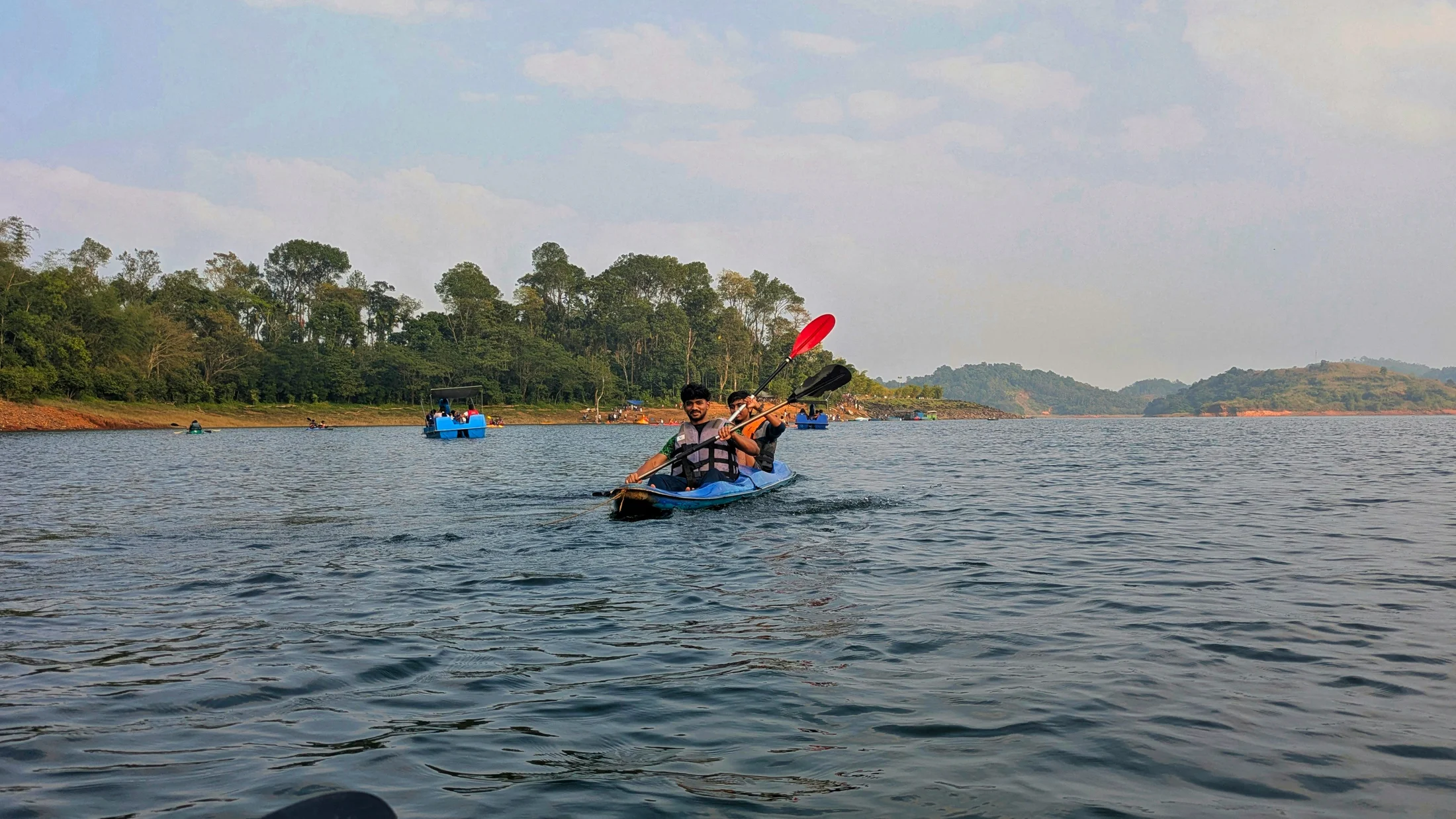
Why family kayaking works and how to prepare for it
A morning of paddling in calm waters gives children hours of active play and adults quality time. Family kayaking works, but it needs planning so that the outing flows smoothly.
Choose your destination based on safety and real accessibility. Look for calm waters, accessible banks, areas sheltered from the wind, and easy departures, with nearby parking and ramps or sandy beaches. Before booking, check the recommended age, water level, and essential services: hourly rentals, toilets, beach bars, and lifeguards during the season. On rivers, check that the return logistics are included in the price.
The benefits are concrete: moderate aerobic activity, learning coordination and orientation, and contact with birds and riverside landscapes. In inland waters, choose sheltered reservoirs or rivers with a stable flow and backwaters, the so-called "class I" waters: flat waters without obstacles, ideal for beginners.
Plan for a cool time slot, in the morning or late in the afternoon, reserve suitable equipment, and confirm local navigation regulations. Prepare for the day with water, sunscreen, a cap, and a short route with stops for play and swimming.
Safety starts with a certified life jacket for everyone, even if you know how to swim. Paddle at a distance where you can speak without shouting to the rest of the group's boats.
In each destination, you will find an indicative rental price, the best time of year, and specific safety tips.
Picuco te puede ayudar
Does something here catch your eye?
Tell us.
Write to us on WhatsApp or email: we answer questions, find the best options and help you sort out the booking.
Where they are and how to use the location map
The map brings together rivers and calm-water reservoirs, safe boarding areas, nearby parking, supervised swimming areas, and points with schools and rentals during the season. Filter by region (North, Centre, Mediterranean), by level (calm waters or moderate flow), and by services (rental, toilets, beach bars, lifeguards).
To give you an idea of the distances, the San Juan Reservoir is about 70 km from Madrid and the Guadalquivir flows through the heart of Córdoba. Banyoles is 119 km from Barcelona by car (approx. 1 h 30 min). Sau is 90 km and approximately 1 h 20 min from Barcelona, and 74 km and approximately 55 min from Girona. You can reach the Trasona Reservoir by bus from Avilés (Cervantes Avda - Bar La Muralla) to Overo (L5).
Use the map to locate ramps, sandy beaches, and banks protected from the prevailing wind. It is useful to have a Google MyMaps with layers for difficulty and services, or a downloadable static image to consult without signal.
Add picnic spots and viewpoints to your route, and save the map on your mobile to navigate without data. On rivers with return included, mark the pick-up point to calculate times and stops.
The 7 best destinations for paddling with little ones
1. San Juan Reservoir: beach and calm near Madrid
The San Juan Reservoir is located between Pelayos de la Presa and San Martín de Valdeiglesias. It is a convenient option for kayaking with children near Madrid.
The water is calm, with afternoon breezes. It is advisable to avoid the areas close to the dam and the narrow stretches.
You arrive via the M-501, the reservoir road. There are two clear embarkation points. Virgen de la Nueva beach is on the right bank, 5 km from San Martín de Valdeiglesias via the M-957, and has held the Blue Flag since 2018. El Muro beach is on the right bank next to the retaining wall, with a jetty and a campsite. In the coves, you will find ramps and sandy shores.
During the season, there is hourly rental, beach bars, toilets, designated swimming areas, and regulated parking. The scent of sunscreen and pine forest accompanies a summer day in Madrid.
Children can start from 4–5 years old in a double kayak with an adult, always wearing a life jacket. In addition to kayaking, there is swimming, picnics under the pines, paddle surfing, and jumping from the shore in safe coves.
Paddle close to the shore and use bright-coloured clothing or a flag. Avoid narrow openings in the afternoon, when there are more motorboats, and plan routes of 60–90 minutes with stops and hydration.
2. Sella River (Family stretch): Asturian classic with children
The Sella is the classic canoeing trip in Spain, and its family stretch is one of the best options for paddling with children. The current is gentle, there are river beaches to stop at, and the entry and exit points are signposted.
The family stretch goes from Arriondas to Toraño, about 7–8 km in eastern Asturias. The 7 km Mini route ends in Toraño; the 14.5 km Complete route ends in Fríes and lasts between 4 and 5 hours. The water has a moderate and stable flow in summer, with small class I rapids.
Operators include rental and return transport in the price, and there are changing rooms, a picnic area, and six beach bars along the route. The mini-descent costs about 25–35 € per person.
The recommended age is from 5–6 years, in a triple canoe with an adult behind steering or in a double with a child seat. It is mandatory to know how to swim, including children, and the minimum height is 1.15 m. During the descent, you can make swimming stops, play with the gentle current, and observe cows and riverside forests.
Go from late spring to summer and avoid the weekend of the International Descent, the first Saturday of August, due to overcrowding. Before setting off, ask about the day's flow and avoid the stretches with more current towards Llovio if you are going with little ones. Practise the entry and exit before starting and set meeting points after every bend. Access is via the N-634, in eastern Asturias.
3. Orellana Reservoir: an immense mirror to get started
The Orellana Reservoir, in Extremadura, has 5084 hectares of calm water and is part of special protection areas for birds. It is a good option for paddling with the family, with services on the shore and biodiversity all around.
Its Costa Dulce Beach was the first inland beach with a Blue Flag in Spain (2010). The swell is low and the water is very calm, so beginners can paddle without any scares. In the morning, the thermal wind blows less and conditions are more stable.
The jetty is on the central peninsula of the village, at the end of the parking area, and can be reached from the EX-115. During the season, there is kayak hire, lifeguards on the beach, showers and picnic areas, as well as nearby campsites. Hire is paid in cash at the booth.
From the water, you can see dabbling ducks, herons and typical grebes; the silence is only broken by the wing of a heron over the smooth surface. You can also go cycling along flat tracks and swim at the Blue Flag beach.
Respect the marked zones and the nesting areas. With children, skirt around points and peninsulas to always have the shore at hand and avoid long crossings.
4. Sau Reservoir: landscape, bell tower and calm waters
At the Sau Reservoir, in Vilanova de Sau (Osona, Barcelona), you paddle in front of the Sant Romà de Sau bell tower, an 11th-century tower that emerges from the water when the level drops.
The waters are calm in coves and along the banks. Watch out for the afternoon breezes channelled by the valley. In summer, the morning mist over the water looks like a light scarf stretched between the mountains.
You reach the shore via the Sau viewpoint, next to the BV-5201 road, with recreational areas by the water and small ramps. Boarding is easy from fine pebble beaches.
The activity is suitable from 2 years old, with individual and double kayaks for families. It is an essential requirement to know how to swim and pets are allowed during the activity. During the season, there is hire, toilets in designated areas and rural restaurants nearby. The indicative price is 15–20 € per hour for a double kayak; it is advisable to confirm availability with the operator.
In summer, the early hours are better; in spring, wear a thin wetsuit due to the water temperature. Avoid the centre of the reservoir when it is windy and plan routes on the leeward side. Bring windproof clothing and a change of clothes for the little ones.
To fish in the reservoir, a Catalonia fishing licence is required.
5. Banyoles Lake: a safe perimeter for the little ones
Banyoles Lake is a great starting point for the little ones: protected waters, a friendly urban environment and a long rowing culture. The lake was formed 250,000 years ago by the dissolution of limestone rocks, a karst phenomenon, and today it is a training centre for Olympic rowing teams.
Banyoles is in Girona, about 30–40 min from the city and 1 h 30 from Barcelona via the AP-7/C-66. You board at the authorised points next to clubs and schools, amidst tree-lined paths. Spring and autumn are the best times; in summer there is more atmosphere.
With children, the recommended age is 3–4 years in a double with an adult, with a child life jacket and trips of 30–45 minutes. You can do short coastal itineraries, visit the historic centre and observe the "pesqueras", the old sheds. At sunrise, the surface of the water looks like polished glass.
The lake has areas reserved for sports boats and navigation is regulated by the Consorci. Stay within the permitted areas, respect the buoys, avoid crossing the rowing lanes and move close to the shore with children. The swimming lane for non-members costs €3 and only grants the right to use that space and the showers.
If you want to complete the day, the 6 km perimeter walk takes 1.5 h on foot or 30 min by bicycle. The museum houses the Banyoles Jaw, a skull from 66,000 years ago.
6. Trasona Reservoir: a controlled circuit in Asturias
Trasona Reservoir is a canoeing track with marked lanes and flat waters.
The sporting atmosphere and the control of the site provide safety and easy learning in calm waters.
The recommended age is 4–5 years in a double kayak, with the option of a short circuit with a return buoy. Before heading out, check training schedules and events to avoid the centre during peak hours and stay within the marked margins. Use bright colours and review "always stay close to the shore" with the little ones.
The reservoir is in Corvera de Asturias, ~8 min (5.8 km) from Avilés by taxi.
7. Guadalquivir in Córdoba: urban havens and nature
In Córdoba, you row with the Mosque-Cathedral in sight and green banks just a few minutes from the centre.
From the water and from the banks, white storks and birds of prey can be spotted. The current is gentle and there are wide havens, but it is advisable to take extreme precautions near the azudas, the small river dams.
To board, you have platforms and prepared banks, with nearby car parks.
The best time is from April to October, with the ideal periods being from April to May and from September to October. In summer, head out in the early morning hours. The golden sunset tints the water and the scent of orange blossom accompanies the trip during the season.
A short walk at sunset, some photos with the Roman Bridge, a picnic on the riverbank and some playtime in the parks complete the day. For safety, do not approach the azudas or bridges under construction, keep your distance from fishermen and cross only in wide havens. Bring a cap, UV shirt and hydration.
How to choose a route and equipment without losing your smile
With children, the boat is what matters: a closed kayak offers more protection from the water and is stable, while a sit-on-top (open) makes getting in and out easier. The canoe has higher gunwales and allows for a child's centre seat, which is useful when you are looking for space and simple manoeuvres.
The double is the most comfortable option for little ones and short outings: the adult sits at the back and steers with the paddle, and the child at the front enjoys and learns. The single is for teenagers aged 12 or older with strength and coordination, always within a group and at a short distance. As for paddles, the kayak uses double paddles and is more agile in the wind; the canoe uses single paddles and leaves more space for the dry bag and snacks.
The approved buoyancy aid (50N) must be tight: the collar must not go up to the child's chin. Try it while sitting and paddling for a few seconds before setting off.
Age dictates the plan. With 3–5 years, a double kayak with an adult and a front seat, on 30–45 min trips with stops. From 6 to 9 years, a double with the option to paddle for a while, incorporating small "challenges" until the next buoy. From 10 to 12, a double or a short single in very calm waters, always alongside an adult. From 13 onwards, a stable single, with turns and re-boarding practised near the shore.
Before setting off, check the list:
- Life jackets for everyone, one shared spare paddle and a dry bag with water, salty snacks and a mobile phone in a waterproof case.
- Cap, sunglasses with a strap, UV shirt and footwear that can get wet.
- Basic first aid kit, lightweight emergency blanket, whistle and sunscreen.
If you bring your own kayak, you need straps and a roof rack. If you rent, confirm the time, boarding point and local regulations, and ask about the forecast wind, the recommended areas for families and the return window.
Safety and preparation with children
The safety of a kayak trip with children starts the day before, at home. Check the AEMET forecast (wind, storms, temperature) and, if you are going to a river or a regulated reservoir, check the level in the SAIH for the basin. Then, communicate your plan to someone: starting point, planned route and return time.
With little ones on board, the life jacket must be worn and buckled at all times, even on the shore. Keep the group within voice distance, at a comfortable chatting distance, and progress close to a safe bank: avoid crossing the water from side to side. Against the sun and heat, use a cap, a UV shirt and drink water every 15–20 minutes.
Before setting off, teach the children how to put on the life jacket and ask for a check with "two fingers" of slack, how to sit centred and how to keep the paddle at rest when the adult instructs them. They must recognise three words: "stop", "get closer to the shore" and "water".
If there is a capsize, stay calm and count "all okay". Hold onto the kayak and the paddle and swim towards the shore. In shallow waters, partially empty the vessel and re-embark with help; if it is not easy, walk along the shore to a safe point.
Carry your mobile phone with battery and in flight mode until you need it, with 112 saved. In some reservoirs, private navigation requires authorisation; if you rent, the operator usually covers it, but always check the local regulations. Also consider accident or civil liability insurance for the activity: many operators include it in the price.
The essential first aid kit fits in a waterproof bag: plasters, disinfectant, saline solution for eyes, a lightweight emergency blanket and paediatric pain relief depending on age. Add bags for waste and a microfibre towel. At sunset the air cools down, so a light sweatshirt for the end comes in handy.
Plans to round off your day
A day on the water is enjoyed more by alternating with solid ground: a short route in the morning and then walks, a picnic and a snack or local ice cream. With children, it is advisable to leave the paddling for the hours with less heat and save energy for the rest of the day.
In Sella (Asturias) you can take a stroll through Cangas de Onís or Ribadesella. In Trasona (Asturias), the 6 km perimeter walk is done on foot or by bike.
Orellana (Extremadura) has a Blue Flag beach, the first inland beach in Spain to receive it, known as "Costa Dulce" due to its facilities for bathing and water sports. At sunset, birdwatching and a walk through the dehesa.
In Sau and Banyoles (Cataluña) the gentle paths of Collsacabra combine with a visit to Rupit i Pruit. In the Guadalquivir (Córdoba), the walk along the riverbank leads to the Mosque-Cathedral.
The practical advice is to alternate paddling, playing and exploring: with children, the best memories come from the mix.
Frequently asked questions about kayaking as a family
What is the recommended minimum age?
In calm waters, many operators accept children from 3–4 years old in a double kayak with an adult. From then on, the little one goes in front and you set the paddling pace.
Below that age, the safest option is to wait and opt for shore games and toy boats in calm waters. Ask the operator before booking: the minimum age changes depending on the river and the type of vessel.
Do I need a permit to navigate?
In several reservoirs, navigating with your own boat requires authorisation from the confederation or the local consortium. Ask before setting off and keep the permit handy.
If you rent the boat, the permit is usually included. Always confirm this at the rental point before booking.
Is it better to go with a guide or on your own?
For first outings or rivers with a current, a guided route simplifies safety and logistics. The guide knows the stretch, sets the pace and handles the transport of the boats.
In lakes or sheltered reservoirs, an hour on your own with a prior briefing works very well. Ask the rental place to explain the wind, the swimming area and how far you can go with children.
Where can I rent equipment?
In all the destinations on this list, there are schools and seasonal rentals with children's life jackets and double kayaks. Ask about the equipment before setting off and check that your child's life jacket fits them well.
Before booking, check the schedules, the available life jacket sizes and the return policy. This way you avoid waiting on the shore with the children and you know what to expect if the weather changes.
What happens if the weather changes?
If strong wind or a storm comes in, return to the nearest shore and wait in a safe area. With children, the priority is to get out of the water quickly and without rushing.
Always avoid the water with electrical devices. If there is lightning nearby, reschedule the outing without hesitation: the river will still be there another day.
How do cancellations and changes work?
Each operator has its own cancellation and change policy, so conditions vary from one company to another. Many allow you to change the date if there is bad weather, always with prior notice.
Confirm the conditions at the time of booking and keep the operator's contact number on your mobile. This way you can resolve any change quickly, even on the day of the outing.
Book your experience — discover active tourism activities in Spain with providers verified by Picuco.
Conclusion
Rowing as a family leaves behind bonds, nature and small victories that children remember. To get it right, choose calm waters, easy access, rentals with children's life jackets and short routes with stops.
The selection brings together kayak options with children in Spain, from sheltered reservoirs to urban backwaters. The essentials are summarised in four things: life jacket always, weather forecast, hydration and sun early or late.
If you are in doubt, start with a guided outing and gradually add autonomy with each visit. When the family is already navigating as a team, expand your horizons with new reservoirs and mini-descents.
Before finalising the plan, review your checklist and check updated availability.