Introduction
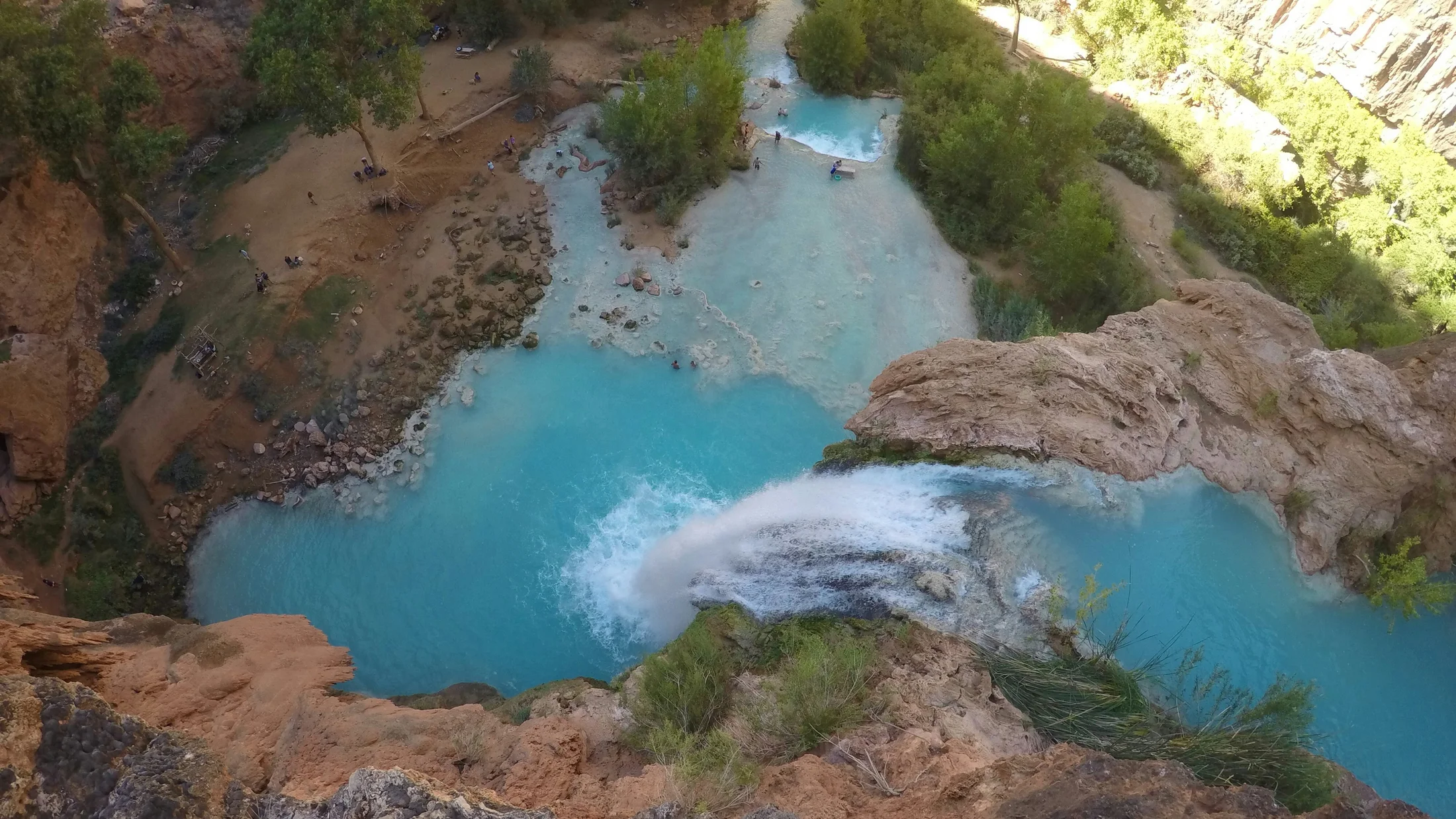
Jumps, abseils and turquoise pools in a single plan: that is canyoning in Spain. There are gentle descents for families looking for clear water and technical canyons for those who already have experience.
In the following lines, you will find reliable data to choose your next canyon: what level each one requires, how long the descent lasts and when it is best to go. With that basis, you can decide on your plan before booking the outing with a guide company.
Canyoning in Spain: where the turquoise pools begin
Spain brings together Pyrenean limestone, Andalusian gorges and volcanic ravines: a very varied mosaic of canyons. In the Sierra de Guara (Huesca), the birthplace of modern canyoning in the peninsula and a Natural Park since 1990, the light green water carves perfect slides and potholes.
The Sierra de Tramuntana (Mallorca) has passes between vertical walls of karst rock that end next to the sea; its cultural landscape was declared a UNESCO World Heritage site in June 2011. In the Canary Islands, volcanic geology creates abrupt gorges with jumps and basalt passages.
In Andalusia, the Río Verde flows through the Parque Natural de las Sierras de Tejeda, Almijara y Alhama, in the municipality of Otívar (Granada). The scent of thyme and wet rock after a light rain accompanies the descent.
The selection prioritises safety, beauty and accessibility, and also takes into account the technical degree and nearby services. Activity times range between 3 and 8 hours depending on the itinerary, with options for families, beginners and experts.
What you are going to find and how we have chosen
Ten canyons in Spain, with turquoise pools and waterfalls, ordered so that you can choose your own. Each one has its own mini-fact sheet with location, difficulty, duration, estimated price, best time, for whom it is and key activities such as jumps, abseils or pools.
The article includes a suggested interactive map, essential equipment and safety tips. The selection is based on five criteria: safety and regulation, beauty of the pools, accessibility and logistics, local services and value for money.
Each fact sheet works like a traffic light. Green if the descent fits your level, amber if you lack equipment or a guide, red if the flow or the season are not favourable.
Before booking, confirm the state of the canyon, the permits and the water flow.
Picuco te puede ayudar
Does something here catch your eye?
Tell us.
Write to us on WhatsApp or email: we answer questions, find the best options and help you sort out the booking.
Ten canyons that never fail for descending among pools and waterfalls
1.Barranco de Mascún (Sierra de Guara): technical classic with pools and slides
Mascún Superior is a canyoning classic in the Sierra de Guara: long, wild and with technical sections that require experience and a cool head. It is located in Rodellar (Bierge, Huesca), within the Sierra y Cañones de Guara Natural Park.
The route includes a nearly 20-metre rappel at the entrance, narrow passages, mandatory swims and natural slides among pools and boulder chaos. It includes a nearly 20-metre rappel at the entrance. Highlights include the Saltador de las Lañas, the Peña Guara waterfall, the Cueva del Mascún, the Oscuros de Otín and the Pozo Negro.
The difficulty is high: go with experience or with a guide. It takes approximately 7-9 h, including approach and return. The indicative price is 75-110 € per person with a guide, with equipment included in most cases.
The approach starts from Rodellar via a marked path and takes 2 to 3 hours, passing through La Costera de Otín until the start at the Saltador de las Lañas; the return is demanding. It is advisable to get up early and check the weather report for the Alcanadre basin, as the flow is variable after rainfall.
2.Río Vero / Alquézar (Sierra de Guara): accessible with turquoise pools
The Río Vero, in Alquézar (Huesca), is traversed from the village by walking for approximately 1 h 15 min to the middle of the canyon, in the Sierra de Guara. Its descent is accessible and very aquatic, and works well as a first contact with canyoning.
The route advances through limestone corridors, with sections of easy swimming and small drops that do not require large rappels. A blue-green light envelops the galleries.
You descend the Middle/Lower section of the river, with low-medium difficulty depending on the section and flow, and a duration of 3-5 h depending on the chosen section. It is suitable for families with teenagers, mixed groups and beginners, although it is advisable to know how to swim because there are sections of gentle swimming.
The best time is spring and summer; in autumn-winter the water is cold. In high season, book in advance and avoid the middle hours of the day.
In the surroundings there is rock art, with more than 60 caves with paintings on their walls, declared a World Heritage Site. Check the visiting regulations before going.
You arrive on foot from Alquézar in approximately 1 h 15 min to the middle of the canyon. The lower section starts at the third boulder chaos and ends at the Villacantal bridge, where it connects with the Ruta de las Pasarelas de Alquézar.
3.Barranco de Foradada (Alins): autumnal descent among pools and waterfalls
The Barranco de Foradada chains together medium-sized waterfalls and clear water in a high mountain environment. The pools follow one after another among stepped jumps, and in autumn the descent gains in light and calm.
It is an option for beginners who already master basic rappelling and for nature photographers. The route does not require advanced technique, but does require confidence with the rope and a desire to walk through mountain terrain.
Before leaving, check the flow the day before. If the water is murky or rises quickly, reschedule the descent. Bring an extra thermal garment for stops.
Access is via local track and path, with parking in the designated areas. Leave the car there and do not block the way.
4. Torrent de Pareis (Mallorca): the island classic of walls and pools
The Torrent de Pareis ends in the sea, at Sa Calobra beach, after descending between 200 m walls. It is a trek with a great atmosphere rather than a technical canyon, unless you link it with the upper Gorg Blau–Sa Fosca sector, which is advanced level.
The descent totals about 3.300 m with an average slope of 5,14%. There is no marked path: the terrain mixes changes in elevation, chaos of boulders, drops, narrow passages and sections that, depending on the season, force you to swim.
The difficulty is medium without ropes during low water periods and high if you link technical sections. Calculate 5 to 7 h depending on the flow and stops. It fits well for strong hikers and in groups with a guide, and it is not recommended during floods.
Go at the end of spring or in summer when dry. Avoid rain due to the risk of flash floods and consult the AEMET forecast for Escorca-Lluc before starting. In winter the route is very risky due to the water in the pools and requires technical equipment such as wetsuits.
The classic section costs between 50 and 85 € per person with a guide; the boat and the bus are separate. It starts at the houses of Escorca, at km 25,2 of the Ma-10 Andratx-Pollença road. Return by boat or bus from Sa Calobra, or by hiking back up.
At the end, the sea smells of salt and of a siesta in the sun. Combine the day with gastronomy in the villages of Tramuntana and confirm the transport schedules in Sa Calobra before starting.
5. Barranco del Infierno (Tenerife): volcanic environment with dramatic jumps
Barranco del Infierno is a Special Natural Reserve of Adeje, in Tenerife, with jumps, rappels and large holes in basaltic rock. The black basalt, after getting wet, reflects like a dark mirror.
Watch out with the plan: canyoning is prohibited all year round in Barranco del Infierno. The descent is done in other nearby volcanic canyons with an authorised guide. In the environment, geological formations such as the roques del Conde, of Ahiyo, of Ichasagua, of Imoque and of Abinque stand out.
Access by path has a daily quota limited to a maximum of 200 visitors and entry control. The hiking entry costs 16 € for non-residents and 6 € for Canary Island residents. Children under 5 years old cannot enter, those under 16 must be accompanied by an adult and entry with animals is not allowed. Wear footwear for stony terrain and keep the helmet provided on at all times.
The best time is stable autumn and winter, avoiding rain episodes and Atlantic storms. It is an ideal outing for beginners and for travellers who want to get to know the volcanic environment safely; the difficulty is medium depending on the permitted itinerary and the flow.
Before going, verify the current permit situation with the Cabildo de Tenerife. If it is not viable in Infierno, the guide will propose legal and safe alternatives in the nearby authorised canyons of Adeje.
6. Barranco de Guayadeque (Gran Canaria): a combination of culture and nature
The Barranco de Guayadeque is a Natural Monument of Gran Canaria with cave-dwellings and a deep ravine. It combines landscape, archaeology and gentle adrenaline.
Technical descent is sporadic and depends on the rain. There are dry ravine itineraries and short sections practicable with a guide. The difficulty is low-medium when dry and medium if there are equipped drops after the rain.
The ravine concentrates the highest density of pre-Hispanic archaeological sites on the island. Its slopes host more than 68 species of native plants and 36 species of vertebrates. It has double protection: Natural Monument and Bien de Interés Cultural (Archaeological Zone).
The wind carries the scent of pine and old lava on the slopes. During the descent, you will find passages between volcanic flows and easy drops, in addition to visiting caves and enjoying the local gastronomy.
Guayadeque is between Agüimes and Ingenio, in Gran Canaria. Reach it via the GC-103 road, with signposted parking and services in cave-hamlets; from the capital, take the GC-1 to exit 18 (Carrizal-Ingenio).
Go in winter or spring: the climate is mild and it is less hot. It is an outing for active families, cultural travellers and beginners. If you want to stay, look for nearby rural accommodation.
7. Los Cahorros de Monachil (Granada): walkways and waterfalls
In Monachil, the hanging bridges and walkways carved into the rock cross the river just a few minutes from Granada. The complex is within the Sierra Nevada Natural Park and is explored on foot.
Canyoning is practised in the upper sections of the river, with short rappels and scrambling. The classic walkway route is hiking and you can combine it with the descent.
The difficulty is medium in the canyon sections and easy-moderate on the walkways. It is suitable for beginners and groups of friends, and allows you to combine family hiking with a guided canyoning trip. It is not recommended for people with vertigo.
Prices start at 17 € per person in individual mode and at 180 € per group. Spring and autumn are the best times; in summer it is hot and there is more crowds.
After heavy rain in Sierra Nevada, the flow rises quickly. If the water is murky or high, choose another date.
Guided visits are managed at the Ayuntamiento de Monachil, in the Plaza Baja. You arrive by car in 20 min from Granada and there is regulated parking during the season.
8.Congost de Mont-rebei (Lleida/Huesca): gorge for water adventures
The Congost de Mont-rebei is a gorge with limestone walls and emerald green water from the reservoir. It is better known for its walkways and kayaking than for classic canyoning.
With a guide, you can combine treks with swimming in coves of the reservoir, rappelling in nearby ravines, and adventure routes adapted to your level. The gorge itself is not a typical technical canyon: if you are looking for pure canyoning, ask about nearby descents in Montsec and Guara.
The plan suits active families and beginners who want iconic landscapes with a touch of adventure. The path has a rope handrail on the wall to facilitate the journey, as it does not have railings.
Book your parking space in advance: there are car parks in La Masieta and Viacamp. Vehicles exceeding 2.30 metres in altitude are not permitted.
You can arrive via the C-13, with a detour towards Guàrdia de Noguera, and continue along the local road LV-9124 passing through Sant Esteve de la Sarga and Alsamora. The environment is managed by the Fundació Catalunya La Pedrera, in the Sierra del Montsec, on the border between Lleida and Huesca.
9.Río Verde (Málaga): Mediterranean with pools and a final jump
The Río Verde flows down the Sierra de Tejeda, Almijara y Alhama with optional clean jumps, natural slides, and short rappels. In summer, the water is temperate and the descent takes place in the area of Otívar, within the Parque Natural de las Sierras de Tejeda, Almijara y Alhama.
The difficulty is medium for the full route and low-medium for the introductory sections. It costs €45-70 per person for the introductory route and €60-90 per person for the full route, with equipment included, plus a natural park toll of €5 per person.
The Natural Park regulations limit canyoning access to groups of a maximum of 8 people. The departure is between 9:00 and 10:00 h and the activity finishes between 14:00 and 16:00 h.
Spring and summer are the best times, and autumn is still pleasant; avoid stormy days. Bring suitable neoprene even in summer so you don't get cold during long stops.
Access is via a forest track with seasonal control and regulated parking, and the internal transfer is 5 km along dirt tracks to the foot of the river. It suits beginners and groups of friends looking for jumps and slides, with green pools, an emblematic final jump, and polished slides.
10.Barranco de la Fuenfría: mountain and cold water
In summer, the flow decreases and lets you play with pools and safe scrambles, always staying attentive to mountain weather.
The route lasts 2 h, with an approach of 1-1.5 h and a return of 20 min. The best times are winter, spring, and autumn. It is an ideal canyon for beginners eager for high mountains and fresh water.
On the route, there is a cable for the ascent (via ferrata type) and a zip line for the descent. At the head of the second rappel, a zip line allows you to overcome a waterfall of about six metres. The air smells of broom and wet stone.
How to read each card and make the right choice
Each card in this article summarises just enough to help you decide: location, technical level, duration, access, indicative price, best time, recommended profile and highlights. Read it before booking and you will know if the canyon fits your group.
The location gives the municipality and protected area, a key piece of information for permits and regulations. The technical level is low if it does not require ropes, medium with simple rappels and high when there is technical continuity, complex escapes or sensitive water flows. The duration includes the approach and the return, not just the time inside the canyon.
The access explains how to get there and if there is regulation for parking or tracks. The indicative price refers to guided outings per person in mid-season and varies according to group, date and whether it includes a wetsuit, helmet, harness and footwear. If you go on your own, budget separately for equipment rental, transport and insurance.
The best time depends on water flows, water temperature and seasonal regulation: intense rain, snowmelt or summer storms change the scenario. The "Ideal for" section filters by profile: family, beginners or advanced. The highlights list jumps, rappels, slides or landscape values that define the experience.
When booking, compare certified companies and check what the price includes, the guide/participant ratio and the cancellation policies. Confirm the state of the canyon the day before: it is the last piece of information that can change your plans.
Location map: visualise your perfect route
An interactive map lets you locate each ravine on the map and organise your route before leaving home. It is useful for comparing distant canyons with each other and deciding in what order to visit them.
Each ravine shows its starting and ending point, and when you click it, a card opens with level, duration, price range and best time. An icon for difficulty (green, amber, red) tells you at a glance what to expect.
Add filters by season (spring, summer, autumn) and by cost (<60 €, 60-90 €, >90 €) to keep only what fits your dates and your budget. Add layers with distances to base towns, regulated parking and points of interest such as visitor centres, fountains and refuges.
Also mark nearby rural accommodation and combinations of ravine with hiking and local food. Estimate driving times between canyons: these are what most influence a weekend of descents.
You can create it with Google My Maps if you want something quick, or with Leaflet if you are looking for advanced customisation. Before leaving, download the map for offline use and have a plan B if the water flow is not favourable.
Essential equipment and how to prepare
Safety in a ravine starts with equipment: a fitted wetsuit, approved helmet, specific harness and footwear with an adherent sole. With those four pieces covered, the descent stops depending on luck.
Add technical material according to the level of the canyon you are going to descend. A section with long rappels or deep pools requires ropes, anchors and spares different from those of a dry and short canyon.
The smell of damp neoprene at dawn is almost a rite of passage before entering the water. Check your material the night before, check the rain forecast and confirm with the company or the club who you are going to descend with.
Mandatory basic equipment
The water of a canyon dictates the equipment: without a wetsuit and helmet, you don't go down. Before booking, check which material is included in the price and its condition.
A full wetsuit and booties maintain temperature and prevent scrapes. Choose 3/2 mm in the Mediterranean summer, 4/3–5 mm in Guara and Gredos, and 5 mm in cold waters, and check the sizing and zips before heading down.
On your head, you must wear a certified helmet (EN 12492/EN 1385), which protects against impacts from falling stones and slips. For rappelling, you need a canyoning harness with a protective seat, designed to get wet and resist abrasion; do not use climbing-only harnesses without a seat. Add an eight-type descender or a specific belay device, with a double rope and safety carabiners.
A canyoning backpack with a dry barrel or dry bag drains well and floats, so protect your food and first aid kit. On your feet, wear boots or sticky shoes with high-grip soles (felt or soft rubber type) and well-fastened laces.
Many companies include a wetsuit, helmet, harness, backpack, and barrel in the price. Renting equipment on your own makes things more expensive and complicates logistics, so confirm what the price covers and the condition of the material.
Technical and optional equipment
Before descending a canyon, check what material you are bringing yourself and what the company provides. For beginners, the guide and the included material are enough; for technical canyons, it is advisable to carry extra safety gear.
Semi-static ropes (Type A/B) and slings are for the person leading or for those in an autonomous group. Choose the length according to the canyon's rappels, with margins. Add two HMS carabiners, one automatic safety carabiner, and quickdraws if necessary.
Neoprene gloves help in cold waters and in long canyons: they reduce heat loss and improve grip. For Mascún or Gredos on cool days, a thicker suit or an additional shorty allows you to modularise your protection.
In your backpack, you cannot be without a whistle, a safety knife, and a mini first aid kit. They are useful for communicating and for cutting ropes quickly in an emergency. A GPS or a watch with maps and a waterproof case for your mobile will orient you during approaches and returns.
If you carry an action camera, secure it with a leash so you don't lose it, and put safety ahead of the perfect shot. In technical canyons, add spare rope and slings, and protect your skin and knees.
Physical preparation and logistics before the descent
A canyon is enjoyed more when you arrive well-prepared and with your homework done. Preparation starts weeks before, in the gym or outdoors, and ends the day before with a review of the data.
For aerobic endurance, run or swim 2–3 times per week. Add leg strength with squats and lunges, and work on your core and the mobility of your ankles and shoulders.
The breakfast of the day should include carbohydrates and protein. Pack 1–1.5 l of water per person in your backpack, more in summer, plus bars and something salty.
The season depends on the area: spring/summer in Guara and the south, summer-low water levels in Gredos, and mild autumn-winter in Canarias. The day before, check the flow and the weather, access permits, parking schedules, and the return journey.
If you are going with a company, confirm the meeting point and time, the guide/client ratio, and the cancellation policy. If you are going independently, leave notice of your route and return time.
A simple plan helps: an early start, a short break in the first third, and plenty of daylight at the end. This way you reduce risks and reach the car calmly.
How to choose your ideal canyon and when to hire a guide
Before choosing a canyon, look at four things: the difficulty rating, the flow, the weather, and the equipment. Depending on these, the activity will be either a pleasure or a problem.
Do not be afraid to ask all your doubts about the descent rating. Do not underestimate the effect of cold water or accumulated fatigue.
Calculate the route well: the first breath of air after a long swim tastes like relief when the planning has been correct.
Evaluate your level and the difficulty of the canyon
Before choosing a canyon, look at how it is scored: canyoning scales combine verticality (V), aquaticity (A), and commitment (X). A V2 A2 X1 is usually for beginners; a V3–4 A3 X2–3 is already intermediate/high level.
A canyon for beginners has short and equipped rappels, frequent escapes, optional or short swims, and clear approach and return routes. An advanced canyon features chained rappels, prolonged narrows, water movements such as surges and siphons, complicated escapes, and high commitment.
With children or in mixed groups, it is advisable to choose initiation sections, with temperate water and optional jumps, and to have a professional guide and small groups. And check the report before leaving: an easy canyon during low water levels can become serious after storms or during snowmelt. If heavy rains are forecast in the upper basin, postpone the activity.
How to choose a company or guide and compare prices
Before paying, ask for the civil liability and accident insurance numbers, and the guide's credentials. The "técnico deportivo de barrancos" is the qualification that the person taking you must have.
Also ask about the guide/client ratio: 1
–1 for initiation and 1–1 in technical canyons. Confirm what equipment the price includes (neoprene, helmet, harness, backpack, and water bottle) and how the sizes and the condition of the material are.Demand clear cancellation conditions if the flow increases or there is a weather alert. And check that there is a prior meeting with a briefing on basic technique, signals, and protocols.
Indicative prices range from 45–70 € per person for a half-day initiation to 70–110 € for full technical sessions, depending on the season and group size. Compare beyond the price: transport, photos, insurance, extra material, and possible access fees or parking.
Safety factors and conditions to check before booking
Before paying for a canyoning descent, check the report and the water: that is what decides the trip. These are the checks you should carry out with the company or the club before booking.
The weather is in charge. Do not book if there is a storm alert in the upper basin, fronts with persistent rain, or sudden drops in temperature that could cause hypothermia. The flow and the colour of the water also speak: if the water is brown or the level rises quickly, do not enter, and consult local gauges if they exist.
Check the permits and the regulations of the place: daily quotas, for example in protected areas, parking rules and schedules. Ask about recent inspections of the anchors and about replacement equipment.
Design a realistic plan B and have the canyon exit points clear. And if you doubt, do not enter: the mountain and the water will still be there.
Safety: risks, when to avoid it and basic regulations
Canyoning combines water, rock and rope, and that is where the risks come from: hypothermia due to cold water and wind, hits during rappelling and slips due to haste or poor communication, and above all, increased flows, which turn friendly pools into traps with surges and siphons.
Important
If you do not master rappelling, self-belaying in water and reading flows, hire a guide. Errors in a canyon are costly and prevention is your best insurance.
Turn back if you see turbid water, suspended logs, persistent foam or lateral currents. Avoid the activity with a rain alert in the basin, during periods of heavy snowmelt or after summer convective storms.
Carry thermal layers and reserve calories. Respect turns at the top of rappels to avoid falling rocks and use clear hand and whistle signals, maintaining a safe distance when rappelling and swimming.
Many canyons are in protected areas with specific rules. In Guara (Natural Park) there are regulated access zones and restrictions due to nesting, and in Torrent de Pareis there is regulation due to flooding and safety. In Tenerife (Barranco del Infierno) access is limited by quota and canyoning may not be permitted.
In Guara you need express authorisation for La Choca (all year round), Otín (1 March to 30 June), Palomeras del Flumen (15 February to 30 June) and El Diablo (1 December to 30 June). The descent of Yara and Formiga (up to their confluence) and of Isarre, Escomentué, San Chinés and Piedra Foratata is prohibited between 1 December and 30 June.
Neoprene is mandatory in Palomeras del Flumen, Formiga, Gorgonchón, Gorgas Negras, Barrasil, Peonera, Mascún, Balcés Superior, Oscuros de Balcés, Vero and Fornocal. In canyons with rappelling, carry an individual harness, descender, carabiner, helmet and one rope per group. The minimum frequency of entry between groups is 10 minutes.
Inform yourself on official websites of parks and local councils, respect quotas and regulated parking, do not leave waste and choose companies that work with permits and good practices.
Frequently asked questions
What is the average price of a canyoning trip in Spain?
A half-day introductory session costs between 45 and 70 € per person, with equipment and insurance included. Full technical canyons rise to 70–110 € per person.
The price changes depending on the season, the group size and whether the trip includes transport or photos. Confirm these conditions when booking to know what the rate covers.
When is the best time for canyoning?
The date depends on where you go. In Guara and the south of the peninsula, the season runs from spring to summer. In Gredos, the time is summer and early autumn, to avoid the thaw. In Canarias, autumn and winter are mild and with stable weather.
The date does not decide everything: after heavy rain, you should not enter the canyon even if the calendar is good. Check the flow and the report before heading out and adjust the plan to the region you choose.
Do I need previous experience?
In introductory canyons with a guide, no previous experience is necessary. You learn to abseil, to swim with a wetsuit and to move over wet rock during the descent itself.
In technical canyons, experience, rope handling and good physical fitness are required. Before booking, check the level of the canyon and the material requested by the company.
Can I do it with my family?
Yes. There are family descents from 8–10 years old, with optional jumps and short times, designed so that children progress at their own pace.
To go as a family, choose temperate water, small groups and companies that have children's equipment available. This way the day is adjusted to the little ones and everyone enjoys the canyon.
Can I book online?
Yes. Many companies and platforms allow you to book the descent online with a calendar, so you can choose the date and slot from home.
Before booking, check what the price includes, the guide/client ratio, the cancellation policy and the age and weight requirements.
What does the insurance cover?
The insurance for the guided activity usually covers civil liability and accidents. Before hiring, ask about the exact coverages, the excess and if it includes rescue. If you go on your own, hire a specific mountain insurance.
Book your experience — discover active tourism activities in Spain with providers verified by Picuco.
Conclusion
Spain brings together very different canyons: technical descents like Mascún, family routes like the Vero and island and volcanic proposals with their own character. There is a canyon for every level and for every way of travelling.
Before going down, choose a canyon according to your level, confirm flows and permits and bet on local companies that know every drop and every escape. They set the pace and know where the exit is when the water gets tight.
Complete the getaway with rural accommodation, a walking route the next day and seasonal cuisine in the local villages. This way the trip does not end when you take off your wetsuit.
If you have already descended a canyon, share your experience to help others choose. If it is your first time, the sensation of a pool after an abseil is the reason why it is repeated.