A night that changes your perspective
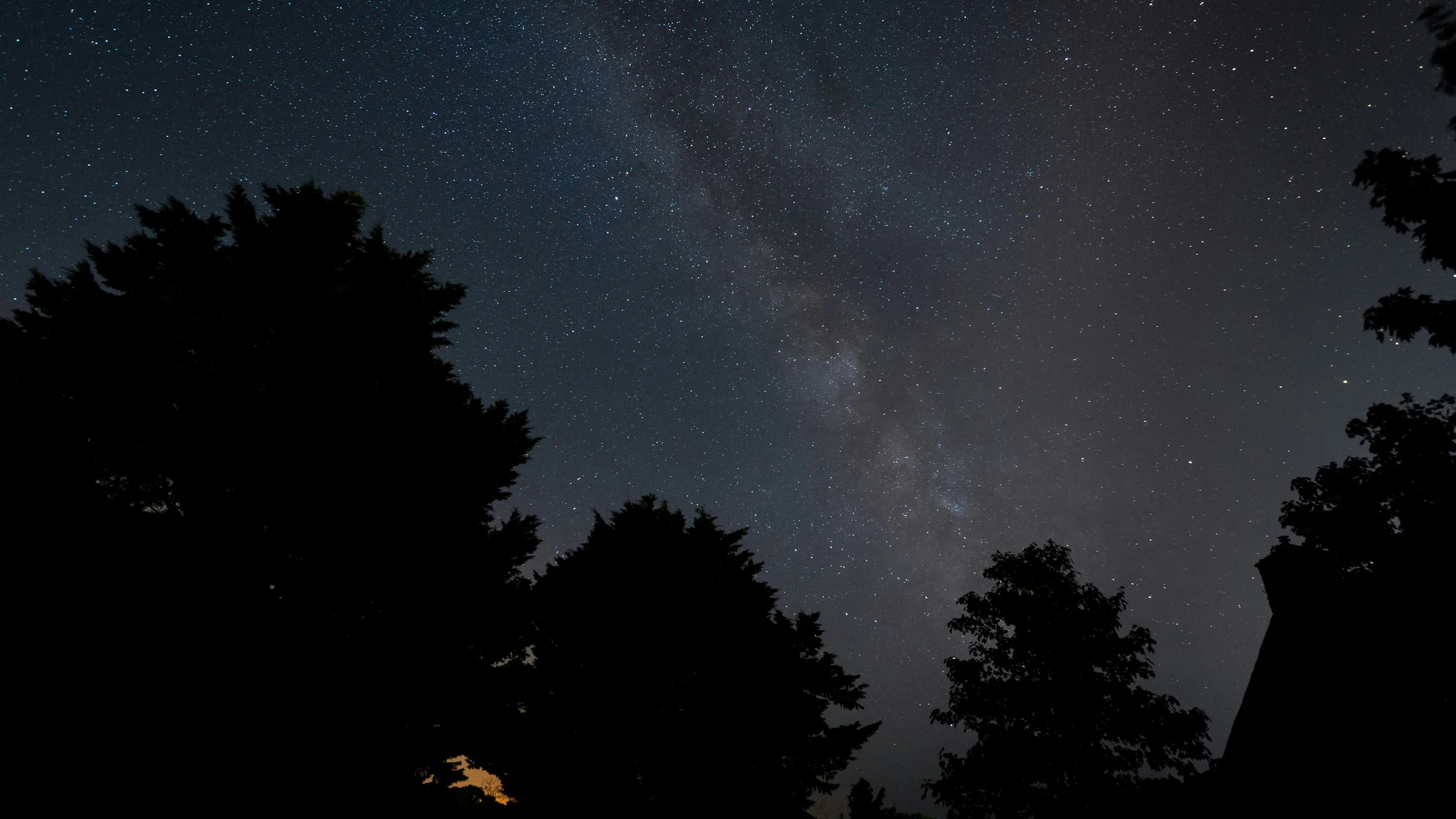
Astrotourism begins when time expands and your sight reaches what the city hides. Looking at the sky calmly changes the way you look at everything else.
This guide brings together the best places to see stars in Spain with truly dark skies. You will also find the criteria for choosing well and how to plan your outing.
The Canary Islands and the mainland complement each other, and the guide explains why. Additionally, it clarifies what the Starlight Reserves in Spain are and how to make the most of the season and the ideal lunar phase.
You don't need complex equipment to start: all that is required is method, patience and respect for the environment. For the outing, bring a headtorch with red light and warm clothing, and prepare to remain in silence.
Picuco te puede ayudar
Does something here catch your eye?
Tell us.
Write to us on WhatsApp or email: we answer questions, find the best options and help you sort out the booking.
Spain under diverse and protected skies
Spain combines altitudes, climates and vast sparsely populated areas that make it a privileged country for looking at the night sky. In the Canary Islands, the thermal inversion created by the trade winds leaves the lower layers with clouds and keeps the summits clear and stable. In the mainland, the interior mountain ranges and wide plateaus provide clean horizons during much of the year, and the dry air from the southeast, leeward, reduces the humidity that blurs the stars.
The Starlight Foundation recognises territories with active protection of the night sky and environmental education. Its network includes destinations such as La Palma and Tenerife, Montsec in Lleida, Monfragüe in Extremadura, Sierra Morena and Gredos Norte. The certification requires responsible lighting, educational activities and objective measurements of sky darkness.
Gredos Norte has certification that guarantees the absence of light and atmospheric pollution, something that also favours biodiversity. La Palma includes the Roque de Los Muchachos Observatory and part of the surroundings of the Caldera de Taburiente National Park, with Starlight Reserve and Tourist Destination certifications renewed for four more years.
In Cabo de Gata, the subdesert climate with little cloud cover and low light pollution allows you to observe the sky from anywhere in the park. There are programmes of free astrotourism and scientific outreach activities, and you must book in advance because places are limited.
In Gredos, you can see Orion in winter and the Pleiades, and in summer the Milky Way in Cabo de Gata and Las Hurdes.
When to go, with whom and how to prepare
The best window for stargazing opens around the new moon. Plan 3-4 nights before and after the new moon to have the sky as dark as possible.
In summer, the centre of the Milky Way can be seen between May and August, especially at midnight. In winter, bright constellations such as Orion and Canis Major dominate early on. In the Canary Islands, atmospheric stability allows you to go out almost all year round; in the mainland, spring and autumn offer the best balance between temperatures and cloud cover.
Before heading out, check the cloud and wind forecasts on AEMET, Meteoblue ("Astronomical seeing" and "Clouds" diagrams) or Windy. Always bring a thermal mid-layer, a hat and gloves, even in August at 2,000 metres. If you are going solo, let someone know your plan.
In family groups, it works well to divide tasks: two people set up the equipment, one takes care of logistics and another keeps things moving with celestial maps. If you prefer a guide, look for outings with monitors trained in astronomy and night safety: they adapt the experience for children, couples or friends and explain the sky with local stories.
The first time, it is advisable to choose an accessible spot, arrive during the day and prepare the equipment without rushing.
Key criteria for choosing your observation point
The Bortle scale measures sky darkness from 1 (extreme dark) to 9 (urban centre). For astrophotography and the Milky Way, look for Bortle 1-3 skies; for observing with the naked eye, a Bortle 3-4 already provides notable skies.
Consult light pollution maps and, if possible, SQM (Sky Quality Meter) readings from local associations. Humidity and haze can whiten the sky even in dark areas, so also check the average seasonal cloudiness and the wind: thin high clouds and sea mist ruin long-exposure photos.
Before heading out, check accessibility, safety and services: nearby parking, stable ground for a tripod and an absence of traffic that generates lights. If there is a forest track, verify if you need prior permission. In parks and observatories, respect dark perimeters and schedules, and do not point lights towards domes or wildlife.
Your checklist before booking the night:
- Bortle 1-3 sky recommended; a 4 is acceptable if you have a good horizon.
- Forecast with no high or medium clouds for 4-6 hours and humidity below 80%.
- Sustained wind below 30 km/h and a controllable thermal sensation.
- Access via a known road, arriving during the day to recognise the terrain.
- A nearby Plan B in case clouds or haze change.
- Respect for the environment with red light, zero waste and low volume.
- Safety with a charged battery, extra clothing, water and coordinates saved on your mobile.
The ten best places to see stars in Spain
Roque de los Muchachos, La Palma: observatory and protected sky
At 2,426 m, the Roque de los Muchachos Observatory crowns the ridge of La Palma and has one of the most stable skies on the planet. It is a world reference for astrotourism.
From the viewpoint, you can see the Caldera de Taburiente National Park and, if the weather permits, Tenerife, La Gomera and El Hierro.
The LP-4 road leads to viewpoints with parking and clear horizons. The detour to the viewpoint leaves the Astrophysical Observatory via the LP-403. The parking area is very limited and car access is restricted according to the road schedules and the number of vehicles, so book beforehand online to avoid crowds. Entry is free.
Arrive during the day, park in the signposted viewpoints and use high-mountain clothing even in summer. Do not illuminate the domes and stay in the designated areas.
At sunset, combine a short walk along the Roque path with a guided daytime visit to the observatory, if there are places available. To sleep, choose rural houses in Garafía or Puntagorda and support the La Palma community.
If you are looking for a guided activity or basic astrophotography, consult our active tourism guide in the Canary Islands and confirm schedules in high season.
Teide, Tenerife: altitude and stable climate
The Teide peak reaches 3,715 m and its stable, dry atmosphere leaves a clear sky almost any night. Teide National Park has the Starlight certification for stargazing.
You do not need a permit to observe from the viewpoint areas, but you do need one for the final path to the peak during the day. Check for closures due to snow or wind.
Arrive with plenty of time, park in spacious viewpoints and avoid white lights. The La Ruleta viewpoint is at p.k. 46.5 of the TF-21 road, West side, direction Roques de García.
During the season, operators with Starlight guides organise outings with telescopes; if you feel like it, look for options on Picuco. To reduce nocturnal travel, stay in La Orotava or Vilaflor and thus support local economies.
Parc Astronòmic del Montsec (Àger), Lleida: Starlight Reserve
In Àger, Noguera (Lleida), the Parc Astronòmic del Montsec has the Starlight Reserve and Tourist Destination seal and an international Starlight award that places it among the best places in Europe to observe the sky.
The park has a multimedia dome, observation with telescopes and nocturnal activities for all ages. Its planetarium features a mobile dome 12 metres in diameter.
The general nocturnal experience takes place during the night period and lasts 2 hours, with a recommended age of 10 years. In high season, book the Parc Astronòmic activities in advance.
If you are going to observe, look for Bortle 2-3 skies and clear horizons to the south: in spring and autumn the seeing is very fine. Arrive before dusk, park in designated areas and avoid powerful lights. For photography, use a robust tripod, medium ISO and short times if there is wind.
In the surroundings, rural houses and small restaurants sustain a community that looks after this sky.
To get there, the C-12 goes from Amposta to Lleida and begins south of Amposta from the N-340.
Sierra de Gredos, Ávila: high skies of the plateau
The Sierra de Gredos combines altitude, dry air and distance from large urban centres, which places it among the best spots in Spain for stargazing. In the highest areas, you reach Bortle 2-3 if you avoid the horizons towards Ávila or Madrid.
The two convenient access points are the Plataforma de Gredos, at 1,750 m via the AV-931, and the Puerto del Pico, on the N-502. Both have large car parks. The main access leaves from Hoyos del Espino, with 150 spaces.
Access is regulated and has a cost: motorcycles and cars 3 €, motorhomes 5 €, buses 12 €; pedestrians and bicycles are free. The regulation schedule is from 08:00 to 20:00 from July to September and from 08:00 to 18:00 from October to June. Outside of these hours, access and parking are free.
Summer and autumn provide long and stable nights; in winter the sky is crystal clear but very cold. Bring boots, down jackets and warm clothing: at that altitude the thermal sensation drops quickly. There are no water sources in the area, so carry enough water.
There are interpretive activities with local guides. Look for proposals on Picuco for new moon dates.
Calar Alto Observatory, Almería: science and panoramas
At 2,168 m, in the Sierra de los Filabres, the Calar Alto Observatory is the largest astronomical complex in continental Europe. It is a classic for stargazing and learning astronomy in Almería.
The dry plateau where it stands has frequently Bortle 2-3 skies, so observations are of great quality.
The A-1178 road ascends through pine forests and scrubland up to the observatory. The meeting point for visits is the visitor reception centre, at the western entrance.
Sometimes guided tours or open days are scheduled. Confirm dates in advance and do not enter restricted perimeters. Visits are only permitted for those over 8 years old.
Spring and autumn are the best times, paying attention to occasional snowfalls and temporary closures. Bring warm clothing: the domes are refrigerated to the expected outdoor night temperature. Observe and photograph from car parks and viewpoints, and avoid directing lights towards the facilities. Have a plan B in case the wind exceeds 40 km/h.
To eat early and travel during the day, stay in Bacares, Gérgal or Serón.
Cabo de Gata-níjar Natural Park, Almería: coast and clear nights
The dry air of the southeast, the low relief, and the distance from large cities leave Cabo de Gata with dark skies and contained brightness. The Natural Park, in Almería, is one of the stops on the list because of its coast and its clear nights, with dark skies and contained brightness.
Summer and early autumn are a good time: July is the month with the most clear skies (83%). For the Milky Way, look for new moon nights between May and September and watch out for strong levante episodes. Families appreciate the short nights at the beginning of summer.
The elevated areas near Vela Blanca offer sunset and sunrise views due to the position of the mountains and the sea, and an 18th-century watchtower stands there.
You reach the Vela Blanca viewpoint via the AL-3115 towards Cabo de Gata and then via the ALP-822; the last part is via a dirt track, with limited parking and the option to leave the car in designated areas and walk up. Cabo de Gata Lighthouse is accessed via the AL-3115; respect its surroundings.
Do not use white light headlamps on the beaches and do not step on the dune vegetation. Stay in San José or Las Negras and consume local: the community's commitment to responsible lighting maintains this sky. You can add a night photography session with local guides to learn coastal composition.
During the day, the coastal cliffs offer coastal routes.
Javalambre, Teruel: inland sky and observatories
The Javalambre sierra is in Teruel, in the south of the province. The Javalambre Astrophysical Observatory is on Pico del Buitre, at 1,957 metres altitude, in the municipality of Arcos de las Salinas.
The cold and dry interior provides stable nights; in summer, the Milky Way is seen as an unmistakable arc. Autumn and winter are the clearest periods, although cold; in spring, temperatures are milder and there is less snow.
To go up, an 11 km track leaves from Arcos de las Salinas following the Arcos river. From the south face, there is another 17 km track from the A-1514 road, 2 km from Torrijas. The northern track, which starts from the Javalambre ski resort, is 12 km long and is neither recommended nor possible in winter. For track access, take an off-road vehicle.
Respect the restrictions and do not illuminate the scientific facilities. Astronomical events and educational activities are occasional: confirm dates with local entities or look at the proposals on Picuco.
Maestrazgo, Teruel
In the Maestrazgo of Teruel, silence is measured in kilometres and the sky is seen in its entirety. It is a region of stone architecture, well-maintained municipal lighting and neighbours who know what they have above them.
Cantavieja, the capital of the region, Mirambel and Fortanete are good bases. From their high plateaus you see clear horizons and, if you move away from the centres, a Bortle 2-3 sky in general. Look for gentle hills without obstacles and park on the hills; the local signposted viewpoints also work.
Summer and autumn provide the best balance between temperature and stability. Arrive early, chat with the local people and ask about discreet corners: the community is the guardian of this sky. Avoid lights and noise, and take everything you bring with you.
Stay in small rural houses that turn off lights and promote observation; your stay feeds an economy that protects dark skies. If you want to debut in astrophotography, try a bright 20 mm lens and 10-15 seconds at moderate ISO.
Las Hurdes, Cáceres: remote corners of the West
Las Hurdes is a region of Cáceres with few people and narrow valleys that block parasitic brightness. That darkness makes it suitable for astrotourism.
The Mirador del Meandro del Melero, near Riomalo de Abajo via the EX-204, is a balcony to see the Milky Way in summer and set up your tripod. The Alagón river draws a sharp curve carved into the rock.
The route to the viewpoint takes about 2.45 hours, with a well-signposted and prepared path that includes sections of descent via wooden stairs. Arrive during the day to choose a safe clearing: the regional roads are well-paved, with curves and gentle mountain passes.
Summer and early autumn concentrate temperate and stable nights. Avoid horizons towards Ciudad Rodrigo or Plasencia and do not walk through the countryside at night because of the fauna and the orography.
Staying in Caminomorisco, Casar de Palomero, Casares de las Hurdes, Ladrillar, Nuñomoral or Pinofranqueado supports local rural accommodation. For an interpreted family outing, look for proposals with local monitors on Picuco.
Cazorla, Segura y las Villas, Jaén: nature and darkness
Choose your horizon well and you will reach a Bortle 3 sky, with south and east being the most useful directions.
The Campos de Hernán Perea, known in the area as Campos de Rampelea, are a karst plateau of more than 15,000 ha above 1,600-1,700 m. They are in the municipality of Santiago-Pontones, within the Cazorla, Segura y Las Villas Natural Park, in the Sierra de Segura, and are the most extensive plateau in Spain.
If you are looking for something more accessible, around the Tranco Reservoir, via the A-319, there are quiet spots and clean horizons.
In winter the nights are clear, but they require serious warm clothing and attention to frosts. Arrive with light to find your way and avoid nesting areas and restricted tracks. During observation, red light and silence are your best allies.
Around Hornos, Segura de la Sierra or Santiago-Pontones there are rural houses with porch skies. Combine hiking routes through the mountains with star observation for a complete getaway.
Step by step, equipment and good practices
A night of stars is prepared before leaving home: with a new moon, a Bortle 1-3 sky and equipment checked. Here you have the complete plan, from booking the date to the last photo.
The plan, in 8 steps
Choose a new moon window and an alternative date in case the weather changes. Check clouds, humidity and wind on AEMET and Meteoblue on the same day.
Select a Bortle 1-3 spot and do a daytime reconnaissance beforehand. Let someone know your expected return time and share your location.
Arrive 60-90 minutes before twilight to park and set up your equipment. Set up your gear using red light and put your mobile phones on flight mode.
Observe first with your naked eye and binoculars; then photograph if applicable. Pack up calmly and leave the place better than you found it.
Book your experience — discover active tourism activities in Spain with providers verified by Picuco.
What to bring
To observe, bring 7x50 or 10x50 binoculars, a star map or an app in red mode and a low chair. If you are going to photograph, you need a camera with manual control, a bright 14-35 mm f/2-f/2.8 lens, a sturdy tripod and a remote shutter release.
Three quick photography tricks: focus on a bright star by zooming in on the screen, use 10-15 s at ISO 1600-3200 and f/2-2.8, and correct the white balance to 3,500-4,000 K.
Minimum impact
Bring dim red light, zero music and keep your voice low. Do not use flash or illuminate wildlife or domes.
Zero rubbish and respect for restrictions and private property. Thank the local people: they are the ones who look after these landscapes and their sky.
Conclusion
Spain's night sky is diverse, accessible and fragile. Choosing the right date and location and maintaining a respectful attitude turns stargazing into an experience that can be repeated throughout the entire year.
The Canary Islands provide stability and altitude; the peninsula, a variety of landscapes and communities that protect their light. With that mix, almost any weekend on the calendar offers a possible outing.
To start, all you need are binoculars, checking the weather report and respecting the silence of the surroundings. Turning off lights during observation helps to protect dark skies and support rural environments.