Introduction
Seven islands, seven ways to move: wind, lava and sea. Active tourism in the Canary Islands is spread across each island with its own character, far beyond the asphalt.
There is hiking through ridges and forests, surfing on beaches with constant peaks and volcanic nature in cones, lava flows and lava tubes. The salty air on your face when coming out of the water and, in the background, a perfect cone silhouetted against the sky.
This proposal brings together a selection of routes and spots with the best seasons, levels, logistics and sustainability, so that you can plan with insight.
Nature and sport in a volcanic archipelago
Seven islands of volcanic origin and climates that change within a few kilometres are the engine of active tourism in the Canary Islands. You can walk along the GR-131 between islands, surf waves over lava bottoms or pedal alongside recent malpaíses.
The offer includes hiking, surfing, diving in marine reserves, trail running, kayaking, whale watching and stargazing in Starlight skies. At dawn, the breeze smells of sea and damp pine.
In the parks, respect the signage and do not leave the path: do not step on lichens or enter closed lava tubes. Avoid ravines when there is rain and carry appropriate equipment.
Before entering the water, check the wind and swell reports. Carry water and high sun protection.
What you will find and how to make the most of it
Seven islands, seven different ways to walk, surf and look at a volcano. Each one is chosen for what it contributes to the whole: variety of routes, quality of waves, access, services and environments.
In each entry you have the description of the place, the key activities, the routes or spots, the level required, the best season, estimated costs, access and practical tips. With that, you can decide before leaving home.
The list fits very different profiles: couples looking for tranquil volcanoes, families combining coast and forest or groups linking peaks and sessions. Choose the island by what you want to do, not by what you hear.
For prices, check the options on Picuco; it is necessary to book in advance.
Picuco te puede ayudar
Does something here catch your eye?
Tell us.
Write to us on WhatsApp or email: we answer questions, find the best options and help you sort out the booking.
Seven islands to move: routes, waves and volcanoes
1. Tenerife: hiking in Teide and a tailwind in El Médano
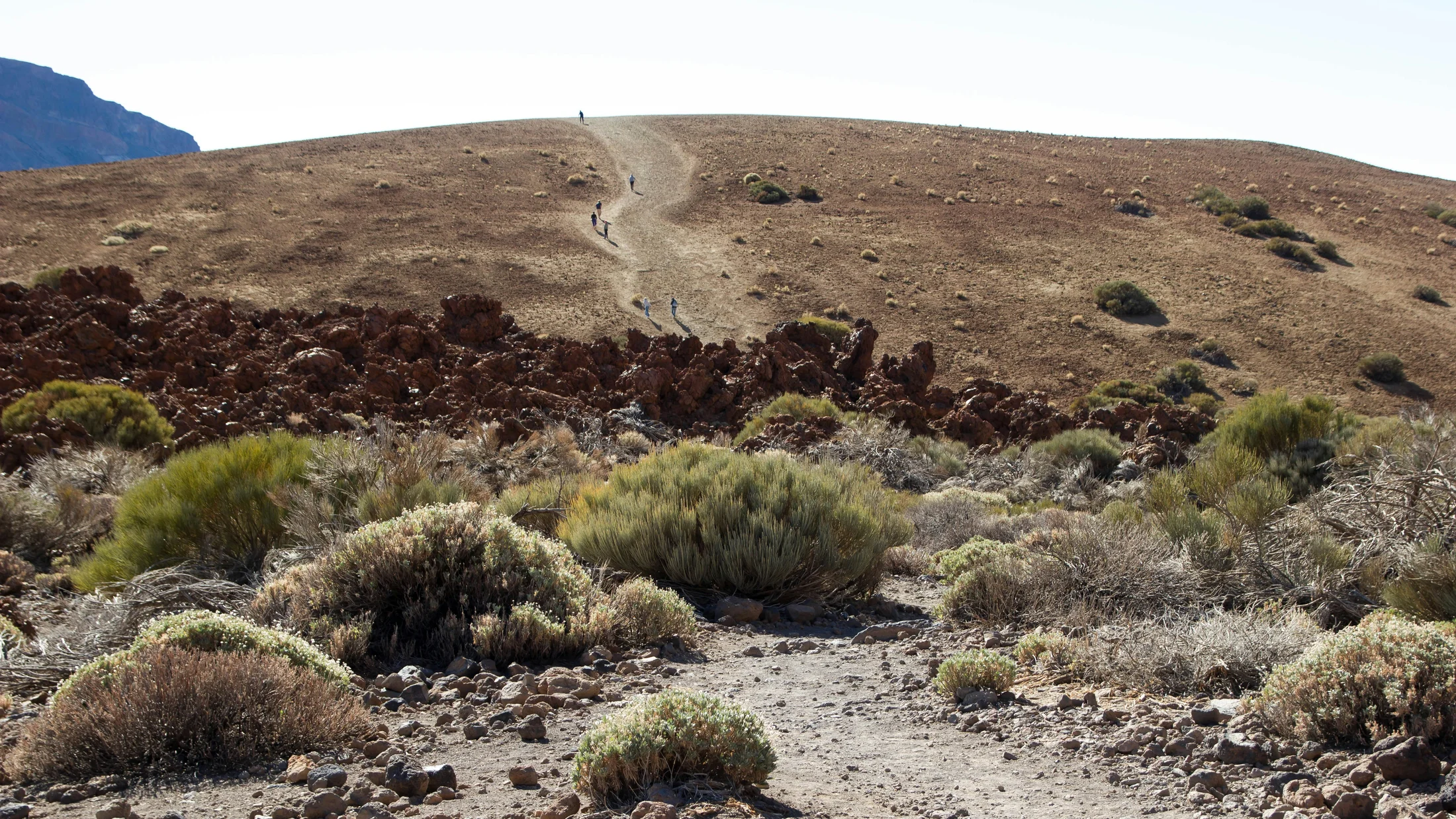
Teide measures 3,715 m and dictates the map of Tenerife: its national park has marked trails, from walks through lava flows to demanding ascents. In the early hours, the lava holds the cold like an old fridge.
To reach the summit you need a special permit managed by the Cabildo de Tenerife, so book it weeks in advance.
Two routes give you a sense of the island. Montaña Blanca–Refugio–La Rambleta is 5-6 h of heavy elevation gain and high mountain: 8.5 km one way and 1,350 metres of ascent. Roques de García takes 1-2 h, it is easy and has an iconic landscape.
It is advisable to avoid summer due to the lack of shade from the sun and the heat reflected by the volcanic soil.
In the south, El Médano is ideal for windsurfing and kitesurfing, with Cabezo and the bay of El Médano as the best spots.
Teide and mid-altitude areas are best enjoyed in spring-autumn; in winter, wear warm clothes and check for snow and ice. Tenerife South Airport (TFS) is 10-15 min from El Médano: it is 8 min by taxi (8.1 km) and from €3 by bus.
Avoid peak sun exposure times.
If you want a complete guide with all the hiking routes through the islands, check our hiking guide in the Canary Islands.
2. Gran Canaria: summit routes and beaches for surfers
The island divides its plans between the high-altitude pine forest and the coastline.
The summit trails traverse pine forests, basaltic slopes and viewpoints towards Teide. The ascent to Roque Nublo takes you 1.5-2 h, with easy-moderate difficulty and 170 m of positive elevation gain.
For the water, choose according to your level. El Confital, in Las Palmas, has powerful waves and a rocky bottom: only for advanced surfers. La Cícer, in Las Canteras, has a school and softboards, ideal for starting out with mid-tide. If you want to compare surf destinations throughout Spain, check out surf in Spain all year round.
Hiking works all year round, although in summer it is hot in the mid-altitudes and it is advisable to plan outings at dawn. Surfing in the north and in El Confital takes place between autumn and winter, and beginner lessons in La Cícer are possible almost all year round. The wind in Pozo Izquierdo occurs from May to September.
You arrive at the LPA airport and in 20-30 min you are in Las Palmas. The Global bus number 60 makes the journey with a single ticket for 2.30 €. Renting a car costs 25-45 €/day. Use boots with grippy soles for the polished volcanic rock and check the tides to enter and exit the reef.
3. Lanzarote: volcanic landscapes and waves on the North coast
In the Timanfaya National Park, visits are regulated: there are guided routes or scenic roads, and you cannot leave the paths. To walk more, Caldera Blanca offers an 8-10 km route of moderate difficulty, with panoramas over recent lava flows. The elevation gain is concentrated at the end, with loose lapilli in the last 15-20 minutes.
The edge of the Caldera Blanca cone reaches 458 m in altitude. There are no services on the route: no water, no toilets, no bars, no shade. Dogs must be on a leash and the car can be parked for free in the village streets, without parking meters.
The Famara coast and the Risco de Famara alternate sections of cliffs and dunes, with attention to the wind. At Famara beach there are multiple peaks, suitable for beginners and intermediate surfers, with schools in the village. San Juan and La Santa have more technical waves over volcanic rock, only for experienced surfers.
For surfing, the best time is autumn-winter, with solid swells; in summer you have the wind and the options in Famara. There are no direct buses from the airport to Famara: you have to transfer in Arrecife, and a taxi costs between 35 € and 50 €. Bring high sun protection, enough water and windproof clothing; do not touch closed lava tubes or step in the holes of La Geria.
4. Fuerteventura: longboards, beaches and volcanic paths
Fuerteventura has constant wind, which is stronger from May to September.
For walking, the Calderón Hondo route takes 1-2 h, is easy and traverses the crater with views of Lobos. In the Corralejo Dunes, there are short walks through protected terrain: do not leave the paths.
Surfing is spread across the coast. In the North Shore (Majanicho–Punta Blanca–El Hierro/La Caleta) you will find waves over lava for intermediate-advanced levels. El Cotillo is a beachbreak with options for all levels depending on the tide: from October to March there is greater swell consistency and big waves, and from June to August the waves are smaller. Respect the line-up by giving priority to the locals and check the currents before entering the water.
The season changes the plan. From May to September the wind is at full throttle; from October to March the sea is more consistent and summer is a good stage to start out on protected beaches.
FUE airport is 38 km south of Corralejo, about 30-40 min by car. The ferry to Lobos takes 15 min and has limited capacity. Do not access closed dunes or beaches with a vehicle, avoid stepping on the scrubland and respect the nesting areas.
5. La Palma: forests, recent volcanoes and trekking
Here you are almost always walking upwards, between humid forest and recent lava flows.
For the Los Brecitos route, you can use a 4x4 taxi for the journey and the return from the car park. Access via La Cumbrecita requires a free prior reservation on the official platform reservasparquesnacionales.es, and the regulated access hours are from 08:30 to 16:00. At Lomo de los Caballos, there is an information point and car park to leave your vehicle at the end of the route.
The Ruta de los Volcanes, the island section of the GR-131, covers 17-20 km through recent ridges, with moderate-demanding difficulty. In the Cumbre Vieja area, the volcano from the 2021 eruption is officially called Tajogaite: access and paths are regulated, so inform yourself at the cabildo or the park before going and respect the closures.
You can come all year round, avoiding intense heat on the summits and monitoring the rain in the ravines; clear winter is a good time for skies and astronomy. Bring poles for long descents and good footwear for the loose pyroclasts, and hire guides for technical or partially closed routes.
6. La Gomera: ancestral paths and protected nature
In La Gomera, you walk along paths that have been connecting hamlets, palm groves and cliffs for centuries. The traditional network of paths and the GR-132, which coincides with the Camino Natural Costas de la Gomera, are the best way to explore it.
Garajonay National Park protects a laurisilva forest and preserves the Roques, geological monuments. Its highest point is the alto de Garajonay, at 1487 m above sea level. The island has been a UNESCO World Biosphere Reserve since 2012.
The circular GR-132 can be done in stages, with short one-day variants.
On calm sea days, combine hiking with kayaking or snorkelling in the southern bays. You can also observe birds in ravines and palm groves, respecting breeding seasons.
In winter and spring the forests are green and the summits are less hot; in summer, the mid-lands are dry and clearer.
Arrive by ferry from Tenerife (Los Cristianos) to San Sebastián in 50-60 min, or to Valle Gran Rey via Vueltas. With strong wind or rough seas, the coastal route can easily be cancelled: book in advance and check in online to carry your ticket on your mobile.
Rural accommodation managed by families maintains paths and orchards. Ask and share schedules to respect their rest periods. Bring poles and footwear with good grip: the elevation changes from the coast to the summit are steep.
7. El Hierro: remote routes, diving and emerging volcanism
Getting there costs a little more, and that is reflected in the island's pace.
In July 2024, the process began to turn it into Spain's first exclusively marine national park.
For hiking, the Malpaso (1,501 m) and ridges route has moderate difficulty, with open views and frequent wind. The gulf paths offer balconies over the ocean amidst twisted Spanish juniper.
Diving in La Restinga and the Marine Reserve shows volcanic seabeds with dusky grouper, barracuda, Mediterranean moray, common octopus, parrotfish, wrasses, spine rays and sea cicadas all year round. It is suitable for all levels with a local guide. Between August and November you can see mantas, devil rays, tunas and occasionally whale shark.
Dives in the reserve have a quota of 2,300 divers per year for each of the four authorised points, so it is advisable to book in advance. The best time to dive is from May to November, due to maximum visibility in La Restinga. For hiking, aim for March to May and September to November.
Outside of the hubs, services are limited: plan your shopping and fuel. Leave a margin of days in case the sea is rough and respect closed areas for conservation.
If you are interested in more specialised diving, consult our technical diving guide in Spain.
Location map
An interactive map brings together the routes, surf spots, parks and access points for each island in a single view. It is useful for deciding which island fits your plan before booking anything.
Choose a base map from OpenStreetMap or official cartography and activate layers by theme: difficulty (easy, moderate, demanding), best time (colours by season), access (road, track, ferry) and services (schools, rentals, refuges). Each marker includes the name of the place, a brief description, level, distance/time or type of wave/bottom, safety advice (tides, wind, closures) and a sustainability notice (do not stray from the path, do not step on dunes, permits).
To set it up, Leaflet or a similar viewer works well with lightweight tiles for fast loading and a clear anchored legend. Web integration can be done with an iframe from a public map (uMap) or by inserting the viewer script with GeoJSON layers.
Add search controls by island, activity filters (hiking/surf/diving) and a "view on mobile" button to take the map offline with screenshots or by exporting a GPX/KML file.
How to choose your island and activity
Choosing well is half the trip. Define a main objective (waves, summits, volcanoes in sight) and a secondary one in case the weather changes, and cross-reference physical level, budget, season and duration.
If you already have experience, aim for high mountains and technical reefs: La Santa, in Tinajo (Lanzarote), is a coastal village at sea level with technical surf reefs.
The large islands (Tenerife, Gran Canaria) offer more options and varied prices. The small ones (El Hierro, La Gomera, La Palma) have less supply, but more quality and calm.
The season rules. There are solid waves from October to March, wind for kite and windsurfing from May to September, and hiking from March to May and from September to November.
For the duration, think of three scenarios: 3-4 days with a base and short radius; 7-10 days combining two areas or two nearby islands; 14+ days for GR-131 treks in stages or a surf trip with stops.
-
La Palma: trekking and recent volcanism; all year round, avoiding the heat at the summit; medium-high difficulty; steep elevation gains and routes that may close for safety.
-
El Hierro: diving and solitary routes; from September to November for diving; medium difficulty; services concentrated in a few hubs.
Before setting off, check wind and swell forecasts and park alerts (closures, permits). Book accommodation near your main activity and confirm classes and rentals 3-7 days in advance during the season. Download GPX tracks and offline maps, carry a powerbank and have a plan B for each island for calima or swell.
Leave margins: the trade winds rule and, when they blow, the day has a different rhythm.
Frequently asked questions
Resolving practical doubts before setting off helps you make the most of your first day of activity in the islands. Here are the answers to what is most often asked by those preparing hiking, surf or routes through the volcanic nature of the Canary Islands.
Is it safe to go hiking and surfing in the islands?
Yes, it is safe if you prepare for the outing: choose routes according to your level and avoid ravines when there is rain. Carry water, a cap and 50+ sunscreen for the routes.
In surfing, check tides, bottoms and forecasts before going in. If you do not know the spot, go with someone.
What basic equipment do I need?
For hiking, bring footwear with grip, poles, a lightweight raincoat, a headlamp and 1.5-2 l of water. The volcanic topography of the islands is harsh on smooth soles and the weather changes quickly at altitude.
For surfing, choose a wetsuit according to the season (2/2 to 4/3) and add a leash and helmet in reef areas. If you are travelling with little luggage, rent the equipment at your destination instead of carrying it.
Do I need insurance or permits?
Before heading out on a route, take out insurance that covers outdoor activities and accidents at sea. It is the way to walk and enter the water with peace of mind on any of the islands.
Some places require a reservation or permit. For the summit of Teide, a permit is mandatory, so request it in advance. In Timanfaya, the visit is guided and requires prior reservation.
Barranco de Masca has a high difficulty level for descent, with irregular terrain, steps and elevation changes. The path costs 40.66€ for non-resident adults and 7.49€ for adult residents in Tenerife.
If you go by car, there is a car park in the Santiago del Teide cemetery area for the trail. In Caserío de Masca, parking is limited to 2 hours between 8:00 and 14:00.
How do I move between islands and within them?
Between islands, you can travel by ferry or on short flights. Choose according to the time you have and the island you want to visit.
Within each island, the most flexible option is a rental car. It lets you reach the starting points of the routes at your own pace.
In cities, if you are not driving, use the bus (guagua) and the taxi to reach the starting points of the routes.
Should I book classes or guides?
In high season, yes: book 1-2 weeks in advance. Surfing takes place from October to March, wind from May to September and long weekends fill up hiking.
Look for certified companies and small groups. This way, the class or the route is tailored to your level and you don't end up in a line of twenty people.
You can check options on Picuco.
What rules apply in parks and natural spaces?
In the parks and natural spaces of the Canary Islands, the basic rule is not to leave the marked trails. Also, do not pick up rocks or plants: they are part of the landscape you have come to see.
Take your rubbish with you to a bin and respect temporary closures, which protect the fauna and vegetation during sensitive periods. In the dunes and in the laurisilva, walk on the boardwalks so as not to damage the ground.
In the pools, be careful with the fauna and the tides: watch where you step and do not stay if the water rises.
How much do the activities cost?
A surfing class in the Canary Islands costs between 35 and 60 €, and a guided dive between 40 and 70 €. Equipment rental ranges between 15 and 30 € per day.
These are indicative ranges and vary according to the island, the season and the provider. It is advisable to book in advance, especially in summer and during the weeks with the highest demand.
Book your experience — discover active tourism activities in Spain with providers verified by Picuco.
Conclusion
Canary Islands has seven different ways to move outdoors: volcanoes, forests and waves, one for each island. Tenerife is the island of high mountains, Gran Canaria acts as an urban surf base and Lanzarote adds lava and vineyards.
Fuerteventura is wind and beaches; La Palma, elevation changes with recent volcanism; La Gomera, ancestral paths; and El Hierro, silence and diving. Choose the island according to what you want to do and not the other way around.
Plan responsibly: check the weather reports, respect the rules and listen to the local communities. Leave a margin of days and a plan B, because the trade winds condition any outdoor activity in the islands.