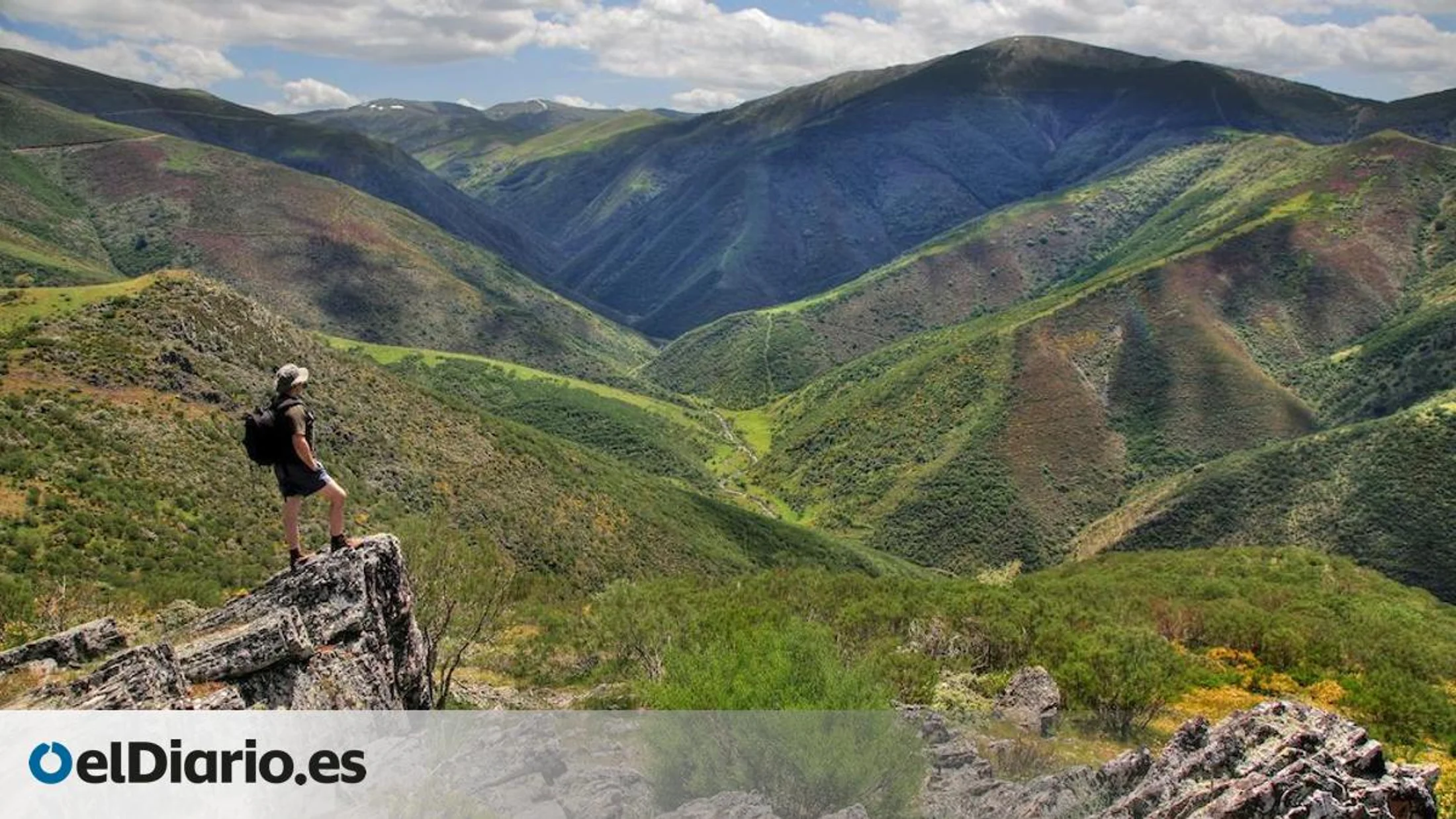
Why hiking in La Rioja combines vineyards, gorges and mountains
Landscape, tradition and active tourism
In La Rioja, walking goes from the vines to the canyon in just a few kilometres. Vineyards on gentle hills, gorges carved by rivers like the Leza and forested mountains follow one after another in a single day.
Hiking routes mix active tourism and wine culture. During enological visits, the winemaker explains the vineyard in person. The GR-93 traverses mountain ranges and valleys, and numerous PR-LR link villages, hermitages and wineries.
The “Valles del Leza, Jubera, Cidacos y Alhama” Biosphere Reserve (UNESCO, 2003) protects canyons and rupicolous fauna. Inside there are palaeontological sites, thermal springs and Celtic remains from Contrebia Leukade. The reserve has been a Starlight Tourist Destination since 2012 and is a habitat for birds of prey, especially griffon vultures.
The Leza canyon, famous for fluvial erosion, forms a gorge with more than 200 m of elevation drop. It is half an hour by car from Logroño.
In autumn the vineyards change colour; in spring the gorges fill with life and water. Plan according to your time: walks of 5-8 km among vines, mid-mountain treks or canyons with viewpoints. The local community maintains paths and vineyards, and appreciates respectful and slow walking.
How we select these routes and how to make the most of them
Seven Riojan routes, chosen with criteria that you can check before setting off. It smells of wet vine shoots at dawn.
The routes were chosen based on objective criteria: accessibility (parking or nearby bus), landscape interest (vineyards, gorges, Ebro, forest), geological uniqueness (canyons, fluvial terraces), connection with wineries and villages with services, safety (signage and alternatives) and sustainability (established routes and good practices).
Each sheet describes location, distance and elevation drop, duration, difficulty, best time and what to see. To read the list quickly, identify your level, choose according to interest (vines, gorges or mountains) and verify the logistics: transport, winery bookings and weather.
At the end there is a quick sheet and practical tips to organise the day.
Picuco te puede ayudar
Does something here catch your eye?
Tell us.
Write to us on WhatsApp or email: we answer questions, find the best options and help you sort out the booking.
Seven essential routes to walk among vines, canyons and mountain ranges
1. Rioja Alta vineyards from Haro and Briñas: panoramic views among vines
The route starts and returns to Plaza de la Paz, in the historic centre of Haro, and traverses Rioja Alta vineyards between agricultural tracks and plot paths. There are 126 m of elevation drop and 3-4 hours at a steady pace, with an easy-moderate level.
During harvest you can see crews and trailers; in winter, pruning creates clean silhouettes.
The terrain is comfortable, but there are sections without shade: bring water and sun protection. Use trekking shoes when dry and boots if it has rained, because the clay mud grips hard. Signage varies on agricultural paths, so it is advisable to carry a map or GPX on your mobile.
Spring and autumn are the best time; in summer, set off early. Parking in Haro and Briñas is simple. If you combine the route with a tasting, do not drive afterwards or coordinate a local taxi. Respect the environment and the vineyards: some paths are private.
2. Hoces del río Leza: from Soto en Cameros to the heart of the canyon
The Leza river has carved one of the great canyons of La Rioja, with limestone walls and griffon vultures soaring over the void. The most popular trail starts from Soto en Cameros and climbs towards high areas with viewpoints; the full route takes between 3 and 5 hours.
The path has moderate difficulty, with narrow sections and scree slopes, and is not recommended on days of heavy rain or strong wind. Bring poles for the descents and enough water. Watch out for slips on the gravel and keep your distance from the edge and the cavities.
The geology can be read in the limestone strata, the incised meanders and the lapies, and there are two areas with ichnites, dinosaur footprints. In autumn, the landscape stands out due to the presence of maples. If you go with children, choose the high variants, which are more panoramic and less exposed.
The rupicolous fauna, including the griffon vulture and choughs, requires you to respect distances and breeding seasons. To visit the Sima del Chorrón inside, speleology equipment and experience are required.
Spring and autumn are the best times due to temperature and flowering; in summer, avoid the middle hours. Access is via the LR-250, with signposted parking areas around the viewpoints and in Soto en Cameros.
3. Monasterio de Valvanera through the Anguiano beech forest: history and nature
On the slopes of the Sierra de la Demanda, a monastery at nearly 1,000 m altitude is surrounded by beech and oak forests.
The temple holds the image of the Virgen de Valvanera, a Romanesque carving from the late 11th or early 12th century and the patron saint of La Rioja since 1965. Mushrooms appear in the forest in autumn, along with occasional monumental sweet chestnuts. The views reach the Najerilla and the peaks of the Demanda, with San Lorenzo (2,271 m) on the horizon.
The difficulty is moderate due to the elevation gain and the forested terrain. The paths are clear for the most part, with local signage and sections of the GR-93 nearby.
Spring brings greenery and autumn, colours. In summer, the shade is pleasant; in winter, there may be snow patches and ice.
Start at the car park next to the Puente de Madre de Dios, where there is an information panel. Access is via the LR-113 and local roads, and there is also parking at the monastery or in designated areas.
If you want to enter the temple, check the liturgical schedules beforehand.
4. Sonsierra and Ebro viewpoints from San Vicente: vineyards and panoramas
Sonsierra is a region of vineyards with viewpoints overlooking the Ebro.
In the highest part of the urban centre lies the castle of San Vicente de la Sonsierra, a 12th-century military fortress built by the kingdom of Navarre and now in ruins. It is part of a walled enclosure that includes the clock tower, the hermitage of San Juan de Arriba, and the church of Santa María la Mayor. From the upper enclosure, you have a 360º view of the landscape.
The most notable viewpoints are the panoramic walkway at the north entrance, the Mirador de la Torre Mayor, and the Mirador del Ebro at the west entrance. The medieval bridge and the castle-church complex are must-visits, and photography at sunrise is the best time. Along the route, you will see vineyard keepers' huts and stone huts among the plots that form part of the area's viticultural heritage.
At sunset, the vineyards turn copper and the river looks like a silver ribbon.
The difficulty is easy-moderate, with dirt terrain and occasional loose stone. Spring and autumn are the best times; in summer, bring water and a hat. The route is suitable for photography and for a responsible picnic in the designated areas.
Signage is mixed along agricultural paths: download a track and respect private boundaries. Within a 10-15 minute radius, there is a wide range of wineries and tours, and it is advisable to book in advance on weekends.
5. Barranco de Badén and canyon areas in Rioja Oriental: adventure and rock
Barranco de Badén opens up dry ravines and small canyons of sandstone and limestone with whimsical profiles. The route is in Rioja Media, in Camero Nuevo, Tierra de los Cameros, and is travelled on foot through narrow paths, scree slopes, and easy rocky passes.
Estimate 9-11 km, 461 m of elevation gain, and 3-4 hours. The difficulty is moderate due to short technical sections, with easy Grade I scrambling.
You will see tilted strata, badlands, and fluvial cuts with occasional fossils, which are not to be collected. The small villages preserve stone and plaster architecture and traditional beehives, and birds of prey fly above the cliffs: bring binoculars.
Avoid rainy days due to the clay mud and slippery conditions. Autumn and spring are the best times; in summer, you must set out very early. Check for specific restrictions due to nesting on cliffs and do not leave the riverbeds during floods.
It is reached via local roads and tracks. Park only in designated areas and without obstructing agricultural work.
6. Sierra de la Demanda: forests and summits of San Lorenzo
The Sierra de la Demanda is the mountainous face of La Rioja: summits above 2,000 m, extensive beech forests and high-altitude pastures. From the Ezcaray area, you can climb towards the surroundings of San Lorenzo peak (2,271 m), starting from Valdezcaray. This summit marks the boundary between the municipalities of Ezcaray and Mansilla de la Sierra.
The waterfalls path starts from the Zarcia refuge, near the Zarcia recreational area, and passes by El Salto Chico, El Salto Medio and El Doble Salto, with views of Pico San Millán, the highest point in the province of Burgos. You will have to cross torrents with slippery terrain, so wear good footwear and proceed with care.
The ridges open up panoramas over La Rioja Alta and Burgos, and in October the beech forests turn from green to ochre. In late spring, alpine flora appears. Roe deer, wild boar and forest birds live in the area: respect their space.
The difficulty is moderate-high if you are looking for the summit and medium on the forest routes. From late spring to autumn is the best time for high mountains; in winter, with snow, you need specific equipment and experience, such as snowshoes or crampons. The weather changes quickly: check the forecast, carry a thermal layer and a windbreaker, and have a plan B.
Access is via local roads to Ezcaray, to the Valdezcaray station and to signposted car parks. You can also link stages of the GR-93 with refuges and rural accommodation to go on treks.
7. Accessible walks between wineries and vineyards: options for everyone
Agricultural paths, low-altitude viewpoints and wineries are linked in walks designed for families and for people with reduced mobility on selected sections.
Between plots near Haro, Briñas, Briones and San Vicente de la Sonsierra, you can walk through the vineyards of Rioja Alta. Near the Ebro, there are low-altitude viewpoints in areas with recreational spaces and shade.
The difficulty is low and the wide, compacted tracks accommodate strollers; check the condition of the ground surface.
Spring and autumn are the best times; in summer, avoid the middle of the day. Respect boundaries and private vineyards, close gates and do not step on vines or drip irrigation systems. Park at wineries with permission or in public areas and walk along legal tracks.
Quick factsheet and location map
Seven hiking routes in La Rioja, with distance, duration, difficulty and the best time of year, so you can organise your day in minutes. The interactive map lets you activate layers for paths, car parks and wineries, and mark your own milestones. Download the GPX/KML tracks when they are available on Picuco or in public cartography and take them on your mobile.
Switch to airplane mode during the route to save battery. If you combine several proposals in one day, plan a logical circuit and avoid the harvest traffic jams.
-
Rioja Alta vineyards (Haro-Briñas): wine tourism and photography route around the Haro and Briñas area, with viewpoints over the Ebro and the winery district; easy-moderate difficulty, best in spring and autumn.
-
Sonsierra and Ebro viewpoints (San Vicente): vineyard and viewpoint route with a vineyard keeper and a castle; easy-moderate difficulty, best in spring and autumn.
-
Sierra de la Demanda (Ezcaray-San Lorenzo): mountains and forests in southwest La Rioja, with peaks and beech forests; moderate-high difficulty; best from late spring to autumn, and in winter with equipment.
-
Accessible walks between wineries: easy routes for families and with sections for reduced mobility, with tastings and vineyard keepers; best in spring and autumn.
In the Barranco de Badén, the first section crosses private property (olive groves and pastures) and you must close the gates to prevent animals from escaping. It is not recommended in rain and wind due to possible rockfalls. Use caution on the final section due to road traffic.
How to choose your hiking route in La Rioja
Before choosing, define your level, the time available and what you want to see: vineyards, gorges or mountains. With those three answers, the list of routes narrows down automatically.
If you are drawn to vineyards and photography at sunset, choose route 1 (Haro-Briñas) or 4 (Sonsierra) for their viewpoints and heritage. They have easy-moderate difficulty and are ideal to combine with a winery.
If you are looking for canyons and geological history, choose the Hoces del Leza: a 4.6 km route starting from Soto en Cameros, with a simple and comfortable layout. Avoid strong winds and use poles.
If you prefer forests and monasteries, choose 3 (Valvanera) to combine beech forests and heritage. Keep an eye on the elevation gain and the weather.
If you are chasing peaks and great views, choose 6 (Demanda), in the Sistema Ibérico. Add a thermal layer and a meteorological plan B.
If you are going with little ones or with reduced mobility, choose 7 (accessible walks) and confirm the ground conditions on-site. Include picnic areas, shade and toilets at the winery or recreational area.
To arrive without a car, check public transport to Logroño, Haro and Nájera (regional buses and train to Haro/Logroño). The Logroño-Haro train costs from 6.25€ and has 1 daily service. Combine a local taxi to get closer to the start of the route.
Check holidays, the harvest and events, because they change schedules and traffic. The best time is spring (March-June) and autumn (September-November); in early summer look for shade and in winter the Demanda only with equipment.
Practical recommendations: equipment, safety, transport and wine tourism
What to pack depending on the type of route
Your backpack changes depending on the terrain. In La Rioja, the dry air and the sun in the vineyards mean you must plan your water and protection before setting off.
Between vineyards and the Ebro, carry trekking shoes with gripped soles, a cap, sunglasses, SPF 30+ cream and 1-1.5 l of water per person. Add a light windbreaker layer: there is dust and clay mud after the rain.
In the gorges and canyons of the Leza and the Badén, wear mid-cut boots, poles and light gloves for the rock. Carry 1.5-2 l of water, as there are not always fountains, and pack a headlamp if you plan to go out at sunrise or sunset.
In the Demanda mountains, carry boots, a thermal layer, waterproof clothing, a map or GPX and an emergency blanket. In summer, add repellent and a cap; in winter, snowshoes or crampons if there is snow.
If you are going wine tasting, keep a folding bag for shopping and clean spare footwear for the winery. Wear comfortable and discreet clothing, and avoid entering with excessive mud.
Pack in layers and check the forecast 24 h before. A multi-use neck gaiter is useful if it gets chilly.
Safety and regulations in gorges and canyons
In the gorges and canyons of La Rioja, walk with secure steps and your eyes on the terrain. Gravel and mud are slippery, so keep your distance from the edge to avoid falls.
Loose stones are common: do not stop under unstable walls. The channelled wind can blow hard between the walls, and it is advisable to avoid cornices when gusts arrive.
Respect the signage and closures, and do not enter protected caves. In spring, during the breeding season for birds of prey, avoid noise and drones; there may be specific restrictions.
Before setting off, communicate your plan and expected return time to 112, the emergency number. Carry poles for descents, a basic first aid kit and sufficient water. Add a GPS or a map with extra battery; airplane mode helps to save battery.
If the river is high, skip the crossings close to the riverbed. In the event of a thunderstorm, leave ridges and isolated groves.
Transport, parking and access
By car, the regional roads of La Rioja are in good condition. The LR-250 leads towards the Leza and the LR-113 towards the Najerilla and Ezcaray.
The LR-250 is 58 km long and goes from the roundabout on Pedregales street (LO-20, Logroño Ring Road) to the N-111, in Lumbreras. n. m.) and has a viewpoint over the Leza river canyon.
Park in designated areas and do not block agricultural access. During the grape harvest, respect the priority of tractors and trucks.
By train, you can reach Logroño and Haro via the regional line. Frequencies vary on bank holidays, so check updated schedules. For final connections, there are local taxis: ask for a quote beforehand.
With the car sorted, organise your day according to the time you have:
- Combining routes: morning among the vines (route 1 or 4) and afternoon at the winery.
- Full day: gorges (2) or forest and monastery (3).
- Two days: Demanda (6) plus an accessible stroll (7) to stretch your legs.
Staying overnight in nearby rural accommodation allows you to get to the viewpoints early and avoid the heat.
Responsible wine tourism and coordination with wineries
Walking through vineyards and finishing with a visit to the winery completes the day and leaves spending in the village. Book in advance: weekends and the harvest season get busy, so confirm schedules and capacity before setting off.
Practical tip
During the harvest (September-October), arrive early to park without stress and avoid the periods of heaviest tractor traffic; your experience will be more relaxed and safe.
Tours and tastings cost between 10 and 20 € per person as a rough guide. If you are going to drive, designate a sober driver or use a taxi: a tasting is not about drinking. Many wineries offer non-alcoholic alternatives and pairings.
Respect the vineyard: do not step on the vine rows or pick grapes or flowers, close the gates and do not enter private property outside of the tracks. Buy local—cheeses, cured meats, oil and wine in village shops or at the winery: that spending supports trades, landscapes and trails.
Frequently asked questions
What is the best time for hiking in La Rioja?
Spring and autumn offer the best conditions for walking among vineyards. From March to June and from September to November, you will find mild temperatures and the vines in good condition.
In summer, you can also walk if you start early and choose routes with shade or alongside rivers. In winter, walks through low-lying areas are the most comfortable option; in the Demanda, go out only with winter equipment and experience.
Are the hoces and canyons of the Leza and similar areas safe?
The hoces and canyons of the Leza and similar areas are safe if you choose good weather conditions. Avoid rain and strong winds: with wet ground or strong gusts, the risk increases on edge sections.
Keep your distance from the edge, use footwear with grip and carry poles and water. Respect the signage and, when in doubt, opt for panoramic variants that are less exposed.
Do I need a guide for these routes?
You can do most of the routes on your own with a map or a GPX track and basic mountain experience. Carry the track downloaded before setting off, because coverage is irregular in some sections.
If you are a beginner in the canyons or want to walk in winter through the Demanda, it is worth considering hiring certified local guides. In addition to safety, they provide you with context about the territory you are traversing.
Can I combine hiking and winery visits on the same day?
Yes, it is common to combine hiking and winery visits on the same day. Walk in the morning, with routes 1 or 4 as ideal options, and book the tasting for the afternoon.
If you drink alcohol, do not drive: organise a taxi or alternative transport to return.
Are permits required or are there restrictions?
Generally, no permits are needed for the proposed routes. There may be specific restrictions due to nesting on cliffs or due to adverse weather conditions.
Before setting off, check the local signage and municipal notices. This way you will know if any route is closed on the day you want to do it.
What options are there for families with children?
With children, route 7 is the simplest: accessible walks through vineyards, without gradients that require you to be constantly watching the little ones. The Leza viewpoints also work well for families, because the high sections can be traversed without direct exposure.
Choose distances of 3-6 km and bring water, a cap and a snack. This way, the hike remains a stroll and doesn't become an endurance test.
To end the day, a winery with non-alcoholic options or a recreational area by the river provides the perfect finish. Book your winery visit in advance if you are going on a weekend.
Book your experience — discover active tourism activities in Spain with providers verified by Picuco.
Conclusion
La Rioja combines vineyards that change colour, gorges and mountains.
Plan wisely: choose the season well, adjust the distance to your level, respect the vineyard and book your tastings in advance. Share your experience with the local community and leave every place better than you found it.