Why Extremadura is your next active getaway
A vast and tranquil territory to move at your own pace
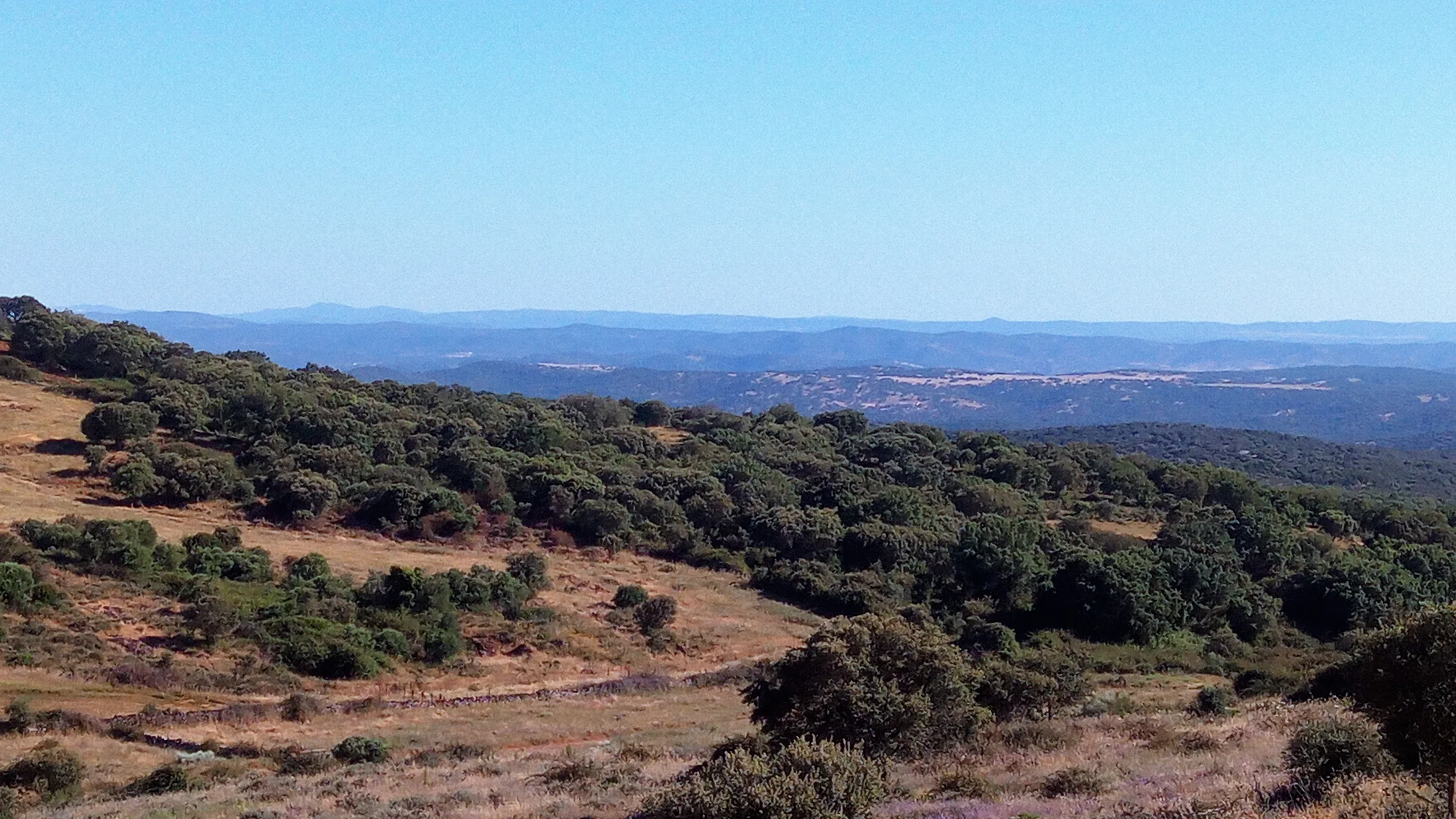
In Extremadura, there are centuries-old dehesas, clean rivers, gentle mountain ranges and protected parks, and plenty of space to explore them without crowds. Silence is part of the landscape.
Hiking, birdwatching, freshwater sports, canyoning and astrotourism are all within a reasonable radius of Cáceres, Mérida or Plasencia. A griffon vulture soars in circles over holm oaks while rockrose crunches underfoot.
The 10 experiences in this selection follow criteria of accessibility, with marked tracks and parking areas, and sustainability, with small groups and Leave No Trace. The natural uniqueness of the habitats, the variety between relaxed and adventure proposals, suitability for families, couples and groups, and respect for parks, SPA and reserves also carry weight.
Each experience includes a description, recommended seasons, levels, indicative prices and specific tips to plan without surprises. With that information, you can choose yours and book well in advance.
What you are going to take away from this article
Extremadura has ten ways to move through the dehesa and natural parks, and here you are going to see which one fits you. The selection organises the active experiences by intensity, budget, season and access, so you can choose without hesitation.
You will find when to go, what equipment to bring and how to combine several activities in the same trip. There are also marked routes with PR and GR codes, swimming areas, viewpoints and observatories where to stop and look.
At the end, you have a map with the locations, filters by activity and a KML download to trace your itineraries. To book, compare options and dates on Picuco and confirm conditions and updated prices with the operator.
Picuco te puede ayudar
Does something here catch your eye?
Tell us.
Write to us on WhatsApp or email: we answer questions, find the best options and help you sort out the booking.
10 active experiences to live nature without crowds
1. Monfragüe National Park: birds in flight and photographic safaris
Monfragüe is home to the world's largest population of cinereous vulture. From viewpoints such as Castillo and Peña Falcón, in the Salto del Gitano, you can see the cinereous vulture and black stork flying.
Verified data
National Park since 2007 and UNESCO Biosphere Reserve since 2003.
The warm wind rises up the quartzite walls and the wings creak like taut sails. To observe birds, bring 8x42 or 10x42 binoculars, a 300-600 mm telephoto lens and discreet clothing. The best months are February-June, due to mating and breeding, and September-October, due to migration.
The meeting point for the activities is Villareal de San Carlos. Some routes require written authorisation which is requested in Villarreal de San Carlos, Torrejón el Rubio or via the National Parks Online Reservation Centre.
Keep your distance, do not use sound calls and remain on the marked paths. It is forbidden to feed the wildlife, cut plants, make fires, litter, navigate, swim, wild camp or park caravans at night. You can go with domestic animals if they are leashed and controlled.
There is a lack of mobile coverage in some areas of the park. The viewpoints have railings and parking, and some are suitable for strollers.
2. Jerte Valley: trails, wild cherry blossoms and canyoning among gorges
Between mid-March and early April, the Jerte Valley is covered in white; in summer, it turns into an aquatic paradise. It is an active tourism destination for those who want to walk, get wet and sleep in a small village.
The Cascada del Caozo Route (SL-CC 32) is a marked route in the valley. The GR-10 crosses simple sections and has a mountain section between Puerto de Tornavacas and Puerto de Honduras; it is a Long Distance Path marked with white and red signs. Puerto de Tornavacas has viewpoints.
In the Jerte Valley, you can go canyoning in Garganta de los Hoyos and in Garganta de los Papúos. The trails range from easy to moderate and the canyons from beginner to intermediate level, always with a guide. Canyoning in the Jerte Valley costs between 45 and 65 € per person.
The dates change depending on the canyon: in Los Papúos, from May to November; in Los Hoyos, from March to November; in Las Nogaleas, only from 1 to 30 August. During the flowering, sign up for sunrise photography routes following the official local calendar. The wild cherry flowers fall like warm snow onto the asphalt and stone walls.
Respect the environment: do not step on private terraces, only park in designated areas and do not fly drones during the flowering.
3. Garganta de los Infiernos: emerald pools and wetsuit descents
In the Garganta de los Infiernos Natural Reserve, the water flows cold and transparent between granitic rock, polishing the pools of Los Pilones until they turn emerald colour.
You can start the route from the village of Jerte or from the Centro de Interpretación de la Naturaleza, located between Jerte and Cabezuela del Valle. The circular route is 16 km long, marked with white and yellow signs and takes about 6 hours. If you want something shorter, the linear alternative totals 5 km (2.5 km out and 2.5 km back) from the Centro de Interpretación to Los Pilones, without great elevation changes and with green and white marks.
You can swim in the authorised pools of Los Pilones, but avoid high jumps and wet ledges. For the wetsuit descent, there is guided canyoning in the sectors enabled according to the water flow, with short rappels, slides and scrambling, at 40 € per person. You need to know how to swim and be at least 13 years old.
Two canyon options: Los Hoyos is a simple descent without a walk-in approach, with 5 rappels, 2 slides and 4 handrails, lasting about 3 hours. Los Papúos takes about 6 hours and includes 5 rappels, 6 slides, 2 jumps, handrails and rock progression. For the canyon, bring a 5 mm wetsuit, helmet, harness and descender; for swimming, water shoes with soles.
Before heading out, check the restrictions due to water flow and the risk of fire at the interpretation centre. Do not use soaps in the river, pick up all your rubbish and respect the stillness of the amphibian fauna.
4. Cornalvo Natural Park: gentle routes and Roman engineering in the heart of the dehesa
A Roman dike continues to hold back the water of the Albarregas in Cornalvo, and around it, the dehesa extends with flat tracks. The park combines a reservoir, holm oak woodland, and comfortable walks for going with the family, watching waterfowl, and noticing the surrounding botany.
The dam was built to supply Augusta Emerita (Mérida). Its containment wall measures 220 m long and 18 m high, with an estimated capacity of 11 hm³.
The reservoir circular route is easy and covers about 7 km, starting and ending at the dam, via tracks and dehesas. On the banks, there are observatories to see great herons, swans, and waders, and the Roman dike and hydraulic elements are signposted. The route is suitable for gravel bikes and for buggies in some sections.
The sun vibrates over the still water and a common kingfisher cuts through the surface like a blue dart.
There are signposted car parks and wide paths. Before setting off, check for possible restrictions due to fires in summer.
The best season is from autumn to spring; in July and August, avoid the middle hours. Close the gates, use the paths to avoid compacting the soil, and do not fly drones during the breeding season.
The park is about 10 km from Mérida, with access via a narrow paved track, without a hard shoulder and with capacity for only two cars.
5. Extremaduran dehesa: on horseback, among holm oaks and flavours with history
The Extremaduran dehesa is a mosaic of holm oaks and cork oaks that livestock farmers manage extensively. There, the Iberian pig, the Merina sheep, and Retinto cattle coexist with other wild species.
Riding through cattle tracks and paths or walking with a guide who interprets tracks, fungi, and traditional uses brings you closer to living rural culture. It smells of sweet acorn and freshly extracted cork while distant cowbells ring.
Some livestock farms open their doors with tastings of Iberian products and cheeses, paired with local wines.
The difficulty is low. For horse riding, the guide decides if children from 8-10 years old can do it, and there are ponies on some farms.
Prices are around 25-40 € per hour on horseback and 40–80 € per person for visits with a tasting. Groups are small: do not leave the livestock tracks and respect closures and the livestock.
6. Orellana Reservoir and Los Canchales: kayaking on tranquil waters
The Orellana reservoir has Spain's first inland beach with a Blue Flag, the "Costa Dulce". Its Orellana la Vieja Marina Port is the only inland port in the country with an uninterrupted Blue Flag since 2018.
By kayak, you travel safe routes between islands, with entries from the beach and from nautical clubs. The difficulty is low if there is no wind, although it is advisable to monitor weather changes.
The Los Canchales reservoir SPA, in the province of Badajoz, can be observed from the water or from shore observatories. Next to the dam is the Los Canchales Interpretation Centre.
The swimming season runs from 15 June to 15 September, with lifeguards. There are ramps and beaches with nearby parking and demarcated areas in summer. At the Orellana la Vieja Beach (Badajoz), payment is made in cash at the booth.
7. Los Barruecos (Malpartida): giant rocks, lagoons and light for photography
In Los Barruecos, Malpartida, white storks nest on granite boulders that look sculpted by the wind. The place has been a Natural Monument since 1996 and brings together giant rocks, ponds and a light that changes with the hours.
At sunrise and sunset, the golden light turns the rocks into living sculptures. The Game of Thrones series filmed scenes in this landscape.
If you are going to photograph, book half a day: sunrise at the main lagoon, mid-morning among the boulders and sunset at the western viewpoints. Bring a lightweight tripod, a 24-70 mm and a 70-200 mm lens, a polariser and a graduated ND filter for sunrises. Los Barruecos can be visited all year round.
Respect the fauna and the terrain: do not use bait or calls, avoid stepping on mosses and lichens and follow the paths so as not to cause erosion. Park in the official car parks and start at the Peñas del Tesoro one, with well-marked paths. Do not climb on rocks with nests.
8. Villuercas-Ibores-Jara Geopark: quartzite viewpoints and authorised 4x4 routes
The Villuercas-Ibores-Jara Geopark has been a UNESCO Global Geopark since 2015 and holds folded mountain ranges, gorges and lapiaces, with Pico Villuercas (1,601 m) as a landmark. The horizon undulates in green and grey bands while the wind brings the scent of rockrose and french lavender.
You can combine interpretive trekking with 4x4 tours through permitted tracks and with a guide. The classic route leaves from the Ermita del Humilladero, at the exit of Guadalupe, and can also be accessed from the Cañamero to Navezuelas road.
The trekking to Pico Villuercas is a circular ascent route from Navezuelas of 25 km and 1,000 m of positive elevation gain. It is demanding, taking 7-8 h, and the paths range from moderate to demanding due to elevation and sun exposure.
The interpretive 4x4 tour travels through scattered geosites in a combined day.
Some tracks require authorisation or a guide, so find out before you go. Guided routes cost 15-30 € p.p. and the interpretive 4x4 35-60 € p.p.; check on Picuco.
Do not collect fossils, respect the geosites and park only in already compacted areas.
9. Sierra de Gata: tranquil summits and villages of stone and water
San Martín de Trevejo, Gata or Trevejo invite you to stay overnight and try the mountain cuisine. In their streets, it smells of firewood and freshly baked bread while the water sounds in the streams.
The summit of Jálama has 1,492 m of altitude. The path includes the ancient Roman Calzada de Santa Clara and allows you to see the La Cervigona waterfall. You can also undertake traverses via the GR-10 and cobbled roads among sweet chestnuts and oaks.
Signage is good on the main paths, but it is advisable to carry a map or GPS on the variations.
Arrive by car; there are regional buses to the regional hubs and rural taxis for connections. The "El Jevero" recreational area can also be accessed by bus (CCV-32 3). The best seasons are spring and autumn: summers are hot, so it is advisable to head out early.
In San Martín de Trevejo, Eljas or Valverde del Fresno, A Fala is spoken, a mixture of Portuguese, Galician and Asturian. Respect the local language and the rhythms of the village, and buy in local shops.
10. Dark skies: stars over the dehesa and nights with a telescope
In Extremadura, the night is fully visible: the low light pollution turns the region into an astrotourism destination, and Monfragüe and its surroundings hold Starlight certifications. The certified area includes the municipalities of Torrejón el Rubio, Serradilla, Casa de Millán, Malpartida de Plasencia, Mirabel, Cañaveral and Pedroso de Acím.
Dehesas and open plains provide clear horizons to see the Milky Way, meteor showers and constellations. The night air smells of cold thyme while the Milky Way traces a milky river over holm oaks.
The guided sessions use a professional 16-inch telescope and allow you to observe lunar craters and seas in detail; the night immersion lasts one and a half hours. There are family workshops for constellation recognition and mythology, and you can also start basic night photography with a tripod, bright wide-angle lens and exposure times of 10-20 s.
Choose the season according to what you want to see: summer for the Milky Way (without the moon), August for the Perseids and winter for a transparent sky. Bring a headtorch with red light, a coat even in August and a mat or chair.
The clearings in the dehesa are accessible by track, so it is advisable to confirm the condition after rainfall. The price is €49.99 per person in a group (open tours, minimum 6 people) and places for the observations are limited. Avoid white lights, do not enter farms without permission and keep silent so as not to disturb the nocturnal fauna.
Location map
The map brings together the 10 experiences from the article in a single view. It has layers by activity (hiking, water, fauna and night), season and level, so you can keep only what suits you for your dates.
Activate the filters and open each file: you will see GPS coordinates, entry and exit points, viewpoints and available operators. Each file includes booking links and local emergency telephone numbers.
Download the KML/GPX file and take it in your favourite app to plan offline. With the same map, you can trace combined 2-4 day itineraries and save favourite points to decide on the go.
How to choose according to your profile, budget and time
Before booking anything, answer three questions: who are you going with, how much time do you have and what intensity are you looking for. With those answers, Extremadura organises itself.
If you travel as a family, prioritise flat routes with shade and signalled access. Couples appreciate mixing gentle nature with moments at sunset. Adventurers can add elevation gain, water and nocturnal activities.
Time dictates the plan. The Jerte with canyoning fits adventurers. Villuercas with 4x4 is the plan for complete travellers.
Spring brings water and blooms; summer, swimming and kayak; autumn, migrations and clear skies; winter, crisp nights.
There are combinations that work well: Monfragüe + dehesa (birds and rural culture), Jerte + Garganta de los Infiernos (trail and swimming or canyoning) and Villuercas + Guadalupe (geology and heritage). Always confirm the weather and book in advance on weekends and bank holidays; at Picuco, you will find proposals filtered by level and season.
Practical tips: equipment, safety and best times
In Extremadura, the weather rules: adapt your equipment and schedule to the temperature and your level. Dress in layers ("onion style"), stay hydrated and let someone know your plan if you go out on your own.
For hiking, use footwear with a gripped sole, poles on routes with elevation changes, and 1-1.5 l of water every 3 h. Carry a map or GPX track, a cap and SPF 50 sunscreen, and avoid the middle hours of the day in summer. The best times are from October to May, with spring and autumn being ideal seasons.
For canyoning, you need a 5 mm wetsuit, helmet, harness, descender and neoprene boots; if it is your first time, go with a qualified guide. Evaluate the water flow after rainfall, do not jump where you cannot see the bottom and check the anchor. The season runs from May to September, varying according to snowmelt and storms.
For kayak and paddle, bring an approved life jacket, a leash for SUP, a dry bag and a windbreaker. Go out when the wind is below 15 km/h, check the storm forecast and maintain a return margin. The season runs from spring to summer; autumn is a good time for birdlife.
If you are going astrotourism, take a red headtorch, a coat, a low chair, a thermos and a sky application. Check the lunar phase and avoid high humidity and mid-level clouds. It can be practised all year round: summer for the Milky Way and winter for greater clarity.
On horse riding routes, wear long trousers and closed footwear, and use the helmet provided by the centre. Follow the guide's instructions and maintain distance between mounts. The season runs from October to May; in summer, early departures.
Consider outdoor activity insurance; some operators include it. In an emergency, call 112, share your GPS location and carry a basic first aid kit. Respect environmental rules: no fire, no loud music and leave no trace, and respect closures and wildlife.
Frequently asked questions
Do I need permits for these activities?
In parks and reserves, restrictions may apply due to fire risk or conservation. For canyoning and 4x4, some sections require a guide or authorisation.
Confirm the conditions at interpretation centres or with the operator before going.
Is there public transport to the start of the routes?
Yes, but with nuances: there is regional bus service to hubs like Plasencia, Cáceres or main villages, although with limited frequency. It is advisable to check schedules before fixing the route and allow margin for the return journey.
For the final connections of linear trails, consider a rural taxi or combining cars. This way you avoid being left without a return trip after finishing the section.
Can I go with small children?
Yes. With small children, it works better to choose flat and short routes, such as Cornalvo or Los Barruecos, and gentle activities in calm water.
In kayak, put a life jacket on them and avoid the hottest hours. For horse riding or canyoning, ask about minimum ages before booking.
How much do guided activities cost?
Prices for guided activities in Extremadura range from €10 per hour for kayak to €65 for canyoning. These serve to give you an idea before booking.
A wildlife safari costs between €35 and €60, and interpretive hiking between €15 and €30. Astrotourism ranges between €20 and €40, and kayak between €10 and €20/h.
Rates are indicative. Confirm the price and group size with the operator before booking, especially if you are a group or want a tailor-made outing.
What regulations apply in Monfragüe and SPA areas?
In Monfragüe and the SPA areas, you must stay on the paths and respect the distances to the nests. Drones cannot be used without permission.
During the breeding season, specific sections and viewpoints are closed. Follow the current signage: it is what indicates where you can pass at any given time.
Where can I stay near the activities?
Mérida is a practical base for activities in Cornalvo and Los Canchales, which are located within its municipality. From there, you have good road connections to both spaces and you return to sleep in the city.
If your plan is the Garganta de los Infiernos, look for accommodation in the westernmost part of the Sierra de Gredos, in the province of Cáceres. Book in advance during high season, because the supply is limited.
Staying in rural accommodation helps the local economy. Choose one near the next day's activity and avoid long journeys at dawn.
Is swimming in pools and reservoirs safe?
Yes, as long as you choose authorised areas with calm currents. Outside of them, the risk increases quickly and is not always visible from the shore.
Avoid jumping and days of high water levels. In reservoirs, pay attention to the wind and the marked areas, and never swim alone.
Can I go with my dog?
In general, you can go with your dog, always on a lead and outside of sensitive areas. In national parks and reserves there may be restrictions, so it is advisable to find out before setting off.
Bring water for the dog and avoid the hours of extreme heat.
Book your experience — discover active tourism activities in Spain with providers verified by Picuco.
Conclusion
Extremadura has holm oaks, gorges and clear skies for you to move at your own pace and without crowds. The night smells of thyme and the Milky Way looks like a path that you can also travel.
The 10 proposals in the guide combine landscape, fauna, water and rural culture, with seasons, levels and prices to help you decide with judgement. Before setting off, plan with the map and confirm the local conditions.
Choose responsible operators: their work looks after the territory and improves your experience. Save this guide, share it with your group and subscribe to the newsletter to receive new routes and equipment checklists by season.