Introduction
What you are looking for between September and November
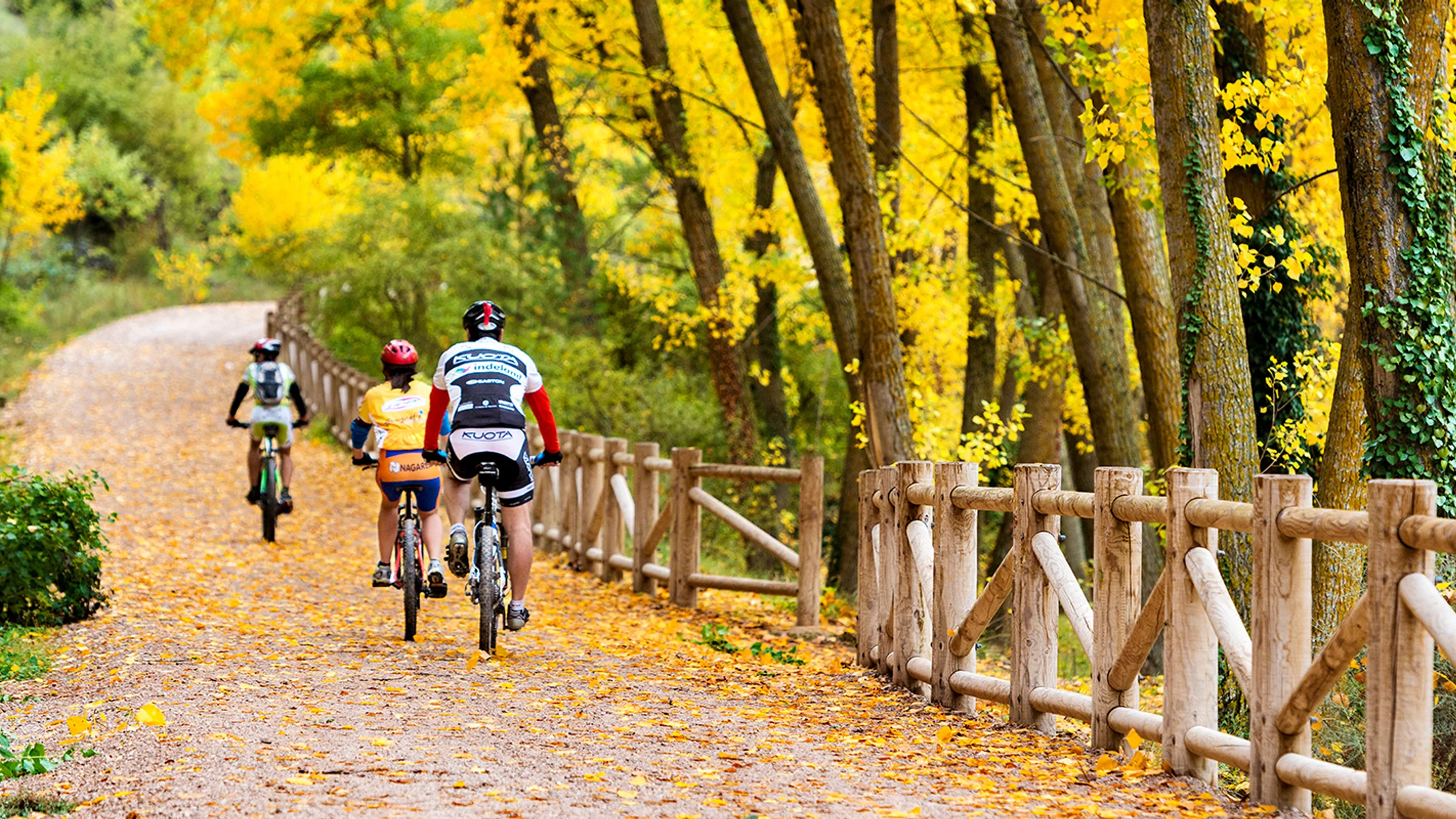
Between September and November, the paths are almost empty and the mountains change colour. Active tourism in autumn offers mild temperatures, intense colours and fewer people on the trails.
During these months, you can chain outdoor activities with lively villages and ongoing harvests. This guide gives you ideas to book in advance, prepare your equipment and choose according to your level.
If you want outdoor plans without any hassle, you will find options with good logistics. If you are travelling independently, you have routes, the best months and safety tips. And if you are travelling as a family, you will see levels, ages and typical durations.
How we select the 10 plans
Each plan on this list has a specific window within autumn: September, October or November. Choosing the month changes the weather, the condition of the paths and the people you encounter.
For each activity and destination, we look at the difficulty, accessibility by transport and tracks, and the infrastructure that remains open outside of summer. The autumnal landscape, the possibility of combining several activities in a few days and safety when the weather changes also carry weight.
Prices appear in ranges (low, medium or high) and we check if there are operators with good environmental practices. We add alternatives for rainy days, the necessary permits and ways to reduce your footprint.
With all that, the decision is yours: you have the data to choose the plan that fits your time, your level and your budget.
Picuco te puede ayudar
Does something here catch your eye?
Tell us.
Write to us on WhatsApp or email: we answer questions, find the best options and help you sort out the booking.
Why autumn feels so good outdoors
In autumn, the sun falls more obliquely and temperatures drop, and your body performs better while walking. September, October and November are a good season for active tourism in Spain: there are fewer people, more available parking spaces and tranquil trails.
Deciduous forests turn ochre and red, and the murmur of a swollen river after the first rain accompanies the route. The fauna also moves: migrations in Doñana, the rutting season in Gredos and coastal cetaceans closer to the shore on calm days.
In Gredos, the rutting season occurs in September and October, lasts from 3 to 5 weeks and the best time to hear it is at 06:00. The males emit guttural sounds, mark territory and fight to the death to compete for females. The Sierra Norte de Gredos is a good place to collect mushrooms in autumn, always in regulated areas and with the corresponding permits; the collection of antlers may be regulated in protected areas.
Each sport has its advantage. For trail running and cycling, less sun exposure allows for longer stretches; for surfing and kayaking, autumnal seas offer consistent swell and waters that are still temperate in September.
Plan with thermal layers, a windbreaker and a light waterproof, and with shorter routes if the day is short. Check the 48-hour forecast and the local mountain report, and adjust your schedule to return with light. Walking among leaves and chaining rhythmic movements improves mood, sleep and the cardiovascular system: carry a light backpack, a downloaded GR- map and a basic first aid kit.
10 essential active tourism plans from September to November
1. Irati Forest (Navarra): hiking and autumn colours
The Irati Forest covers 17,179 ha and is the second largest beech-fir forest in Europe, only behind Germany's Black Forest. In October, the forest turns golden and becomes one of the best autumn hiking destinations in Spain.
The marked routes range from easy to medium difficulty, so there are short circuits for going with children.
October is the month of foliage. If you want fewer people, choose September or early November. The price is low-medium: some car parks require payment and rural accommodation starts at a medium price, so it is worth confirming during the season.
Access is regulated by car park capacity and is cut off when capacity is reached. Access points close from 18:00 to avoid traffic crossings. You can enter through the Salazar (Ochagavía) and Aezkoa (Aribe) valleys.
In low season, access is free. In the valleys, there is a €3 discount on the car fee if you spend more than €15 in local establishments.
Wear waterproof footwear, use offline maps and do not stray from the paths. Respect the wildlife and the forest property. To take care of the area, avoid peak hours, carpool and consume in local rural houses and cider houses.
2. Arán Valley (Pyrenees): MTB and high-altitude trekking routes
The Arán Valley has stable and traversable high mountains in autumn, above 1,500 m and without the summer heat. It is an MTB and high-altitude trekking destination for those who want to keep moving when the season winds down.
Among the routes in the area is the trek to Artiga de Lin and Uelhs deth Joeu. The difficulty is medium: active families in the valleys with routes of 10–15 km and intermediate-level cyclists on forest tracks. Estimate 1 h 45 min for each outing.
In November, the first snowfalls arrive at high altitudes. There are early frosts and rapid weather changes, so bring thermal clothing, gloves and a headlamp for the short afternoons.
Use public fountains, respect livestock farming and close the gates. Prioritise family accommodation.
You arrive by car via the N-230 through the Vielha tunnel (5,173 m long; south entrance at 1,626 m and north exit at 1,390 m). From Pallars Sobirà, the C-28 (14 km) crosses the Pòrt dera Bonaigua (2,072 m). From France, you enter via Pònt de Rei (N-618) or via Pòrt deth Portilhon (D618A/N-141). There are no direct trains or planes: you arrive by bus or taxi from Lleida (165 km), Montrejeau (60 km) or Luchon (40 km), and ALSA has direct lines from Barcelona and services from Lleida. There are marked car parks in the valleys.
3. Basque Coast (Basque Country): surfing and coastal escapes
Surfing, coastal paths and gastronomy are shared between lighthouses and flysch cliffs.
Surf lessons last 2 h and are held with a school, so they are suitable for beginners. Hiking through the coastal sections is of easy-medium difficulty. In September, the waters are still mild; November brings more wave power.
The Zumaia–Deba landscape has been a UNESCO Global Geopark since 2015, and the K/Pg (Cretaceous) geological boundary can be seen in its cliffs. Before walking on the flysch platform, check the tides.
You can arrive by commuter train to many beaches, which have regulated parking. In low season, it is advisable to confirm schedules and availability. Respect the currents and the priorities at the peak, and be careful of slips on wet rock.
For a sustainable option, avoid fragile access points, use public transport and support taverns with local produce. The perfect plan: surfing in the morning, a cliff walk in the afternoon and pintxos at dusk.
4. Picos de Europa (Cantabria/Asturias): mountain routes and viewpoints
In September and early October, the Picos de Europa have clear skies, mild temperatures and less traffic. The massif distributes mountain routes and viewpoints between Cantabria and Asturias, and it is a great option for autumn active tourism.
Fog can enter through the mountain passes like a white sea in just a few minutes. Bring mountain gear and act with prudence.
Its difficulty is medium due to length and exposure; it is completed in 6–8 h round trip and has no technical passes: just avoid getting close to the edge.
The Covadonga Lakes have easy loops of 6–10 km that take 2–4 h depending on the itinerary. Enol Lake, in Cangas de Onís, is at 1134 metres altitude, measures 750 m in length and 400 m at maximum width, with a maximum depth of 25 m; at sunrise, it offers postcard-perfect light.
Go in September or October: in November it can snow at altitude and close certain sections. Calculate approximately 20–30 € for the cable car and expect regulated parking. During high demand, there are traffic restrictions to the Lakes, so in autumn it is advisable to check the shuttle buses.
To walk, pack a windbreaker, a thermal layer and a headlamp, and prepare for fog and an early sunset. Bring enough water and food. Do not leave the path, pick up your waste and choose rural accommodation in the area.
5. Doñana (Andalucía): birdwatching and kayaking
In autumn, Doñana fills with flocks of waders, Eurasian spoonbills and greater flamingos that spread out between marshes and lagoons. Over the reedbeds, the hum of thousands of wings sounds like fine rain.
The plan combines birdwatching with a tranquil kayak trip through authorised channels and lagoons. There are hides for observing, guided 4x4 itineraries through permitted areas and kayak outings through nearby estuaries and outer marshes. The kayak excursions depart from Sanlúcar de Barrameda.
October and November are the best time: the migratory passage coincides with the thin layers of water left by the first rains. The observation is suitable for families and the kayaking is for beginners, in sheltered waters. The outings last from 2 to 4 h.
The 4x4 tours cost 35–60 € p.p. and the kayak, 25–45 €. Children under 10 years old pay 20 € if they go with their family unit, and there is a 20% discount for people with disabilities on the classic visit. That visit is paid only in cash or by transfer and travels through the Pinares de Coto del Rey, the Matasgordas cork oak forests, the Hinojos Marsh and the José A. Valverde Visitor Centre. It is advisable to confirm permits and current rates.
Core areas are restricted: access is to perimeter areas and visitor centres while respecting the signage. Bring wellies or amphibious footwear, repellent and a windbreaker, and do not venture into flooded marshland without a guide. Keep your distance from the wildlife, use appropriate optics and keep quiet: do not bait birds or invade roosts. For photography, a 300–500 mm telephoto lens, a lightweight tripod and a rain cover.
6. Sierra de Gredos (Castilla y León): trail running and technical paths
Granite, glacial valleys and elevation gain: in autumn, the Sierra de Gredos is run and walked with fresh air and without heat. At sunrise, the smell of dry juniper mixes with clean air.
The trail from La Plataforma to Laguna Grande covers 14–16 km. The difficulty is medium-advanced in high mountains, although the valley bottoms offer easy options for families. Experienced mountaineers can plan a 2-day traverse to Cinco Lagunas.
The price is low-medium: there are mountain huts with half board and regulated car parks. In November, ice appears on the shaded slopes and snow patches at high altitudes.
The weather changes quickly. Bring a physical map and GPS, thermal layers, and avoid ridges with strong winds. If you are running, folding poles help on technical descents and it is advisable to save energy for the return. Stick to rock and path, do not cut corners, and buy cheese, honey and meat from local producers.
You arrive from Hoyos del Espino via the AV-931 road (12 km) to the Plataforma de Gredos, with a car park of 150 spaces. Access is regulated by hours and you pay at the booth at km 7 from Hoyos. As base towns, Hoyos del Espino or Navacepeda.
7. Montserrat (Catalonia): climbing and via ferrata
Montserrat is a conglomerate massif with cliffs, needles and paths 65 km from Barcelona, 1 hour by car. In autumn, its north-facing cliffs provide shade, which is why it is a classic for active tourism during the season.
Climb in sunny or shaded sectors, traverse equipped routes and gullies, or walk along paths such as the Camí de les Ermites. Climbing ranges from IV to 7a and beyond, hiking is easy-medium, and the equipped routes in the area and surroundings are perfect for beginners.
Arrive by train and rack railway to Monistrol/Monestir, or by car with regulated parking; the trails are well marked. Always wear a helmet on conglomerate, double-check anchors and ropes, and watch out for wet rock after rain.
The park prohibits making fires, littering and capturing or collecting animals, rocks and plants. Respect nesting sites and temporary prohibitions, do not overuse magnesium and eat in bars and accommodation in Bages.
End the day with the orange sunset from Sant Jeroni, with the profile of the needles in silhouette.
8. Sierra de Guara (Aragon): canyoning and water adventure
The Sierra de Guara is a European reference for canyoning: clear water canyons and carved limestone, with pools between honey-coloured walls.
The best-known descents are Formiga, Peonera, Río Vero, Oscuros de Balced, Petit Mascún, Mascún Superior and Gorgas Negras. A canyon descent lasts from 5 h to 8 h at easy to medium level and from 7 h to 11 h at a higher level. For adapted family routes, the minimum age is 5 years, and level 2 is available from 7 or 8 years old.
If you do not master the manoeuvres, go with a professional guide. Wear a 5 mm wetsuit, booties, helmet and harness, and do not jump without checking the depth. Do not step on the vegetation in the riverbed, do not use soaps and take all your waste with you.
Access is via tracks and signposted car parks. Check flow rates and local reports before heading out: access via track to the Parking de los Oscuros de Balced is closed during red alerts. If it is cool, combine a short canyon with hiking through the peripheral mountain ranges in the sun.
To book, leave a 25% deposit by bank transfer and pay the rest in cash on the day of arrival; cards are not accepted.
9. Rías Baixas (Galicia): sea kayaking and coastal routes
In September the sea in the Rías Baixas is calmer and the beaches are still mild. You paddle between mussel rafts, coves and lighthouses, and then swap the kayak for a coastal path.
There are three usual routes: the circumnavigation of Isla de Arousa (12–18 km, moderate difficulty), Combarro – La Toja (8–14 km, easy-moderate difficulty) and the Islas Cíes (6–12 km, moderate difficulty). You can also do the circular route to Isla de Cortegada.
The plan works for getting started in sheltered waters and for families with a guide. Short crossings last 2–4 h; if you add a picnic and hiking, you get the full day. A guided route costs €25–50 p.p., so confirm the rate depending on the area.
The launch points are at ports and beaches with a slipway. For the Kayak Areoso route you need prior authorisation from the Xunta de Galicia.
September is the best time; in October the plan depends on the storms, so choose days with low swell. Always wear a life jacket, carry a tow line and communication, check tides and winds (N and NE are the most favourable) and avoid navigation channels and ferry crossings. Don't go near the bird colonies, respect mussel rafts and fishing gear and try local produce with the estuary seal.
Rowing in the morning and finishing with a seafood platter in a harbour tavern is the tastiest way to close the day.
10. La Rioja: rural cycling and grape harvest experiences
In autumn, the vineyards of La Rioja are tinged with ochres and garnets and bicycles return to the paths. The area combines relaxed gravel, Green Ways and wine culture, with easy-to-follow routes and villages where you can stop to eat.
The Vía Verde del Oja runs 26 km between Ezcaray and Casalarreina. It is permitted for pedestrians, people with reduced mobility, bicycles (including off-road), riders and long-distance runners. In Santo Domingo de la Calzada the route crosses the Camino de Santiago.
The route passes through the monumental complexes of Casalarreina and Santo Domingo, the church of Bañares, the town centre of Ezcaray, the riverside forest of the Oja and the Sierra de la Demanda. The difficulty is easy-medium, so it works well for families and recreational cyclists. You can add gravel routes between wineries and villages.
September and October are the best months for the harvest and the colours; November is still quiet and without heat. Many wineries offer walks through the vineyard at sunset with photography among the vines. Set aside a full day if you want to combine the route with visits and tastings.
Wear a helmet, lights for tunnels and a high-vis vest on local roads, and don't drink and pedal. To travel sustainably, buy direct from producers, choose wineries with environmental certifications and reduce car journeys. There are car parks next to the Vía Verde.
Location map
The interactive map brings together the 10 destinations with pins, approximate coordinates and links to their pages. You open it on your mobile and see at a glance where each autumn plan is.
Filter by activity (hiking, MTB, kayak, surf, climbing) and by level, so you can keep only what suits you. A line suggests routes between points with estimated travel times, useful for stringing destinations together in the same long weekend.
If you prefer to carry it with you without coverage, there is a downloadable version and a printable one with a QR code to each page.
How to choose your perfect autumn plan according to level, weather and budget
Before booking anything, look at how much you actually walk: if you can do 10 km without fatigue or if you move comfortably with elevation changes. That answer rules out half the plans and saves you from a bad day.
The weather rules in autumn. Check the 48 and 24-hour forecast, the local report and the condition of the paths, and cut down route hours if there is rain or fog.
The budget also dictates the choice. With little money, you have self-guided hiking and Vías Verdes; at a medium level, bike rental and surfing are included; and if you want technical guides or treks with mountain huts, prepare to spend more.
The month changes the activity. September is for MTB and kayaking in Rías Baixas, October for the leaves in the forests and the grape harvest in La Rioja, and November for birdwatching in Doñana and short mountain routes.
Finalise the logistics before setting off: access and permits, transport schedules and a Plan B in case the weather changes.
Irati, the practical case
In low season, access is free, and in the valleys there is a €3 discount on the car fee if you spend more than €15 in local establishments. Overnight stays are prohibited within the forest.
Recommended equipment and safety in autumn activities
In autumn, the weather changes quickly and layering saves your morning. Wear a thermal base layer, an insulating layer and a windbreaker or waterproof jacket; in the mountains, add a headlamp and a thermal blanket.
Each activity requires its own material. For hiking, waterproof boots, poles, physical map and GPS, water and a first aid kit. For MTB, helmet, long gloves, lights, puncture repair kit, raincoat and layers.
In the water, neoprene makes the difference: 4/3 mm in September and October, or 5/4 with booties in November, with a leash and cold wax for surfing; for canyoning, a 5 mm suit. In a kayak, life jacket, spray deck, tow line, spare paddle and a waterproof bag. For canyoning, 5 mm neoprene, helmet, harness and descender, booties and gloves. For climbing, helmet, harness, climbing shoes, slings, cordage and warm clothing at the belay station.
Safety starts before you leave. Plan the activity and leave word with your schedule and route, check the weather report and the planned alternatives, and carry accident insurance that covers the activity. Respect permits and local regulations, and hire training and a professional guide for technical activities.
During the route, conserve heat with dry clothes, hydrate and eat every 60–90 minutes.
Travel responsibly and reduce your impact
In autumn, the trails get crowded and the wildlife is moving: a couple of gestures make a difference. Apply the "leave no trace" principle: avoid shortcuts, do not uproot flora and take your waste with you.
Keep your distance from wildlife, especially during migration and the rutting season. The click of your camera is worth less than their wellbeing. Also avoid activities that damage fragile ecosystems during this season, such as stepping on peat bogs or shifting dunes.
Choose operators and accommodation with recognisable environmental seals, such as sustainable tourism certifications. Move by public transport or carpooling when you can and concentrate activities in one area to reduce travel. And buy at local markets and from local producers: your money stays close to the place you are visiting.
Frequently asked questions
Is it hot in September and cold in November equally throughout Spain?
No: autumn weather is not the same throughout Spain. In the mountains, it gets chilly from September, while on the northern coast, the water is still temperate until October.
Adjust layers and schedules according to the region you are visiting. In a single weekend, you can go from the heat of the coast to needing a jacket at altitude.
Is the Ruta del Cares safe in autumn?
Yes, it is safe if you have experience in long routes and act with prudence. In autumn, the days get shorter, so calculate your departure time carefully.
Avoid doing it in heavy rain: the rock gets wet and the path becomes complicated. Bring a headtorch and return while there is still light.
Do I need to book in advance in autumn?
Yes, it is advisable to book 1–3 weeks in advance for surfing, technical guides and weekend accommodation. Autumn brings good weather and fewer people, but the difference is noticeable on weekends.
In Picos and Irati, regulated car parks can fill up. If your plan depends on leaving the car there, reserve a space or get an early start.
Are permits needed for Doñana and Cíes?
Yes, in Doñana you must book an authorised guided tour and in the Cíes Islands, permits and quotas are required even outside of summer. In Doñana, you can only enter restricted areas with authorised operators.
In Cíes, permits are needed and there are visitor quotas even outside of summer, with a maximum daily limit of visitors. During high season (Holy Week and from 15 May to 15 September), you must first obtain authorisation from the Xunta de Galicia and then buy your ticket. In low season, the visit is carried out through guided groups.
Book with plenty of time, especially during those high season dates, and confirm the quota before finalising your trip.
When is the grape harvest in La Rioja?
The grape harvest in La Rioja extends between mid-September and October, and varies depending on the area and the weather. If you want to take part in a grape harvest experience, book as soon as the dates are confirmed: they sell out.
How do I move between destinations without a car?
Without a car, prioritise destinations well connected by train or bus: the Basque coast, La Rioja–Logroño and the Pyrenees with shuttles. This way, you can link several autumn plans without depending on your own vehicle.
For local trips at your destination, rent a bicycle. It gives you the freedom to move between trails, viewpoints and villages at your own pace.
What insurance is best for technical activities?
Look for insurance that covers rescue and the specific activity you are going to do, such as climbing or canyoning. Before taking it out, check the exclusions for weather and altitude.
Book your experience — discover active tourism activities in Spain with providers verified by Picuco.
Conclusion
From September to November, the routes, the waves and the rivers are at their best for serene and vibrant active tourism. Choose your plan, prepare your gear and go out to enjoy it.
Plan ahead, wear layers and choose responsible options. Check the interactive map to trace your itinerary and download the equipment checklist.
Before setting off, check the forecast and permits, travel light and take care of every territory. Tell us in the comments which plan you chose and what advice you would give for the next getaway.