Rafting for beginners: what it is and why it's addictive
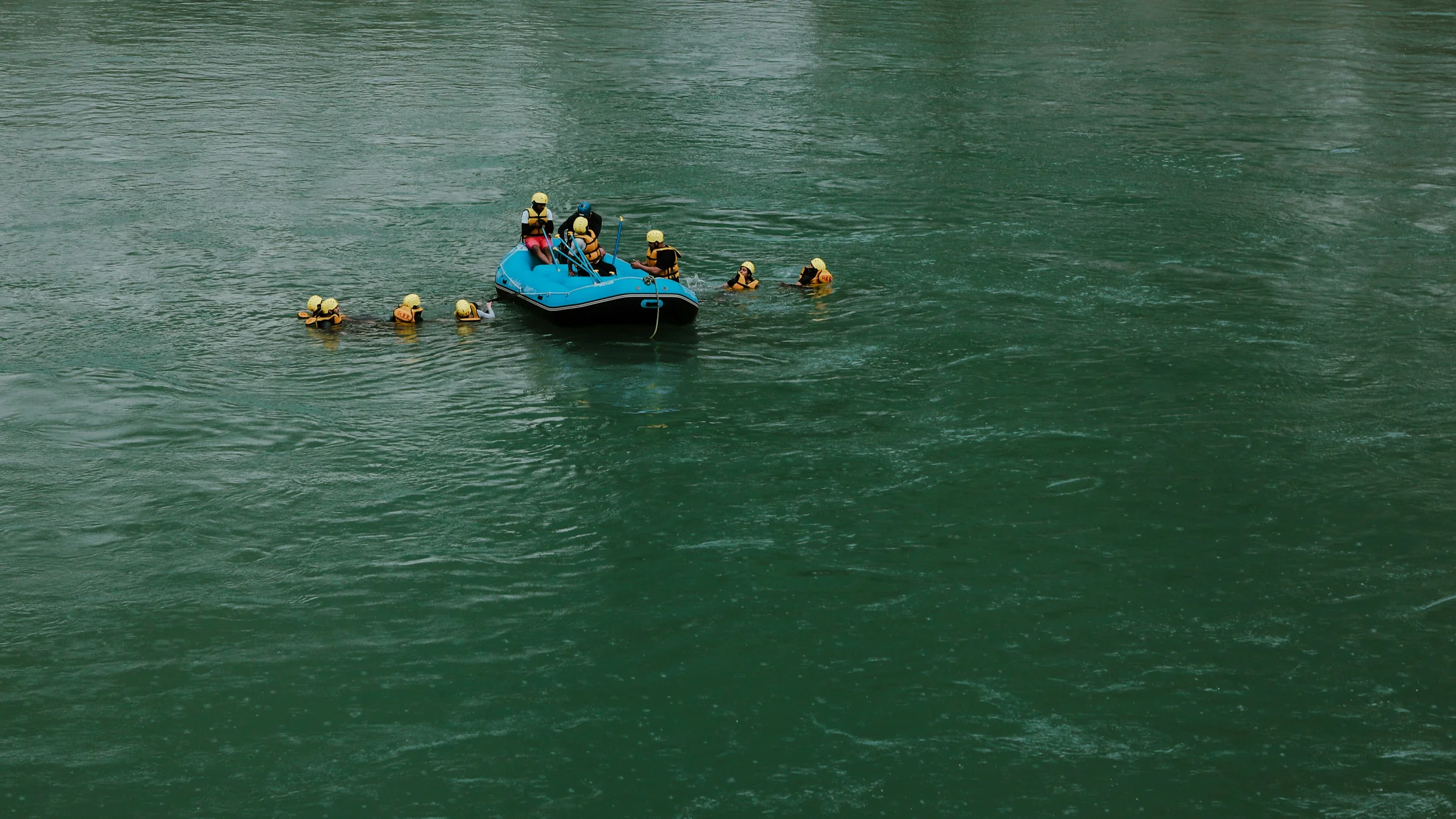
Beginner rafting is going down a river in a guided inflatable raft, paddling as a group and following the guide's instructions. Imagine a raft moving through white waves while the air smells of damp forest.
It combines nature and coordination, and serves as your first contact with white water if you choose a serious company and a certified guide. Your role is to listen, paddle as a team, and maintain a stable posture; the guide reads the river, sets the pace, and decides on the safe lines.
Before getting into the water, there is a briefing where you practise paddling strokes, positions, and paddle signals. The usual requirements are basic swimming skills, not being pregnant, and not having serious heart problems; the minimum age varies depending on the river, from 4 years old in Huesca to 6 in Cantabria.
Beginner descents cost between 30 and 55 € per person. There are outings for beginners in the Pyrenees and southern mountain ranges, and the season usually runs from spring to autumn depending on the flow. Specialist companies operate stretches with controlled safety and approved equipment.
In spring, there is more flow due to snowmelt and the descents are more technical. In the Ara river, you only descend when the flow allows it, in May and June due to the snowmelt. If you are looking for this type of adventure, book in advance for those dates.
Picuco te puede ayudar
Does something here catch your eye?
Tell us.
Write to us on WhatsApp or email: we answer questions, find the best options and help you sort out the booking.
Before booking: the essentials you need to know
The river is measured by classes, and that scale decides which stretch you get as a beginner. Class I is gentle current; Class II adds small waves and simple manoeuvres; Class III brings rapids with constant splashes and requires coordination. Class IV–V adds complexity, power, and risk, and is for experienced people; Class VI is considered extreme and not commercially navigable.
For your first descent, choose a Class I–II or II–III stretch and always go with a professional guide. In the raft, the guide, sometimes called the captain, gives the orders; the paddlers row in synchrony and the crew sits on the edges to gain stability and balance.
The rules on board are few and clear: helmet and life jacket always fastened, feet inside, active body, eyes forward, and attention to "stop water" when the guide says so. The murmur of the water draws closer as the guide draws the line with the paddle.
Before booking, ask about the usual requirements: minimum age, weight within the life jacket limits, and absence of recent injuries, uncompensated heart problems, or pregnancy. Also ask for information regarding civil liability and accident insurance, and about medical coverage on the route.
Check that the helmets comply with the EN 1385 standard and that the life jackets are ISO 12402-5 certified or equivalent. Preparation starts the day before: sleep well, hydrate, avoid alcohol and very heavy meals, and check the weather report and the flow published by the hydrographic basin if available.
Bring dry clothes for afterwards, identification, and secure payment methods. Arrive at the meeting point on time to get dressed calmly, try on sizes, and attend the briefing without rushing.
The 10 key questions before your first descent
Is rafting safe?: risks and safety measures
Rafting is safe if you choose the right river class and follow the company's protocols. Real risks do exist: capsizing, collisions with rocks, falling into the water and minor bumps. These are reduced with a helmet, life jacket, certified guide, a raft in good condition and a briefing with dry practices.
Good companies use checklists before every trip and set a tight guide/group ratio. A common example is 1 guide per raft and 1 safety guide if the stretch requires it.
You can also reduce the risk: obey orders, maintain an active posture and do not let go of the paddle unless instructed. For your first time, choose Class I–II.
Before setting off, ask to see the first aid kit and learn the evacuation plan. Ask about the current insurance and the guide's training (IRF/ACA).
There are warning signs that are worth detecting: lack of a briefing, old equipment or equipment without your size, guides who minimise risks or who do not ask about your health. If you do not feel comfortable during the briefing, it is valid to choose not to get into the raft.
Do I need to know how to swim to go rafting?: swimming and alternatives
On Class I–II stretches, many companies accept people who do not know how to swim. The condition is to wear the life jacket correctly adjusted and to understand the safety position.
Knowing how to swim adds confidence, but it is not an absolute requirement on easy stretches with a professional guide. What matters is your actual comfort in the water. The life jacket keeps you afloat: you just have to know how to adopt the basic posture and follow the guide's instructions.
The defensive posture is face up, with your feet forward and hips high, to float and protect yourself from rocks; when the guide orders, switch to active swimming to return to the raft.
If you do not swim, you have clear alternatives:
- Choose a Class I stretch and place yourself in the central position of the raft.
- Go in summer, with friendly flow rates.
- Train in a pool to familiarise yourself with floating.
- Ask for extra falling and recovery practices during the briefing.
Before entering the water, check that the life jacket is tight without any slack: lift it by the shoulders. Practise calm breathing with splashes and, if you feel anxious, communicate it to the guide before entering the water. Feel the freshness of the water on your face and the raft as a mobile refuge.
Which river classes should I choose?: understanding I–VI and choosing according to your level
The international I–VI scale marks the river level for a first descent. It serves to compare stretches and to know what you are going to encounter before getting into the raft.
Choose according to your previous experience, your physical fitness and your tolerance for risk. If you are in doubt, start with II in a stable season and with medium flow rates; from there, progress to III with an introductory course.
Serious companies label the stretches and indicate a recommended range of ages and levels. As a good practice, they adapt the stretch to the flow of the day, cancel if the river rises too much and offer equivalent alternatives.
To help you organise yourself, this is the usual route:
- First time: class I–II (or gentle II) with a guide.
- Second step: II–III after a technique session.
- Class IV–V: wait until you have accumulated experience and courses.
What equipment do I need?: helmet, life jacket, paddle and more
The company provides the technical material: EN 1385 helmet, ISO 12402-5 life jacket, self-bailing raft and a paddle suitable for your size. Depending on the water and the weather, we add a wetsuit, neoprene boots, anorak and gloves.
You bring a swimsuit or technical underwear, a thermal shirt or lycra, a towel, a dry change of clothes and waterproof sunscreen. Better light layers that dry quickly. For your feet, closed footwear that won't slip off: neoprene boots or old lace-up trainers.
Add an eyewear strap and leave jewellery and loose objects on land. Bring broad-spectrum sunscreen and lip balm, and a reusable bottle for before and after the descent; do not take it on the raft unless instructed.
Avoid thick cotton, jeans, flip-flops, mobile phones without a waterproof case or lanyard, and rigid backpacks. If you take medication, such as an inhaler, inform the guide and agree on how to carry it in a waterproof container.
What clothes should I wear?: clothing according to weather and water temperature
Rafting clothing depends on two things: the coldness of the water and that of the air. With the right choice, you will enjoy the descent from the very first minute.
In cold waters or on cloudy days, use a 3–5 mm wetsuit: it insulates by retaining a thin layer of lukewarm water. Under the wetsuit, you can add a synthetic thermal layer if permitted. In winter, include neoprene gloves and a thermal hat under the helmet if the guide allows it.
In summer and temperate rivers, a long-sleeved lycra or technical shirt protects you from the sun and chafing; the windbreaker helps with splashes. The sun on your skin and the breeze from the valley cool the droplets on the helmet.
Avoid cotton and garments that become heavy when wet; choose quick-drying synthetic fabrics. For footwear, prioritise support and a grip sole. Bring a full change of clothes and a bag for wet clothing.
Three combinations that work:
- In summer (class II), long-sleeved lycra, swimsuit and neoprene boots.
- In cool spring, 3 mm wetsuit, anorak and neoprene socks.
- On cold days, 5 mm wetsuit, synthetic thermal layer and gloves.
What physical and technical preparation do I need?: swimming, strength and endurance
You don't need to be an athlete to go down a river in a raft, but arriving with some aerobic base and mobility helps your team. With 2–3 weekly sessions of 30–40 minutes of light cardio (running, cycling or swimming) and some strength training for your core and shoulders, you'll be more than ready to start.
Technique is learned during the briefing: posture, paddling forward and back, the "stop" command, and how to hold the paddle so as not to hit your companion. If you have doubts about the water, some basic swimming classes or pool flotation sessions will increase your confidence.
At home, you can practice the movement with dry rowing using a resistance band, 3×12 per side. Add planks and glute bridges, 3×30–45 seconds, and squats and lunges, 3×12, to gain stability. Flexibility in your ankles and hips makes the positions in the raft easier.
Can I do it with children or with medical conditions?: limits and recommendations
Family rafting works if age and weight limits are respected. Many companies accept children from 6–8 years old in Class I–II with calm waters, although the minimum age and weight depend on the stretch and the life jacket.
Families can request short stretches, more stops, a low guide/children ratio, extra safety practices and central positions in the raft. Before paying, ask about helmets and life jackets in children's sizes and about the evacuation plan.
People with uncontrolled heart conditions, recent injuries, recent surgeries or pregnancy should refrain. If in doubt, consult a doctor and inform the guide.
With medical conditions, carry the necessary medication in a waterproof container and notify the guide. Avoid high flows or cold water if it affects your condition, and prioritise stable and sunny days.
Standard documentation includes a signed authorisation for minors, ID or passport and a waiver of liability. On a sunny stretch, short laughs mix with the murmur of the river.
How to choose a company and a guide?: certifications, reviews and safety
Choosing the operator well is half the safety of your first descent. Before booking, ask for guides with IRF certification or equivalent training and periodic refresher courses.
Also pay attention to the guide/passenger ratio, the quality of the equipment and the content of the briefing.
Read reviews between the lines: look for mentions of safety, the clarity of instructions and how changing flows are managed, not just the fun. When booking, ask what kind of river the stretch is and what the plan B is if the flow increases.
Also ask if they include a safety guide or a photographer at critical banks, and how far the insurance and healthcare assistance coverage goes.
Be wary of operators that avoid talking about risks or that do not detail the cancellation conditions.
At Picuco you will find activities with verified providers and you will be able to compare options by region and difficulty.
What happens if I fall into the water?: rescue protocols and recommended behaviour
Falling into the water can happen, and the protocol is simple: adopt the defensive posture and seek eye contact with the guide. If you approach rocks, protect your head with your arms.
Use the push of the water to your advantage, like a conveyor belt. Do not fight against the current: correct position and calm. When the guide instructs you, switch to active swimming towards the raft or towards the safe bank.
Avoid standing up in strong currents so as not to trap your feet between the stones. The guide will bring you closer with the safety rope or pull you up by grabbing your life jacket by the shoulders: move towards their zone and keep the paddle away from your body. When your face emerges, breathe deeply, cough out the water and listen to the orders.
If there is a capsize, stay with your group, hold onto the perimeter rope and wait for instructions. Look and listen: the guide's voice or whistle is in command. Never let go of your helmet or life jacket in the water.
How to book and what is included: logistics, price and insurance
Booking your first descent takes ten minutes if you read the fine print. You choose the date and section, receive confirmation, pay a deposit and check the cancellation policy due to flow or weather.
The price usually includes technical equipment (helmet, life jacket, wetsuit), the guide, the briefing and, sometimes, local transport between the base and the put-in or take-out. Before paying, ask what you need to bring yourself, what is excluded, what the insurance covers and what ID you must bring.
Also confirm the total duration and the actual time in the water, whether photos are included and how the refund works if the river rises or falls excessively. In Spain, for Class I–III, indicative prices range from 35 to 65 € per person depending on duration and season; family or group rates can make the trip cheaper.
Book in advance. On the day of the descent, bring your ID, card and a dry change in a bag, and arrive 20–30 minutes early to get dressed without rushing.
From booking to return: step by step for your first rafting
A first rafting trip is enjoyed more when you know what is happening at every moment of the day. This plan summarises the logistics and safety from the moment you choose a company until you share your feedback, so that you arrive at the river with your nerves under control.
Start with the section: choose one of difficulty I–II or gentle II depending on the season and the flow. It is advisable to book in advance for weekends and bank holidays, and also in spring, when the snowmelt provides more flow.
The night before, have a light dinner, stay hydrated and get 7–8 hours of sleep, and it is advisable to avoid using brand-new equipment on the same day. Prepare your backpack with lycra or thermal clothing, swimwear, towel, dry change, waterproof bag and sunscreen.
In the raft, maintain an active posture, listen to the guide, paddle in sync and keep your feet inside.
Add an elastic band for your glasses, your medication and a snack for afterwards. Helmet and life jacket well adjusted, pay attention to the guide and no alcohol before entering the water.
If the guide gives the "stop" signal with the paddle, stop paddling and stabilise.
After the take-out, change clothes, hydrate, check the photos and share your feedback. To progress, look for introductory whitewater or paddling technique courses, try a II–III in a stable season and read resources from the IRF and canoeing federations.
Book your experience — discover active tourism activities in Spain with providers verified by Picuco.
Conclusion
Your first rafting trip can be exciting and safe if you choose well and prepare calmly.
Take care of the equipment and the environment. The best adventure is the one that ends with smiles and the desire to return.