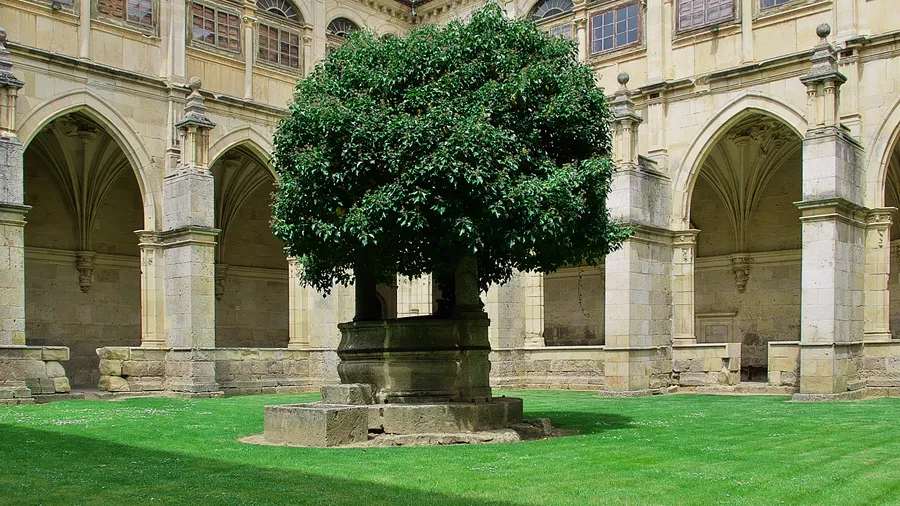
Highlights

  • • Plateresque Renaissance cloister with detailed ornamentation
  • • Located in Carrión de los Condes on the Camino de Santiago
  • • Founded in the 11th century as a Cluniac Benedictine monastery
  • • Testament to the influence of the Cluniac order in Spain
  • • Free entry and suitable for families and pets
  • • Architecture combining Romanesque and Renaissance styles

Description

The Monastery of San Zoilo is an ancient Cluniac Benedictine monastery located in Carrión de los Condes, Palencia. Founded in the 11th century, this monastic complex is situated in a key town on the Camino de Santiago, adding significant historical and cultural value. The original construction has undergone various modifications over the centuries, showcasing architectural styles ranging from Romanesque to Renaissance.

When visiting the monastery, you can admire its famous Plateresque Renaissance cloister, considered a standout piece of Spanish art. This cloister is characterized by its detailed ornamentation, with columns and capitals decorated with vegetal motifs and symbolic figures. Additionally, the interior houses architectural and artistic elements that display the building's evolution and its religious importance in the region.

The monastery is located in Carrión de los Condes, a strategic point on the Jacobean route connecting northern Spain with Santiago de Compostela. During the Middle Ages, this place was a center of spirituality and hospitality for pilgrims. The Cluniac order, to which it belonged, was fundamental in spreading monasticism and culture across Europe, and San Zoilo stands as a testament to that influence.

To plan your visit, it is recommended to allocate between one and two hours to explore the cloister and accessible rooms. Admission is free and no prior reservation is required. The monastery is accessible for people with reduced mobility, although some areas may have certain limitations. It is a family-friendly space and allows pets under supervision. The best time to visit is during spring and autumn, when the weather is milder and pleasant for strolling around Carrión de los Condes and its surroundings.

Key Information

Visit Duration

1-2 hours

Recommended Seasons

Spring, Autumn

Pricing

Free

Accessibility

Medium

Kid-Friendly Pet-Friendly No Booking Required

Guide

Essential information for visiting San Zoilo Monastery

Location
Practical Information
Pricing
Free
Visit Duration
1-2 hours
Features & Services
  • Accessibility:Medium
  • Kid-Friendly:Yes
  • Pet-Friendly:Yes
  • Booking:No Booking Required
Planning Information

Recommended Seasons

Spring · Autumn

Best Time to Visit

Spring and autumn offer mild weather ideal for visiting the monastery and strolling through Carrión de los Condes without the summer crowds.

Visitor Tips

Wear comfortable shoes to explore the cloister and the surroundings of Carrión de los Condes. Check the weather before your visit, as spring and autumn offer the best experience. Although entry is free, respecting conservation rules is essential. If visiting with children, take the opportunity to explain the historical significance of the Camino de Santiago and the monastery's role.

Historical Facts

The Monastery of San Zoilo was founded in the 11th century by monks of the Cluniac order, who promoted monastic reform across Europe. Its location in Carrión de los Condes made it a key stop for pilgrims on the Camino de Santiago. Over the centuries, the monastery was expanded and renovated, notably its 16th-century Plateresque Renaissance cloister, reflecting the artistic and religious evolution of the region.

Frequently Asked Questions

Get answers about San Zoilo Monastery

It was founded in the 11th century as a Benedictine monastery of the Cluniac order.
Its Plateresque Renaissance cloister, featuring highly detailed artistic ornamentation.
Yes, entry is free and no reservation is required.
Yes, although some areas may have limitations, general access is accessible.
Yes, pets are allowed as long as they are supervised.