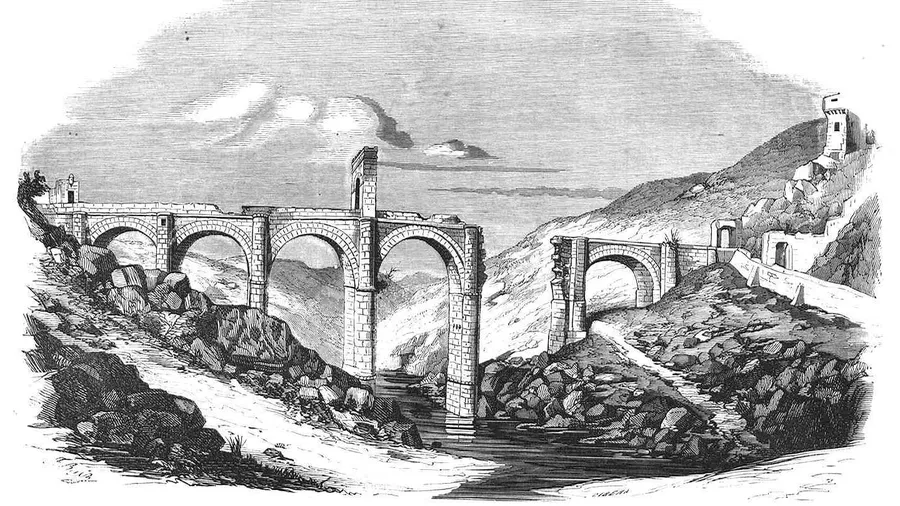
Roman Bridge of Alcántara

Highlights

  • • Built in the 2nd century AD during the Roman Empire
  • • Six semicircular arches made of carved granite
  • • Central triumphal arch dedicated to Emperor Trajan
  • • Located over the Tagus River in Cáceres province
  • • Part of the ancient Roman Vía de la Plata
  • • Pedestrian access from the town of Alcántara

Description

The Roman Bridge of Alcántara is a monumental structure built in the 2nd century AD during the height of the Roman Empire. It spans the Tagus River in Cáceres province, Extremadura, and was designed to facilitate passage along the Vía de la Plata, one of the main Roman roads connecting the north and south of the Iberian Peninsula. Its construction combines engineering and aesthetics, showcasing Roman technical skill in creating durable infrastructure.

Walking across the bridge, you'll see six large semicircular arches rising over the river, each built with perfectly carved granite blocks. At the center stands a triumphal arch, serving as a symbol of power and a tribute to Emperor Trajan, under whose rule the bridge was erected. The weathered stone and the sound of water beneath its arches evoke the site's millenary history.

This bridge is not only a testament to Roman engineering but also a key element in local and regional history. Over the centuries, it has withstood wars, floods, and the passage of time, maintaining its function and heritage value. It is part of Extremadura's cultural heritage and a representative example of Roman influence on the peninsula.

To visit, it is recommended to arrive at Alcántara, a nearby town that offers pedestrian access to the bridge. The visit is free and requires no prior reservation. The surrounding terrain is somewhat challenging for people with reduced mobility due to uneven paths. Comfortable footwear and water are advised, especially in summer. The approximate visit duration is 1 to 2 hours, enough time to cross the bridge, enjoy the Tagus River scenery, and explore the nearby natural and urban environment.

Key Information

Visit Duration

1-2 hours

Recommended Seasons

Spring, Autumn

Pricing

Free

Accessibility

Medium

Kid-Friendly Pet-Friendly No Booking Required

Guide

Essential information for visiting Roman Bridge of Alcántara

Location
Practical Information
Pricing
Free
Visit Duration
1-2 hours
Features & Services
  • Accessibility:Medium
  • Kid-Friendly:Yes
  • Pet-Friendly:Yes
  • Booking:No Booking Required
Planning Information

Recommended Seasons

Spring · Autumn

Best Time to Visit

The best time to visit is spring and autumn, when the weather is mild and the natural landscape is at its most beautiful.

Visitor Tips

To make the most of your visit, wear comfortable shoes and bring water, especially in summer. The natural surroundings are pleasant for walking, but the terrain can be uneven. Visit the nearby town of Alcántara to learn more about local history and enjoy regional cuisine. Avoid the hottest hours for a more comfortable experience.

Historical Facts

The Roman Bridge of Alcántara was built between 104 and 106 AD under Emperor Trajan's rule. Its main purpose was to facilitate transit along the Vía de la Plata, a commercial and military route connecting northern and southern Hispania. The central commemorative arch bears an inscription honoring the emperor and the builders, reflecting the bridge's strategic and symbolic importance.

Frequently Asked Questions

Get answers about Roman Bridge of Alcántara

Yes, the bridge is accessible to pedestrians and can be crossed on foot.
Yes, visiting the bridge is free of charge.
The bridge is an open public space with no specific opening hours.
Access can be challenging due to uneven paths and slopes.
Yes, pets are allowed as long as they are kept on a leash.