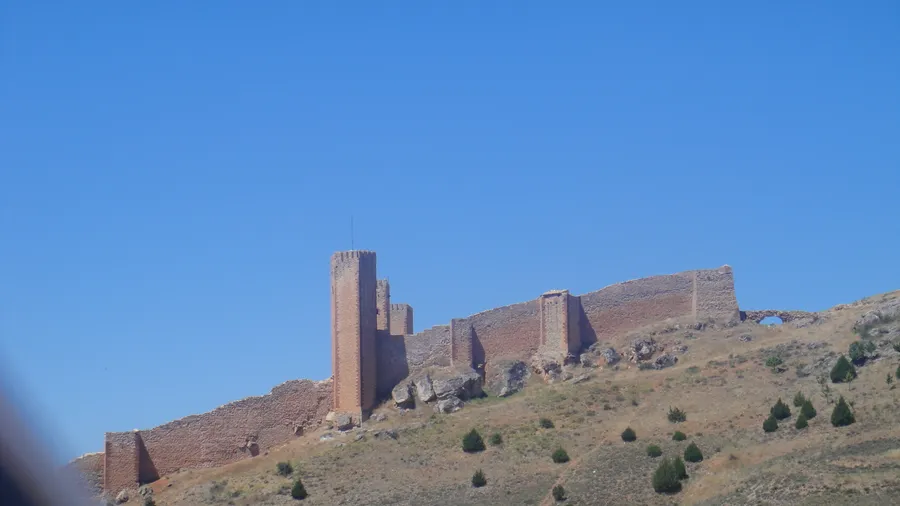
Molina de Aragón Castle

Highlights

  • • Largest medieval fortress preserved in the province of Guadalajara
  • • Double enclosure: outer albacara of 800+ m and inner castle with six towers
  • • Tower of Homage (Doña Blanca's Tower) and the Covered Tower
  • • Romanesque church of Santa María del Collado within the walls
  • • Cultural Heritage site; National Monument since 1931
  • • Symbol of the Lordship of Molina, overlooking the Gallo river valley

Description

Molina de Aragón Castle is the largest medieval fortress preserved in the province of Guadalajara and one of the most imposing military complexes in Castilla-La Mancha. It stands on a hill above the town of Molina, dominating the Gallo river valley and the historic border between the Crowns of Aragon and Castile.

Its origins go back to an Andalusian alcázar of the 10th-11th centuries, built over an earlier Celtiberian castro. The current fortress is the result of the reconstruction ordered by Alfonso I of Aragon in 1129 and successive enlargements of the Lordship of Molina, ruled by the House of Lara until the late 13th century; the complex later passed to the Crown of Castile through the marriage of María de Lara to Sancho IV.

The outer perimeter —the albacara— runs over 800 metres and surrounds a second inner ward with six towers, four of them in good condition: the Tower of Homage (also called Doña Blanca's Tower) and the Covered Tower stand out, alongside historic gates such as the Clock Gate and the Horses' Gate. Within the walls stands the Romanesque church of Santa María del Collado.

Declared a National Monument in 1931 and today a Cultural Heritage site (BIC), the consolidated ruins can be visited on prior request to the Municipality of Molina de Aragón, the current owner. It's an essential stop on any route through the Lordship of Molina and the Alto Tajo.

Key Information

Accessibility

Low

Kid-Friendly Pet-Friendly Booking Required

Related Destinations
Guide

Essential information for visiting Molina de Aragón Castle

Location
Features & Services
  • Accessibility:Low
  • Kid-Friendly:Yes
  • Pet-Friendly:Yes
  • Booking:Booking Required
Planning Information

Visitor Tips

Visits on prior request to the Municipality of Molina de Aragón. Best light at dawn or sunset; mountain footwear and water in the warmer months. The path crosses uneven ground (consolidated ruins).

Historical Facts

Andalusian alcázar (10th-11th centuries) over an earlier Celtiberian castro. Rebuilt by Alfonso I of Aragon in 1129. Capital of the Lordship of Molina under the House of Lara until the late 13th century; later incorporated into the Crown of Castile through the marriage of María de Lara to Sancho IV. Declared a National Monument on 3 June 1931.