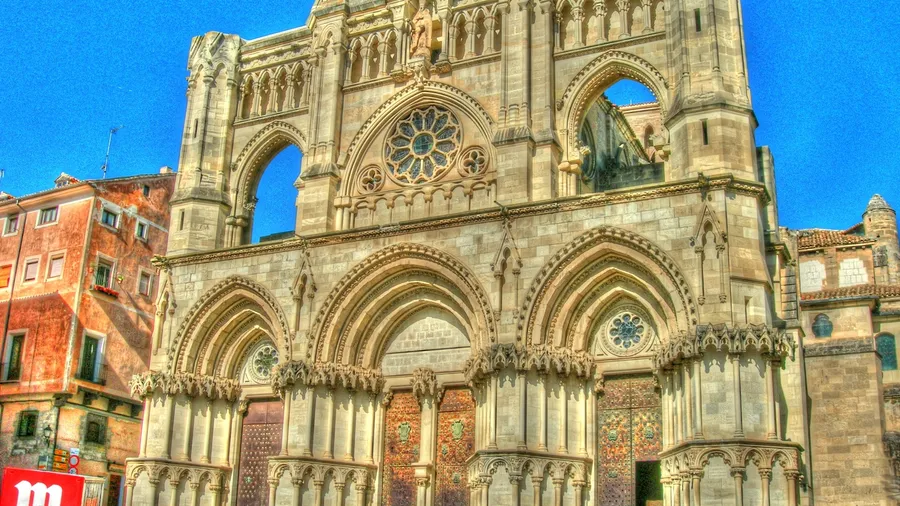
Cathedral of Santa María and San Julián, Cuenca
Highlights
- • One of the earliest Gothic cathedrals in Spain (1196-1257)
- • Anglo-Norman Gothic influence, rare on the peninsula
- • Three naves, transept, double ambulatory and sexpartite ribbed vaults
- • 16th-century Renaissance cloister by Juan de Herrera
- • 18th-century Baroque Transparente by Ventura Rodríguez
- • Unique carvings of New World animals discovered after 1492
Description
Key Information
Accessibility
Medium
Kid-Friendly Pet-Friendly No Booking Required
Guide
Essential information for visiting Cathedral of Santa María and San Julián, Cuenca
Location
Features & Services
- Accessibility:Medium
- Kid-Friendly:Yes
- Pet-Friendly:No
- Booking:No Booking Required
Planning Information
Visitor Tips
Access from the Plaza Mayor. Opening hours and entry fee on the official cathedral website. The visit usually includes cloister, sacristy and treasury; check accessibility if you have reduced mobility.
Historical Facts
Built 1196-1257. Collapse of the bell tower in 1902. Neo-Gothic façade reconstructed by Vicente Lampérez in the 20th century. Renaissance cloister by Juan de Herrera (16th century). 18th-century Transparente by Ventura Rodríguez. Seat of the Diocese of Cuenca.