Highlights

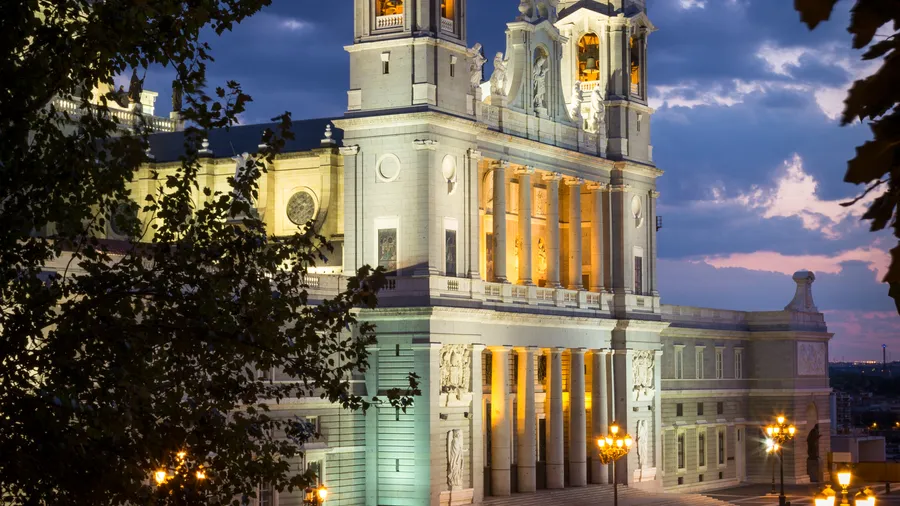
  • • Neoclassical façade facing the Palacio Real
  • • Interior with colorful stained glass and main altar
  • • Crypt with chapels and archaeological remains
  • • Access to the dome with panoramic views
  • • Dedicated to the Virgen de la Almudena, Madrid's patron saint

Description

The Catedral de la Almudena is Madrid's main Catholic temple, located in the heart of the city directly opposite the Palacio Real. Construction began in 1883 and extended over more than a century, concluding in 1993 with its consecration. This prolonged work showcases a blend of architectural styles ranging from neoclassical on its main façade, through neo-Gothic inside, to neo-Romanesque details in some chapels. The cathedral is dedicated to the Virgen de la Almudena, patron saint of Madrid, and stands as a religious and cultural symbol for the city.

When visiting Almudena, you can admire its imposing white façade contrasting with the Palacio Real, creating a harmonious urban ensemble. Inside, colorful stained glass windows fill the space with light, highlighting the main altar and the crypt, which houses various chapels and archaeological remains. Visitors can also ascend the dome to enjoy panoramic views over Madrid and its surroundings, an experience connecting the city's history with the present.

The cathedral's history is marked by changes in its original design due to different architects and political and economic circumstances. Initially planned in neo-Gothic style, the façade was modified to adopt a neoclassical air that harmonizes with the Palacio Real. Its construction reflects Madrid's evolution from the 19th to the late 20th century, integrating elements from different eras and styles.

To plan your visit, it is recommended to allow between one and two hours to explore the temple and its adjoining spaces. Entry is free, although some activities or special accesses may require prior reservation. The cathedral is accessible for people with reduced mobility and welcomes children accompanied by adults. It is advisable to check schedules and possible restrictions on holidays or religious events.

Key Information

Visit Duration

1-2 hours

Recommended Seasons

Spring, Autumn

Pricing

Free

Accessibility

High

Kid-Friendly Pet-Friendly Booking Required

Guide

Essential information for visiting Almudena Cathedral

Location

In this area

Practical Information
Pricing
Free
Visit Duration
1-2 hours
Features & Services
  • Accessibility:High
  • Kid-Friendly:Yes
  • Pet-Friendly:No
  • Booking:Booking Required
Planning Information

Recommended Seasons

Spring · Autumn

Best Time to Visit

The best time to visit the Catedral de la Almudena is in spring and autumn, when the weather is pleasant for strolling through central Madrid and avoiding the extreme temperatures of summer and winter.

Visitor Tips

To make the most of your visit, arrive early to avoid crowds, especially on weekends and holidays. Wear comfortable shoes for exploring the interior and climbing the dome if you choose. Check schedules and possible religious events that might limit access. The area has several cafés and restaurants to complete your cultural experience.

Historical Facts

Construction of the Catedral de la Almudena began in 1883 and lasted over a century, reflecting changes in architectural styles and Spain's political history. It was officially consecrated in 1993 by Pope John Paul II, becoming the first cathedral consecrated in Spain in the 20th century.

Frequently Asked Questions

Get answers about Almudena Cathedral

Yes, it is possible to climb the dome to enjoy panoramic views of Madrid, although it may require a reservation or additional payment.
Hours may vary; it is recommended to check the official website before your visit.
Yes, general entry is free, although some special activities may have a cost.
Yes, the cathedral has adapted access for people with reduced mobility.
No, pets are not allowed inside the temple, except guide dogs.