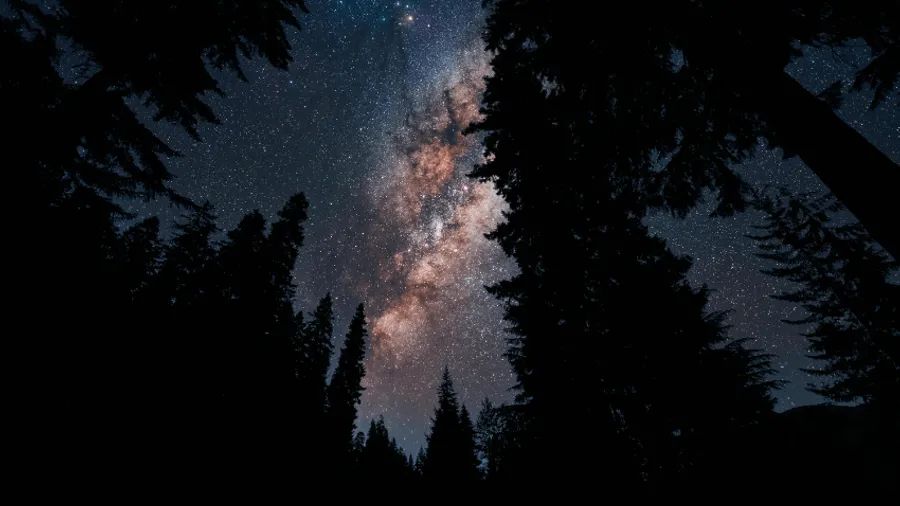
Stands out for

  • • Professional telescopes for detailed stargazing
  • • Dark sky with minimal light pollution
  • • Visit to the historic NASA antenna in Robledo
  • • Expert astronomy guide throughout the entire experience
  • • Direct connection to space history and NASA's legacy

Description

Context Robledo de Chavela, nestled in the Western Sierra of Madrid, offers exceptionally low light pollution, making it ideal for astronomy. The site is home to the historic NASA antenna that confirmed humanity’s first moon landing—an enduring symbol of the area’s scientific legacy. The route gently ascends through a protected natural landscape, where the breeze carries the scents of wild thyme and pine trees.

The experience You’ll take part in a guided nighttime tour led by an expert astronomer who will teach you how to use professional telescopes to view stars, planets, and constellations. The deep darkness of the sky reveals details invisible in urban areas. The cool, smooth metal of the telescopes contrasts with the crisp night air as your guide shares stories of space and answers your questions.

For whom This activity suits families with children over 8 years old, couples, and groups interested in astronomy and nighttime nature. It requires minimal physical fitness and is not recommended for those with limited mobility unless accompanied by assistance, or for people who cannot tolerate cold night temperatures.

Local context Robledo de Chavela hosts the Madrid Space Communications Complex and the NASA Training and Visitor Center, preserving the memory of lunar exploration. Locals continue to honor the area’s scientific and cultural traditions, weaving astronomy into their daily identity.

Key Info

Difficulty

Easy

Setting

Outdoors

Best season

All year round

Recommended Age Range

All ages

Booking required

Practical Guide

Everything you need to know about Stargazing in Robledo de Chavela

Location
Expert Recommendations

Bring warm clothing suitable for nighttime and comfortable shoes for walking. Avoid bright lights and use a red-light flashlight to protect night vision. The best time is May through September, on moonless or new moon nights for optimal visibility. Arrive early to adjust to darkness and follow your guide’s instructions for proper telescope use to enhance your experience.

Physical Requirements

low or no physical activity required

About the Area

Robledo de Chavela lies in the Western Sierra of Madrid, surrounded by preserved hills and enjoying low light pollution—perfect for astrotourism. Beyond stargazing, visitors can explore the NASA Training and Visitor Center, hike scenic nature trails, or visit local landmarks such as the Church of Our Lady of the Assumption, a historic site with deep regional roots.

Offers

Best available offers for Stargazing in Robledo de Chavela

Observación de estrellas en Madrid

From
€9

Nearby Accommodations

Find where to stay near Stargazing in Robledo de Chavela

Loading accommodation options...

Nearby Destinations

Destinations where you can enjoy Stargazing in Robledo de Chavela

Frequently Asked Questions

Get answers about Stargazing in Robledo de Chavela

There is no strict age limit; however, it’s recommended to consult with the operator to confirm suitability for young children, ensuring they are accompanied and properly dressed for cold night conditions.
Wear comfortable, warm clothing, a jacket, suitable hiking shoes, and a red-light flashlight to preserve night vision and avoid disrupting others’ viewing.
The site is accessible by car, about one hour from Madrid via the Western Sierra of Madrid, with good road connections from the capital.
Professional and amateur-grade telescopes are used, enabling clear views of stars, planets, and other celestial objects.
There is no clear information on accessibility; it’s best to contact the operator directly to confirm if any support or adaptations are available.